The Hidden Role of Nitrogen Cycle, Periodic Table Nitrogen, and Atomic Mass in Earth’s Balance
Table of Contents
- The Complete Overview of Nitrogen’s Triad: Cycle, Periodic Table, and Atomic Mass
- Historical Background and Evolution
- Core Mechanisms: How It Works
- Key Benefits and Crucial Impact
- Major Advantages
- Comparative Analysis
- Future Trends and Innovations
- Conclusion
- Comprehensive FAQs
- Q: How does nitrogen’s atomic mass affect its role in the nitrogen cycle?
- Q: Why is nitrogen’s position on the periodic table important?
- Q: Can the nitrogen cycle be restored after pollution damage?
- Q: How does the Haber-Bosch process impact the nitrogen cycle?
- Q: Are there natural ways to enhance nitrogen fixation?
- Q: What role does nitrogen play in climate change?
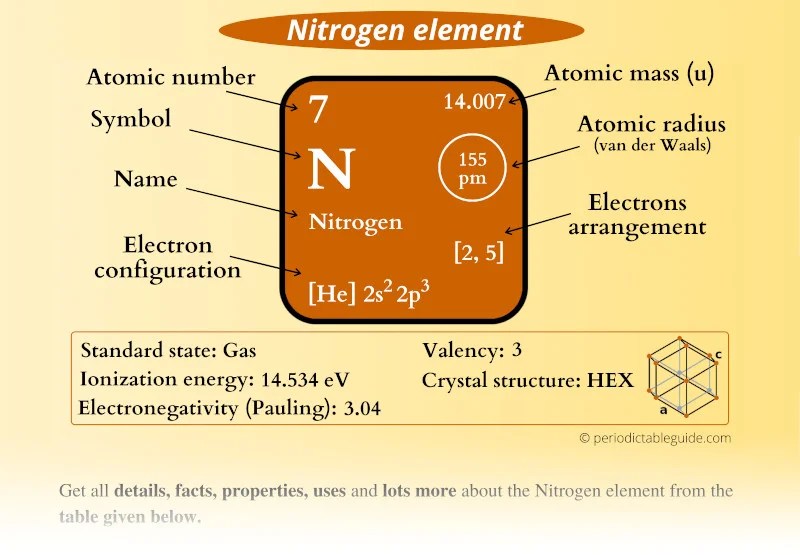
Nitrogen is the silent architect of life on Earth. While oxygen dominates the atmosphere by volume, nitrogen—abundant yet inert—serves as the backbone of proteins, DNA, and every living organism’s fundamental structure. Yet, its journey through the nitrogen cycle, its precise atomic mass (14.007 u), and its position (atomic number 7) on the periodic table are often overlooked. This interplay determines soil fertility, ocean productivity, and even climate regulation. Without nitrogen’s transformation from atmospheric gas to plant-available compounds, ecosystems would collapse.
The nitrogen cycle periodic table nitrogen atomic mass nexus reveals a paradox: nitrogen is both essential and elusive. Plants cannot use atmospheric N₂ directly; they rely on bacteria to fix it into ammonia (NH₃) or nitrates (NO₃⁻). Meanwhile, nitrogen’s atomic mass—critical for isotopic studies—helps scientists trace pollution, ancient ecosystems, and even extraterrestrial life. The balance between these processes dictates whether a forest thrives or a desert expands.
Human interference, from fertilizer runoff to fossil fuel emissions, has disrupted this equilibrium. Understanding the nitrogen cycle periodic table nitrogen atomic mass connection is not just academic—it’s a matter of survival. Below, we dissect how these elements interact, their historical significance, and the innovations reshaping their future.
The Complete Overview of Nitrogen’s Triad: Cycle, Periodic Table, and Atomic Mass
Nitrogen’s dominance in Earth’s systems stems from its dual nature: an atmospheric giant (78% of air) and a biochemical linchpin. The nitrogen cycle—a global loop of fixation, assimilation, mineralization, and denitrification—relies on microbial alchemy to convert inert N₂ into bioavailable forms. Meanwhile, nitrogen’s atomic mass (14.007 u) and isotopic variants (¹⁴N, ¹⁵N) are tools for tracking these transformations. For instance, the ratio of ¹⁵N to ¹⁴N in soil can reveal nitrogen pollution sources, while its periodic table placement (Group 15) defines its chemical reactivity.The interplay between these factors is subtle yet profound. A slight shift in nitrogen’s availability—whether from over-fertilization or climate-driven microbial changes—can alter ecosystems. Consider the Amazon rainforest: its nitrogen cycle is finely tuned to low-input systems, yet deforestation introduces synthetic nitrogen, disrupting the balance. Meanwhile, nitrogen’s atomic mass influences its behavior in high-energy environments, from lightning-induced fixation to industrial Haber-Bosch processes.
Historical Background and Evolution
The nitrogen cycle’s discovery was a gradual revelation. In the 18th century, scientists like Joseph Priestley and Antoine Lavoisier identified nitrogen as a distinct gas, but its role in life remained mysterious. The breakthrough came in 1886 when German agronomist Hermann Hellriegel proved that legumes’ root nodules—home to nitrogen-fixing bacteria (Rhizobium)—enabled plants to thrive without added nitrogen. This laid the foundation for modern agriculture, though industrial nitrogen fixation (via the Haber-Bosch process, 1913) later overshadowed natural cycles.Nitrogen’s atomic mass, meanwhile, was refined in the early 20th century as isotopic studies emerged. The discovery of ¹⁵N (a stable isotope) allowed researchers to trace nitrogen’s pathways in ecosystems. Today, these isotopes are used in forensic science, paleoclimatology, and even archaeology—revealing, for example, the diets of ancient civilizations through bone nitrogen ratios.
Core Mechanisms: How It Works
The nitrogen cycle periodic table nitrogen atomic mass system operates through four key phases:1. Fixation: Atmospheric N₂ is converted to ammonia (NH₃) via lightning, industrial processes, or microbial action (e.g., Azotobacter bacteria).
2. Assimilation: Plants absorb NH₃ or nitrates (NO₃⁻) to build amino acids and proteins.
3. Mineralization: Decomposers (fungi, bacteria) break down organic nitrogen into NH₃.
4. Denitrification: Anaerobic bacteria convert nitrates back to N₂, completing the cycle.
Nitrogen’s atomic mass plays a critical role in isotopic fractionation—lighter ¹⁴N is processed faster than ¹⁵N, leaving behind isotopically heavier residues. This principle is exploited in environmental monitoring: a soil sample with elevated ¹⁵N/¹⁴N ratios may indicate fertilizer contamination or sewage input.
Key Benefits and Crucial Impact
The nitrogen cycle periodic table nitrogen atomic mass triad sustains life while regulating Earth’s systems. Without nitrogen fixation, primary producers (plants, algae) would starve, collapsing food webs. Yet, excess nitrogen—from agricultural runoff or fossil fuel combustion—fuels harmful algal blooms and dead zones (e.g., the Gulf of Mexico). The balance is delicate: too little nitrogen limits growth; too much poisons ecosystems.This system also underpins human innovation. The Haber-Bosch process, which relies on nitrogen’s atomic properties, has fed billions but at a cost: synthetic nitrogen now dominates global cycles, disrupting natural patterns. Understanding these dynamics is essential for sustainable agriculture and climate resilience.
"Nitrogen is the currency of life, but like any currency, its value depends on circulation. Too much or too little breaks the economy of nature." — Dr. Hans Jenny, Soil Scientist
Major Advantages
- Ecosystem Stability: The nitrogen cycle maintains biodiversity by ensuring nutrient availability without toxicity.
- Agricultural Productivity: Controlled nitrogen inputs (via fertilizers or legume crops) boost yields sustainably.
- Climate Regulation: Denitrification releases N₂O (a potent greenhouse gas), but balanced cycles mitigate emissions.
- Forensic and Archaeological Tools: Nitrogen isotopes trace pollution, dietary habits, and even criminal activity.
- Industrial Precision: Nitrogen’s atomic mass enables targeted chemical synthesis, from explosives to pharmaceuticals.
Comparative Analysis
| Natural Nitrogen Cycle | Anthropogenic Nitrogen Cycle |
|---|---|
| Driven by microbial fixation (slow, localized). | Accelerated by industrial Haber-Bosch (rapid, global). |
| Nitrogen isotopes reflect natural fractionation (¹⁵N enrichment in organic matter). | Isotopes show synthetic signatures (¹⁵N depletion from fertilizers). |
| Limited by phosphorus availability (Redfield ratio). | Often phosphorus-excessive, leading to eutrophication. |
| Self-regulating via denitrification. | Disrupted by nitrogen saturation, increasing N₂O emissions. |

Future Trends and Innovations
The nitrogen cycle periodic table nitrogen atomic mass nexus is evolving with technological advances. Precision agriculture uses isotopic analysis to optimize fertilizer use, reducing waste. Meanwhile, bioengineered crops with enhanced nitrogen fixation (e.g., Cassava projects) aim to cut synthetic inputs. On the climate front, denitrifying bioreactors are being developed to capture agricultural runoff before it reaches waterways.Emerging research also explores nitrogen’s role in astrobiology. Mars’ atmosphere is 95% CO₂, but traces of nitrogen suggest past habitability. By studying nitrogen’s behavior on Earth, scientists may uncover clues about life’s potential elsewhere.
Conclusion
The nitrogen cycle periodic table nitrogen atomic mass relationship is a testament to nature’s precision. From microscopic bacteria to global climate models, nitrogen’s transformations shape our world. Yet, human activity has tilted the scales, demanding innovative solutions—whether through isotopic tracking, sustainable farming, or planetary-scale nitrogen management.As we stand at the crossroads of ecological crisis and technological progress, understanding this triad is not optional. It is the key to preserving Earth’s balance while feeding its growing population.
Comprehensive FAQs
Q: How does nitrogen’s atomic mass affect its role in the nitrogen cycle?
The atomic mass of nitrogen (14.007 u) influences isotopic fractionation, where lighter ¹⁴N is processed faster than ¹⁵N. This creates measurable ratios that scientists use to track nitrogen sources (e.g., distinguishing between natural and synthetic inputs).
Q: Why is nitrogen’s position on the periodic table important?
Nitrogen (atomic number 7) sits in Group 15, sharing properties with phosphorus and arsenic. Its five valence electrons enable it to form critical compounds (e.g., NH₃, NO₃⁻) essential for life, while its triple bond in N₂ makes it chemically inert until fixed.
Q: Can the nitrogen cycle be restored after pollution damage?
Partial restoration is possible through denitrifying wetlands, biochar amendments, and reduced fertilizer use. However, severe nitrogen saturation (e.g., in dead zones) may require decades to recover naturally.
Q: How does the Haber-Bosch process impact the nitrogen cycle?
The process artificially fixes atmospheric nitrogen into ammonia, bypassing natural fixation. This has doubled Earth’s reactive nitrogen pool, leading to eutrophication and greenhouse gas emissions.
Q: Are there natural ways to enhance nitrogen fixation?
Yes: crop rotation with legumes, cover cropping, and mycorrhizal fungi can improve soil nitrogen retention. Some research explores genetically modified plants with built-in nitrogen-fixing genes.
Q: What role does nitrogen play in climate change?
Nitrogen oxides (NOₓ) contribute to smog, while nitrous oxide (N₂O) is 300x more potent than CO₂. Balancing the nitrogen cycle is critical for mitigating these emissions.
Leave a Comment
Comments are moderated before appearing. The data you submit is processed according to the Privacy Policy of versiliasolutions.oneagency.co.