Ohio Legislature Party Breakdown: Who Holds Power in 2024?
Table of Contents
- The Complete Overview of Ohio Legislature Party Breakdown
- Historical Background and Evolution
- Core Mechanisms: How It Works
- Key Benefits and Crucial Impact
- Major Advantages
- Comparative Analysis
- Future Trends and Innovations
- Conclusion
- Comprehensive FAQs
- Q: How often does the Ohio legislature party breakdown change?
- Q: Can Democrats ever regain control of the Ohio legislature?
- Q: How does gerrymandering affect the Ohio legislature party breakdown?
- Q: What issues are most influenced by the Ohio legislature party breakdown?
- Q: How do Ohio’s legislative sessions work under the current party breakdown?
- Q: What would happen if Democrats took control of the Ohio legislature?
Ohio’s political landscape has never been more volatile. The Ohio legislature party breakdown in 2024 tells a story of razor-thin margins, ideological clashes, and a Republican supermajority that could unravel with a single election cycle. While the GOP clings to control in both chambers, Democrats have made steady gains in urban districts, reshaping the balance of power in ways that will define the state’s future. The stakes are high—not just for policy, but for the very nature of governance in Ohio.
This tension isn’t new. For decades, Ohio’s legislature has oscillated between divided government and single-party dominance, but the current Ohio legislature party breakdown reflects a unique moment: a Republican-led statehouse with a Democratic governor (Mike DeWine’s successor) and a public increasingly skeptical of partisan gridlock. The 2024 elections could flip the script entirely, making this the most critical juncture in Ohio politics since the 2010 GOP wave.
Understanding the Ohio legislature party breakdown requires dissecting more than just seat counts. It means examining gerrymandering battles, voter turnout trends in swing counties, and the quiet but profound influence of special interest groups. Ohio’s political map isn’t just about red and blue—it’s a patchwork of suburban shifts, rural consolidation, and urban consolidation that forces both parties to adapt or risk irrelevance.
###
The Complete Overview of Ohio Legislature Party Breakdown
The Ohio General Assembly is a bicameral body consisting of the 99-member House of Representatives and the 33-member Senate. As of 2024, Republicans hold supermajorities in both chambers, a position they’ve maintained since the 2010 redistricting cycle. However, the Ohio legislature party breakdown is deceptively simple: behind the numbers lies a fragile coalition of conservative lawmakers, suburban moderates, and rural delegates who often clash over fiscal policy, social issues, and even procedural matters.The current Ohio legislature party breakdown stands as follows:
The Ohio legislature party breakdown isn’t static. Ohio’s political geography is dominated by three regions: the urban core (Cleveland, Columbus, Cincinnati), the suburban collar counties, and the rural Appalachian and farmland districts. Democrats dominate the cities, Republicans hold the rural strongholds, and the suburbs—once a GOP bastion—have become the wild card. The 2022 midterms saw Democrats gain ground in Franklin, Montgomery, and Hamilton counties, signaling a potential realignment that could reshape the Ohio legislature party breakdown by 2026.
###
Historical Background and Evolution
Ohio’s legislative history is a study in volatility. Before the 2010 redistricting, Democrats often held the edge, particularly in the House, where they controlled the chamber in the early 2000s. But the 2010 GOP wave, fueled by national Tea Party energy and aggressive gerrymandering, flipped the Ohio legislature party breakdown overnight. Republicans drew districts that concentrated Democratic voters in a handful of urban seats while spreading GOP supporters across rural and suburban areas—a tactic that has kept them in power ever since.The 2016 and 2018 elections tested this model. While Republicans maintained control, they faced backlash over issues like gerrymandering (leading to the 2018 League of Women Voters v. Husted Supreme Court case) and social policies. The Ohio legislature party breakdown became a battleground over transparency: Republicans accused Democrats of hypocrisy for opposing redistricting reform while benefiting from it in the past, while Democrats argued the system was rigged against fair representation.
The COVID-19 pandemic and the 2020 election further disrupted the status quo. Urban turnout surged in 2020, narrowing Republican margins, and the Ohio legislature party breakdown became a proxy for broader cultural divides. Issues like voting rights, police reform, and COVID-19 relief became litmus tests, with Republicans often aligning with national GOP priorities and Democrats pushing for more progressive policies. The result? A legislature where every vote feels like a referendum on Ohio’s future.
###
Core Mechanisms: How It Works
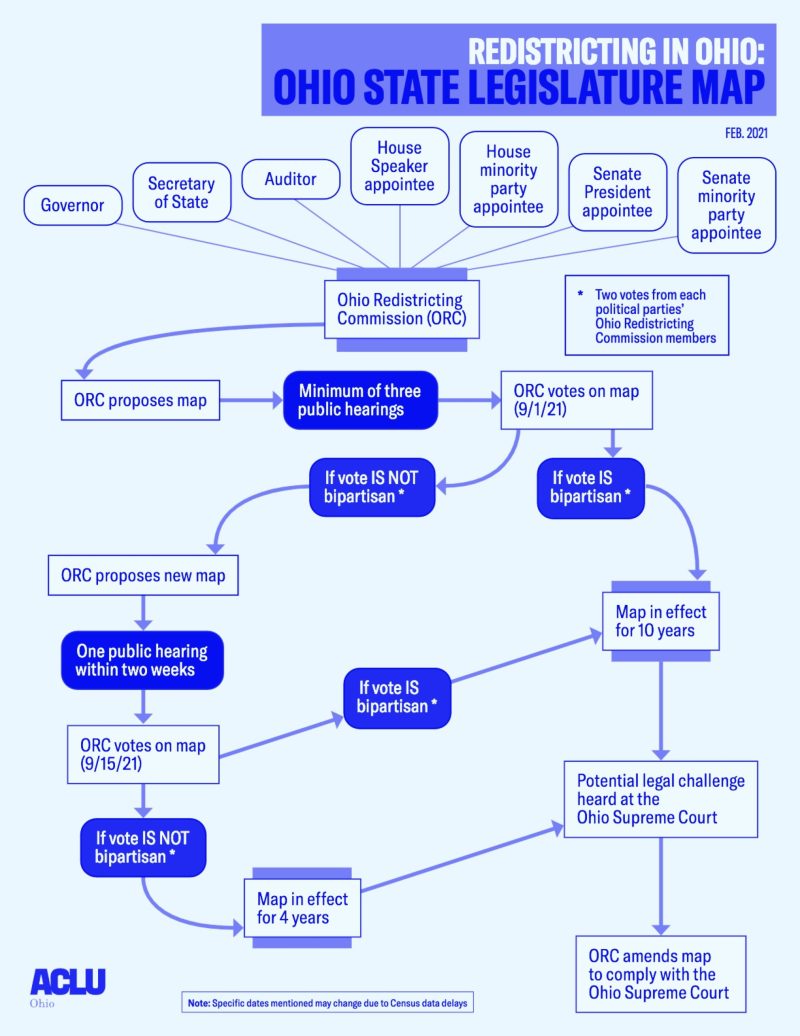
The Ohio legislature party breakdown is determined by a mix of elections, redistricting, and internal party dynamics. Elections are held every two years for the House and every four years for the Senate. Ohio’s closed primaries mean party affiliation is critical—candidates must secure their party’s nomination before facing off in the general election. This system often leads to hyper-partisan races, where moderates struggle to gain traction.Redistricting is the second major factor shaping the Ohio legislature party breakdown. After the 2020 Census, Ohio’s legislature drew new district maps, but the process was contentious. A bipartisan redistricting commission was created to reduce partisan influence, but Republicans still held the majority and crafted maps that favored their candidates. The Ohio legislature party breakdown post-redistricting remained lopsided, though Democrats gained a few seats in urban areas.
Inside the legislature, party leadership plays a decisive role. The Speaker of the House (currently Jason Stephens, R-Kitts Hill) and the President of the Senate (currently Matt Huffman, R-Lima) control the agenda, schedule votes, and assign committee chairs—tools they use to maintain Republican dominance. Democrats, meanwhile, rely on filibusters and procedural maneuvers to slow legislation, though their numbers are too small to block major bills outright.
###
Key Benefits and Crucial Impact
The current Ohio legislature party breakdown grants Republicans unchecked power to advance their agenda, from tax cuts to education reform. With supermajorities in both chambers, they can pass budgets without Democratic input, override gubernatorial vetoes, and appoint key officials without compromise. This control has allowed Ohio to become a laboratory for conservative policies, from right-to-work laws to restrictions on abortion and transgender rights.Yet, the Ohio legislature party breakdown also creates risks. A legislature this polarized struggles with governance. Bills stall over ideological disputes, and public trust in the institution erodes when lawmakers appear more concerned with scoring political points than solving problems. The 2023-2024 session saw multiple high-profile clashes, including fights over veterans’ benefits, healthcare expansion, and climate policy, where partisan divisions made consensus impossible.
> "Ohio’s legislature isn’t broken—it’s designed to be this way. The Ohio legislature party breakdown ensures that power stays concentrated in the hands of a few, regardless of what voters actually want." — Ohio State University Political Science Professor Dr. David B. Cohen
###
Major Advantages
The Ohio legislature party breakdown favors Republicans in several key ways:- Legislative Efficiency: Supermajorities allow rapid passage of priority bills without filibusters or prolonged debate.
###
Comparative Analysis
| Metric | Ohio Legislature (2024) | National Average (2024) ||--------------------------|-----------------------------|-----------------------------|
| House Party Control | 69R, 30D (69.7% GOP) | ~55% GOP (varies by state) |
| Senate Party Control | 23R, 10D (69.7% GOP) | ~52% GOP (varies by state) |
| Supermajority Status | Yes (both chambers) | Rare (only ~10 states) |
| Redistricting Influence | GOP-drawn maps | Mixed (some states use commissions) |
| Urban vs. Rural Split | Sharp divide (cities Dem, rural GOP) | Similar but less extreme in some states |
###

Future Trends and Innovations
The Ohio legislature party breakdown is at a crossroads. Democrats are making inroads in suburban areas, particularly in Franklin and Montgomery counties, where disillusionment with Trump-era policies and cultural issues is growing. If this trend continues, the 2026 elections could see a House flip, forcing Republicans into a defensive crouch.Another wild card is independent redistricting. Ohio voters approved a constitutional amendment in 2018 to create a bipartisan commission for future redistricting, but the 2020 maps were still drawn by the legislature. If future maps are truly neutral, the Ohio legislature party breakdown could shift dramatically, favoring Democrats in urban and suburban districts.
Finally, ballot initiatives are becoming a Democratic strategy to bypass the legislature. Issues like medical marijuana legalization (Issue 2, 2023) and potential future measures on abortion rights or voting reform could force the GOP-led legislature to either comply or risk public backlash.
###
Conclusion
The Ohio legislature party breakdown is more than a ledger of seat counts—it’s a reflection of Ohio’s political soul. A state once known for its moderate, pragmatic politics has become a battleground where ideology often trumps governance. The current GOP supermajority is a product of gerrymandering, rural consolidation, and suburban realignment, but it’s not permanent.Democrats are positioning themselves for a comeback, and if they can turn out urban and suburban voters in 2026, the Ohio legislature party breakdown could look entirely different. Until then, Ohio’s political future hinges on whether Republicans can hold their coalition together—or if the state’s evolving demographics will force a reckoning.
One thing is certain: the Ohio legislature party breakdown will remain a defining feature of state politics for years to come, shaping everything from education funding to environmental policy. The question isn’t if it will change, but when—and what that change will mean for Ohio’s people.
###
Comprehensive FAQs
Q: How often does the Ohio legislature party breakdown change?
The Ohio legislature party breakdown can shift with every election cycle, but major realignments are rare due to gerrymandering. The last significant change was in 2010, when Republicans took control after decades of Democratic dominance. Since then, only minor fluctuations have occurred, with Democrats gaining a few seats in 2018 and 2022 but not enough to flip control.
Q: Can Democrats ever regain control of the Ohio legislature?
Yes, but it would require a massive suburban shift and high urban turnout. Democrats need to win back at least 10 House seats and 3 Senate seats to take control. Their best path is focusing on Franklin, Montgomery, and Hamilton counties, where suburban voters are increasingly disillusioned with Republican policies on issues like abortion and education.
Q: How does gerrymandering affect the Ohio legislature party breakdown?
Gerrymandering is the single biggest factor in the current Ohio legislature party breakdown. After the 2010 Census, Republicans drew districts that packed Democrats into urban seats while cracking GOP voters across suburban and rural areas. This ensured Republicans won ~60% of the House seats with only ~50% of the statewide vote. While Ohio now has a bipartisan redistricting commission, the 2020 maps still favored Republicans, maintaining the imbalance.
Q: What issues are most influenced by the Ohio legislature party breakdown?
The Ohio legislature party breakdown directly impacts:
Q: How do Ohio’s legislative sessions work under the current party breakdown?
With Republicans in control, the Ohio legislature party breakdown means:
Q: What would happen if Democrats took control of the Ohio legislature?
A Democratic-controlled legislature would likely lead to:
Leave a Comment
Comments are moderated before appearing. The data you submit is processed according to the Privacy Policy of versiliasolutions.oneagency.co.