How Personalized Marketing Transforms Consumer Engagement
Table of Contents
- The Complete Overview of Personalized Marketing
- Historical Background and Evolution
- Core Mechanisms: How It Works
- Key Benefits and Crucial Impact
- Major Advantages
- Comparative Analysis
- Future Trends and Innovations
- Conclusion
- Comprehensive FAQs
- Q: What’s the difference between personalization and segmentation?
- Q: How can small businesses implement personalized marketing without a big budget?
- Q: Is personalized marketing invasive if it relies on customer data?
- Q: Can AI fully replace human creativity in personalization?
- Q: What’s the biggest challenge in scaling personalized marketing?
The art of connecting with consumers on an individual level has evolved far beyond generic ads and mass emails. Today, personalized marketing isn’t just a tactic—it’s the backbone of modern brand-consumer relationships. Companies that master this approach don’t just sell products; they curate experiences, anticipate needs, and foster loyalty in ways that one-size-fits-all campaigns simply can’t replicate. The shift from broad outreach to hyper-targeted engagement reflects a fundamental truth: consumers now expect relevance, not interruption.
Yet the challenge lies in execution. Personalization isn’t about slapping a customer’s name onto an email or serving up the same discount to everyone. It demands precision—leveraging data, behavioral insights, and real-time interactions to deliver messages that feel tailor-made. The brands thriving in this space aren’t just collecting data; they’re turning raw information into actionable, human-centered strategies. This is where the gap between possibility and performance becomes critical.
The stakes are higher than ever. A study by McKinsey found that personalized marketing can lift sales by up to 15%, while a Harvard Business Review analysis revealed that 71% of consumers expect companies to deliver personalized interactions. The question isn’t whether to adopt these strategies—it’s how to do it effectively without crossing into intrusive territory. The balance between personalization and privacy, automation and authenticity, is the tightrope modern marketers must walk.
The Complete Overview of Personalized Marketing
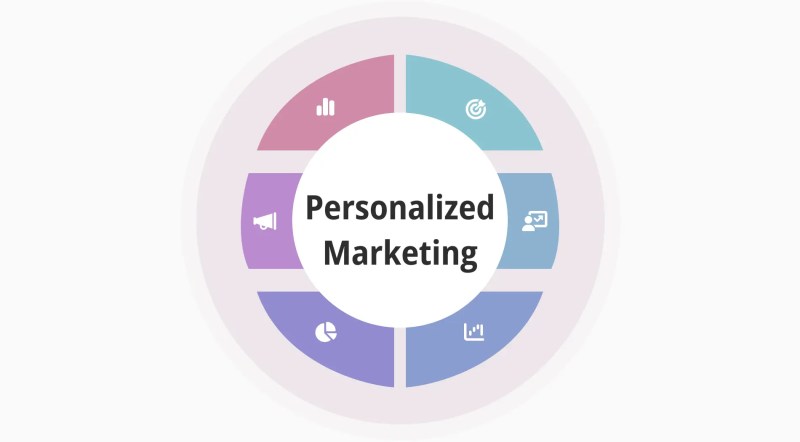
At its core, personalized marketing is the practice of using data, technology, and creative strategy to craft messages, offers, and experiences that resonate with individual consumers. Unlike traditional marketing, which relies on broad demographics, this approach hinges on granular insights—from browsing history to purchase patterns—to deliver content that feels uniquely relevant. The result? Higher engagement, stronger conversions, and deeper brand affinity.What sets personalized marketing apart is its dynamic nature. It’s not static; it adapts in real time. A customer’s interaction with a brand—whether it’s a website visit, a social media like, or an abandoned cart—feeds into a feedback loop that refines future communications. This isn’t just about targeting; it’s about creating a dialogue where the consumer feels understood and valued. The technology enabling this shift—AI, machine learning, and advanced analytics—has democratized the ability to deliver personalized experiences, even for brands with modest budgets.
Historical Background and Evolution
The roots of personalized marketing trace back to direct mail in the 19th century, where businesses would handwrite notes to repeat customers. Fast forward to the digital age, and the evolution accelerated with the rise of CRM systems in the 1990s, which allowed companies to segment audiences based on limited data. However, the real inflection point came with the proliferation of the internet and social media, which generated vast troves of behavioral data.Today, personalized marketing is powered by a confluence of technologies: predictive analytics, natural language processing, and real-time personalization engines. Platforms like Netflix and Spotify didn’t just popularize personalization—they set the standard for what consumers now expect. The shift from batch-and-blast email campaigns to dynamic, context-aware messaging reflects a broader cultural shift toward convenience and individuality. Brands that fail to adapt risk becoming background noise in an increasingly crowded marketplace.
Core Mechanisms: How It Works
The machinery behind personalized marketing operates on three pillars: data collection, segmentation, and delivery. Data collection involves tracking user interactions across channels—website clicks, app usage, and even offline behaviors through loyalty programs. This data is then segmented into clusters based on shared characteristics, such as purchase history, preferences, or engagement levels. The final step is delivery, where automated systems serve tailored content, whether it’s a product recommendation, a discount code, or a customized landing page.What makes this process powerful is its scalability. AI-driven tools can analyze millions of data points in seconds, identifying patterns that human analysts might miss. For example, an e-commerce brand might use machine learning to predict which products a customer is likely to buy next based on their browsing behavior, then trigger an email with those items—complete with personalized pricing or bundling suggestions. The key is ensuring that personalization feels organic, not forced, by aligning technology with human-centric design.
Key Benefits and Crucial Impact
The impact of personalized marketing extends beyond metrics like click-through rates and conversions. It reshapes the entire customer journey, turning passive observers into active participants. Consumers today are inundated with choices; personalization cuts through the noise by offering value upfront. When done right, it fosters trust, reduces friction in the buying process, and turns customers into advocates. The brands that excel in this space don’t just sell—they build communities around shared values and experiences.The ROI of personalized marketing is well-documented, but its intangible benefits are often overlooked. A well-executed strategy can elevate brand perception, differentiate a company in a crowded market, and even influence long-term loyalty. The challenge lies in measuring these outcomes beyond short-term KPIs. While metrics like conversion rates are important, the true measure of success is whether customers feel understood and whether those feelings translate into sustained engagement.
"Personalization is no longer a luxury—it’s the expectation. Consumers don’t just want to be heard; they want to be heard right." — Forrester Research, 2023
Major Advantages
- Higher Conversion Rates: Personalized emails deliver six times higher transaction rates than generic ones, according to Experian. Tailored product recommendations increase average order value by up to 30%.
- Improved Customer Retention: Brands that personalize customer experiences see a 40% increase in retention, as consumers are more likely to return when interactions feel relevant.
- Enhanced Customer Insights: Data-driven personalization reveals hidden preferences and behaviors, allowing brands to refine their offerings and messaging strategies.
- Competitive Differentiation: In saturated markets, personalization becomes a moat—brands that deliver unique experiences stand out against commoditized competitors.
- Cost Efficiency: By focusing resources on high-intent audiences, brands reduce wasted spend on broad, underperforming campaigns.
Comparative Analysis
| Traditional Marketing | Personalized Marketing |
|---|---|
| One-size-fits-all messaging | Dynamic, real-time content tailored to individual behaviors |
| Limited data sources (demographics, basic preferences) | Multi-channel data integration (behavioral, contextual, predictive) |
| Static campaigns with long lead times | Automated, scalable personalization with instant deployment |
| Difficult to measure individual impact | Granular attribution and ROI tracking per customer segment |

Future Trends and Innovations
The next frontier of personalized marketing lies in hyper-personalization—moving beyond broad segments to individual-level customization. Advances in AI, particularly generative models, will enable brands to create one-of-a-kind content, from personalized video messages to dynamically generated product designs. Voice and visual search will further refine targeting, allowing brands to anticipate needs before they’re explicitly stated.Privacy, however, remains a critical consideration. As regulations like GDPR and CCPA tighten, brands must balance personalization with transparency. The future will likely see a rise in "privacy-by-design" personalization, where consumers have granular control over their data while still receiving relevant experiences. Additionally, the integration of IoT devices will provide even richer contextual data, enabling marketers to tailor interactions based on real-world environments—think smart home devices suggesting products based on daily routines.
Conclusion
Personalized marketing is no longer optional—it’s a necessity for brands aiming to thrive in a consumer-driven economy. The ability to deliver relevant, timely, and meaningful interactions separates leaders from laggards. However, success hinges on more than just technology; it requires a deep understanding of human psychology, ethical data practices, and a commitment to long-term customer relationships.As the landscape evolves, the brands that will dominate are those that treat personalization as a strategic imperative, not a tactical add-on. The goal isn’t just to sell more; it’s to create connections that resonate on a personal level, fostering loyalty in an era where attention is the most valuable currency.
Comprehensive FAQs
Q: What’s the difference between personalization and segmentation?
A: Segmentation groups customers based on shared traits (e.g., age, location), while personalized marketing tailors content to individual behaviors and preferences in real time. Segmentation is broad; personalization is granular.
Q: How can small businesses implement personalized marketing without a big budget?
A: Start with email personalization (e.g., first-name fields, past purchase references), use free tools like Google Analytics for behavioral insights, and leverage social media listening to identify trends. Focus on high-impact, low-cost tactics like loyalty programs and retargeting ads.
Q: Is personalized marketing invasive if it relies on customer data?
A: It can be if not handled ethically. Transparency is key—clearly communicate how data is used, offer opt-out options, and ensure compliance with privacy laws. The best personalized marketing feels helpful, not creepy.
Q: Can AI fully replace human creativity in personalization?
A: No. AI excels at analyzing data and automating delivery, but human intuition is needed to craft compelling narratives, anticipate emotional triggers, and ensure personalization aligns with brand values.
Q: What’s the biggest challenge in scaling personalized marketing?
A: Balancing personalization with scalability. As customer bases grow, maintaining relevance across thousands of interactions requires robust infrastructure, real-time data processing, and continuous optimization.
Leave a Comment
Comments are moderated before appearing. The data you submit is processed according to the Privacy Policy of versiliasolutions.oneagency.co.