How the Relationship Between PR and Marketing Redefines Brand Authority in 2024
Table of Contents
- The Complete Overview of the Relationship Between PR and Marketing
- Historical Background and Evolution
- Core Mechanisms: How It Works
- Key Benefits and Crucial Impact
- Major Advantages
- Comparative Analysis
- Future Trends and Innovations
- Conclusion
- Comprehensive FAQs
- Q: How can small businesses integrate PR and marketing without a large budget?
- Q: What’s the biggest mistake brands make when merging PR and marketing?
- Q: Can PR and marketing work together in B2B industries?
- Q: How does AI impact the collaboration between PR and marketing?
- Q: What role does social media play in bridging PR and marketing?
The line between public relations and marketing has blurred to the point of irrelevance. What once were distinct disciplines—one focused on reputation, the other on sales—now operate as interdependent systems. A brand’s ability to leverage both disciplines simultaneously determines its longevity in an era where trust is currency and attention spans are fractured. The relationship between PR and marketing isn’t just about alignment; it’s about orchestrating a unified narrative that resonates across every touchpoint, from earned media to paid campaigns.
Yet, the tension persists. PR professionals still cling to the idealism of "telling the truth," while marketers chase metrics that often prioritize short-term conversions over long-term credibility. This friction isn’t a flaw—it’s a friction wheel that, when properly calibrated, propels brands forward. The most successful organizations don’t silo these functions; they merge them into a cohesive ecosystem where storytelling meets strategy, and authenticity meets analytics. The question isn’t whether PR and marketing should collaborate—it’s how deeply they can intertwine without losing their distinct strengths.
The brands that thrive understand this: the relationship between PR and marketing isn’t a partnership; it’s a merger of DNA. A well-executed PR campaign can amplify a marketing message, while a data-driven marketing strategy can provide the insights PR needs to craft compelling narratives. The result? A brand that doesn’t just sell products but cultivates loyalty, authority, and cultural relevance. The following breakdown dissects how this dynamic functions, why it matters, and where it’s headed.
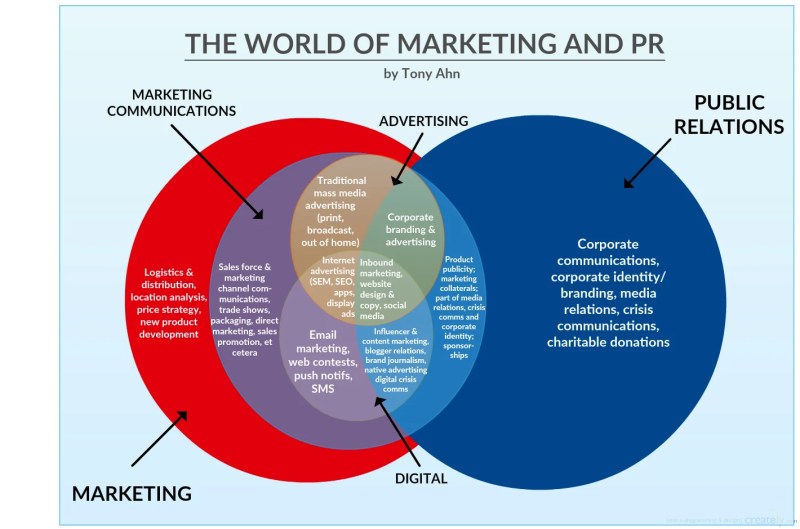
The Complete Overview of the Relationship Between PR and Marketing
The relationship between PR and marketing has evolved from a functional divide into a strategic powerhouse. At its core, PR builds trust and shapes perception through earned media, while marketing drives action through controlled channels. But the modern consumer doesn’t distinguish between these roles—they experience a brand’s message holistically. A viral PR stunt can become a marketing asset overnight, while a poorly executed ad campaign can undermine years of PR efforts. The synergy between the two isn’t just beneficial; it’s essential for brands navigating an information-saturated landscape where credibility is the ultimate differentiator.What separates high-performing brands from the rest is their ability to treat PR and marketing as two sides of the same coin. For example, a crisis managed through PR can be repurposed into a marketing narrative that reinforces resilience, while a marketing campaign’s success hinges on the media coverage it generates. The integration isn’t about one discipline dominating the other but about creating a feedback loop where insights from PR inform marketing tactics, and marketing’s data refines PR messaging. This duality ensures that every brand interaction—whether it’s a press release, a social media post, or a paid ad—reinforces the same core message.
Historical Background and Evolution
The origins of the relationship between PR and marketing trace back to the early 20th century, when Ivy Lee and Edward Bernays laid the foundations of modern PR by emphasizing transparency and public trust. Meanwhile, marketing emerged as a sales-driven discipline focused on persuasion and distribution. For decades, these fields operated independently, with PR handling reputation and marketing handling promotions. However, the digital revolution forced a reckoning: consumers now research brands online before making purchasing decisions, blurring the lines between earned and paid media.The shift became irreversible in the 2010s, as social media democratized storytelling and brands realized that authenticity—once the domain of PR—was now a marketing imperative. Companies like Apple and Nike proved that a single campaign could span both disciplines, using PR to build cultural relevance and marketing to convert that relevance into sales. Today, the relationship between PR and marketing is defined by real-time collaboration, where a brand’s crisis response (PR) can be instantly amplified through targeted ads (marketing), or a marketing campaign’s success is measured by its media pickup (PR). The evolution isn’t just about adaptation; it’s about redefining the very nature of brand communication.
Core Mechanisms: How It Works
The mechanics of the relationship between PR and marketing revolve around three pillars: alignment, amplification, and analytics. Alignment ensures that both teams share the same brand narrative, whether it’s through a unified messaging framework or a shared content calendar. Amplification leverages PR’s earned credibility to boost marketing’s reach—think of a product launch covered by TechCrunch driving traffic to a paid ad campaign. Analytics, meanwhile, bridges the gap by using marketing data to refine PR strategies (e.g., identifying which stories resonate most with audiences) and PR insights to optimize marketing spend (e.g., allocating budget to channels with the highest media pickup).The most effective integrations occur when PR and marketing operate as a closed loop. For instance, a brand might use PR to secure a feature in The New York Times, then use marketing to retarget readers with a tailored ad. Conversely, a marketing campaign’s underperformance might trigger a PR-driven rebranding effort to restore trust. The key is mutual respect for each discipline’s strengths: PR brings legitimacy, while marketing delivers precision. When executed correctly, this synergy doesn’t just enhance visibility—it creates a self-sustaining cycle of growth.
Key Benefits and Crucial Impact
The impact of a well-orchestrated relationship between PR and marketing extends beyond mere visibility—it reshapes a brand’s entire ecosystem. Companies that master this integration enjoy higher trust scores, stronger customer loyalty, and more efficient resource allocation. The data speaks for itself: brands with aligned PR and marketing strategies see a 30% increase in media coverage and a 20% boost in conversion rates, according to a 2023 Edelman study. The reason? Consumers are more likely to engage with brands that present a consistent, credible message across all channels.This isn’t just theoretical; it’s a competitive necessity. In an age where consumers distrust traditional advertising, the relationship between PR and marketing becomes the bedrock of brand authority. A single misstep—like a marketing campaign that contradicts a PR statement—can erode years of goodwill. Conversely, a harmonized approach ensures that every interaction, whether paid or earned, reinforces the brand’s value proposition.
"The most powerful brands don’t just sell products; they sell belief systems. PR and marketing must work in tandem to ensure that belief is consistently communicated, whether through a press release or a billboard." — Simon Mainwaring, Brand Futurist
Major Advantages
- Enhanced Credibility: Earned media from PR lends organic authority to marketing messages, making ads and promotions more trustworthy.
- Cost Efficiency: Integrated campaigns reduce redundancy—PR-generated content can be repurposed for marketing, cutting production costs.
- Crisis Resilience: A unified approach ensures that PR and marketing respond cohesively to negative events, minimizing reputational damage.
- Data-Driven Storytelling: Marketing analytics inform PR strategies, allowing brands to craft narratives that resonate with specific audience segments.
- Scalable Growth: Successful PR campaigns can be amplified through marketing channels, extending reach without proportional cost increases.
Comparative Analysis
| PR Focus | Marketing Focus |
|---|---|
| Earned media (press, influencer partnerships, thought leadership) | Paid media (ads, sponsorships, promotions) |
| Long-term reputation management | Short-to-medium-term sales and engagement |
| Controlled narrative (brand messaging, crisis communication) | Controlled execution (campaign creative, audience targeting) |
| Metrics: Media impressions, sentiment analysis, share of voice | Metrics: Conversion rates, ROI, CAC (Customer Acquisition Cost) |

Future Trends and Innovations
The future of the relationship between PR and marketing will be defined by three key shifts: hyper-personalization, AI-driven insights, and immersive storytelling. As consumers demand more tailored experiences, PR and marketing will collaborate to create dynamic narratives that adapt in real time. AI will play a pivotal role, using predictive analytics to identify trending topics for PR and optimize ad placements for marketing. Meanwhile, immersive technologies like VR and AR will blur the lines between media consumption and brand interaction, requiring PR and marketing to work together to craft experiences that feel authentic yet engaging.Another emerging trend is the rise of "purpose-driven" branding, where PR and marketing must align around a brand’s social or environmental mission. Consumers no longer separate a company’s ethics from its products—PR will need to amplify these values through earned media, while marketing will translate them into purchase incentives. The brands that succeed will be those that treat PR and marketing as a single, agile entity capable of adapting to cultural shifts before they become mainstream.
Conclusion
The relationship between PR and marketing is no longer a strategic advantage—it’s a survival tactic. Brands that treat these disciplines as siloed functions risk irrelevance in an era where consistency and authenticity are non-negotiable. The most resilient organizations recognize that PR and marketing are not separate tools but interconnected levers that amplify each other’s impact. Whether it’s through a crisis response that doubles as a marketing case study or a product launch fueled by both earned and paid media, the synergy between these fields is the difference between a brand that fades and one that endures.The path forward is clear: integrate, innovate, and iterate. The brands that master the relationship between PR and marketing won’t just lead their industries—they’ll redefine what it means to build a lasting connection with audiences.
Comprehensive FAQs
Q: How can small businesses integrate PR and marketing without a large budget?
A: Small businesses should focus on high-impact, low-cost strategies like influencer micro-collaborations (PR) paired with retargeting ads (marketing). Repurpose PR content—such as blog posts or press releases—into social media ads, and use free tools like Google Alerts to monitor media mentions for real-time marketing adjustments.
Q: What’s the biggest mistake brands make when merging PR and marketing?
A: The most common error is treating PR as a "bolt-on" to marketing rather than a core strategy. Brands often repurpose marketing content for PR without adapting it for earned media, or vice versa. The fix? Align on a unified messaging framework and ensure both teams have equal input in campaign development.
Q: Can PR and marketing work together in B2B industries?
A: Absolutely. In B2B, the relationship between PR and marketing is even more critical due to longer sales cycles. PR builds credibility through thought leadership (e.g., whitepapers, industry speaking engagements), while marketing nurtures leads with targeted content and account-based strategies. The key is to use PR to establish authority and marketing to convert that authority into pipeline.
Q: How does AI impact the collaboration between PR and marketing?
A: AI enhances collaboration by automating media monitoring (PR) and ad optimization (marketing). Tools like natural language processing can analyze press coverage for sentiment trends, while AI-driven ad platforms adjust bids in real time based on PR-generated buzz. The result? More precise storytelling and data-driven decision-making across both disciplines.
Q: What role does social media play in bridging PR and marketing?
A: Social media is the ultimate convergence point. A PR-driven campaign (e.g., a CEO interview) can be amplified through paid social ads, while organic engagement (likes, shares) provides marketing with social proof to retarget audiences. Platforms like LinkedIn and Twitter also allow brands to repurpose press releases as native content, ensuring consistency across earned and owned channels.
Leave a Comment
Comments are moderated before appearing. The data you submit is processed according to the Privacy Policy of versiliasolutions.oneagency.co.