The Art of Crafting a Polished Reply of Interview Invitation
Table of Contents
- The Complete Overview of Replying to Interview Invitations
- Historical Background and Evolution
- Core Mechanisms: How It Works
- Key Benefits and Crucial Impact
- Major Advantages
- Comparative Analysis
- Future Trends and Innovations
- Conclusion
- Comprehensive FAQs
- Q: How soon should I reply to an interview invitation?
- Q: What if I need to reschedule the interview?
- Q: Should I include my resume or portfolio in the reply?
- Q: What’s the best way to confirm a virtual interview?
- Q: Can I use a template for my reply?
- Q: What if I accidentally reply to the wrong contact?
- Q: Should I mention salary expectations in the reply?
- Q: How do I reply if I’m unsure about accepting?
- Q: Is it okay to reply via text or social media?
- Q: What if the interview is in a different time zone?
The first email arrives: "We’d love to invite you for an interview." A moment of validation—your skills have been recognized—but also a crossroads. How you reply sets the tone for your candidacy. A rushed, generic response risks undermining your professionalism; a meticulously crafted reply can elevate your standing before you even walk through the door. The reply of interview invitation is not merely a formality; it’s a strategic maneuver in the job-hunting game, where precision in tone, timing, and detail can distinguish you from the pack.
Yet, many candidates overlook its significance. They treat it as a checkbox, a perfunctory acknowledgment that fails to reflect their enthusiasm, preparedness, or cultural fit. The truth is, recruiters and hiring managers notice these details. A well-structured response to an interview invitation demonstrates organization, gratitude, and professionalism—qualities that align with the traits they seek in hires. It’s an opportunity to reinforce your brand, clarify logistics, and subtly reinforce why you’re the ideal candidate.
The stakes are higher than ever. With remote interviews, hybrid schedules, and global talent pools, the initial exchange must account for time zones, technical readiness, and cultural nuances. A poorly timed or poorly worded interview invitation reply can create friction before the conversation even begins. This guide dissects the anatomy of an effective response, from the nuances of tone to the logistics of confirmation, ensuring you navigate this critical step with confidence and finesse.

The Complete Overview of Replying to Interview Invitations
The reply of interview invitation is a pivotal exchange in the hiring process, often overlooked in favor of interview preparation. Yet, it serves as the bridge between your application and the actual assessment. A well-crafted response does more than confirm attendance; it signals your professionalism, attention to detail, and alignment with the company’s values. Recruiters report that candidates who take the time to reply thoughtfully are often perceived as more engaged and serious about the opportunity—qualities that can tip the scales in a competitive hiring landscape.At its core, the response to an interview invitation is a twofold communication: a confirmation of your availability and a reinforcement of your interest. It’s not just about saying "yes" or "no"—it’s about demonstrating that you’ve read the invitation carefully, understood the expectations, and are ready to engage meaningfully. Whether you’re responding via email, a scheduling platform, or a phone call, the principles remain the same: clarity, brevity, and professionalism. The goal is to leave the recruiter with a positive impression, one that carries through to the interview itself.
Historical Background and Evolution
The tradition of confirming interview attendance has evolved alongside the job market itself. In the pre-digital era, replies were often handled via telephone or handwritten letters, emphasizing formality and personal touch. The rise of email in the 1990s streamlined the process but also introduced new challenges—how to balance professionalism with efficiency in a medium that lacked the warmth of a voice or handshake. Today, with the proliferation of scheduling tools like Calendly and instant messaging platforms, the reply of interview invitation has become more dynamic, yet the underlying principles of respect and preparedness remain unchanged.What has shifted is the expectation of immediacy. In an age where recruiters may send invitations on short notice, the pressure to respond quickly has increased. However, rushing a reply can lead to errors—missed details, incorrect dates, or even automated responses that feel impersonal. The modern interview invitation response must strike a balance: prompt yet polished, concise yet thorough. It’s a reflection of how you’d handle the role itself—efficient without being dismissive, professional without being robotic.
Core Mechanisms: How It Works
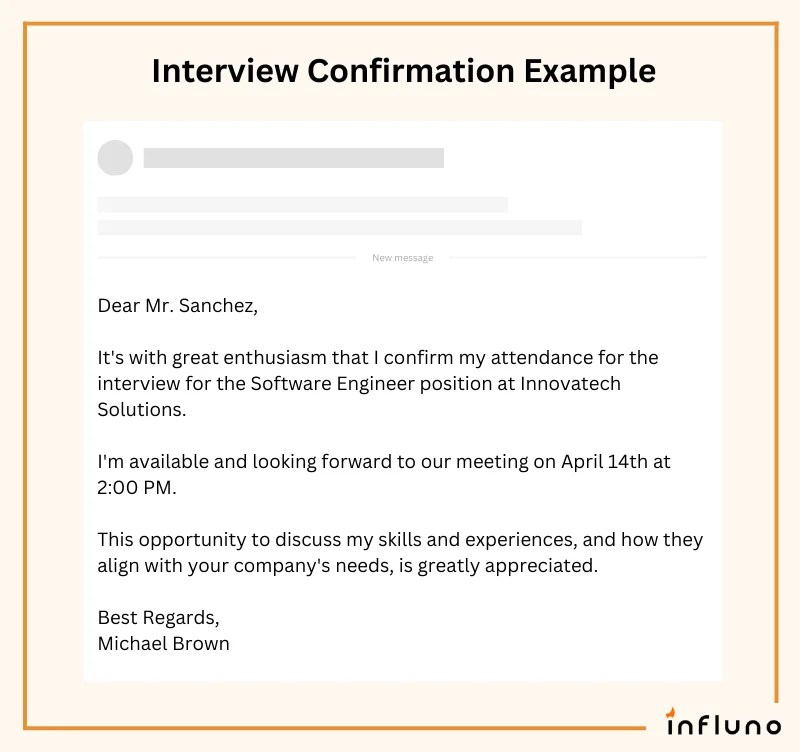
The mechanics of crafting a reply to an interview invitation hinge on three key elements: structure, tone, and logistics. Structurally, the response should include a clear subject line (e.g., "Confirmation: Interview for [Position] on [Date]"), a brief acknowledgment of the invitation, confirmation of your attendance (or a polite decline with an explanation), and any necessary follow-up questions or details. Tone-wise, the message should be warm yet professional, avoiding overly casual language while still conveying enthusiasm. Logistically, you must address practicalities—time zones, preferred meeting platforms, and any accommodations needed (e.g., accessibility requirements).The most effective responses to interview invitations also demonstrate foresight. For example, if the interview is virtual, you might proactively ask about the platform or testing requirements. If you’re traveling, you could mention your arrival time to show consideration for the interviewer’s schedule. These small gestures subtly communicate that you’re not just a candidate but a problem-solver—an attribute that hiring managers value highly.
Key Benefits and Crucial Impact
A well-executed reply of interview invitation serves as a silent ambassador for your candidacy. It’s the first impression you make after your application has been selected, and it can influence how seriously you’re taken. Studies show that candidates who respond thoughtfully are more likely to be perceived as organized, reliable, and invested in the role. Conversely, a delayed or poorly worded reply can raise red flags, making recruiters question your commitment or professionalism.Beyond perception, the response to an interview invitation is a practical tool for managing expectations. It allows you to clarify logistics, ask pertinent questions, and even subtly reinforce your qualifications. For instance, if the invitation mentions a specific project you’re excited about, referencing it in your reply can signal your alignment with the company’s goals. This level of engagement can set you apart in a sea of candidates who treat the reply as a mere formality.
"The way you respond to an interview invitation is a microcosm of how you’ll handle the role. It’s not just about showing up—it’s about showing up prepared, engaged, and ready to contribute." — Sarah Thompson, Senior Recruiter at TechCorp
Major Advantages
- First Impression Management: A polished reply of interview invitation ensures your candidacy starts on a positive note, reinforcing professionalism before the interview begins.
- Logistical Clarity: Proactively addressing scheduling conflicts, platform preferences, or travel arrangements demonstrates foresight and reduces back-and-forth communication.
- Enhanced Engagement: Referencing specific details from the invitation (e.g., company values, project focus) shows genuine interest and alignment with the role.
- Risk Mitigation: A timely and detailed response minimizes the chance of misunderstandings, such as missed interviews or technical issues on the day.
- Strategic Differentiation: In competitive hiring markets, a standout interview invitation reply can make you memorable to recruiters and hiring managers.
Comparative Analysis
| Aspect | Generic Reply | Strategic Reply |
|---|---|---|
| Tone | Formal but impersonal (e.g., "I accept.") | Warm yet professional (e.g., "I’m thrilled to accept and look forward to discussing [specific topic].") |
| Timeliness | Delayed or rushed, often automated | Prompt, ideally within 24 hours |
| Detail Orientation | Lacks specifics (e.g., no mention of platform or prep) | Includes logistics (e.g., "I’ll test my camera 30 minutes prior") and questions |
| Impact on Perception | Seen as disinterested or unprepared | Perceived as organized, engaged, and professional |
Future Trends and Innovations
As remote and hybrid work models become the norm, the reply of interview invitation is likely to incorporate more dynamic elements. AI-driven scheduling tools may soon suggest optimal response templates based on industry norms, while video confirmations could replace text replies entirely. Additionally, companies may prioritize candidates who demonstrate tech-savviness by responding via their preferred platform (e.g., Slack for startups, LinkedIn for corporate roles). The future of interview replies will also emphasize personalization—using data from your application to tailor responses that resonate with the hiring team’s priorities.Another emerging trend is the rise of "pre-interview" engagement, where candidates are encouraged to share a short video response or complete a pre-assessment before confirming their attendance. This shift reflects a broader move toward interactive, two-way communication in hiring processes. As these innovations unfold, the ability to craft a strategic interview invitation reply will remain a critical skill, blending technology with timeless professionalism.
Conclusion
The reply of interview invitation is far more than a courtesy—it’s a strategic opportunity to shape your candidacy from the outset. By investing time in crafting a thoughtful, detailed, and timely response, you signal to recruiters that you’re not just qualified but also professional, engaged, and ready to contribute. The small effort required to perfect this exchange can yield significant returns, from securing the interview to leaving a lasting impression during the assessment itself.As the job market continues to evolve, the ability to communicate effectively in this critical step will distinguish you in an increasingly competitive landscape. Whether you’re responding to a traditional email or a cutting-edge scheduling tool, the principles remain: be prompt, be professional, and be proactive. A well-executed interview invitation reply is the first step toward turning an opportunity into an offer.
Comprehensive FAQs
Q: How soon should I reply to an interview invitation?
A: Aim to respond within 24 hours to demonstrate promptness and respect for the recruiter’s time. If the invitation is time-sensitive (e.g., a same-day interview), reply immediately to avoid scheduling conflicts.
Q: What if I need to reschedule the interview?
A: Politely decline the original slot and propose alternative dates, referencing specific availability (e.g., "I’m available on [dates]—would [time] work?"). Avoid vague responses like "Let me check my calendar," which can delay the process.
Q: Should I include my resume or portfolio in the reply?
A: No. The reply should focus on confirming attendance and addressing logistics. Attachments can be shared separately if requested, but this step is unnecessary unless the interviewer explicitly asks for them.
Q: What’s the best way to confirm a virtual interview?
A: Specify the platform (e.g., Zoom, Microsoft Teams), your tech readiness (e.g., "I’ll test my setup beforehand"), and any accessibility needs. If unsure about the platform, ask: "Would you like me to join via [Option A] or [Option B]?"
Q: Can I use a template for my reply?
A: Yes, but personalize it. Generic templates risk sounding insincere. Tailor the tone to the company culture (e.g., formal for finance, conversational for creative roles) and reference specific details from the invitation.
Q: What if I accidentally reply to the wrong contact?
A: Apologize immediately, correct the mistake, and resend the reply to the right person. Example: "My apologies for the earlier email—I’ve sent the correct confirmation to [correct email]."
Q: Should I mention salary expectations in the reply?
A: Only if the invitation explicitly asks for this information. Otherwise, save it for the interview or a counteroffer stage. Prematurely discussing salary can undermine your negotiating leverage.
Q: How do I reply if I’m unsure about accepting?
A: Politely ask for more time: "I’m very interested in this opportunity and would love to learn more before confirming. Could we schedule a brief call to discuss?" This buys you time to weigh your options without burning bridges.
Q: Is it okay to reply via text or social media?
A: Only if the recruiter has explicitly requested it. For professional settings, email remains the safest and most appropriate channel unless otherwise specified.
Q: What if the interview is in a different time zone?
A: Confirm your local time and the meeting time in UTC or the interviewer’s time zone to avoid confusion. Example: "I’ll be available at 2 PM EST (6 PM UTC)—does that align with your schedule?"
Leave a Comment
Comments are moderated before appearing. The data you submit is processed according to the Privacy Policy of versiliasolutions.oneagency.co.