How Revenue Cycle Management Automation Transforms Healthcare Finances
Table of Contents
- The Complete Overview of Revenue Cycle Management Automation
- Historical Background and Evolution
- Core Mechanisms: How It Works
- Key Benefits and Crucial Impact
- Major Advantages
- Comparative Analysis
- Future Trends and Innovations
- Conclusion
- Comprehensive FAQs
- Q: How does revenue cycle management automation differ from traditional RCM software?
- Q: What are the biggest challenges in implementing RCMA?
- Q: Can small practices afford revenue cycle management automation?
- Q: How does RCMA handle patient privacy and HIPAA compliance?
- Q: What’s the ROI timeline for RCMA implementation?
- Q: How does RCMA adapt to changes in payer policies or coding updates?
Healthcare providers lose billions annually to administrative inefficiencies—denied claims, delayed payments, and manual data entry errors. These leaks aren’t just financial; they erode trust in patient care delivery. The solution? Revenue cycle management automation (RCMA), a technology-driven overhaul that replaces fragmented processes with intelligent, end-to-end workflows. Unlike traditional RCM systems that merely digitize paperwork, modern RCMA integrates AI, predictive analytics, and real-time connectivity to turn financial operations into a competitive advantage.
The shift toward automation isn’t optional—it’s survival. Hospitals using RCMA report a 30–50% reduction in claim denials and a 20–40% boost in collections speed. Yet adoption remains uneven, with many providers still relying on legacy systems or patchwork solutions. The gap between early adopters and laggards isn’t just in efficiency; it’s in patient satisfaction, operational resilience, and long-term sustainability.
What separates the two? Understanding how RCMA reshapes every stage—from patient intake to final reconciliation—without sacrificing compliance or human oversight. The technology doesn’t eliminate roles; it redefines them, freeing staff from repetitive tasks to focus on high-value interactions. The question isn’t whether automation will dominate healthcare finance, but how quickly providers can adapt to avoid obsolescence.
The Complete Overview of Revenue Cycle Management Automation
Revenue cycle management automation (RCMA) is the application of intelligent software to automate, optimize, and monitor the entire revenue cycle—from appointment scheduling to patient billing and beyond. Unlike standalone billing tools or basic electronic health record (EHR) integrations, RCMA platforms consolidate disparate functions into a unified system that learns, adapts, and predicts financial outcomes. Key components include AI-driven claim scrubbing, automated denial management, dynamic pricing engines, and real-time analytics dashboards that flag anomalies before they become losses.
The core premise is simple: eliminate manual intervention in predictable, rule-based tasks while preserving human judgment for exceptions. For example, an automated RCMA system might auto-post payments, match them to patient accounts, and trigger follow-ups for discrepancies—all within seconds. The result? Fewer errors, faster reimbursements, and a revenue cycle that operates like a well-oiled machine. But the real transformation lies in data: RCMA platforms turn raw transactional data into actionable insights, revealing patterns in denials, payer behavior, and even patient payment preferences.
Historical Background and Evolution
The revenue cycle has always been a bottleneck. Before the 2000s, hospitals relied on paper-based systems, manual coding, and slow interoffice mail for claim submissions. The HIPAA regulations of 1996 forced a digital pivot, but early EHR implementations often treated billing as an afterthought—bolt-on modules that duplicated data and created silos. By the mid-2010s, cloud computing and API integrations began connecting EHRs with specialized RCM software, but these systems still required heavy manual oversight.
The turning point came with the rise of machine learning and natural language processing (NLP). Modern RCMA platforms now use NLP to parse unstructured data in physician notes, flagging potential billing errors before claims are submitted. Predictive analytics models, trained on historical denial data, can estimate the likelihood of a claim being rejected—and suggest corrective actions in real time. Even regulatory changes, like the shift to value-based care, have accelerated adoption: providers need RCMA to track quality metrics alongside financial ones, ensuring compliance while optimizing revenue.
Core Mechanisms: How It Works
RCMA operates through a layered architecture that integrates with existing systems (EHRs, practice management software, clearinghouses) while adding automation at each touchpoint. The process begins with pre-service automation, where AI-driven tools verify insurance eligibility, estimate patient responsibility, and even pre-populate financial counseling messages. During the service phase, charge capture automation ensures every billable service is recorded accurately, with AI cross-referencing against payer contracts to avoid undercoding.
The post-service stage is where RCMA shines: automated claim submission routes transactions through the fastest available pathway (electronic, direct, or fax fallback), while AI monitors for denials in real time. Denied claims are auto-remediated—whether by resubmitting with corrected data or triggering a payer appeal—with human reviewers only intervening for complex cases. Finally, patient collections are optimized via dynamic payment plans, automated reminders, and even AI-driven negotiation of self-pay discounts. The entire cycle is tracked via dashboards that highlight bottlenecks, such as a spike in payer-specific denials or delays in provider follow-ups.
Key Benefits and Crucial Impact
Providers implementing RCMA don’t just cut costs—they redefine their financial health. The impact is measurable: a 2023 study by the American Hospital Association found that hospitals using advanced RCMA reduced claim denials by 40% and improved cash flow by 15–25%. Beyond the balance sheet, the technology enhances patient experiences by reducing billing disputes and offering transparent, personalized payment options. For smaller practices, RCMA levels the playing field against larger systems by automating tasks that once required expensive administrative staff.
The long-term strategic advantage lies in data-driven decision-making. RCMA platforms generate predictive models that forecast revenue trends, identify high-risk payers, and even simulate the financial impact of expanding into new service lines. This isn’t just about collecting payments faster; it’s about turning financial operations into a strategic asset. The question for providers isn’t whether to adopt RCMA, but how to integrate it without disrupting existing workflows or violating compliance standards.
"Revenue cycle automation isn’t about replacing people—it’s about giving them the tools to focus on what matters: patient care and strategic growth."
—Dr. Emily Chen, Chief Financial Officer, Mercy Health System
Major Advantages
- Error Reduction: AI-powered claim scrubbing catches coding errors, missing documentation, or payer-specific requirements before submission, slashing denial rates by up to 50%. For example, an RCMA system might flag a missing modifier in a procedure code and auto-correct it.
- Faster Reimbursements: Automated claim routing and real-time payer communication reduce the average claim processing time from 30+ days to under 7 days. Some systems use predictive algorithms to prioritize high-value claims for expedited review.
- Cost Savings: Labor costs for billing and collections drop by 30–40% as automation handles repetitive tasks. For a 200-bed hospital, this can translate to $500K–$1M annually in savings.
- Patient Experience: Automated financial counseling and flexible payment plans (e.g., interest-free installments) reduce billing disputes and improve satisfaction scores. Some RCMA platforms even integrate with patient portals to send personalized payment links.
- Regulatory Compliance: Built-in audit trails and automated compliance checks ensure adherence to HIPAA, CMS guidelines, and state-specific billing laws. AI can also monitor for fraud patterns, such as duplicate billing or upcoding.
Comparative Analysis
| Traditional RCM Systems | Revenue Cycle Management Automation (RCMA) |
|---|---|
| Manual data entry, paper-based or basic EHR integrations. | Fully automated workflows with AI, NLP, and predictive analytics. |
| Denial rates: 10–20% (with high manual review overhead). | Denial rates: 2–10% (with auto-remediation and predictive prevention). |
| Revenue cycle time: 30–60 days. | Revenue cycle time: 7–14 days (with real-time claim tracking). |
| Limited insights; reports are retrospective. | Proactive analytics with predictive modeling and scenario planning. |
Future Trends and Innovations
The next frontier for RCMA lies in hyper-personalization and predictive finance. Emerging technologies like generative AI will enable systems to draft patient payment plans based on behavioral data (e.g., past payment history) and even negotiate discounts with payers using automated contract analysis. Blockchain may secure claim transactions, reducing fraud, while edge computing will bring real-time analytics to the point of care—allowing clinicians to see financial implications of treatment decisions instantly.
Regulatory shifts will also drive innovation. As value-based care models expand, RCMA platforms will need to integrate quality metrics (e.g., readmission rates) with financial data to justify reimbursements. Meanwhile, global providers will demand multi-currency and cross-border compliance features. The ultimate goal? A revenue cycle that’s not just automated, but self-optimizing, continuously learning from every transaction to maximize revenue while minimizing administrative burden.
Conclusion
Revenue cycle management automation is more than a tool—it’s a paradigm shift. Providers that embrace RCMA today will operate with greater efficiency, resilience, and financial clarity tomorrow. The technology doesn’t replace the human element; it elevates it, allowing staff to focus on strategic initiatives rather than fire drills. For those still hesitant, the data is clear: the gap between automated and manual processes is widening, and the cost of inaction is measurable in lost revenue and missed opportunities.
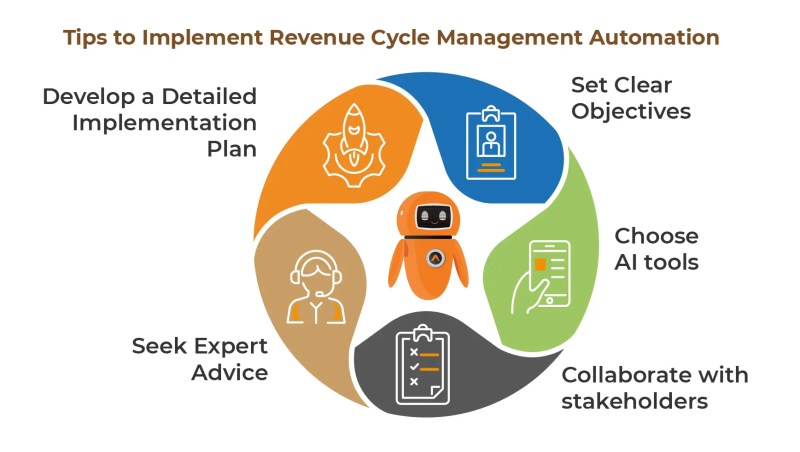
The path forward is clear. Start with a pilot program in high-denial areas, select a vendor with strong AI capabilities, and prioritize integration with existing EHRs. The providers leading the charge aren’t just saving money—they’re redefining what’s possible in healthcare finance. The question is no longer whether to automate, but how quickly to scale.
Comprehensive FAQs
Q: How does revenue cycle management automation differ from traditional RCM software?
A: Traditional RCM software digitizes paperwork and automates basic tasks like claim submission, but it still requires heavy manual oversight for corrections and denials. Revenue cycle management automation (RCMA) uses AI, predictive analytics, and real-time connectivity to proactively prevent errors, auto-remediate denials, and optimize workflows without human intervention for routine tasks.
Q: What are the biggest challenges in implementing RCMA?
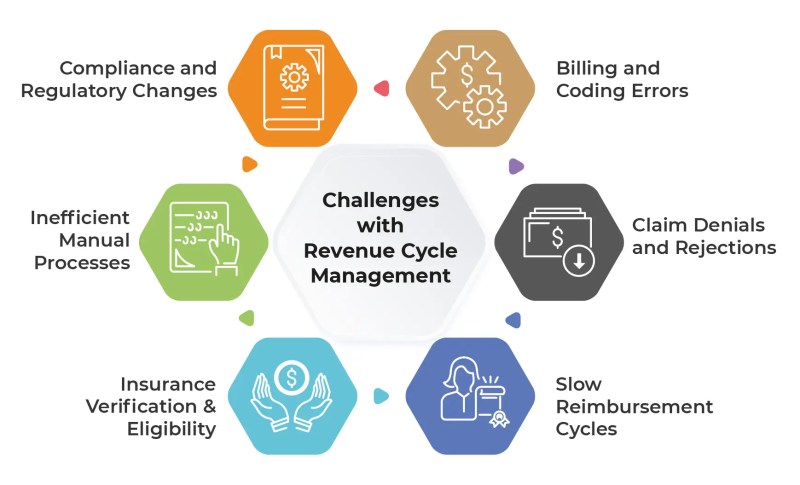
A: The primary challenges include data integration (ensuring seamless EHR and payer connectivity), staff resistance (training teams to trust automated decisions), and compliance risks (ensuring AI-driven actions align with billing laws). Vendor selection is critical—providers must choose platforms with robust audit trails and regulatory expertise.
Q: Can small practices afford revenue cycle management automation?
A: Yes, but the approach differs. Large hospitals may invest in enterprise-wide RCMA suites, while smaller practices can start with modular solutions (e.g., AI-driven claim scrubbing or automated patient statements). Cloud-based RCMA-as-a-service models also offer scalable pricing, with costs often offset by immediate savings in denial rates and labor.
Q: How does RCMA handle patient privacy and HIPAA compliance?
A: Leading RCMA platforms are built with end-to-end encryption, role-based access controls, and automated compliance checks. AI models are trained on anonymized data, and all patient interactions (e.g., payment reminders) comply with HIPAA’s minimum necessary standard. Vendors typically provide SOC 2 certifications and regular audit logs to demonstrate security.
Q: What’s the ROI timeline for RCMA implementation?
A: The ROI varies by complexity, but most providers see tangible improvements within 6–12 months. Early wins include reduced denial rates (visible in 3–6 months) and faster collections (4–8 weeks post-go-live). Long-term savings (2–3 years) come from reduced labor costs and data-driven revenue optimization. A well-implemented RCMA system typically pays for itself within 12–18 months.
Q: How does RCMA adapt to changes in payer policies or coding updates?
A: Modern RCMA platforms use continuous learning algorithms to update coding rules, payer contracts, and reimbursement schedules in real time. Vendors often provide automated alerts for policy changes, and some systems integrate with CMS and state Medicaid feeds to pull updates dynamically. Manual overrides are always available for exceptions.
Leave a Comment
Comments are moderated before appearing. The data you submit is processed according to the Privacy Policy of versiliasolutions.oneagency.co.