How a Roth IRA Calculator Reveals Compound Interest Magic
Table of Contents
- The Complete Overview of Roth IRA Calculator Compound Interest
- Historical Background and Evolution
- Core Mechanisms: How It Works
- Key Benefits and Crucial Impact
- Major Advantages
- Comparative Analysis
- Future Trends and Innovations
- Conclusion
- Comprehensive FAQs
- Q: How accurate are Roth IRA calculator compound interest projections?
- Q: Can I use a Roth IRA calculator if I’ve already maxed out my contributions?
- Q: Does the calculator account for inflation?
- Q: What’s the difference between a Roth IRA calculator and a 401(k) calculator?
- Q: How do early withdrawals affect compound interest in a Roth IRA?
- Q: Can I use a Roth IRA calculator to plan for early retirement?
The numbers don’t lie: a Roth IRA calculator isn’t just a tool—it’s a time machine. Plug in $6,000 annually for 30 years at a modest 7% return, and the result isn’t $180,000. It’s $470,000. That’s the silent force of Roth IRA calculator compound interest at work, where each dollar you contribute today earns not just interest, but interest on that interest, year after year. The math is relentless, favoring those who start early and stay disciplined. Yet most investors underestimate how aggressively this growth accelerates in the later decades—a phenomenon financial planners call the "compound interest snowball."
What makes this calculator so powerful isn’t the upfront contribution, but the tax-free growth. Unlike traditional IRAs, where withdrawals in retirement trigger tax bills, a Roth IRA lets your investments compound without Uncle Sam taking a cut. That’s why a $5,000 annual contribution at age 25 could balloon to over $1 million by 65—assuming consistent returns. The Roth IRA calculator compound interest effect turns modest savings into a wealth-building engine, but only if you understand the rules. Miss the contribution deadlines, exceed income limits, or withdraw early, and the magic evaporates.
The problem? Most people treat retirement planning like a static spreadsheet. They input numbers, see a projection, and assume it’s set. But compound interest thrives on behavior—consistent contributions, smart asset allocation, and patience. A Roth IRA calculator forces you to confront a harsh truth: time is your most valuable asset. The earlier you start, the less you need to contribute each year to reach the same goal. That’s why financial advisors often say, "Don’t wait for the perfect market—start now." The calculator doesn’t just show you numbers; it reveals the cost of delay.
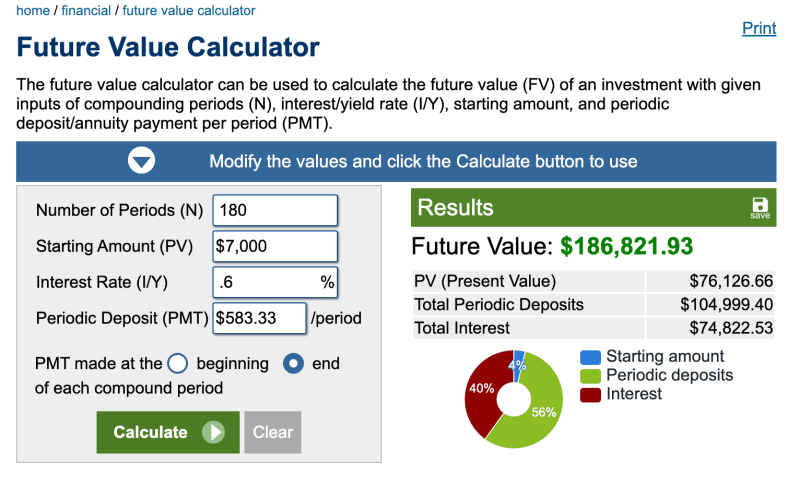
The Complete Overview of Roth IRA Calculator Compound Interest
At its core, a Roth IRA calculator compound interest tool is designed to simulate the exponential growth of tax-free investments over time. Unlike traditional retirement calculators that focus solely on contributions and returns, this variant emphasizes the tax-advantaged nature of Roth IRAs—a feature that dramatically alters the trajectory of wealth accumulation. The calculator typically requires three key inputs: annual contribution amount, expected annual return rate, and the number of years until retirement. What it outputs isn’t just a balance; it’s a visualization of how compounding works in a tax-free environment, where every dollar you contribute today earns additional dollars from both capital appreciation and dividends, all without erosion from taxes.The beauty of this system lies in its simplicity: no complex formulas or financial jargon. Yet beneath the surface, it’s built on decades of actuarial science and tax law. The Roth IRA, established in 1997 as part of the Taxpayer Relief Act, was created to incentivize long-term savings by offering backdoor tax benefits. Unlike traditional IRAs, where contributions may be tax-deductible but withdrawals are taxed, Roth IRAs allow after-tax contributions to grow completely tax-free. This means the compound interest generated within the account is never touched by capital gains or dividend taxes—a critical advantage for investors in high-tax brackets. The calculator doesn’t just project numbers; it quantifies the real value of tax-free growth, which can be the difference between a comfortable retirement and one fraught with financial stress.
Historical Background and Evolution
The concept of compound interest dates back to ancient civilizations, but its application to retirement planning became prominent in the 20th century. Albert Einstein allegedly called it the "eighth wonder of the world," though historians debate whether he actually said it. What’s undeniable is that compounding became the cornerstone of modern investing, particularly with the rise of tax-advantaged accounts like IRAs in the 1970s. The Roth IRA, however, represented a paradigm shift. Introduced to address the needs of middle-class Americans who faced high marginal tax rates, it offered a way to "pay taxes now" in exchange for tax-free withdrawals in retirement—a deal that becomes increasingly valuable as tax rates rise.The evolution of Roth IRA calculator compound interest tools mirrors the growth of personal finance technology. Early versions were clunky, requiring manual calculations or reliance on financial advisors. Today, algorithms powered by machine learning can adjust for inflation, market volatility, and even early withdrawal penalties in real time. The shift from static projections to dynamic modeling reflects a broader trend: investors no longer just want to know what they’ll have in retirement; they want to understand how to optimize it. Calculators now incorporate features like Roth conversion strategies, mega backdoor Roth contributions, and even Roth laddering—techniques that maximize the compounding effect by strategically managing taxable and tax-free assets.
Core Mechanisms: How It Works
The mechanics of a Roth IRA calculator compound interest tool are rooted in exponential growth mathematics. The formula at its heart is simple: future value = principal × (1 + rate)^time. But the real magic happens when you layer on tax-free contributions. Here’s how it breaks down: each dollar you contribute is invested in assets (stocks, bonds, ETFs) that appreciate over time. Unlike a taxable brokerage account, where capital gains and dividends are taxed annually, a Roth IRA lets those gains compound without deduction. Over 30 years, even small differences in tax treatment can lead to hundreds of thousands of dollars in additional growth.The calculator also accounts for the "time value of money," a principle that underscores why starting early is non-negotiable. For example, contributing $500 monthly from age 25 to 35 (10 years) at a 7% return yields roughly $100,000 by retirement. But if you wait until age 35, you’d need to contribute $1,000 monthly for the same 30-year period to reach the same balance. The calculator doesn’t just show you the end result; it highlights the opportunity cost of delay—a concept that’s often lost in generic retirement planning advice. Additionally, modern tools integrate Monte Carlo simulations to account for market fluctuations, providing a range of possible outcomes rather than a single projection.
Key Benefits and Crucial Impact
The primary appeal of leveraging a Roth IRA calculator compound interest tool lies in its ability to turn abstract financial concepts into tangible outcomes. For young professionals, it’s a wake-up call: the power of compounding is greatest when time is on your side. For near-retirees, it’s a stress test—revealing whether current savings will sustain their lifestyle in 20 years. The calculator forces a confrontation with reality: most people underestimate how much they’ll need, overestimate their ability to save, and ignore the role taxes play in eroding returns. By inputting conservative assumptions, users often discover that traditional retirement goals (like replacing 70% of pre-retirement income) are within reach—but only if they act now.Beyond the numbers, the psychological impact is profound. Studies show that visualizing future financial security reduces stress and increases motivation to save. A Roth IRA calculator doesn’t just crunch numbers; it creates a mental anchor for long-term discipline. When users see how an extra $200 monthly contribution could add $100,000 to their nest egg, they’re more likely to adjust their budgets. The tool also demystifies complex tax strategies, such as Roth conversions during low-income years or backdoor Roth contributions for high earners. By making these options visible, it empowers investors to make informed decisions rather than relying on generic advice.
"Compound interest is the most powerful force in the universe—except for leverage. And the Roth IRA is one of the few places where you can harness both legally and efficiently." — David Bach, The Automatic Millionaire
Major Advantages
- Tax-Free Growth: All investment earnings—dividends, capital gains, and interest—are never taxed, allowing compound interest to work uninterrupted.
- Flexible Withdrawals: Contributions (not earnings) can be withdrawn at any time without penalty, making it a liquidity buffer for emergencies.
- No Required Minimum Distributions (RMDs): Unlike traditional IRAs, Roth IRAs don’t force withdrawals in retirement, letting money grow indefinitely.
- Estate Planning Benefits: Assets pass tax-free to heirs, who can inherit and continue tax-free growth for decades.
- Psychological Clarity: The calculator’s projections make abstract goals (e.g., "financial independence") feel achievable, boosting savings consistency.
Comparative Analysis
| Roth IRA | Traditional IRA |
|---|---|
|
|
| Best for: Young earners, high-income taxpayers, those expecting higher taxes in retirement. | Best for: Low-to-middle-income earners, those who want upfront tax deductions. |
| Compound Interest Impact: Higher due to tax-free growth (e.g., $500k vs. $400k over 30 years at 7%). | Compound Interest Impact: Reduced by annual taxes on gains. |

Future Trends and Innovations
The next generation of Roth IRA calculator compound interest tools will likely integrate artificial intelligence to personalize projections based on behavioral data. For example, algorithms could adjust for lifestyle inflation, career shifts, or unexpected expenses—factors that derail even the best-laid plans. We’re also seeing a rise in "dynamic Roth" calculators that simulate strategies like Roth conversions during market downturns or backdoor Roth contributions for high-net-worth individuals. As tax laws evolve (e.g., potential changes to RMD rules or contribution limits), these tools will need to adapt in real time, offering users scenario planning rather than static forecasts.Another trend is the fusion of Roth IRA calculators with broader financial wellness platforms. Imagine a tool that doesn’t just project retirement balances but also syncs with your 401(k), HSA, and taxable accounts to show how all assets compound together. Blockchain technology could further enhance transparency, allowing users to track the tax efficiency of every contribution. The future of these calculators won’t be about crunching numbers—it’ll be about strategic engagement, helping users optimize their entire financial ecosystem for maximum compounding potential.
Conclusion
The most powerful lesson from any Roth IRA calculator compound interest** tool isn’t the final balance—it’s the realization that small, consistent actions today can yield outsized results tomorrow. The numbers don’t lie: starting early, maximizing contributions, and leveraging tax-free growth are the trifecta of wealth building. Yet the calculator also reveals a harsh truth: procrastination isn’t just a time waster—it’s a wealth destroyer. Every year you delay, you’re not just losing contributions; you’re forfeiting the compounding effect of those contributions, which grows exponentially over time.For those who use the tool wisely, the Roth IRA becomes more than an account—it’s a system. By combining disciplined saving with smart tax strategies, investors can turn modest savings into a legacy. The key is to treat the calculator as a mirror: it doesn’t just show you where you’re going; it reflects the choices you’re making today. And in the world of compound interest, those choices matter more than anything else.
Comprehensive FAQs
Q: How accurate are Roth IRA calculator compound interest projections?
A: Calculators provide estimates based on inputs like contribution amounts and expected returns. They don’t account for unforeseen events (e.g., market crashes, tax law changes). For precision, use tools with Monte Carlo simulations or consult a financial advisor. The accuracy hinges on realistic assumptions—overestimating returns or underestimating fees can skew results.
Q: Can I use a Roth IRA calculator if I’ve already maxed out my contributions?
A: Yes. The calculator can still model scenarios like:
- Roth conversions (moving funds from a traditional IRA to Roth).
- Backdoor Roth contributions (for high earners).
- Withdrawal strategies to optimize tax-free growth.
Q: Does the calculator account for inflation?
A: Most advanced calculators include an inflation adjustment slider (typically 2–3%). This ensures projections reflect the real purchasing power of your savings. Ignoring inflation can lead to overestimating future wealth—e.g., $1M in nominal terms may only buy $500k worth of goods in 30 years.
Q: What’s the difference between a Roth IRA calculator and a 401(k) calculator?
A: Both project compound growth, but key differences include:
- Tax Treatment: Roth IRAs offer tax-free withdrawals; 401(k)s provide upfront tax deductions but taxable withdrawals.
- Contribution Limits: 401(k)s allow higher limits ($23,000 in 2024 vs. $7,000 for Roth IRAs).
- Employer Matching: 401(k)s often include free money; Roth IRAs don’t.
Q: How do early withdrawals affect compound interest in a Roth IRA?
A: Withdrawals of contributions (not earnings) are penalty-free at any age. Withdrawing earnings before age 59½ triggers a 10% penalty (unless an exception applies, like first-time homebuyer rules). The impact on compound interest? Early withdrawals reduce the principal available to grow. For example, withdrawing $10,000 at age 40 cuts future growth by ~$50,000+ over 20 years at 7%—the penalty is steeper than the tax hit.
Q: Can I use a Roth IRA calculator to plan for early retirement?
A: Absolutely. Enter your target retirement age (e.g., 45) and adjust the withdrawal rate slider (e.g., 4% rule). The calculator will show if your savings can sustain withdrawals. For early retirees, Roth IRAs are ideal because:
- No RMDs force selling investments in a down market.
- Tax-free withdrawals simplify cash flow planning.
- Flexible contribution rules allow catch-up contributions if needed.
Leave a Comment
Comments are moderated before appearing. The data you submit is processed according to the Privacy Policy of versiliasolutions.oneagency.co.