How Scalable Virtual Hardware Systems Are Redefining Tech Infrastructure
Table of Contents
- The Complete Overview of Scalable Virtual Hardware Systems
- Historical Background and Evolution
- Core Mechanisms: How It Works
- Key Benefits and Crucial Impact
- Major Advantages
- Comparative Analysis
- Future Trends and Innovations
- Conclusion
- Comprehensive FAQs
- Q: How do scalable virtual hardware systems differ from traditional virtualization (e.g., VMware ESXi)?
- Q: Are there security risks associated with virtualized hardware?
- Q: Can scalable virtual hardware systems replace physical servers entirely?
- Q: What skills are needed to manage these systems?
- Q: How do these systems handle hardware failures?
- Q: What industries benefit most from scalable virtual hardware?
The demand for real-time data processing, global low-latency applications, and seamless cloud-native deployments has exposed a critical flaw in traditional hardware architectures: rigidity. Physical servers, while robust, cannot adapt to fluctuating workloads without costly over-provisioning or underutilization. Enter scalable virtual hardware systems—a paradigm shift where hardware resources are abstracted, pooled, and dynamically allocated as software-defined entities. This isn’t just virtualization 2.0; it’s a fundamental reimagining of how compute, storage, and networking are delivered, where elasticity meets performance without sacrificing reliability.
What makes these systems revolutionary isn’t their ability to mimic physical hardware but their capacity to transcend it. By decoupling hardware from firmware and leveraging containerization, FPGA acceleration, and AI-driven resource orchestration, organizations can scale compute capacity in milliseconds—not days. Financial institutions use them to handle sudden transaction spikes; gaming platforms deploy them for instant server provisioning during peak events; and research labs repurpose them for high-performance computing (HPC) clusters without capital expenditures. The result? A hardware ecosystem that behaves more like a utility than a fixed asset.
The transition from static to dynamic hardware isn’t just technical—it’s economic. Companies that once faced a choice between paying for idle capacity or risking downtime now access scalable virtual hardware systems on-demand, slashing operational costs by up to 70% while improving uptime. Yet beneath the surface, the technology raises critical questions: How do these systems maintain security in a shared environment? What happens when virtualized hardware encounters hardware-specific bottlenecks? And where does this innovation lead next? The answers lie in understanding the architecture, trade-offs, and untapped potential of a hardware layer that’s finally catching up to the software-defined world.
The Complete Overview of Scalable Virtual Hardware Systems
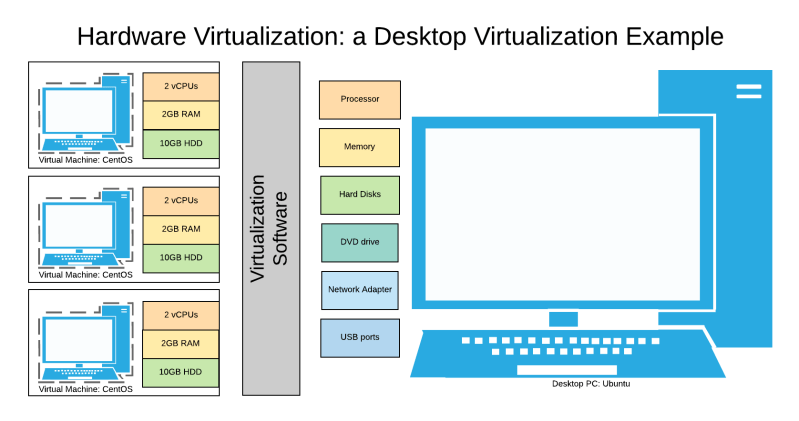
Scalable virtual hardware systems represent the convergence of virtualization, hardware abstraction, and real-time resource management. At their core, they eliminate the dependency on monolithic physical machines by partitioning hardware into isolated, software-controlled units—what industry analysts call "bare-metal virtualization" or "hardware-as-a-service" (HaaS). Unlike traditional virtual machines (VMs), which rely on hypervisors to share a single host’s resources, these systems distribute workloads across a pool of disaggregated components: CPUs, GPUs, FPGAs, and even specialized accelerators like TPUs. This disaggregation allows organizations to scale individual components independently, such as adding 100 GPUs to a rendering cluster without overhauling the entire infrastructure.
The technology’s power lies in its ability to orchestrate hardware dynamically. Tools like Kubernetes, combined with custom firmware solutions (e.g., OpenBMC or Redfish), enable automated provisioning, load balancing, and failover. For example, a machine learning model requiring 8 NVIDIA A100 GPUs can be deployed instantly, with the system automatically reclaiming resources once the job completes. This level of granularity was impossible with physical servers, where scaling meant purchasing entire racks. The shift also introduces new challenges: ensuring low-latency communication between virtualized hardware components, managing thermal throttling in dense configurations, and mitigating single points of failure in a distributed setup.
Historical Background and Evolution
The roots of scalable virtual hardware systems trace back to the 1960s with IBM’s mainframe virtualization, but the modern iteration emerged from three key technological waves. First, the rise of x86 server virtualization in the 2000s (VMware, Xen) demonstrated that software could abstract hardware—but only at the OS level. Second, the proliferation of GPUs and FPGAs in the 2010s forced developers to seek ways to virtualize accelerators without performance penalties. Finally, the cloud revolution exposed the inefficiency of static hardware, pushing vendors to explore disaggregated architectures. Today’s systems build on these layers, integrating hardware pass-through (PCIe SR-IOV), containerization (Kata Containers), and even virtualized firmware (vBMC) to create a truly elastic infrastructure.
Breakthroughs in 2018–2020 solidified the concept: NVIDIA’s vGPU technology allowed multiple VMs to share a single GPU, while startups like Rackspace and Scaleway launched bare-metal cloud services where users could deploy virtualized hardware with the performance of dedicated machines. Meanwhile, research projects like Facebook’s "Big Sur" and Google’s "Kubernetes Engine" showcased how disaggregated storage and compute could reduce data center costs by 30%. The COVID-19 pandemic accelerated adoption, as companies scrambled to scale virtual desktops and remote workstations without physical expansions. Now, the technology is maturing into a mainstream solution, with enterprises adopting it not just for cost savings but for agility in hybrid and multi-cloud environments.
Core Mechanisms: How It Works
The magic of scalable virtual hardware systems hinges on two interconnected layers: hardware abstraction and dynamic orchestration. At the abstraction layer, physical components are exposed as software-defined resources. For instance, a GPU’s memory and compute cores are partitioned into virtual GPUs (vGPUs) using technologies like NVIDIA GRID or AMD MxGPU. Similarly, storage arrays are sliced into virtual block devices via tools like Ceph or OpenEBS. This abstraction is enabled by firmware modifications—such as Intel’s VT-d or AMD’s IOMMU—that allow the hypervisor to directly assign hardware devices to VMs or containers without OS interference.
Orchestration, the second layer, ensures these resources are allocated efficiently. Modern systems use a combination of container schedulers (Kubernetes), custom middleware (e.g., OpenStack’s Placement service), and AI-driven predictors to match workloads with available hardware. For example, a deep learning workload might trigger the system to allocate 4 GPUs, 128GB of RAM, and a high-speed NVMe SSD—all from a shared pool—while a traditional web server might use a single vCPU and 2GB of memory. The system also handles failover: if a physical GPU fails, the orchestration layer reroutes the vGPU to another node transparently. This level of automation was previously reserved for software stacks; extending it to hardware marks a seismic shift in IT operations.
Key Benefits and Crucial Impact
The adoption of scalable virtual hardware systems isn’t merely an optimization—it’s a strategic pivot toward infrastructure that adapts to business needs rather than the other way around. For startups, it eliminates the need for upfront hardware investments, replacing CapEx with OpEx. For enterprises, it future-proofs data centers against unpredictable demand, such as seasonal traffic spikes or sudden growth. Even governments and research institutions benefit, as these systems enable secure, isolated environments for sensitive workloads without physical segmentation. The impact extends beyond IT: industries like healthcare (virtualizing medical imaging servers) and finance (scaling fraud detection clusters) are reaping operational efficiencies that were unimaginable a decade ago.
Yet the most profound change may be cultural. Teams no longer think in terms of "servers" but "resource pools." DevOps engineers deploy infrastructure as code, specifying hardware profiles alongside software dependencies. Security teams enforce policies at the hardware level, ensuring compliance without sacrificing performance. And executives measure success in terms of utilization efficiency rather than hardware refresh cycles. The result is a feedback loop where technology and business strategy evolve in lockstep.
"Virtualizing hardware isn’t just about efficiency—it’s about redefining what infrastructure can do. When you can spin up a GPU cluster in seconds, you’re not just running applications; you’re reimagining entire business models."
— James Hamilton, Former VP & Distinguished Engineer, Amazon Web Services
Major Advantages
- Elastic Scaling: Resources scale in real-time, matching demand without over-provisioning. For example, a gaming company can handle 10x peak traffic during a new game launch by dynamically allocating additional vCPUs and vGPUs, then releasing them afterward.
- Cost Efficiency: Organizations pay only for the hardware they use, reducing CapEx by up to 60% compared to traditional data centers. Disaggregated systems also minimize waste, as unused components (e.g., idle GPUs) are automatically repurposed.
- Hardware Diversity: Workloads can access the optimal hardware for their needs—e.g., FPGAs for real-time signal processing, TPUs for AI inference, or high-core-count CPUs for batch jobs—without siloed infrastructure.
- Disaster Recovery: Virtualized hardware can be mirrored across geographic locations, ensuring continuity even if a data center fails. Snapshots of entire hardware configurations enable instant failover.
- Security Isolation: Unlike shared physical servers, virtualized hardware allows workloads to run in air-gapped environments. For instance, a healthcare provider can isolate a HIPAA-compliant database on dedicated vGPUs without exposing it to other tenants.
Comparative Analysis
While scalable virtual hardware systems offer compelling advantages, they aren’t a one-size-fits-all solution. Understanding their trade-offs against traditional and emerging alternatives is critical for decision-makers.
| Feature | Scalable Virtual Hardware Systems vs. Traditional Physical Servers vs. Public Cloud VMs |
|---|---|
| Scalability |
|
| Cost Structure |
|
| Performance |
|
| Use Cases |
|

Future Trends and Innovations
The next frontier for scalable virtual hardware systems lies in three intersecting domains: hardware specialization, autonomous management, and edge integration. As AI and quantum computing demand increasingly niche hardware (e.g., photonic processors, neuromorphic chips), virtualization will need to support heterogeneous hardware pools where workloads dynamically select the best accelerator. Projects like RISC-V’s open-source architecture and Intel’s Flex Rattle are paving the way for software-defined silicon, where hardware can be reconfigured on-the-fly. Meanwhile, AI-driven orchestration—already in use by companies like Google (with its "Borg" scheduler)—will evolve to predict workload patterns with sub-millisecond accuracy, eliminating human intervention entirely.
Edge computing will further blur the lines between virtual and physical hardware. Today, edge nodes rely on fixed-purpose devices (e.g., NVIDIA Jetson for IoT). Tomorrow, they’ll use scalable virtual hardware systems to host containerized workloads on-demand, with resources pulled from centralized pools or even 5G-connected cloudlets. This "liquid hardware" model could enable autonomous vehicles to dynamically allocate GPUs for real-time object detection or storage for HD map updates. The challenge? Ensuring low-latency communication between virtualized edge components and central orchestration layers. Solutions like Google’s "Anthos" and AWS’s "Outposts" are early steps toward this vision, but widespread adoption hinges on solving the "last mile" of hardware virtualization at the edge.
Conclusion
Scalable virtual hardware systems are not a fleeting trend but the inevitable evolution of IT infrastructure. The shift from static to dynamic hardware mirrors the transition from monolithic applications to microservices—both represent a move toward modularity, efficiency, and responsiveness. For organizations that embrace this paradigm, the rewards are clear: reduced costs, accelerated innovation, and the ability to deploy infrastructure as agilely as software. Yet the transition requires careful planning. Teams must grapple with new security models, retrain staff on hardware-as-code principles, and integrate virtualized hardware into existing workflows. The good news? The tools and best practices are emerging rapidly, with vendors like VMware, Nutanix, and Cisco leading the charge.
The future of computing isn’t just about more powerful hardware—it’s about hardware that adapts. As businesses demand real-time scalability and sustainability becomes a priority, scalable virtual hardware systems will play a pivotal role. Those who master them won’t just keep pace with technological change; they’ll define it.
Comprehensive FAQs
Q: How do scalable virtual hardware systems differ from traditional virtualization (e.g., VMware ESXi)?
A: Traditional virtualization abstracts the OS layer, allowing multiple VMs to share a single physical server’s CPU, RAM, and storage. Scalable virtual hardware systems go further by virtualizing the hardware itself—GPUs, FPGAs, NICs, and even storage arrays—enabling granular, on-demand access to individual components. For example, you can allocate a fraction of a GPU’s memory to a VM, whereas ESXi would require dedicating an entire GPU to a single VM.
Q: Are there security risks associated with virtualized hardware?
A: Yes, but they’re mitigated through isolation techniques like PCIe passthrough, SR-IOV, and hardware-based encryption. Virtualized hardware can also introduce new attack surfaces, such as firmware vulnerabilities (e.g., in BMC chips) or side-channel exploits between co-located workloads. Best practices include using trusted platform modules (TPMs), air-gapped networks for sensitive workloads, and regular firmware updates. Vendors like Microsoft (with its "Azure Confidential Computing") are developing hardware-enforced isolation to address these risks.
Q: Can scalable virtual hardware systems replace physical servers entirely?
A: Not yet. While they excel at dynamic workloads (e.g., AI training, bursty traffic), some applications—like high-frequency trading or latency-sensitive embedded systems—still require bare-metal performance. Hybrid approaches, where virtualized and physical hardware coexist, are more practical for most enterprises. For example, a financial firm might use virtualized GPUs for analytics but keep its trading servers physical for sub-millisecond response times.
Q: What skills are needed to manage these systems?
A: Teams require a mix of traditional IT and emerging hardware-as-code skills. Key areas include:
- Container orchestration (Kubernetes, Docker Swarm).
- Hardware abstraction tools (e.g., OpenBMC, Redfish).
- Firmware programming (for custom hardware profiles).
- Performance tuning for virtualized accelerators (e.g., GPU memory partitioning).
- Security hardening of virtualized hardware (e.g., isolating PCIe devices).
Q: How do these systems handle hardware failures?
A: Modern scalable virtual hardware systems use a combination of redundancy and automated failover. For example:
- If a GPU fails, the orchestration layer (e.g., Kubernetes with the
device-pluginfor GPUs) automatically reroutes the vGPU to another node. - Storage arrays use erasure coding or mirroring to prevent data loss.
- Firmware-level health checks (e.g., IPMI or Redfish) detect hardware degradation before it impacts workloads.
- Checkpointing allows in-progress jobs (e.g., a deep learning training session) to resume on alternative hardware.
Q: What industries benefit most from scalable virtual hardware?
A: Industries with spiky, resource-intensive, or hardware-diverse workloads see the most value:
- AI/ML: Dynamic allocation of GPUs/TPUs for training and inference.
- Gaming/Streaming: Instant scaling of rendering servers during peak events.
- Healthcare: Isolated virtualized hardware for HIPAA-compliant imaging and genomics.
- Finance: Scalable clusters for fraud detection and high-frequency trading backtests.
- Manufacturing: Edge virtualization for real-time quality control with IoT sensors.
- Research: HPC clusters that repurpose hardware for different simulations.
Leave a Comment
Comments are moderated before appearing. The data you submit is processed according to the Privacy Policy of versiliasolutions.oneagency.co.