How Software Testing Integration Transforms Quality Assurance in Modern Development
Table of Contents
- The Complete Overview of Software Testing Integration
- Historical Background and Evolution
- Core Mechanisms: How It Works
- Key Benefits and Crucial Impact
- Major Advantages
- Comparative Analysis
- Future Trends and Innovations
- Conclusion
- Comprehensive FAQs
- Q: What’s the difference between traditional testing and software testing integration?
- Q: Which tools are essential for software testing integration?
- Q: How does shift-left testing fit into software testing integration?
- Q: Can small teams benefit from software testing integration?
- Q: What metrics should we track to measure software testing integration success?
Software testing integration has evolved from a siloed QA phase into a dynamic, embedded process that shapes the entire development lifecycle. Unlike traditional testing—where verification occurred late in the cycle—today’s software testing integration ensures quality is woven into every stage, from coding to deployment. This shift isn’t just about catching bugs earlier; it’s about aligning testing with agile methodologies, DevOps pipelines, and real-time feedback loops that reduce technical debt and accelerate releases.
The rise of software testing integration reflects a broader industry acknowledgment: quality cannot be bolted on after development. Instead, it must be a collaborative effort between developers, testers, and operations teams. Tools like Selenium, JUnit, and Postman now interface seamlessly with CI/CD platforms (Jenkins, GitLab CI), while AI-driven test automation (e.g., Testim, Applitools) predicts failures before they impact users. The result? Fewer production defects, faster iterations, and a competitive edge in markets where reliability is non-negotiable.
Yet, despite its critical role, software testing integration remains misunderstood. Many organizations treat it as an afterthought, deploying tests in isolation rather than as a unified strategy. The disparity between fragmented testing and integrated quality assurance often leads to delayed releases, higher costs, and frustrated stakeholders. This article dissects how software testing integration functions, its transformative impact, and the innovations reshaping its future.
The Complete Overview of Software Testing Integration
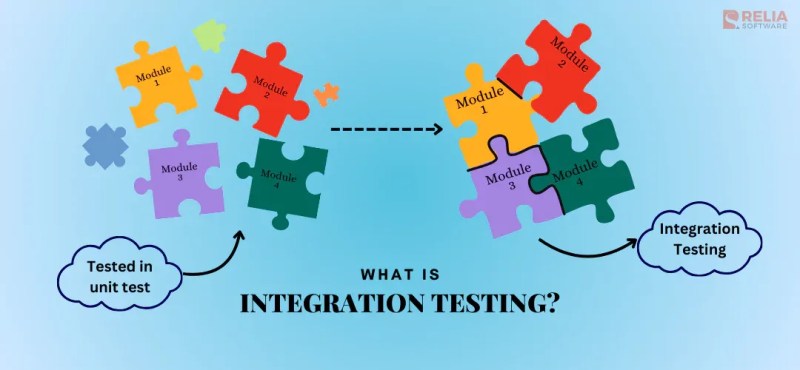
At its core, software testing integration refers to the systematic embedding of testing activities into the development workflow, ensuring consistency, traceability, and automation. This approach contrasts with legacy models where testing was a standalone phase, executed after coding. Modern software testing integration leverages tools, methodologies, and cultural shifts to make quality a shared responsibility. For instance, shift-left testing—moving validation earlier in the SDLC—reduces rework by identifying issues in real time, while continuous testing in DevOps pipelines eliminates bottlenecks between development and deployment.
The integration process typically involves three pillars: toolchain unification (e.g., linking Jira with Selenium), process alignment (e.g., test-driven development), and data-driven insights (e.g., using test coverage metrics to prioritize fixes). Companies like Netflix and Amazon exemplify this model, where automated test suites run thousands of checks per commit, with failures triggering immediate alerts. The goal isn’t just to find bugs but to prevent them through proactive, embedded validation.
Historical Background and Evolution
The origins of software testing integration trace back to the 1970s, when structured testing frameworks (like IEEE standards) formalized QA processes. However, these early methods were reactive, focusing on post-development validation. The 1990s introduced agile principles, which demanded faster feedback loops, but testing remained largely manual. The turning point came in the 2000s with the rise of continuous integration (CI), where developers merged code changes frequently, necessitating automated test suites to validate each commit.
By the 2010s, software testing integration matured with the adoption of DevOps. Tools like Jenkins and Docker enabled seamless test execution in cloud environments, while APIs and microservices required granular, service-level testing. Today, integration extends beyond code—encompassing security scanning (SAST/DAST), performance benchmarking, and user experience (UX) validation. The evolution reflects a fundamental shift: from testing as a gatekeeper to testing as a collaborative enabler of innovation.
Core Mechanisms: How It Works
The mechanics of software testing integration hinge on three interconnected layers: automation frameworks, CI/CD pipelines, and observability tools. Automation frameworks (e.g., Cypress, Playwright) execute repetitive tests, while CI/CD pipelines (GitHub Actions, CircleCI) trigger tests on every code push. Observability tools (e.g., New Relic, Datadog) monitor test outcomes in real time, providing actionable insights. For example, a failed API test in a CI pipeline might halt deployment until resolved, ensuring only validated code reaches production.
Integration also relies on test data management and environment parity. Synthetic test data (e.g., generated via tools like Mockaroo) replaces manual data entry, while containerization (Docker, Kubernetes) ensures tests run in environments mirroring production. This consistency reduces "works on my machine" issues and improves reliability. The result is a closed-loop system where testing isn’t an isolated step but a continuous feedback mechanism driving development forward.
Key Benefits and Crucial Impact
The impact of software testing integration extends beyond technical efficiency—it redefines team dynamics, risk management, and business agility. Organizations adopting integrated testing report up to 40% faster release cycles and 30% fewer production incidents, according to industry benchmarks. The integration eliminates silos between development and QA, fostering a culture where testing is a shared priority. For instance, Google’s use of software testing integration in its Chrome browser team reduced critical bugs by 60% within two years, directly correlating with user satisfaction metrics.
Financially, the benefits are equally compelling. Traditional waterfall testing models incur hidden costs—late-stage fixes, rollback efforts, and reputational damage from outages. Integrated testing mitigates these risks by catching issues early, reducing the average cost of a bug from $100 (early detection) to $1,000+ (post-release). Beyond cost savings, software testing integration enables data-driven decision-making, with test analytics revealing patterns (e.g., regression hotspots) that inform architectural improvements.
"Testing isn’t a phase; it’s a mindset. The best organizations don’t ask when to test—they ask how to integrate it into every decision."
— James Bach, Software Testing Pioneer
Major Advantages
- Faster Time-to-Market: Automated, embedded tests reduce manual validation delays, allowing teams to release features incrementally without sacrificing quality.
- Reduced Technical Debt: Early defect detection prevents compounding issues, as fixes are addressed before they propagate across the codebase.
- Improved Collaboration: Shared ownership of testing (e.g., developers writing unit tests) breaks down QA-developer barriers, fostering cross-functional alignment.
- Scalability: Cloud-based software testing integration tools (e.g., Sauce Labs, BrowserStack) support parallel test execution, accommodating high-velocity development at scale.
- Enhanced Security: Integrated security testing (e.g., OWASP ZAP in CI pipelines) identifies vulnerabilities early, aligning with compliance requirements (GDPR, SOC 2).
Comparative Analysis
| Traditional Testing | Software Testing Integration |
|---|---|
| Silos QA as a separate phase. | Embeds testing into DevOps/CD pipelines. |
| Manual, ad-hoc validation. | Automated, scripted, and data-driven. |
| Late-stage defect detection. | Shift-left testing with real-time feedback. |
| High cost per bug (post-release fixes). | Lower cost per bug (early intervention). |

Future Trends and Innovations
The next frontier for software testing integration lies in AI and predictive analytics. Machine learning models (e.g., Google’s TestGPT) are already generating test cases from requirements, while anomaly detection algorithms flag potential failures before they occur. Additionally, the rise of low-code/no-code testing platforms (e.g., Mabl, Testim) democratizes test automation, allowing non-technical stakeholders to contribute. Another trend is chaos engineering, where controlled disruptions (e.g., Netflix’s Chaos Monkey) test system resilience in production-like conditions.
Looking ahead, software testing integration will blur further with development and operations. Edge computing will demand real-time testing of distributed systems, while quantum computing may introduce new validation challenges. The key innovation will be self-healing test suites, where AI dynamically adjusts test scripts to accommodate evolving application states. As development velocities increase, the ability to integrate testing seamlessly—without friction—will distinguish industry leaders from laggards.
Conclusion
Software testing integration is no longer optional; it’s the backbone of modern software delivery. The organizations thriving today are those that treat testing as a strategic asset, not a checkbox. By unifying tools, processes, and culture, they achieve not just faster releases but higher-quality products. The shift from reactive to proactive testing has redefined what’s possible, and the trends on the horizon—AI, chaos engineering, and low-code automation—will push these boundaries even further.
For teams still grappling with fragmented QA, the message is clear: integrate testing early, automate ruthlessly, and treat quality as a collaborative effort. The cost of inaction is no longer just technical debt—it’s lost market share, eroded trust, and the risk of being left behind in an era where reliability is the ultimate differentiator.
Comprehensive FAQs
Q: What’s the difference between traditional testing and software testing integration?
A: Traditional testing is a discrete phase (often post-development), while software testing integration embeds validation into every stage of the SDLC. Integration uses automation, CI/CD, and real-time feedback to catch issues early, whereas traditional methods rely on manual, late-stage checks.
Q: Which tools are essential for software testing integration?
A: Core tools include automation frameworks (Selenium, Cypress), CI/CD platforms (Jenkins, GitLab CI), test management systems (TestRail, Zephyr), and observability tools (New Relic, Datadog). Security tools (OWASP ZAP, Checkmarx) are also critical for integrated compliance testing.
Q: How does shift-left testing fit into software testing integration?
A: Shift-left testing is a cornerstone of software testing integration. It moves validation earlier in the development cycle (e.g., unit tests during coding, integration tests post-build), reducing the cost and effort of fixing defects later. This approach is enabled by automated test suites that run continuously in CI pipelines.
Q: Can small teams benefit from software testing integration?
A: Absolutely. Small teams can start with lightweight software testing integration by adopting low-code test automation tools (e.g., Testim, Applitools) and integrating them into simple CI pipelines (GitHub Actions). The key is prioritizing high-impact tests (unit, API) over exhaustive manual validation.
Q: What metrics should we track to measure software testing integration success?
A: Critical metrics include test coverage (percentage of code tested), defect escape rate (bugs reaching production), mean time to detect/resolve (MTTD/MTTR), and automation efficiency (time saved vs. manual testing). Business impact metrics like release velocity and customer-reported issues also reflect integration effectiveness.
Leave a Comment
Comments are moderated before appearing. The data you submit is processed according to the Privacy Policy of versiliasolutions.oneagency.co.