
Decoding Methylamine’s Mystery: The Hybridization of Nitrogen in CH₃NH₂ Explained
The confusion often stems from a conflation of structural theory with experimental observations. Textbooks may oversimplify hybridization as a static concept...
Tag
The confusion often stems from a conflation of structural theory with experimental observations. Textbooks may oversimplify hybridization as a static concept...

Fluorine’s electronegativity—measured at 3.98 on the Pauling scale—is the highest of any element, a fact that explains its aggressive reactivity and its role...

The same element can exist in radically different forms—hard as a rock, slippery as pencil lead, or stronger than steel. This paradox lies at the heart of...

Yet for decades, this principle was misunderstood. Early chemists like Dmitri Mendeleev arranged elements by atomic mass, unaware that the increased distance...

What makes the CH₂ molecular orbital diagram particularly fascinating is its duality: it bridges experimental observations (like UV spectroscopy) and...
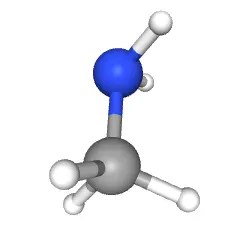
The formula ch3nh2 —methylamine—is deceptively simple, masking a fundamental question in chemistry: does it exist as an ionic or molecular compound? The answer...

What happens when you replace one hydrogen with a methyl group (CH₃), transforming NH₃ into CH₃NH₂ (methylamine)? The ch3nh2 lewis structure reveals a subtle...

The first time you encounter CH3NH2, it might seem like just another organic molecule—until you realize its geometry dictates everything from its reactivity to...

The world around us is a masterclass in transformation—where raw elements don’t merely exist but actively compounds are formed as a result of precise, often...

The trend of decreasing electronegativity also explains why alkali metals like sodium or potassium react explosively with water. Their low electronegativity...
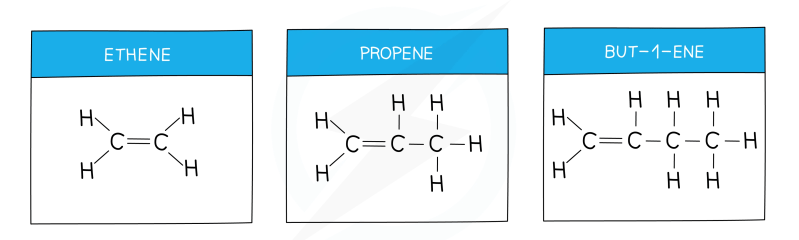
Unsaturated chemistry isn’t just a niche concept buried in lab manuals—it’s the invisible force behind the plastics in your phone case, the polymers in medical...

Yet the implications stretch beyond textbooks. In the lab, unsaturated compounds like alkenes and alkynes defy the stability of their saturated siblings...

The dissolution of ionic compounds in water is one of the most fundamental yet intricate processes in chemistry, underpinning everything from biological...

Methylamine (CH 3 NH 2 ) is one of the simplest organic amines, yet its molecular behavior raises a fundamental question in organic chemistry: does CH 3 NH 2...

The question of whether electronegativity increases across a period isn't just academic—it's the foundation for predicting chemical behavior. When chemists...

There’s a quiet revolution unfolding in the world of adhesives, one that’s redefining what’s possible in bonding materials—without the mess, without the wait...

What makes this trend so powerful is its universality. Whether you’re analyzing why fluorine forms the strongest bonds or why silicon dominates modern...

At first glance, the trend seems paradoxical: larger atoms with more protons should theoretically hold electrons tighter. Yet the reality is far more nuanced...

This pursuit of electron perfection isn’t abstract theory—it’s the hidden force behind everything from the rust on your car to the oxygen in your blood. The...

Gorilla Super Glue isn’t just another adhesive—it’s a high-performance chemical bond that transforms materials under precise conditions. The moment you squeeze...