
How to Work Out an Average: The Math, Mistakes, and Mastery Behind Simple Calculations
The concept of averaging transcends basic arithmetic; it’s a cornerstone of decision-making. A miscalculated average in a business report could mislead...
Tag
The concept of averaging transcends basic arithmetic; it’s a cornerstone of decision-making. A miscalculated average in a business report could mislead...

The confusion stems from their ambiguity: m- and m+ on calculator aren’t standardized across brands. Some devices label them as "memory subtract" and "memory...

Most users stumble upon "m+" by accident, pressing it instead of "+" during a rushed calculation, only to watch their screen flash with a cryptic memory value...

What makes "mrc full form in calculator" particularly intriguing is its dual role: it serves as both a memory management tool and a computational shortcut...

What makes mrc in calculator particularly intriguing is its dual functionality: it acts as both a temporary storage unit and a multiplier for stored values...

The confusion stems from a fundamental design paradox: MRC meaning on calculator isn’t consistently documented in user manuals, and its behavior isn’t...

What makes this function particularly powerful is its ability to preserve memory states across multiple operations. Unlike basic calculators that reset after...

Numbers alone rarely tell a complete story—context is everything. When a report states "75% market growth" or a survey reveals "60% customer satisfaction," the...

Yet, the true power lies in why this percentage matters. It’s not just about the arithmetic—it’s about the leverage. A 15% commission on an $80,000 sale could...

The curiosity behind what is 5 percent of 40,000 often arises in high-stakes scenarios. For instance, a freelancer might wonder how a 5% service fee on a...

Mathematics often feels like a silent force—until you need it. The question what is 5% of 40000 isn’t just an abstract exercise; it’s a gateway to...

The beauty of percentages lies in their scalability. A 6% increase on a $60,000 salary might feel modest until you realize it translates to $3,600—a sum that...

Numbers don’t lie—but they can be misinterpreted if their underlying logic isn’t understood. Take what is the 5 percent of 40,000 , a seemingly simple question...

Calculating percentages isn’t just an academic exercise—it’s a daily necessity for professionals, entrepreneurs, and even casual investors. When someone asks...

The amortization calculator formula isn’t just a tool—it’s the backbone of modern lending. Whether you’re refinancing a mortgage, structuring a business loan...
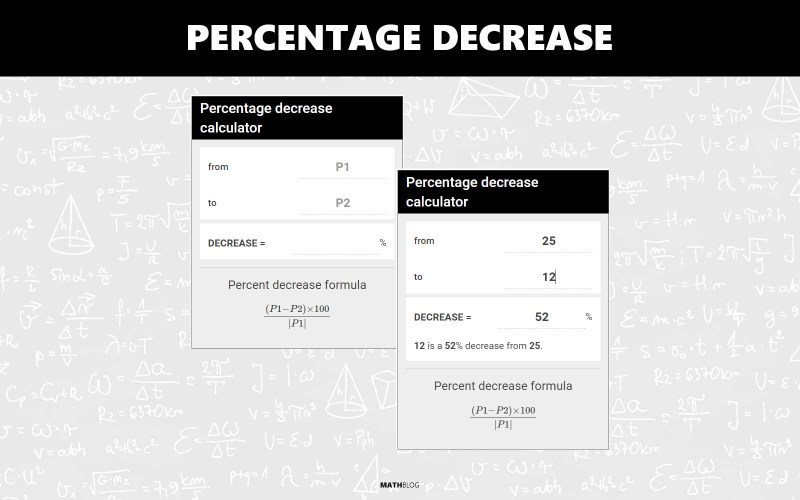
Many professionals overlook the nuances of percentage declines, leading to misinterpretations that distort financial health or operational efficiency. For...

The process itself is deceptively simple, yet its applications span industries, from corporate strategy to personal finance. A miscalculation here can distort...

The art of calculating discount using proportions isn’t just about slashing prices—it’s a mathematical framework that bridges arithmetic, psychology, and...

Percent increase isn’t just a classroom exercise—it’s the silent metric shaping investment decisions, economic forecasts, and even personal budgets. A 10%...

The concept of percentage increase has evolved alongside human commerce and science. Ancient civilizations used rudimentary forms of proportional reasoning to...