How to Choose the Right Tools to Conduct Market Research for Precision Insights
Table of Contents
- The Complete Overview of Tools to Conduct Market Research
- Historical Background and Evolution
- Core Mechanisms: How It Works
- Key Benefits and Crucial Impact
- Major Advantages
- Comparative Analysis
- Future Trends and Innovations
- Conclusion
- Comprehensive FAQs
- Q: What are the most affordable tools to conduct market research for small businesses?
- Q: How do I ensure my market research tools provide actionable insights?
- Q: Can AI tools to conduct market research replace human analysts?
- Q: What’s the best tool to conduct market research for B2B vs. B2C?
- Q: How often should I update my market research tools?
Market research isn’t just about collecting data—it’s about extracting meaning from it. The right tools to conduct market research can transform raw numbers into strategic insights, revealing hidden consumer preferences, untapped demand, and competitive vulnerabilities. Without them, businesses risk operating on intuition alone, a luxury few can afford in today’s hyper-competitive landscape.
The challenge lies in selecting tools that align with specific objectives. A startup testing product-market fit needs agile, low-cost solutions, while an enterprise analyzing global trends requires scalable, AI-enhanced platforms. The wrong choice leads to wasted resources or, worse, misguided strategies. The key is understanding not just what tools exist, but how they function, their strengths, and where they excel—or fail—in real-world applications.
What separates successful market researchers from the rest isn’t access to data, but the ability to wield the right tools to conduct market research with precision. Whether it’s identifying niche audience segments or forecasting industry shifts, the tools you choose determine the clarity of your insights. The following breakdown cuts through the noise to focus on what matters: effectiveness, adaptability, and measurable impact.

The Complete Overview of Tools to Conduct Market Research
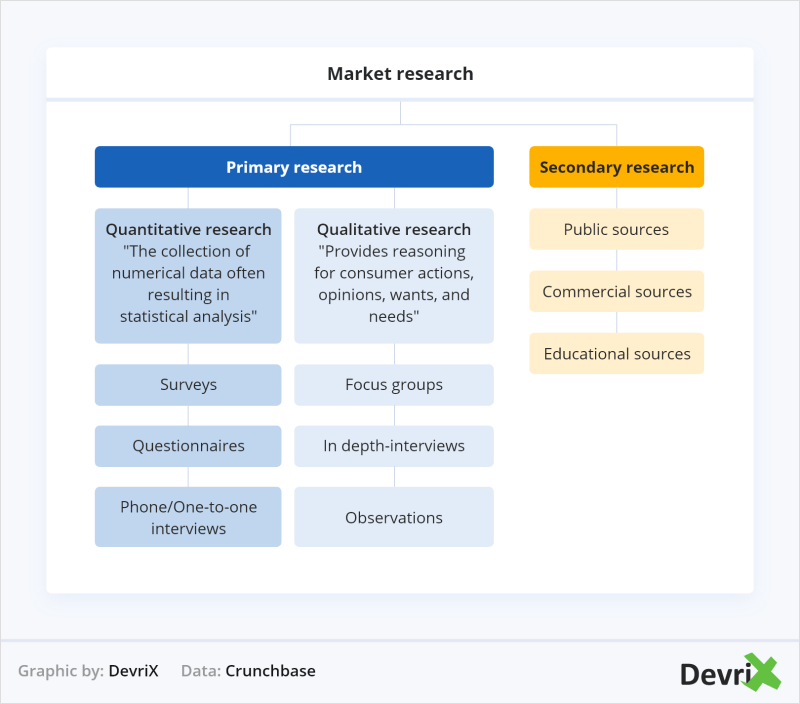
Market research tools have evolved from basic survey software to sophisticated ecosystems integrating AI, predictive analytics, and real-time data streams. The modern toolkit includes platforms for quantitative analysis (surveys, polls), qualitative exploration (interviews, focus groups), and competitive benchmarking (SEO tools, social listening). Each serves a distinct purpose, but their true value lies in how they’re combined to answer complex business questions.
The landscape is fragmented, with niche solutions for B2B, B2C, and industry-specific research (e.g., healthcare, fintech). Some tools specialize in speed (e.g., rapid prototyping feedback), while others prioritize depth (e.g., longitudinal consumer tracking). The choice depends on whether you’re validating a hypothesis or uncovering an entirely new market opportunity. Ignoring this distinction often results in tools that are either overkill or insufficient for the task.
Historical Background and Evolution
The origins of market research tools trace back to the early 20th century, when companies like Nielsen and Gallup pioneered structured survey methodologies. These tools were manual, labor-intensive, and limited to basic demographics. The digital revolution of the 1990s introduced online surveys and CRM integrations, democratizing access to consumer data. By the 2010s, cloud-based platforms and mobile research apps expanded capabilities, enabling real-time feedback and global reach.
Today, the integration of machine learning and big data has redefined tools to conduct market research. Platforms now automate sentiment analysis from social media, predict churn rates using behavioral patterns, and even simulate market responses to pricing changes. The shift from reactive to predictive research marks the most significant leap—tools no longer just describe markets but anticipate their evolution. This transition has made market research more proactive, aligning closely with agile business strategies.
Core Mechanisms: How It Works
At its core, any tool designed for market research operates on three pillars: data collection, analysis, and application. Data collection methods vary—survey tools like Typeform or Qualtrics rely on structured questionnaires, while tools like Hotjar or FullStory capture user behavior through heatmaps and session recordings. Analysis engines then process this data, applying statistical models (e.g., regression, clustering) or natural language processing (NLP) to identify patterns. The final step is translating these insights into actionable strategies, whether through A/B testing or go-to-market adjustments.
Advanced tools to conduct market research incorporate feedback loops, where initial findings inform subsequent data collection. For example, a tool like SurveyMonkey Audience might start with broad demographic questions but dynamically adjust follow-ups based on early responses. Similarly, AI-driven platforms like Google’s Consumer Barometer use predictive algorithms to forecast trends before they materialize. The mechanism isn’t just about crunching numbers—it’s about creating a dynamic, iterative process that adapts to new information in real time.
Key Benefits and Crucial Impact
The impact of leveraging the right tools to conduct market research extends beyond mere data collection. It directly influences product development, marketing spend efficiency, and customer retention. Businesses that integrate these tools into their workflows see a 30–50% improvement in campaign ROI, according to McKinsey, because they’re no longer guessing at consumer needs. The tools themselves act as force multipliers, turning raw data into competitive advantages.
Consider the case of a SaaS company using tools like Canny or UserVoice to gather feature requests. By analyzing sentiment and frequency, they prioritize development based on actual user demand rather than internal assumptions. The result? Faster iterations, higher adoption rates, and reduced churn. This is the power of tools to conduct market research: they don’t just inform—they accelerate execution.
"Market research tools are the difference between reacting to the market and shaping it." — Forrester Research
Major Advantages
- Precision Targeting: Tools like Google Analytics or HubSpot enable hyper-segmentation, allowing businesses to tailor messages to micro-audiences (e.g., tech-savvy millennials vs. cost-conscious Gen X). This reduces wasted ad spend by up to 40%.
- Real-Time Insights: Platforms like Brandwatch or Hootsuite monitor social media conversations instantly, enabling brands to address crises or capitalize on trends within hours—not weeks.
- Cost Efficiency: Cloud-based tools (e.g., SurveySparrow) eliminate the need for in-house research teams, cutting operational costs by 25–35% while improving data quality.
- Competitive Benchmarking: Tools like SEMrush or Ahrefs provide transparent visibility into competitors’ strategies, from keyword dominance to content gaps, leveling the playing field for smaller players.
- Predictive Capabilities: AI tools like IBM Watson or Salesforce Einstein analyze historical data to forecast demand, pricing elasticity, and even customer lifetime value with 85% accuracy.
Comparative Analysis
| Tool Type | Best For |
|---|---|
| Survey Platforms (Typeform, Qualtrics) | Quantitative data collection with high response rates; ideal for product feedback and demographic analysis. |
| Behavioral Analytics (Hotjar, Crazy Egg) | Visualizing user interactions on websites/apps; identifies friction points in the customer journey. |
| Social Listening (Brandwatch, Mention) | Tracking brand sentiment and industry trends across social platforms; essential for PR and reputation management. |
| AI-Powered Insights (Google Trends, IBM Watson) | Predictive analytics and trend forecasting; useful for long-term strategic planning. |
Future Trends and Innovations
The next frontier in tools to conduct market research lies in hyper-personalization and automation. Emerging technologies like generative AI (e.g., ChatGPT for survey analysis) and blockchain (for secure, transparent data sharing) are poised to redefine how businesses gather and act on insights. For instance, AI can now generate synthetic consumer profiles to test hypothetical scenarios without real-world data collection, reducing bias and speeding up validation.
Another trend is the convergence of offline and online research. Tools like eye-tracking software (e.g., Tobii) combined with VR simulations allow brands to observe physical product interactions in controlled environments. Meanwhile, IoT devices (e.g., smart home sensors) provide passive data on consumer behavior, eliminating the need for intrusive surveys. The future of market research tools won’t just be smarter—it will be seamlessly embedded into everyday consumer interactions.
Conclusion
Selecting the right tools to conduct market research isn’t a one-size-fits-all endeavor. It requires aligning your objectives with the capabilities of each platform, whether you’re a startup validating a niche or a corporation mapping global trends. The tools themselves are evolving rapidly, but their value hinges on how they’re deployed—integrated into workflows, not treated as standalone solutions.
As data grows in volume and complexity, the tools that thrive will be those that balance depth with simplicity, automation with human oversight. The goal isn’t to accumulate more data, but to extract clearer, actionable signals. For businesses serious about staying ahead, the question isn’t if to invest in these tools, but how to leverage them before competitors do.
Comprehensive FAQs
Q: What are the most affordable tools to conduct market research for small businesses?
A: Small businesses should prioritize free or low-cost tools like Google Forms (for surveys), AnswerThePublic (for keyword research), and Canva (for visualizing data). Paid options like SurveyMonkey’s basic plan ($25/month) or SEMrush’s starter package ($119/month) offer scalability without breaking the bank.
Q: How do I ensure my market research tools provide actionable insights?
A: Actionable insights require three things: clear objectives (e.g., "Reduce cart abandonment"), structured data (e.g., heatmaps + surveys), and cross-tool validation (e.g., combining social listening with sales data). Avoid tools that deliver vague metrics—focus on those that tie directly to business outcomes.
Q: Can AI tools to conduct market research replace human analysts?
A: No. AI excels at processing large datasets and identifying patterns, but human analysts provide context, ethical oversight, and creative interpretation. The ideal approach is hybrid: use AI for data crunching and let humans refine insights into strategies.
Q: What’s the best tool to conduct market research for B2B vs. B2C?
A: B2B research benefits from tools like LinkedIn Sales Navigator (for lead insights) and ZoomInfo (for firmographics). B2C thrives on consumer-focused platforms like Appen (crowdsourced feedback) or BuzzSumo (content performance). The key difference is depth (B2B) vs. volume (B2C).
Q: How often should I update my market research tools?
A: At least annually, or whenever your business model, audience, or industry shifts. Tools like Google Trends or Statista update their methodologies frequently—sticking to outdated versions can lead to skewed data. For agile teams, quarterly reviews of tool performance are ideal.
Leave a Comment
Comments are moderated before appearing. The data you submit is processed according to the Privacy Policy of versiliasolutions.oneagency.co.