How Umbrella Insurance Coverage for Small Business Protects You Beyond Standard Policies
Table of Contents
- The Complete Overview of Umbrella Insurance Coverage for Small Business
- Historical Background and Evolution
- Core Mechanisms: How It Works
- Key Benefits and Crucial Impact
- Major Advantages
- Comparative Analysis
- Future Trends and Innovations
- Conclusion
- Comprehensive FAQs
- Q: Does umbrella insurance coverage for small business replace my existing liability policies?
- Q: What types of claims does umbrella insurance typically cover?
- Q: How much does umbrella insurance coverage for small business cost?
- Q: Can umbrella insurance protect my personal assets?
- Q: Do I need umbrella insurance if I have an LLC?
- Q: How do I qualify for umbrella insurance coverage for small business?
- Q: What’s the difference between an umbrella policy and excess liability insurance?
- Q: Can I get umbrella insurance for a home-based business?
- Q: How quickly can I get umbrella insurance coverage for small business?
- Q: Does umbrella insurance cover cyber liability?
- Q: What happens if I don’t have umbrella insurance and a claim exceeds my limits?
Every small business owner knows the drill: general liability insurance is non-negotiable. It’s the first line of defense when a customer slips on a wet floor or a supplier alleges breach of contract. But what happens when the claim exceeds your policy limits—or when a lawsuit names your business in a scenario your standard coverage never addressed? That’s where the conversation shifts from "basic protection" to "existential risk." Umbrella insurance coverage for small business isn’t just an add-on; it’s the financial firewall that prevents a single lawsuit from bankrupting your operation. The numbers don’t lie: according to the U.S. Chamber of Commerce, nearly 40% of small businesses face at least one liability claim annually, with payouts often spiraling into six or seven figures. Without an umbrella policy, those claims become personal liabilities, putting your assets—your home, savings, even future earnings—on the line.
The problem is, most small business owners assume their existing insurance will suffice. They overlook the fine print: general liability policies typically cap coverage at $1 million or $2 million. A single frivolous lawsuit, a data breach, or an employee-related incident can shatter those limits in minutes. Consider the case of a boutique coffee shop sued for $3 million after a customer claimed a latte caused a severe allergic reaction. The shop’s $1.5 million general liability policy covered half the claim—but the owner still faced a $1.5 million personal judgment. That’s the moment umbrella insurance coverage for small business becomes the difference between survival and shutdown. The policy doesn’t just extend limits; it fills the gaps in coverage that standard plans ignore, such as libel, slander, or even certain cyber risks, depending on the carrier.
Yet despite its critical role, umbrella insurance remains one of the most misunderstood tools in a small business owner’s arsenal. Many dismiss it as "extra" or "luxury" coverage, unaware that it’s often the most cost-effective way to mitigate risk. For a few hundred dollars annually, you can add millions in liability protection—far cheaper than the alternative: losing your business (and personal assets) to a single catastrophic event. The question isn’t if you need it, but how soon you can afford to implement it before the next claim hits.
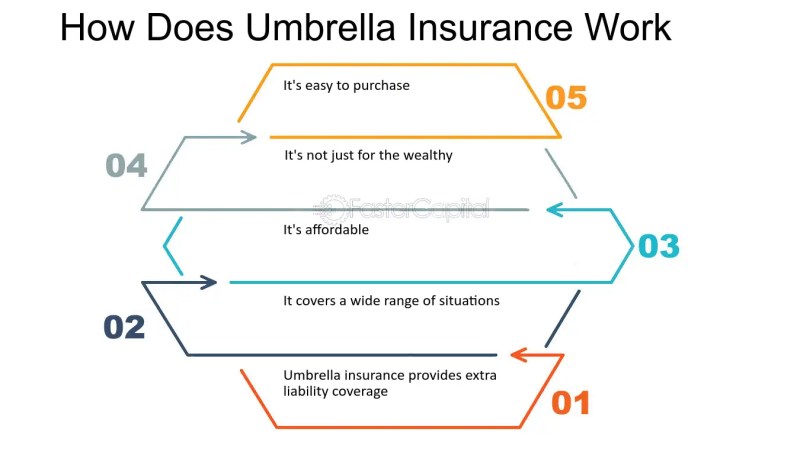
The Complete Overview of Umbrella Insurance Coverage for Small Business
Umbrella insurance coverage for small business is a specialized layer of liability protection designed to kick in when underlying policies—like general liability, commercial auto, or professional liability—hit their limits. Think of it as a financial parachute: when your primary insurance can’t cover the full cost of a claim, the umbrella policy steps in to absorb the excess, often up to $1 million or more. This isn’t just about higher limits; it’s about broader coverage. While general liability might exclude certain risks (e.g., intentional acts, punitive damages), an umbrella policy often includes these scenarios, provided they’re not explicitly excluded in the fine print. The key distinction lies in the "drop-down" feature: if a claim falls outside your primary policy’s scope entirely, the umbrella can still provide coverage, subject to its own terms.
The misconception that umbrella insurance is only for large corporations is a costly oversight. Small businesses—especially those in high-risk industries like construction, hospitality, or professional services—face unique vulnerabilities. A single employee lawsuit, a product liability claim, or even a social media post interpreted as defamation can trigger a claim that dwarfs your primary policy’s limits. For example, a freelance graphic designer might face a $5 million lawsuit for allegedly plagiarizing a client’s work. Their $1 million professional liability policy would be exhausted instantly, leaving them exposed. Here’s where umbrella insurance coverage for small business becomes a game-changer: it bridges the gap between what your primary insurance covers and what a judge or plaintiff might demand, often at a fraction of the cost of raising primary limits.
Historical Background and Evolution
The concept of umbrella insurance traces back to the 1970s, when insurers began offering excess liability coverage to individuals and businesses facing rising litigation costs. Early policies were primarily marketed to high-net-worth individuals and large enterprises, where the risk of personal asset seizure was a tangible threat. However, the landscape shifted in the 1990s and 2000s as tort reform and jury awards in the U.S. led to an explosion of high-dollar lawsuits against small businesses. Courts became more plaintiff-friendly, and punitive damages—often excluded from primary policies—became a common feature of verdicts. This created a demand for affordable, scalable excess coverage, paving the way for umbrella insurance to evolve into a mainstream business tool.
Today, umbrella insurance coverage for small business is no longer a niche product but a strategic necessity. The rise of social media has amplified the risk of defamation claims, while the gig economy has blurred the lines between personal and commercial liability. A single viral post or a misclassified independent contractor can expose a business to claims that primary insurance won’t touch. Additionally, cyber liability—though often covered by separate policies—can overlap with umbrella coverage in cases where a data breach leads to third-party lawsuits. The evolution of umbrella insurance reflects broader societal changes: as businesses operate in an increasingly litigious and interconnected world, the need for a safety net that extends beyond standard limits has become non-negotiable.
Core Mechanisms: How It Works
At its core, umbrella insurance coverage for small business operates on a simple but powerful principle: it provides additional liability protection after your primary policies have been exhausted. The process begins when a claim is filed against your business. If the claim exceeds your general liability limit (e.g., $1 million), the umbrella policy activates to cover the remaining amount, up to its own limit (commonly $1 million to $5 million). Importantly, the umbrella doesn’t replace primary coverage; it supplements it. This means you must maintain underlying policies in good standing, as the umbrella will only cover claims that would otherwise be valid under those policies. For instance, if you’re sued for $2 million but your general liability only covers $1 million, the umbrella would cover the additional $1 million, provided the claim is legitimate.
The mechanics extend beyond mere limit stacking. Umbrella policies often include additional coverages not found in primary plans, such as personal injury (libel, slander), certain cyber risks, and even some forms of intentional torts (though these are typically excluded or limited). The policy also usually includes a "follow-form" clause, meaning its terms mirror those of your primary policies—if a claim is excluded under your general liability, it’s likely excluded under the umbrella. However, some carriers offer "priority" or "non-priority" options, allowing you to dictate which policy pays first in the event of overlapping coverage. For small business owners, this flexibility is critical when structuring a risk management strategy. The cost of umbrella insurance is surprisingly low—often between $300 and $1,000 annually for $1 million in coverage—making it one of the most efficient ways to enhance protection without breaking the bank.
Key Benefits and Crucial Impact
Umbrella insurance coverage for small business isn’t just about higher limits; it’s about resilience. In an era where a single lawsuit can derail years of hard work, the policy acts as a financial stabilizer, ensuring that your business remains operational even in the face of adversity. The impact is twofold: it protects your assets from seizure and preserves your reputation by demonstrating a commitment to risk management. Without it, a claim that exceeds your primary limits could force you to liquidate personal assets, declare bankruptcy, or even shut down operations. The psychological burden alone—knowing that one bad day could wipe you out—is enough to justify the investment. For businesses in high-risk sectors, such as food service, healthcare, or contracting, the stakes are even higher, as regulatory scrutiny and third-party claims are more prevalent.
The financial implications are equally compelling. The average cost of a liability claim for small businesses has risen by 40% over the past decade, with medical malpractice and professional negligence claims often exceeding $10 million. Umbrella insurance ensures that these costs don’t fall on your shoulders. Moreover, many lenders and investors now require umbrella coverage as a condition of funding, recognizing its role in mitigating risk. Even if not mandated, having the policy can improve your creditworthiness and negotiating power. The peace of mind it provides is invaluable—allowing you to focus on growth rather than fearing the next legal threat.
"Umbrella insurance isn’t an indulgence; it’s insurance for the insurance you already have. Without it, you’re playing Russian roulette with your livelihood." — James R. Beck, Partner at Beck & Lee LLP
Major Advantages
- Extended Liability Limits: Covers claims that exceed your primary policy’s limits, often up to $5 million or more, protecting personal and business assets from seizure.
- Broadened Coverage Gaps: Includes risks not covered by standard policies, such as libel, slander, and certain cyber liabilities, depending on the carrier.
- Cost-Effectiveness: Provides millions in additional coverage for a fraction of the cost of raising primary limits (e.g., $500/year for $1 million in umbrella vs. $5,000+ for a $2 million general liability bump).
- Asset Protection: Shields personal assets (home, savings, investments) from lawsuits that penetrate your business’s liability shield.
- Lender and Investor Confidence: Demonstrates proactive risk management, often improving loan eligibility and negotiating leverage.
Comparative Analysis
| Umbrella Insurance Coverage for Small Business | Primary Liability Insurance |
|---|---|
|
|
|
|
|
|

Future Trends and Innovations
The next decade of umbrella insurance coverage for small business will be shaped by two dominant forces: technological disruption and regulatory evolution. As artificial intelligence and automation reshape industries, new liability risks will emerge—particularly around AI-generated content, autonomous systems, and data privacy. Umbrella policies may soon include endorsements for "emerging technology risks," allowing businesses to transfer these novel exposures to insurers. Similarly, the rise of remote work and decentralized teams will blur the lines between personal and commercial liability, necessitating more flexible umbrella coverage that adapts to hybrid business models. Carriers are already experimenting with modular policies, where businesses can "plug in" specific coverages (e.g., social media liability, gig worker risks) as needed, rather than committing to a one-size-fits-all umbrella.
Regulatory changes will also play a critical role. States are tightening laws around cybersecurity breaches, environmental liability, and workplace safety, all of which could expand the scope of umbrella coverage. For instance, if a new federal law mandates stricter data protection measures, umbrella policies may need to include cyber liability as a standard feature. Additionally, the insurance industry is likely to adopt more dynamic pricing models, using real-time data (e.g., claim history, industry trends) to adjust premiums and coverage limits. Small businesses may soon see umbrella policies tied to performance metrics, such as safety records or customer satisfaction scores, further incentivizing risk mitigation. The future of umbrella insurance isn’t just about higher limits—it’s about smarter, more adaptive protection that evolves with the threats your business faces.
Conclusion
Umbrella insurance coverage for small business is no longer optional; it’s a cornerstone of modern risk management. The data is clear: the cost of inaction far outweighs the cost of the policy. Whether you’re a sole proprietor, a growing startup, or an established SMB, the potential fallout from a single uninsured claim can be catastrophic. The good news is that the barrier to entry is lower than ever. With premiums starting at a few hundred dollars annually, the financial risk of implementing umbrella coverage is minimal compared to the existential risk of operating without it. The key is to act before a claim forces your hand—because once the lawsuit is filed, it’s too late to retroactively purchase protection.
Start by auditing your current liability coverage. Identify the gaps—where your primary policies fall short—and determine how an umbrella policy can fill them. Consult with an independent insurance broker who specializes in small business risks; they can tailor a solution to your industry, asset profile, and growth trajectory. Remember, umbrella insurance isn’t just about money—it’s about legacy. It ensures that the years of effort you’ve poured into your business aren’t wiped out by a single unpredictable event. In an uncertain world, the businesses that survive—and thrive—are those that prepare for the worst while planning for the best. Umbrella insurance is that preparation.
Comprehensive FAQs
Q: Does umbrella insurance coverage for small business replace my existing liability policies?
A: No. Umbrella insurance is designed to supplement your primary policies (general liability, commercial auto, etc.). It only activates after those policies have been exhausted. You must maintain underlying coverage in good standing for the umbrella to work. Think of it as a secondary layer of protection, not a replacement.
Q: What types of claims does umbrella insurance typically cover?
A: Umbrella policies usually cover claims that exceed your primary limits, including bodily injury, property damage, personal injury (libel, slander), and certain cyber liabilities. However, they often exclude intentional acts, professional errors (unless under a professional liability umbrella), and some punitive damages. Always review your policy’s "follow-form" clause to understand exclusions.
Q: How much does umbrella insurance coverage for small business cost?
A: Costs vary based on coverage limits, industry risk, and your business’s asset profile. On average, a $1 million umbrella policy costs between $300 and $1,000 annually for small businesses. High-risk industries (e.g., construction, healthcare) may pay more, while low-risk businesses (e.g., consulting, retail) often see lower premiums. The cost is typically a fraction of raising primary limits.
Q: Can umbrella insurance protect my personal assets?
A: Yes, one of the primary benefits of umbrella insurance coverage for small business is asset protection. If a lawsuit exceeds your business’s liability limits, the umbrella can shield your personal assets (home, savings, vehicles) from seizure, provided the claim is valid under the policy terms. This is especially critical for sole proprietors and LLC owners who lack a corporate liability shield.
Q: Do I need umbrella insurance if I have an LLC?
A: While an LLC provides limited liability protection by separating personal and business assets, it doesn’t shield you from lawsuits that exceed your business’s insurance limits. If a claim penetrates your LLC’s veil (e.g., through personal guarantees or negligence), your personal assets remain at risk. Umbrella insurance adds an extra layer of protection, ensuring that even if your LLC is sued for amounts beyond its coverage, your personal finances stay intact.
Q: How do I qualify for umbrella insurance coverage for small business?
A: To qualify, you must meet the insurer’s requirements for underlying coverage, typically including:
- General liability insurance with limits of at least $500,000–$1 million.
- Commercial auto insurance (if you own vehicles used for business).
- A clean claims history (though some carriers offer policies for businesses with prior claims).
Q: What’s the difference between an umbrella policy and excess liability insurance?
A: While both provide additional coverage, umbrella insurance is broader. Excess liability typically covers only specific risks (e.g., commercial auto) and follows the terms of that single policy. Umbrella insurance, however, covers a range of liabilities—general liability, personal injury, and sometimes even cyber—once primary policies are exhausted. It’s more comprehensive and often more cost-effective for small businesses.
Q: Can I get umbrella insurance for a home-based business?
A: Yes, many insurers offer umbrella coverage for home-based businesses, provided you have the necessary underlying policies (e.g., a homeowners policy with business liability endorsements or a business owner’s policy). However, some carriers may exclude certain risks (e.g., product liability if you sell goods) or impose higher premiums. Always disclose your home-based status to avoid coverage gaps.
Q: How quickly can I get umbrella insurance coverage for small business?
A: The approval process typically takes 7–14 days, depending on the insurer and your business’s risk profile. Some carriers offer accelerated underwriting (as little as 48 hours) for low-risk applicants. If you’re facing an immediate threat (e.g., a pending lawsuit), contact your broker immediately—they may be able to secure a temporary or "claims-made" umbrella policy while you finalize permanent coverage.
Q: Does umbrella insurance cover cyber liability?
A: It depends on the policy. Some umbrella insurers include basic cyber liability as part of their coverage, while others require a separate cyber policy. If your business handles sensitive data, confirm with your provider whether the umbrella extends to data breaches, network security failures, or third-party cyber claims. Many carriers now offer endorsements to bridge this gap.
Q: What happens if I don’t have umbrella insurance and a claim exceeds my limits?
A: Without umbrella coverage, you’re personally responsible for the excess amount. This could mean:
- Asset seizure (your home, vehicles, or savings).
- Bankruptcy or business shutdown.
- Legal fees and punitive damages coming out of pocket.
- Difficulty obtaining future insurance due to a history of uninsured claims.
Leave a Comment
Comments are moderated before appearing. The data you submit is processed according to the Privacy Policy of versiliasolutions.oneagency.co.