Decoding Understanding Insurance Policies: The Smart Buyer’s Blueprint
Table of Contents
- The Complete Overview of Understanding Insurance Policies
- Historical Background and Evolution
- Core Mechanisms: How It Works
- Key Benefits and Crucial Impact
- Major Advantages
- Comparative Analysis
- Future Trends and Innovations
- Conclusion
- Comprehensive FAQs
- Q: What’s the difference between an insurance policy and an insurance plan?
- Q: Why do insurers deny claims, and how can I avoid it?
- Q: Can I customize my insurance policy, or am I stuck with standard terms?
- Q: What’s the 80/20 rule in insurance, and how does it affect me?
- Q: Is it better to bundle insurance policies (e.g., auto + home) for discounts?
- Q: How often should I review and update my insurance policies?
- Q: What’s the worst-case scenario if I don’t understand my insurance policy?
Insurance isn’t just paperwork—it’s a financial safety net designed to mitigate risk when life’s unpredictability strikes. Yet for many, the process of understanding insurance policies begins with frustration: dense clauses, ambiguous exclusions, and jargon that feels deliberately opaque. The irony is stark: these policies exist to protect you, but their complexity often leaves buyers at a disadvantage before they’ve even signed. The gap between what insurers promise and what consumers grasp is where costly mistakes happen—whether it’s overpaying for redundant coverage or discovering critical exclusions too late.
The problem isn’t the concept of insurance itself. It’s the systemic opacity that surrounds understanding insurance policies. Policies are rarely written with the average consumer in mind; they’re drafted by actuaries, underwriters, and legal teams prioritizing risk mitigation for the insurer, not clarity for the insured. This disconnect explains why nearly 60% of policyholders admit to not fully comprehending their own coverage, according to industry surveys. The solution? Demystifying the process—not by oversimplifying, but by exposing the mechanics, pitfalls, and strategic insights that turn confusion into control.
At its core, understanding insurance policies requires three things: a grasp of how risk is transferred, the ability to decode policy language, and the foresight to anticipate what standard clauses might exclude. This isn’t about memorizing legalese; it’s about recognizing patterns, asking the right questions, and leveraging comparisons to ensure you’re not leaving money—or protection—on the table.
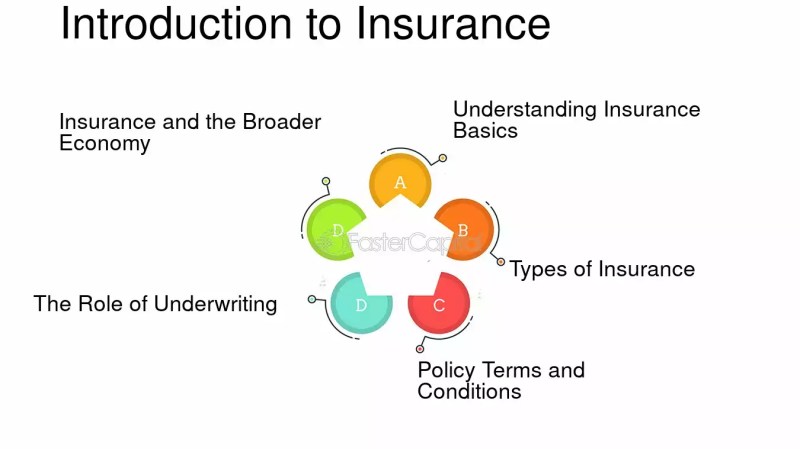
The Complete Overview of Understanding Insurance Policies
Insurance policies are contractual agreements where one party (the insurer) agrees to compensate another (the insured) for specified losses in exchange for periodic premiums. The transaction is simple in theory: you pay a predictable cost now to avoid a potentially catastrophic expense later. However, the execution hinges on understanding insurance policies as living documents—subject to interpretation, negotiation, and evolving risk landscapes. A policy isn’t static; it’s a dynamic tool that adapts to your life stages, from young adulthood (where health insurance might be the priority) to retirement (where long-term care or annuities take center stage). The challenge lies in aligning these tools with your actual needs, not just the insurer’s risk models.The modern insurance industry traces its roots to 17th-century maritime trade, where merchants pooled funds to cover shipwreck losses—a primitive form of risk sharing. By the 19th century, industrialization and urbanization spurred demand for fire, life, and liability insurance, formalizing the concept of understanding insurance policies as a necessity for economic stability. Today, the industry is a $6 trillion global powerhouse, but its evolution hasn’t always kept pace with consumer education. Digital transformation has introduced algorithmic underwriting and AI-driven risk assessment, yet the fundamental asymmetry persists: insurers have access to vast data, while policyholders often navigate policies blindly. Bridging this gap starts with recognizing that insurance is less about the product and more about the process—how you engage with it, question it, and adapt it to your circumstances.
Historical Background and Evolution
The birth of insurance was a response to human ingenuity outpacing human resilience. In ancient Babylon, merchants used clay tablets to document trade agreements with basic risk-sharing clauses—an early iteration of understanding insurance policies as a social contract. By the Renaissance, Italian bankers formalized insurance for loans, laying the groundwork for modern underwriting principles. The turning point came in 1680 with the founding of the first life insurance company, the Amicable Society, which shifted focus from property to human life as the insurable asset. This period marked the transition from ad-hoc risk pooling to structured, actuarial-based policies—a shift that defined understanding insurance policies as a discipline requiring mathematical precision.The 20th century democratized insurance, turning it from a luxury for the elite into a staple of middle-class financial planning. The New Deal in the U.S. expanded access to affordable health and unemployment insurance, while post-WWII prosperity fueled demand for homeowners and auto policies. Today, insurance is a cornerstone of personal finance, yet its evolution has created a paradox: as policies became more accessible, they also became more complex. Regulatory frameworks like the Affordable Care Act or the EU’s Solvency II directives were designed to protect consumers, but they’ve inadvertently deepened the chasm between policyholders and the intricacies of understanding insurance policies. The result? A system where trust is often misplaced, and coverage gaps exploit behavioral biases—like the tendency to assume "standard" policies meet all needs.
Core Mechanisms: How It Works
At its simplest, an insurance policy operates on three pillars: risk identification, premium calculation, and claims settlement. The insurer assesses your risk profile (age, health, occupation, location) to determine premiums, using historical data and statistical models. This is where understanding insurance policies begins—recognizing that your premium isn’t arbitrary but a reflection of your likelihood to file a claim. For example, a non-smoker pays less for life insurance than a smoker because actuarial tables show higher mortality rates in the latter group. The policy then outlines the scope of coverage: what’s included, what’s excluded, and under what conditions claims will be paid. This is the fine print that separates a policyholder who feels secure from one who’s left high and dry during a crisis.The claims process is where theory meets reality. When you file a claim, the insurer reviews it against the policy’s terms, often involving investigations to verify legitimacy. Delays or denials here are common pain points, stemming from either honest misunderstandings or deliberate exclusions buried in the policy language. Understanding insurance policies means anticipating this friction: knowing your deductible, co-insurance percentages, and the insurer’s average claim resolution time. For instance, a $1,000 deductible on a $50,000 homeowners policy means you’ll pay the first $1,000 of any claim, which can be a dealbreaker if you’re on a tight budget. The key is to align your policy’s mechanics with your financial capacity to absorb losses.
Key Benefits and Crucial Impact
Insurance isn’t just a financial product; it’s a psychological crutch. The mere existence of a policy can reduce stress about unforeseen events, from medical emergencies to natural disasters. This peace of mind has tangible economic benefits: studies show that insured households recover faster from crises, maintain higher credit scores, and invest more in long-term assets like education or retirement. Yet the impact of understanding insurance policies extends beyond individual well-being. It stabilizes economies by ensuring businesses can operate without fear of lawsuits (liability insurance), and it protects communities from systemic shocks (e.g., flood insurance reducing migration after disasters). The flip side? Poorly understood policies can create false security, leading to underinsurance—a global problem where policyholders assume they’re covered only to face devastating out-of-pocket costs.The irony of insurance is that it thrives on the rarity of claims. Insurers profit when you don’t need them, which is why the industry’s marketing often emphasizes "protection" without clarifying the conditions under which that protection actually applies. Understanding insurance policies means recognizing this tension: you’re paying for a service you hope never to use. The goal isn’t to view insurance as a waste of money but as a calculated trade-off—balancing premiums against the potential cost of an uninsured loss. For example, a $2,000 annual auto insurance premium might seem steep until you consider the average cost of a totaled car ($30,000+), medical bills from an accident ($100,000+), or legal fees from a lawsuit.
> "Insurance is the transfer of the uncertainty from the unknown to the known." — Unknown (often attributed to insurance actuaries)
> This quote captures the essence of understanding insurance policies: the transformation of an unpredictable risk into a manageable financial obligation. The challenge is ensuring that the "known" part—your policy’s terms—accurately reflects your reality, not just the insurer’s risk appetite.
Major Advantages
- Financial Protection Against Catastrophic Losses: Policies shield you from bankruptcy-level expenses (e.g., a $500,000 medical bill or a $200,000 home repair after a fire). Without insurance, such events could derail decades of financial planning.
- Compliance with Legal and Contractual Requirements: Many loans (mortgages, auto) mandate insurance as a condition. Violating these terms can lead to foreclosure or repossession, making understanding insurance policies a prerequisite for homeownership or vehicle financing.
- Access to Better Healthcare and Longevity: Health insurance doesn’t just cover treatments—it enables preventive care, early diagnosis, and chronic condition management, directly impacting life expectancy and quality of life.
- Business Continuity and Liability Shield: For entrepreneurs, general liability insurance and business interruption coverage can mean the difference between recovery and closure after a lawsuit or disaster.
- Tax Benefits and Wealth Accumulation: Certain policies (e.g., whole life insurance, annuities) offer tax-deferred growth or tax-free withdrawals, serving as both protection and investment vehicles.
Comparative Analysis
| Policy Type | Key Considerations for Understanding Insurance Policies |
|---|---|
| Health Insurance | Focus on network coverage, out-of-pocket maxima, and pre-existing condition clauses. HMO vs. PPO plans differ drastically in flexibility and costs. |
| Auto Insurance | Liability limits, collision/comprehensive deductibles, and uninsured motorist coverage are critical. State minimums often underinsure—opt for full coverage if your car’s value exceeds $10K. |
| Homeowners/Renters | Replacement cost vs. actual cash value, flood/earthquake endorsements (often excluded), and personal liability limits (typically $300K—insufficient for high-net-worth individuals). |
| Life Insurance | Term vs. permanent policies, riders (e.g., waiver of premium for disability), and beneficiary designations. Whole life policies double as cash-value assets but come with high fees. |

Future Trends and Innovations
The insurance industry is undergoing a digital renaissance, with technology reshaping understanding insurance policies from a passive transaction to an interactive, data-driven experience. Insurtech startups are leveraging AI to personalize policies in real time, adjusting premiums based on usage (e.g., pay-as-you-drive auto insurance) or health metrics (wearable-based life insurance). Blockchain is poised to revolutionize claims processing by creating immutable records, reducing fraud, and speeding up payouts. Meanwhile, parametric insurance—where payouts are triggered by predefined events (e.g., a hurricane’s wind speed exceeding a threshold)—is gaining traction in disaster-prone regions. These innovations promise to make policies more transparent, but they also introduce new complexities, such as ethical concerns around data privacy and the digital divide.The biggest shift may be cultural: the rise of "insurance as a service" (IaaS), where coverage is embedded in everyday products (e.g., phone insurance bundled with a smartphone purchase). This blurs the lines between understanding insurance policies and consumer behavior, raising questions about whether buyers are making informed choices or succumbing to convenience. Regulators are scrambling to keep up, with initiatives like the EU’s Digital Operational Resilience Act (DORA) aiming to standardize cyber-risk insurance in an era of increasing digital threats. The future of insurance will likely be defined by two opposing forces: the democratization of access through tech and the need for stricter safeguards to prevent exploitation. For consumers, the takeaway is clear: stay vigilant. The more insurance becomes embedded in daily life, the more critical it is to remain an active participant—not a passive policyholder—in the process of understanding insurance policies.
Conclusion
Insurance is a paradox: it’s both a necessity and a source of confusion, a tool that can either safeguard your future or leave you exposed. The key to navigating this paradox lies in understanding insurance policies not as static documents but as dynamic instruments that require your engagement. It’s about asking the right questions—like whether your renters policy covers a flood, or if your life insurance rider will pay out for a pre-existing condition—before you sign on the dotted line. It’s about recognizing that the cheapest policy isn’t always the best deal if it leaves you underprotected, and that the most expensive one isn’t worth it if it’s bloated with unnecessary riders.The good news is that understanding insurance policies is within reach for anyone willing to invest the time. Start by treating your policy like a contract—not a set-it-and-forget-it product. Review it annually, especially after major life changes (marriage, children, career shifts). Use comparison tools to benchmark premiums and coverage, and don’t hesitate to negotiate with insurers or brokers. Above all, approach insurance with the mindset of a consumer, not a supplicant. The more you know, the less power you relinquish to the industry’s opacity. In the end, insurance isn’t just about transferring risk—it’s about reclaiming control over your financial destiny.
Comprehensive FAQs
Q: What’s the difference between an insurance policy and an insurance plan?
A: The terms are often used interchangeably, but technically, a policy is the legal contract outlining coverage, exclusions, and terms, while a plan refers to the specific package of benefits (e.g., a "Platinum health insurance plan" under a broader policy). Understanding insurance policies requires distinguishing between the two: the plan defines what you’re covered for, while the policy details the fine print (e.g., how claims are processed). Always review the policy document, not just the sales brochure.
Q: Why do insurers deny claims, and how can I avoid it?
A: Claims are denied for three main reasons:
- Non-compliance with policy terms (e.g., failing to report a claim within the 30-day window).
- Ambiguity or misrepresentation (e.g., omitting a pre-existing condition on a life insurance application).
- Exclusions (e.g., "acts of war" clauses in homeowners insurance).
- Documenting everything (photos, receipts, incident reports).
- Reading the exclusions section thoroughly.
- Asking for a "proof of loss" form if the insurer disputes legitimacy.
Q: Can I customize my insurance policy, or am I stuck with standard terms?
A: Most policies offer riders or endorsements to tailor coverage. For example:
- Auto insurance: Adding roadside assistance or gap insurance.
- Homeowners: Upgrading to scheduled personal property coverage for high-value items (e.g., jewelry).
- Life insurance: Accelerated death benefit riders for terminal illness.
Q: What’s the 80/20 rule in insurance, and how does it affect me?
A: The 80/20 rule (or "co-insurance") typically applies to health insurance and some property policies. It means the insurer covers 80% of costs after you’ve met your deductible, while you cover the remaining 20%. For example, if your medical bill is $10,000 and you’ve paid a $1,000 deductible, the insurer pays $7,200, and you pay $1,800. The rule incentivizes policyholders to share in costs, but it can become a financial burden if you’re underinsured. Understanding insurance policies here means ensuring your coverage limits (e.g., $1M in health insurance) are high enough to avoid hitting the 20% gap for major expenses.
Q: Is it better to bundle insurance policies (e.g., auto + home) for discounts?
A: Bundling can save 10–25% on premiums, but understanding insurance policies requires evaluating whether the discount outweighs potential downsides:
- Pros: Convenience, potential discounts, and simplified billing.
- Cons: You might be forced into coverage you don’t need (e.g., renters insurance if you own a home). Some insurers also apply the same deductible across policies, which could be costly if you file multiple claims.
Q: How often should I review and update my insurance policies?
A: At a minimum, annually, but major life events warrant immediate reviews:
- Marriage/divorce (updating beneficiaries, combining or splitting policies).
- Having a child (increasing life insurance, adding a child to health coverage).
- Buying a home or car (adjusting coverage limits).
- Retirement (shifting from term to permanent life insurance, reviewing long-term care needs).
Q: What’s the worst-case scenario if I don’t understand my insurance policy?
A: The consequences range from financial strain to legal exposure, depending on the policy type:
- Health Insurance: Denied claims for preventable conditions or missing the enrollment window, leaving you with unaffordable medical debt.
- Auto Insurance: Underinsured in an accident, facing lawsuits for damages exceeding your liability limits (e.g., $50K in bodily injury coverage may not cover a $200K medical bill).
- Homeowners: Discovering flood damage isn’t covered during a storm, forcing you to pay out-of-pocket for a $50,000 repair.
- Life Insurance: Naming an ex-spouse as beneficiary after a divorce, or assuming a term policy will pay out when it expires.
Leave a Comment
Comments are moderated before appearing. The data you submit is processed according to the Privacy Policy of versiliasolutions.oneagency.co.