The Universal Property of Quotients: A Mathematical Foundation for Modern Algebra
Table of Contents
- The Complete Overview of the Universal Property of Quotients
- Historical Background and Evolution
- Core Mechanisms: How It Works
- Key Benefits and Crucial Impact
- Major Advantages
- Comparative Analysis
- Future Trends and Innovations
- Conclusion
- Comprehensive FAQs
- Q: How does the universal property of quotients differ from the First Isomorphism Theorem?
- Q: Can the universal property of quotients be applied to non-algebraic structures, like graphs or sets?
- Q: Why is the "universal" in the universal property of quotients significant?
- Q: How is the universal property of quotients used in cryptography?
- Q: Are there limitations to the universal property of quotients?
- Q: How does the universal property of quotients relate to category theory?
- Q: Can you provide an example of the universal property in action beyond algebra?
The universal property of quotients is not merely a theoretical abstraction but a structural bedrock of modern mathematics, quietly governing everything from cryptographic protocols to the classification of geometric spaces. At its essence, it formalizes how algebraic objects behave under equivalence relations, revealing a hidden symmetry that simplifies complex systems. When mathematicians speak of "quotienting" a group, ring, or topological space, they invoke this property—a elegant way to construct new structures by identifying elements deemed "equivalent." The power lies in its generality: whether in the quotient group of integers modulo n or the projective space derived from vector bundles, the universal property ensures consistency across disciplines.
This principle transcends its algebraic origins, seeping into computer science as a framework for hashing, into physics as a tool for classifying particle symmetries, and even into linguistics for parsing syntactic structures. Yet for all its ubiquity, its implications remain underappreciated outside specialized circles. The universal property of quotients doesn’t just describe relationships—it preserves them, allowing mathematicians to transfer properties from one structure to another while retaining essential invariants. This duality of abstraction and precision makes it indispensable in fields where rigor meets innovation.
The elegance of the universal property lies in its paradox: it is both profoundly simple and staggeringly deep. On one hand, it reduces problems to their irreducible components—dividing out redundancies to reveal core structure. On the other, it demands a shift in perspective, requiring practitioners to think in terms of morphisms (structure-preserving maps) rather than raw elements. This duality is why it appears in seemingly disparate contexts, from the quotient of a ring by an ideal in commutative algebra to the orbit space in differential geometry. Understanding it is not just about memorizing definitions; it’s about grasping how mathematics itself organizes complexity.

The Complete Overview of the Universal Property of Quotients
The universal property of quotients is a foundational concept in category theory and universal algebra, encapsulating how a quotient object interacts with its source via a canonical surjection. At its heart, it states that given an equivalence relation on a set (or a congruence on an algebraic structure), the quotient inherits properties from the original object in a way that is universal—meaning any other structure preserving these properties must factor through the quotient. This "universality" ensures that the quotient is not just any arbitrary construction but the most general one satisfying certain conditions, making it unique up to isomorphism.In concrete terms, consider the integers modulo n, denoted ℤ/nℤ. The universal property here asserts that any homomorphism from ℤ to an abelian group G that sends n to the identity must factor uniquely through ℤ/nℤ. This property isn’t limited to groups; it extends to rings, modules, topological spaces, and even sheaves in algebraic geometry. The quotient’s role is to "collapse" redundant information while preserving the relationships that matter, a process that underpins everything from error-correcting codes to the classification of Lie algebras.
Historical Background and Evolution
The seeds of the universal property of quotients were sown in the 19th century, as mathematicians grappled with the need to formalize algebraic structures beyond numbers. Early work by Évariste Galois on group theory and Richard Dedekind’s development of ideals in rings laid the groundwork, but it was the rise of abstract algebra in the early 20th century that crystallized the concept. David Hilbert’s Basis Theorem (1890) and Emmy Noether’s work on rings and ideals provided the tools to study quotients systematically, though the term "universal property" itself emerged later in the context of category theory.The modern formulation traces back to the mid-20th century, when Saunders Mac Lane and Samuel Eilenberg formalized category theory in the 1940s. They recognized that many mathematical constructions—including quotients—could be unified under the lens of universal properties, which describe objects as "most general" solutions to certain problems. This perspective shifted mathematics from ad-hoc constructions to a more abstract, structural approach, where objects are defined by their interactions with others. The universal property of quotients became a paradigm, illustrating how algebra could be recast in terms of mappings and diagrams rather than elements and operations.
Core Mechanisms: How It Works
To grasp the universal property of quotients, one must first understand the interplay between an object X, an equivalence relation ~ on X, and the quotient set X/~. The key idea is that the quotient inherits a structure from X in a way that respects the equivalence classes. For example, in a group G with a normal subgroup N, the quotient group G/N consists of cosets gN, and the group operation is defined by (gN)(hN) = (gh)N. The universal property then asserts that any group homomorphism φ: G → H that vanishes on N (i.e., φ(N) = {e}) factors uniquely through G/N.This factorization is the crux: given φ, there exists a unique homomorphism ψ: G/N → H such that φ = ψ ∘ π, where π is the canonical projection from G to G/N. The "uniqueness" ensures that G/N is the only structure that satisfies this condition, making it the "most general" quotient. The same logic applies to rings, modules, and topological spaces, where the universal property ensures that the quotient is the "best" possible construction preserving the relevant structure.
Key Benefits and Crucial Impact
The universal property of quotients is more than a technical tool—it is a philosophical shift in how mathematicians approach structure. By focusing on mappings rather than elements, it reduces complex problems to their essential relationships, often simplifying proofs and revealing hidden symmetries. In algebra, it allows the classification of groups, rings, and fields by their quotient structures, while in topology, it underpins the construction of manifolds and fiber bundles. Even in computer science, the principle informs the design of data structures like hash tables, where equivalence classes (hash buckets) are managed via quotient-like operations.Its impact extends beyond pure mathematics. In physics, the universal property of quotients appears in gauge theory, where physical states are identified under symmetry operations, leading to quotient spaces like the moduli space of instantons. In cryptography, modular arithmetic—rooted in the universal property of ℤ/nℤ—forms the backbone of RSA encryption. The property’s ability to balance generality and precision makes it a bridge between abstract theory and applied science, a testament to its versatility.
"The universal property of quotients is not just a mathematical curiosity; it is the lens through which we see the deepest symmetries of nature. It teaches us that structure is often more important than the elements themselves."
— Saunders Mac Lane, Category Theory (1971)
Major Advantages
- Structural Simplification: Quotients distill complex objects to their irreducible components, making proofs and computations more tractable. For instance, classifying finite groups often reduces to analyzing their abelian quotients.
- Uniqueness Guarantees: The universal property ensures that quotients are unique up to isomorphism, eliminating ambiguity in constructions. This is critical in category theory, where objects are defined by their behavior under morphisms.
- Preservation of Properties: Well-chosen quotients inherit key properties from the original structure (e.g., a quotient of a vector space is still a vector space). This allows mathematicians to transfer results between related structures.
- Interdisciplinary Applicability: The property applies across algebra, topology, logic, and even computer science, providing a unifying framework for diverse problems.
- Algorithmic Efficiency: In computational mathematics, quotients enable efficient algorithms (e.g., the Fast Fourier Transform relies on roots of unity, which are elements of a quotient ring).
Comparative Analysis
While the universal property of quotients is central to abstract algebra, it shares similarities with other foundational concepts. Below is a comparison with related ideas:| Concept | Key Difference from Universal Property of Quotients |
|---|---|
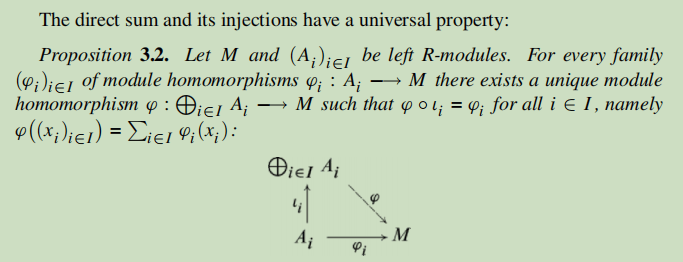
| Direct Sums | Direct sums decompose objects into coproducts (disjoint unions), whereas quotients involve identifying elements via an equivalence relation. Direct sums preserve all structure additively, while quotients collapse redundant information. |
| Subobjects | Subobjects are embedded within a larger structure, whereas quotients are constructed from the larger structure by factoring out a relation. Subobjects answer "what’s inside?"; quotients answer "what remains after identification?" |
| Localization | Localization inverts elements (e.g., creating a field of fractions), while quotients impose equivalences. Localization expands the structure; quotients contract it. |
| Colimits | Colimits generalize quotients in category theory, but quotients are specific colimits (coequalizers) where the equivalence relation is explicitly given. Colimits are more abstract, while the universal property of quotients provides concrete constructions. |
Future Trends and Innovations
As mathematics continues to intersect with machine learning and quantum computing, the universal property of quotients is poised to play an even larger role. In quantum mechanics, quotient spaces describe symmetry-protected topological phases, where the universal property helps classify exotic states of matter. Meanwhile, in artificial intelligence, quotient structures appear in representation learning, where data points are grouped into equivalence classes (e.g., via autoencoders or clustering). Future work may explore how these ideas can be formalized in a unified categorical framework, bridging theoretical mathematics with data-driven disciplines.Another frontier lies in homotopy theory and higher category theory, where higher-dimensional quotients (e.g., n-stacks) generalize the classical notion. These structures are already being applied to problems in string theory and robotic motion planning, suggesting that the universal property’s reach will only expand. As mathematicians refine their tools for studying infinite-dimensional spaces and non-commutative geometries, the quotient’s ability to distill complexity will remain indispensable.
Conclusion
The universal property of quotients is a testament to the power of abstraction in mathematics. By focusing on relationships rather than raw elements, it reveals the underlying order in seemingly disparate fields, from the symmetries of crystals to the logic of computer programs. Its elegance lies in its simplicity: a few axioms suffice to unlock a vast landscape of applications, from pure theory to cutting-edge technology. Yet its depth is equally profound, demanding a shift in perspective that rewards those willing to engage with its nuances.For mathematicians, the property is a tool for simplification and classification; for physicists, a lens for understanding symmetry; for computer scientists, a framework for efficient computation. Its enduring relevance is a reminder that the most fundamental ideas often lie at the intersection of abstraction and utility, waiting to be rediscovered in new contexts. As research progresses, the universal property of quotients will continue to be a beacon, guiding the exploration of structure in an increasingly interconnected world.
Comprehensive FAQs
Q: How does the universal property of quotients differ from the First Isomorphism Theorem?
The First Isomorphism Theorem states that if φ: G → H is a group homomorphism with kernel N, then G/N ≅ Im(φ). While this theorem relies on the universal property of quotients (the existence of G/N and the factorization of φ), it is a specific instance. The universal property is more general, applying to any algebraic structure (rings, modules) and even topological spaces, whereas the First Isomorphism Theorem is group-theoretic.
Q: Can the universal property of quotients be applied to non-algebraic structures, like graphs or sets?
Yes, but with adaptations. For sets, the universal property underpins the construction of quotient sets via equivalence relations. For graphs, quotient graphs (vertex or edge quotients) are defined by identifying vertices or edges under a congruence, and the universal property ensures these quotients behave predictably under graph homomorphisms. The key is defining an appropriate "structure-preserving" relation.
Q: Why is the "universal" in the universal property of quotients significant?
The term "universal" indicates that the quotient is the most general object satisfying certain conditions. This means any other structure preserving those conditions must factor through the quotient uniquely. It’s not just about existence but about maximality—the quotient is the "best" possible construction, up to isomorphism, for the given problem.
Q: How is the universal property of quotients used in cryptography?
In cryptography, the universal property of ℤ/nℤ underpins modular arithmetic, which is essential for RSA encryption. The property ensures that operations like exponentiation modulo n behave predictably, allowing secure key exchange. The quotient ℤ/nℤ also enables efficient computation of discrete logarithms and finite field arithmetic, both critical for modern cryptographic protocols.
Q: Are there limitations to the universal property of quotients?
While powerful, the universal property requires careful handling of equivalence relations or congruences. Poorly chosen relations can lead to quotients that lose meaningful structure (e.g., a quotient group that’s not a group if the normal subgroup isn’t normal). Additionally, in infinite structures, quotients may not inherit all desired properties (e.g., compactness in topology), requiring additional axioms like Hausdorff separation.
Q: How does the universal property of quotients relate to category theory?
In category theory, the universal property of quotients is a specific case of a coequalizer, which is a colimit. The quotient X/~ is the coequalizer of the parallel pair of morphisms from X × X to X (the equivalence relation and its inverse). This connection shows how quotients fit into the broader framework of categorical constructions, where objects are defined by their behavior under morphisms.
Q: Can you provide an example of the universal property in action beyond algebra?
In algebraic topology, the universal property appears in the construction of the quotient space X/R, where R is an equivalence relation on a topological space X. For instance, the real projective plane ℝℙ² is the quotient of the 2-sphere S² under the antipodal map. The universal property ensures that any continuous map from S² that identifies antipodal points factors uniquely through ℝℙ², preserving topological structure.
Leave a Comment
Comments are moderated before appearing. The data you submit is processed according to the Privacy Policy of versiliasolutions.oneagency.co.