The Hidden Fortune: Unraveling the Value of a 1881 Morgan Silver Dollar
Table of Contents
- The Complete Overview of the 1881 Morgan Silver Dollar
- Historical Background and Evolution
- Core Mechanisms: How It Works
- Key Benefits and Crucial Impact
- Major Advantages
- Comparative Analysis
- Future Trends and Innovations
- Conclusion
- Comprehensive FAQs
- Q: What’s the difference between an 1881 Morgan and a 1881-CC Morgan?
- Q: How do I authenticate a potential 1881 Morgan?
- Q: Why is the 1881-O more valuable than the 1881-S?
- Q: Can I melt down an 1881 Morgan for silver?
- Q: What’s the best way to store an 1881 Morgan to preserve its value?
- Q: Are there any known errors in the 1881 Morgan that increase its value?
The 1881 Morgan silver dollar is more than a piece of currency—it’s a tangible link to America’s 19th-century economic expansion, a symbol of Gilded Age craftsmanship, and for collectors, a potential windfall. Unlike modern bullion coins, its value isn’t solely tied to silver spot prices; rarity, condition, and historical context elevate it into a numismatic treasure. Even in average circulation strikes, examples can fetch hundreds, while key dates like the 1881-O (New Orleans mint) command prices exceeding $20,000 in high grades. The coin’s dual appeal—both as an investment and a collector’s item—makes understanding its value of a 1881 Morgan silver dollar a critical skill for numismatists and investors alike.
What sets the 1881 Morgan apart is its role in the series’ evolution. Minted during the final years of the Morgan dollar’s original run (1878–1904), it reflects the U.S. Mint’s transition from high-relief designs to the more durable, lower-relief style that defined the later years. This shift, coupled with the Coinage Act of 1873 (which demonetized silver), created a scarcity that modern collectors exploit. The 1881 variety—with its subtle design tweaks and limited mintage—embodies the tension between industrial progress and the enduring allure of silver coinage.
For those new to the world of Morgan silver dollar valuations, the 1881 date is a gateway to deeper numismatic study. Its market behavior mirrors broader trends in rare coins: condition dictates price, provenance adds prestige, and key errors (like the 1881-O’s elusive "No Motto" variety) can multiply value overnight. Whether you’re a historian, an investor, or a hobbyist, grasping the true worth of an 1881 Morgan silver dollar requires dissecting its mintage, grading standards, and the psychological factors that drive collectors to bid millions at auction.
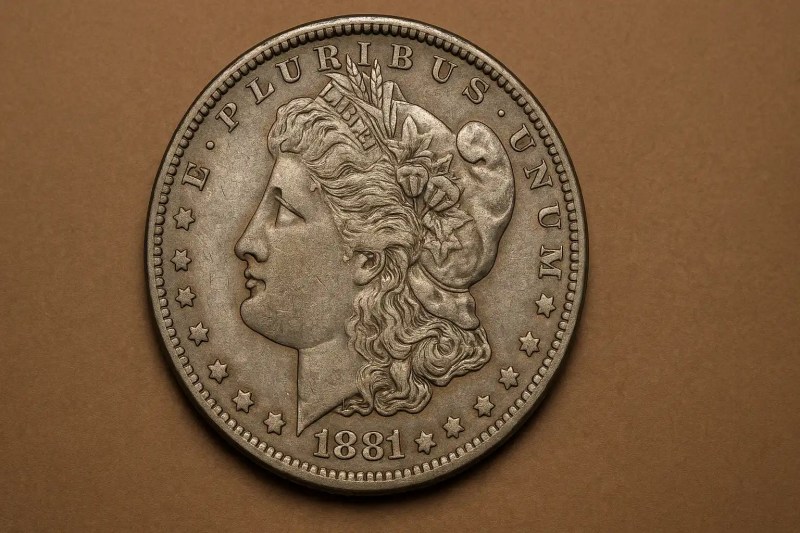
The Complete Overview of the 1881 Morgan Silver Dollar
The 1881 Morgan silver dollar represents a pivotal moment in American numismatics—a coin caught between the waning years of the silver standard and the rising dominance of gold-backed currency. Struck at three mints (Philadelphia, New Orleans, and San Francisco), it shares the iconic obverse design by George T. Morgan (depicting Liberty with a Phrygian cap) and the reverse by Charles E. Barber (an eagle perched on olive branches). Yet, its value of a 1881 Morgan silver dollar is shaped by production nuances: Philadelphia coins, for instance, were struck in far greater quantities than their New Orleans counterparts, creating a tiered rarity that collectors exploit. The 1881-O, in particular, is a holy grail for specialists, with only 3.5 million minted—less than half the Philadelphia output—making high-grade examples exceedingly scarce.Beyond mintmarks, the 1881 Morgan’s value is influenced by its place in the series’ lifecycle. By 1881, the U.S. Mint had already reduced silver content from $1.29 to $1.00 per dollar (due to the Bland-Allison Act), a move that inadvertently preserved the coin’s long-term appeal. Unlike later Morgan dollars, which were melted down en masse in the 20th century, the 1881 variety survived in sufficient numbers to sustain a robust secondary market. Today, a well-preserved 1881 Morgan silver dollar can command prices ranging from $25 (circulated) to $15,000+ (MS-65 or higher), with error coins and proof strikes reaching six figures.
Historical Background and Evolution
The 1881 Morgan dollar emerged during a period of economic upheaval. The Coinage Act of 1873 had severed the U.S. from the silver standard, but public pressure—particularly from Western silver miners—led to the Bland-Allison Act of 1878, which mandated the purchase of silver bullion for coinage. This created a paradox: while the government was legally required to mint silver dollars, the market’s preference for gold (backed by the Sherman Silver Purchase Act of 1890) ensured that most Morgan dollars were hoarded or exported. The 1881 issue, therefore, was both a product of political compromise and a victim of its own time—its value of a 1881 Morgan silver dollar today is a testament to how historical scarcity drives modern demand.The design itself tells a story of adaptation. Early Morgans (1878–1883) featured high-relief details that wore quickly in circulation, leading to complaints about rapid degradation. By 1881, the Mint had flattened the design, reducing detail but increasing durability. This transition is subtle but critical for collectors: high-relief 1881 Morgans (struck with the original dies) are rarer and more valuable than their low-relief counterparts. The Philadelphia mint’s 1881 output was massive—over 8.5 million coins—but only a fraction survived in uncirculated condition, making even common dates a prized find for type collectors.
Core Mechanisms: How It Works
The value of a 1881 Morgan silver dollar is determined by a trifecta of factors: intrinsic metal content, numismatic rarity, and market sentiment. Intrinsically, each coin contains 0.7734 troy ounces of 90% silver, worth roughly $15–$20 at current spot prices (as of 2023). However, this "bullion value" is often overshadowed by the coin’s collectible premium. For example, a circulated 1881 Morgan might sell for $30–$50, while a gem MS-65 can exceed $10,000—far above its silver content. This premium reflects the coin’s historical significance, limited mintage, and the effort required to preserve it in pristine condition.Grading is the linchpin of valuation. The Sheldon scale (used by PCGS and NGC) ranges from Poor (1) to Perfect Mint State (70), but the 1881 Morgan’s market value spikes at MS-60 and above. A coin graded MS-63 might sell for $500, while an MS-65 could reach $5,000. The difference lies in eye appeal: luster, strike sharpness, and the absence of toning or bag marks. Provenance also plays a role—coins with pedigrees (e.g., from the Eliasberg Collection) can command 20–30% premiums. For investors, this means that while the silver content provides a floor, the numismatic aspect drives long-term appreciation.
Key Benefits and Crucial Impact
The 1881 Morgan silver dollar bridges the gap between investment and heritage. For collectors, it’s a tangible piece of American history; for investors, it’s a hedge against inflation with a track record of outperforming paper assets. Unlike stocks or bonds, a well-chosen Morgan dollar offers liquidity, portability, and a hedge against currency debasement. Its value of a 1881 Morgan silver dollar has appreciated steadily over decades, with key dates like the 1881-O seeing 10x gains in high grades since the 1980s. This resilience stems from the coin’s dual role: it’s both a commodity (silver) and a collectible, reducing volatility compared to pure bullion.The psychological appeal is equally powerful. Owning a Morgan dollar connects the holder to the 19th century’s frontier spirit—when silver backed the dollar and the U.S. Mint was the world’s largest producer of coinage. This emotional resonance is why even common dates (like the 1881-P) hold value: collectors don’t just buy silver; they buy a story. The coin’s design, too, has endured: Liberty’s profile and the eagle’s spread wings remain iconic, reinforcing its cultural legacy.
> "A Morgan dollar is not just money; it’s a piece of American history that happens to be made of silver."
> —Q. David Bowers, Legendary Numismatist and Author of The Encyclopedia of United States Silver Coins
Major Advantages
- Inflation Hedge: Silver’s intrinsic value has historically outpaced inflation, with the 1881 Morgan’s numismatic premium adding a layer of protection against currency devaluation.
- Liquidity: Unlike rare stamps or art, Morgan dollars trade actively on platforms like eBay, Heritage Auctions, and PCGS Set Registry, ensuring quick sales for high-grade specimens.
- Portability: A single 1881-O in MS-65 can represent a lifetime’s savings in a pocket-sized asset, unlike real estate or fine wine.
- Tax Benefits: In the U.S., coins like the Morgan dollar are classified as "collectibles" for tax purposes, often qualifying for lower capital gains rates than stocks or bonds.
- Heritage Value: Provenance-rich examples (e.g., from the Walter Breen Collection) can achieve auction records, blending investment with cultural significance.
Comparative Analysis
| Factor | 1881 Morgan Silver Dollar | Modern Bullion (e.g., American Silver Eagle) |
|---|---|---|
| Primary Value Driver | Numismatic rarity + silver content | Silver spot price + premium |
| Liquidity | High for common dates; specialized for key varieties | High (widely traded) |
| Storage Costs | Moderate (slabs add ~10–15% to value) | Low (bulk storage efficient) |
| Long-Term Appreciation | Outperforms bullion for rare grades (e.g., 1881-O MS-65) | Tracks silver prices with minor premiums |

Future Trends and Innovations
The value of a 1881 Morgan silver dollar is poised to climb as millennial and Gen Z collectors enter the market, drawn by nostalgia and the allure of tangible assets. Digital platforms like Stack’s Bowers and PCGS Set Registry are making it easier to verify authenticity and provenance, reducing fraud risks. Meanwhile, economic uncertainty—from geopolitical tensions to central bank policies—could drive demand for silver as a "safe haven" asset, benefiting Morgans beyond their numismatic appeal.Innovations in grading technology (e.g., 3D imaging for toning analysis) may also refine valuations, though traditional eye-grading will likely remain dominant for Morgans. For investors, the key will be balancing between common dates (for liquidity) and key varieties (for appreciation). The 1881-O, in particular, could see renewed interest as the last surviving examples from major collections (like the Pittman Act melt) become available.
Conclusion
The 1881 Morgan silver dollar is a masterclass in how history, craftsmanship, and market forces collide to create value. Its true worth extends beyond the silver it contains—it’s a reflection of America’s industrial era, a challenge to modern collectors to preserve its legacy, and a hedge against the volatility of digital currencies. For those who understand its nuances, the 1881 Morgan isn’t just a coin; it’s a legacy asset with the potential to appreciate for generations.Yet, its value is not static. Condition, provenance, and market trends will continue to shape its trajectory. The lesson for collectors and investors alike is clear: the 1881 Morgan’s enduring appeal lies in its duality—it’s both a piece of the past and a smart play for the future.
Comprehensive FAQs
Q: What’s the difference between an 1881 Morgan and a 1881-CC Morgan?
A: The "CC" mintmark denotes the Carson City Mint (Nevada), which struck Morgans from 1878–1893. While the 1881-CC is rarer than the Philadelphia or New Orleans varieties, its value of an 1881 Morgan silver dollar is generally lower unless it’s a high-grade specimen or a key date (like 1881-CC, which is common but still sought after for type sets). Carson City coins often have softer strikes due to the mint’s high-altitude location.
Q: How do I authenticate a potential 1881 Morgan?
A: Start with a magnifying glass and a grading guide to check for counterfeit hallmarks (e.g., fake mintmarks, incorrect die breaks). For high-value coins, use third-party services like PCGS or NGC, which provide slab certifications. Beware of "washers"—coins cleaned to remove toning—which can destroy value. Provenance (e.g., a pedigree from a reputable dealer) also adds credibility.
Q: Why is the 1881-O more valuable than the 1881-S?
A: The 1881-O (New Orleans) was minted in far smaller quantities (3.5 million vs. 1.5 million for San Francisco) and was more heavily exported or melted in the early 20th century. Today, high-grade 1881-O Morgans are scarcer, driving up their market value of an 1881 Morgan silver dollar. Additionally, the New Orleans mint’s reputation for inconsistent strikes (due to humid conditions) makes well-preserved examples even rarer.
Q: Can I melt down an 1881 Morgan for silver?
A: Legally, yes—but it’s financially reckless. Even in a silver bullion crash, the numismatic value of a high-grade Morgan will exceed its melt value. For example, an 1881-O in MS-65 might contain $15 of silver but sell for $10,000+. The IRS also taxes numismatic coins as collectibles, so melting could trigger capital gains taxes on the lost premium. Always consult a numismatist before liquidating.
Q: What’s the best way to store an 1881 Morgan to preserve its value?
A: Use acid-free holders (e.g., Whitman or Ultra Cap) for circulated coins, and PCGS/NGC slabs for uncirculated specimens. Store in a cool, dry environment (avoid attics or basements) and handle only with cotton gloves to prevent oils from transferring. Never stack coins—use individual slots in albums to prevent scratching. For long-term storage, consider a bank safety deposit box or a professional vault.
Q: Are there any known errors in the 1881 Morgan that increase its value?
A: Yes. The most sought-after errors include:
- No Motto (1881-O): Some dies omitted "E PLURIBUS UNUM" due to a mint error; these can fetch $50,000+ in MS-63.
- Double Die Obverse (DDO): Subtle doubling on Liberty’s hair or cheek adds 20–50% to value.
- Proof-Like Strike: Coins with mirror-like fields (often from the Philadelphia mint) are prized by collectors.
Leave a Comment
Comments are moderated before appearing. The data you submit is processed according to the Privacy Policy of versiliasolutions.oneagency.co.