The Rise of Virtual Reality Real Estate: A New Frontier in Property
Table of Contents
- The Complete Overview of Virtual Reality Real Estate
- Historical Background and Evolution
- Core Mechanisms: How It Works
- Key Benefits and Crucial Impact
- Major Advantages
- Comparative Analysis
- Future Trends and Innovations
- Conclusion
- Comprehensive FAQs
- Q: Can I use virtual reality real estate for business?
- Q: Is virtual reality real estate legally recognized?
- Q: How do I buy virtual land?
- Q: What determines the value of virtual land?
- Q: Can I sell virtual land for profit?
- Q: Are there risks involved in virtual reality real estate?
The concept of owning a home has long been tied to physical boundaries—brick, mortar, and land deeds. But what if the next generation of property transcends those limitations? Virtual reality real estate (VRRE) is redefining ownership, investment, and spatial interaction by merging digital innovation with traditional real estate paradigms. Unlike conventional markets, where location dictates value, VRRE allows buyers to acquire digital land within virtual worlds, where scarcity, utility, and speculative potential redefine asset appreciation.
This shift isn’t just about gaming or entertainment; it’s a burgeoning economic ecosystem. Platforms like Decentraland, The Sandbox, and Somnium Space have already facilitated millions in transactions, proving that digital property isn’t a niche experiment but a legitimate asset class. The technology behind it—high-fidelity VR headsets, blockchain-based deeds, and interactive 3D environments—creates a seamless bridge between the physical and virtual, raising critical questions: How does ownership work in a digital space? What legal frameworks govern these transactions? And how will this disrupt—or complement—the traditional real estate sector?
For investors, developers, and tech enthusiasts, VRRE represents a frontier where creativity meets capital. Yet, skepticism lingers: Is this just another speculative bubble, or is it the next evolution of property rights? The answers lie in understanding its mechanics, economic drivers, and the broader implications for how we perceive value in the digital age.

The Complete Overview of Virtual Reality Real Estate
Virtual reality real estate operates at the intersection of technology and property rights, leveraging immersive digital environments to simulate ownership, development, and commerce. Unlike traditional real estate, which relies on physical infrastructure, VRRE thrives in metaverse platforms where users can buy, sell, or lease virtual land parcels. These parcels often come with NFT-based deeds, ensuring verifiable ownership on blockchain networks. The value proposition stems from both speculative investment and functional utility—virtual land can host businesses, events, or even serve as digital storefronts for brands.
The market’s growth is fueled by three key factors: the rise of the metaverse, advancements in VR hardware (such as Meta Quest and Apple Vision Pro), and the increasing acceptance of digital assets as legitimate investments. While early adopters focus on platforms like Decentraland, where land prices have soared, mainstream adoption hinges on interoperability—allowing virtual properties to exist across multiple metaverses. This cross-platform compatibility could unlock new use cases, from virtual tourism to digital coworking spaces.
Historical Background and Evolution
The roots of virtual reality real estate trace back to the early 2010s, when blockchain-based virtual worlds began experimenting with digital ownership. Projects like Second Life (2003) laid the groundwork by introducing user-generated content and virtual economies, but it was the advent of Ethereum and smart contracts that enabled true property rights. In 2017, Decentraland’s ICO raised $24 million, signaling the birth of a new asset class. By 2021, virtual land sales in Decentraland and The Sandbox exceeded $500 million, with parcels trading at prices comparable to prime physical real estate in some cities.
The evolution of VRRE is closely tied to technological milestones: the launch of high-end VR headsets (Oculus Rift, HTC Vive), the proliferation of Web3 infrastructure, and the mainstreaming of NFTs. These developments reduced barriers to entry, allowing developers to build interactive experiences on virtual land. Today, VRRE is no longer confined to tech enthusiasts; it’s attracting institutional investors, luxury brands (like Gucci’s virtual store in The Sandbox), and even governments exploring digital sovereignty. The shift from speculative hype to practical utility marks the next phase of this industry.
Core Mechanisms: How It Works
At its core, virtual reality real estate functions through a combination of blockchain technology, 3D modeling, and VR/AR hardware. When a user purchases virtual land, they receive an NFT representing ownership, stored on a blockchain like Ethereum. This deed is immutable and transferable, mirroring physical property titles. The land itself exists as a 3D polygon within a virtual world, defined by coordinates and metadata (e.g., size, zoning restrictions). Developers then use tools like Unity or Unreal Engine to build structures, events, or businesses on these parcels.
The transaction process mirrors traditional real estate but with digital efficiencies. Buyers browse virtual marketplaces (e.g., OpenSea, Rarible), negotiate prices via crypto, and complete purchases through smart contracts—eliminating intermediaries like brokers or escrow services. However, challenges remain: interoperability between platforms is limited, and legal recognition of digital property is still evolving. Despite these hurdles, the mechanics of VRRE are robust enough to support a growing ecosystem of virtual commerce, entertainment, and social interaction.
Key Benefits and Crucial Impact
Virtual reality real estate is more than a novelty—it’s a disruptive force with tangible benefits for investors, creators, and consumers. For businesses, virtual land offers a low-cost alternative to physical retail, with global reach and 24/7 accessibility. For individuals, it presents an opportunity to monetize digital creativity, whether through virtual art galleries, gaming experiences, or branded metaverse events. The impact extends to urban planning, where digital cities can simulate real-world infrastructure before construction, reducing costs and environmental footprints.
Yet, the most profound change may be cultural. VRRE challenges our understanding of property, ownership, and even identity. If a virtual home can be as meaningful as a physical one, how do we define "home"? As the line between digital and physical blurs, the implications for law, economics, and social behavior are vast. The question isn’t whether VRRE will persist, but how deeply it will reshape our relationship with space itself.
"Virtual reality real estate isn’t just about buying land—it’s about redefining the relationship between humans and space in the digital age."
— Phil Rosedale, Founder of Second Life and High Fidelity
Major Advantages
- Global Accessibility: Virtual land transcends geographical barriers, allowing buyers from any country to participate in a borderless market.
- Lower Entry Costs: Compared to physical real estate, virtual parcels are often more affordable, with prices starting as low as a few hundred dollars.
- Creative Freedom: Owners can design and monetize their land without physical constraints, enabling unique business models like virtual concerts or digital marketplaces.
- Blockchain Security: NFT-based deeds provide transparent, tamper-proof ownership records, reducing fraud risks.
- Future-Proofing: As the metaverse expands, early adopters may benefit from appreciation similar to early internet domain investors.
Comparative Analysis
| Virtual Reality Real Estate | Traditional Real Estate |
|---|---|
| Ownership via NFTs on blockchain | Ownership via deeds registered with government agencies |
| No physical maintenance costs | High maintenance, property taxes, and insurance costs |
| Limited legal recognition in most jurisdictions | Legally binding in all sovereign nations |
| Value driven by digital utility and speculation | Value driven by location, scarcity, and physical demand |
Future Trends and Innovations
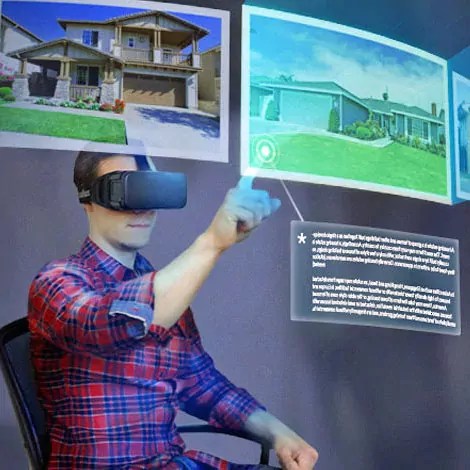
The next decade of virtual reality real estate will likely see increased integration with augmented reality (AR) and the Internet of Things (IoT), blurring the lines between virtual and physical spaces. Imagine walking through a virtual showroom of a physical home before buying it, or attending a concert in a hybrid AR/VR venue. Advances in haptic feedback and neural interfaces could make these experiences even more immersive, further normalizing digital ownership. Additionally, regulatory clarity will be critical—governments may soon recognize virtual property rights, paving the way for tax frameworks and legal protections.
Innovations like AI-driven virtual architecture and dynamic metaverse economies will also reshape the industry. For instance, AI could automate the design of virtual properties based on user preferences, while decentralized autonomous organizations (DAOs) might govern virtual communities. The key trend? VRRE is evolving from a speculative asset into a foundational element of the digital economy, with applications spanning education, healthcare, and entertainment. The only certainty is that the landscape will continue to transform at an unprecedented pace.
Conclusion
Virtual reality real estate is not a fleeting trend but a fundamental shift in how we perceive and interact with property. While challenges remain—particularly around legal recognition and interoperability—the economic and creative potential is undeniable. For investors, it offers a high-growth asset class; for developers, it’s a canvas for innovation; and for consumers, it’s a new frontier of digital experiences. The question is no longer whether VRRE will succeed, but how deeply it will integrate into our daily lives.
As the metaverse matures, the boundaries between virtual and physical will dissolve further, making VRRE a cornerstone of the future economy. Early adopters who understand its mechanics, risks, and opportunities will be best positioned to capitalize on this revolution. The future of property isn’t just about land—it’s about the spaces we inhabit, whether they exist in the physical world or the digital one.
Comprehensive FAQs
Q: Can I use virtual reality real estate for business?
A: Yes. Many brands and entrepreneurs use virtual land to host stores, events, or interactive experiences. Platforms like The Sandbox allow businesses to create 3D virtual shops, while Decentraland supports virtual conferences and art exhibitions. The key is leveraging the platform’s tools to design an engaging user experience.
Q: Is virtual reality real estate legally recognized?
A: Currently, most jurisdictions do not recognize virtual property rights under traditional law. However, some countries (e.g., the UAE) have begun exploring digital asset regulations. Ownership is typically enforced via blockchain smart contracts, but disputes may require arbitration or legal clarification in emerging frameworks.
Q: How do I buy virtual land?
A: You can purchase virtual land through dedicated marketplaces like OpenSea, Rarible, or platform-specific stores (e.g., Decentraland’s LAND marketplace). Transactions are usually conducted in cryptocurrency (ETH, SOL, etc.), and you’ll receive an NFT deed upon completion. Ensure the platform supports your preferred VR headset for full immersion.
Q: What determines the value of virtual land?
A: Value is driven by factors like location (prime virtual districts), scarcity (limited parcels), utility (commercial potential), and speculation (market hype). For example, a parcel near a major metaverse event venue may appreciate faster than an isolated plot. Historical sales data and platform activity also influence pricing.
Q: Can I sell virtual land for profit?
A: Absolutely. Many investors treat virtual land as a speculative asset, buying low and selling high—similar to physical real estate flipping. However, market volatility is higher, and liquidity depends on platform demand. Some sellers also monetize their land through rental income (e.g., leasing space for events).
Q: Are there risks involved in virtual reality real estate?
A: Yes. Risks include market bubbles, platform shutdowns, regulatory uncertainty, and technical limitations (e.g., interoperability issues). Additionally, since virtual land lacks physical substance, its long-term value depends on sustained metaverse adoption. Diversification and due diligence are essential for mitigating these risks.
Leave a Comment
Comments are moderated before appearing. The data you submit is processed according to the Privacy Policy of versiliasolutions.oneagency.co.