The Hidden Brilliance of What Is a 2.5D Game
Table of Contents
- The Complete Overview of What Is a 2.5D Game
- Historical Background and Evolution
- Core Mechanics: How It Works
- Key Benefits and Crucial Impact
- Major Advantages
- Comparative Analysis
- Future Trends and Innovations
- Conclusion
- Comprehensive FAQs
- Q: Is a 2.5D game the same as a 2D game with depth?
- Q: Can 2.5D games run on any platform?
- Q: Are there famous AAA games that use 2.5D techniques?
- Q: How do developers create the illusion of depth in 2.5D?
- Q: Will 2.5D games become obsolete as 3D graphics improve?
The term what is a 2.5D game might sound like a niche curiosity, but it represents a revolutionary fusion of visual storytelling and technical ingenuity. Unlike traditional 2D or 3D games, this hybrid approach leverages the illusion of depth without the full computational overhead of true three-dimensional environments. Developers exploit perspective tricks—parallax scrolling, layered sprites, and pseudo-3D lighting—to create experiences that feel immersive yet remain accessible. The result? Games that balance artistic expression with performance efficiency, often favored by indie studios and mobile developers.
This technique isn’t just a gimmick; it’s a deliberate choice with roots in both retro gaming nostalgia and modern optimization demands. Titles like Celeste, Hyper Light Drifter, and Stardew Valley prove its versatility, spanning platformers, RPGs, and even narrative-driven adventures. The appeal lies in its ability to deliver cinematic depth while keeping development costs and hardware requirements low—a critical factor for smaller teams and casual audiences alike.
Yet the question persists: What is a 2.5D game beyond the surface-level definition? It’s a design philosophy that prioritizes player immersion through clever visual deception, where every pixel and parallax layer serves a purpose. This article dissects its mechanics, historical significance, and why it continues to thrive in an era dominated by photorealistic 3D graphics.
The Complete Overview of What Is a 2.5D Game
At its core, what is a 2.5D game refers to a visual and gameplay style that mimics three-dimensional space using two-dimensional techniques. The key distinction lies in how depth is achieved: rather than rendering fully volumetric objects, developers use layered sprites, isometric projections, or forced perspective to create the illusion of a third axis. This approach isn’t about sacrificing quality—it’s about optimizing resources while preserving artistic integrity. Games like Shovel Knight and Hollow Knight exemplify this balance, where pixel-perfect 2D art interacts with depth cues to craft worlds that feel both retro and modern.The term itself emerged in the late 20th century as a middle ground for developers constrained by hardware limitations. Early examples, such as Super Mario Bros.’ side-scrolling levels or Zelda’s top-down dungeons, laid the groundwork by introducing parallax backgrounds—layers moving at different speeds to simulate distance. Today, what is a 2.5D game encompasses a broader spectrum, from side-scrollers with pseudo-3D lighting to isometric RPGs with dynamic camera angles. The evolution reflects a broader industry shift toward accessibility without compromising creativity.
Historical Background and Evolution
The origins of what is a 2.5D game can be traced back to the 1980s and 1990s, when arcade and console games pioneered techniques to simulate depth. Out Run (1986) used parallax scrolling to make its racetrack feel expansive, while Donkey Kong Country (1994) employed pre-rendered 3D backgrounds to enhance its 2D platforming. These innovations weren’t just technical feats—they were narrative tools, allowing developers to convey scale and atmosphere without the computational cost of full 3D rendering.By the 2000s, the rise of indie development and digital distribution platforms like Steam and itch.io democratized the medium. Games like Super Meat Boy (2010) and Undertale (2015) demonstrated how what is a 2.5D game could rival AAA productions in both polish and emotional impact. The technique’s adaptability—from Celeste’s hand-drawn precision to Stardew Valley’s pixel-art charm—proved its staying power. Even today, studios like FromSoftware (Bloodborne) and Nintendo (Metroid Dread) incorporate 2.5D elements to enhance their worlds, blurring the line between traditional and hybrid design.
Core Mechanics: How It Works
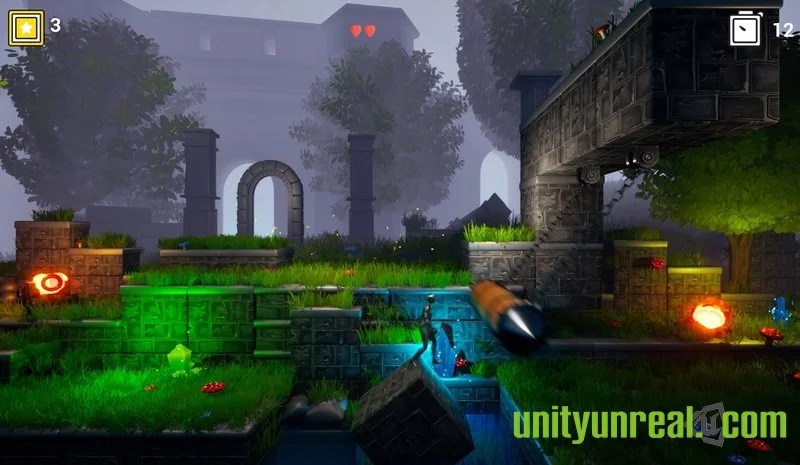
The magic of what is a 2.5D game lies in its layering system. Developers stack multiple 2D planes—foreground, midground, and background—each moving at incremental speeds to create depth. For instance, a tree in the distance might shift slower than a bush in the foreground, tricking the player’s brain into perceiving a three-dimensional space. This parallax effect is further enhanced by lighting tricks: shadows cast at angles, dynamic camera tilts, or even faux-3D textures applied to sprites.Beyond visuals, gameplay mechanics often adapt to the illusion. Side-scrolling platformers use fixed camera angles to maintain readability, while isometric RPGs like Fire Emblem employ grid-based movement to simulate depth. Some games, such as Hyper Light Drifter, go further by incorporating pseudo-3D lighting and particle effects to reinforce the illusion. The result is a system that’s both technically efficient and artistically rich, offering a middle path between the flatness of traditional 2D and the complexity of full 3D.
Key Benefits and Crucial Impact
The enduring popularity of what is a 2.5D game stems from its unique advantages. For developers, it reduces the need for expensive 3D modeling and physics engines, lowering production costs while allowing for rapid iteration. For players, it delivers a visually engaging experience without the performance demands of open-world 3D games—a critical factor on mobile devices and lower-end hardware. This accessibility has made 2.5D a staple of indie gaming, where creativity often outpaces budget.Yet its impact extends beyond technical efficiency. The style fosters a distinct aesthetic—one that blends nostalgia with innovation. Games like Hollow Knight and Dead Cells use 2.5D to craft intricate, handcrafted worlds that feel alive despite their 2D roots. The illusion of depth also enhances storytelling, allowing developers to guide the player’s gaze and emphasize key elements without overwhelming them with visual clutter.
> "2.5D isn’t just a compromise; it’s a deliberate choice to prioritize artistry over realism. It’s the difference between a photograph and a painting—both can be stunning, but they serve different purposes." — Toby Fox, creator of Undertale and Deltarune
Major Advantages
- Cost-Effective Development: Reduces reliance on 3D assets, lowering modeling, texturing, and animation costs.
- Performance Optimization: Runs smoothly on lower-end hardware, including mobile and older consoles.
- Artistic Freedom: Allows for stylized, handcrafted visuals that stand out in a market dominated by photorealism.
- Narrative Clarity: Fixed camera angles and layered depth enhance storytelling by controlling player focus.
- Modular Design: Easier to prototype and iterate, making it ideal for indie developers and experimental projects.
Comparative Analysis
| Aspect | 2.5D Games | Traditional 2D Games | Full 3D Games |
|---|---|---|---|
| Visual Depth | Illusion via parallax, lighting, and perspective | Flat or limited depth (e.g., sprites) | True volumetric rendering |
| Development Cost | Moderate (hybrid art/tech) | Low (simpler assets) | High (complex modeling) |
| Performance Demand | Low to moderate | Very low | High (GPU/CPU intensive) |
| Artistic Style | Stylized, layered, cinematic | Pixel art, vector, or flat designs | Photorealistic or stylized 3D |

Future Trends and Innovations
The future of what is a 2.5D game hinges on two key directions: technological integration and creative experimentation. As real-time ray tracing and advanced shaders become more accessible, developers may blend 2.5D with procedural lighting or dynamic reflections to deepen the illusion. Tools like Unity’s 2D/3D hybrid pipelines or Godot’s layered rendering could further simplify production, making 2.5D even more viable for indie projects.Beyond tech, the style’s evolution will likely focus on narrative and interactivity. Games like Outer Wilds (which uses 2.5D for its celestial exploration) suggest a trend toward using the illusion to enhance environmental storytelling. Virtual reality could also play a role, with 2.5D techniques offering a lighter alternative to full 3D VR experiences. As long as the industry values accessibility and artistic innovation, what is a 2.5D game will remain a vital part of gaming’s future.
Conclusion
The question what is a 2.5D game reveals more than just a technical classification—it exposes a philosophy of efficiency, creativity, and player-centric design. In an era where games often prioritize hyper-realism, 2.5D offers a refreshing alternative: one that respects the player’s time and hardware while delivering visually stunning experiences. Its history, from arcade classics to modern indie gems, proves that limitations can breed innovation.As technology advances, the boundaries of what is a 2.5D game will continue to expand. Whether through VR integration, AI-assisted parallax generation, or entirely new narrative techniques, this hybrid approach is far from obsolete. It’s a testament to the idea that sometimes, the most groundbreaking ideas aren’t about pushing boundaries—but about redefining them.
Comprehensive FAQs
Q: Is a 2.5D game the same as a 2D game with depth?
A: Not exactly. While both use 2D sprites, what is a 2.5D game specifically employs techniques like parallax scrolling, forced perspective, or isometric projections to create the illusion of a third dimension. Traditional 2D games lack these depth cues entirely.
Q: Can 2.5D games run on any platform?
A: Yes, one of the biggest advantages of what is a 2.5D game is its cross-platform compatibility. Due to lower resource demands, these games perform well on consoles, PCs, and even mobile devices without requiring high-end hardware.
Q: Are there famous AAA games that use 2.5D techniques?
A: Absolutely. While often associated with indie titles, AAA games like Bloodborne (FromSoftware), Metroid Dread (Nintendo), and Bayonetta (PlatinumGames) incorporate 2.5D elements—such as isometric combat or layered backgrounds—to enhance their worlds.
Q: How do developers create the illusion of depth in 2.5D?
A: The primary methods include:
- Parallax scrolling (multiple layers moving at different speeds)
- Forced perspective (angles and lighting to simulate distance)
- Isometric projections (30° angles to imply height)
- Pseudo-3D lighting (shadows and highlights to fake volume)
Q: Will 2.5D games become obsolete as 3D graphics improve?
A: Unlikely. Even with advancements in 3D, what is a 2.5D game offers unique advantages—lower costs, stylistic flexibility, and accessibility—that make it a permanent fixture in gaming. It’s not about replacement but about diversification of design approaches.
Leave a Comment
Comments are moderated before appearing. The data you submit is processed according to the Privacy Policy of versiliasolutions.oneagency.co.