What Is a Zoning Compliance Letter—and Why It’s Critical for Your Property
Table of Contents
- The Complete Overview of What Is a Zoning Compliance Letter
- Historical Background and Evolution
- Core Mechanisms: How It Works
- Key Benefits and Crucial Impact
- Major Advantages
- Comparative Analysis
- Future Trends and Innovations
- Conclusion
- Comprehensive FAQs
- Q: How long does it take to get a zoning compliance letter?
- Q: Can a zoning compliance letter expire?
- Q: What happens if my property isn’t compliant?
- Q: Do I need a zoning compliance letter for a home renovation?
- Q: Can I challenge a zoning compliance letter if I disagree with its findings?
- Q: Are zoning compliance letters transferable between properties?
- Q: How do I request a zoning compliance letter?
A zoning compliance letter isn’t just bureaucratic jargon—it’s a critical tool that can determine whether a property remains legally operational, a development moves forward, or a business faces costly penalties. Whether you’re a developer reviewing a brownfield site, a homeowner renovating an inherited property, or a commercial landlord expanding a retail space, understanding what is a zoning compliance letter is non-negotiable. Without it, you risk voiding permits, triggering inspections, or even facing demolition orders—scenarios that have derailed projects worth millions.
The letter serves as a municipal stamp of approval, confirming that a property’s current use aligns with local zoning ordinances. But its role extends beyond mere verification. It acts as a shield against disputes with neighbors, a prerequisite for financing, and a safeguard against future legal challenges. For instance, a mixed-use zoning compliance letter might reveal that a residential building was illegally converted into offices, forcing a costly rezoning process—or worse, a forced return to its original use. The stakes are high, yet many property owners and professionals overlook its significance until it’s too late.
Consider the case of a boutique hotel in Chicago that discovered, mid-renovation, that its proposed rooftop bar violated height restrictions in a historic preservation district. The absence of a pre-renovation zoning compliance letter meant the project stalled for six months while the city reworked permits. The delay cost the owners $2.1 million in lost revenue—a preventable expense if they’d secured the document upfront. This isn’t an isolated incident. Across the U.S., cities from Los Angeles to Boston have rejected projects due to overlooked zoning discrepancies, often because stakeholders assumed their property was compliant without formal confirmation.
The Complete Overview of What Is a Zoning Compliance Letter
A zoning compliance letter, often referred to as a zoning verification letter or zoning compliance certificate, is an official document issued by a municipal planning department or zoning board. It confirms whether a property’s current use, structure, or proposed modifications adhere to local zoning laws, building codes, and land-use regulations. Unlike a zoning map, which shows designated districts, this letter provides a real-time assessment of whether a specific parcel meets all applicable rules—whether for residential, commercial, industrial, or agricultural purposes.
The document typically includes key details such as the property’s zoning classification (e.g., R-3 for single-family residential), permitted uses, height limits, setback requirements, off-street parking mandates, and any conditional uses or variances in place. Some jurisdictions also note pending rezoning applications or historical designations (e.g., historic preservation overlays) that could impact future development. The letter’s value lies in its specificity: it doesn’t just say a property is in a "commercial zone"—it details whether a proposed office, restaurant, or warehouse is legally allowable there.
Historical Background and Evolution
The origins of zoning compliance letters trace back to the early 20th century, when rapid urbanization led to unchecked sprawl and conflicts between residential, industrial, and commercial land uses. The 1916 New York Zoning Resolution is often cited as the first modern zoning ordinance, establishing height limits and use restrictions to prevent nuisances like factories adjacent to schools. Over time, cities expanded these rules to include environmental protections, accessibility standards, and historic preservation—each layer adding complexity to compliance verification.
Before digital records, property owners relied on manual inspections and paper-based zoning maps, making errors common. The rise of Geographic Information Systems (GIS) in the 1990s streamlined zoning data, but even today, many municipalities issue compliance letters only after a formal request—leaving gaps for those who assume their property is compliant. The letter’s modern role has evolved to address not just physical structures but also emerging issues like short-term rentals (e.g., Airbnb restrictions in residential zones) and renewable energy installations (e.g., solar panel setbacks). Some cities now require pre-application compliance letters for large projects to avoid costly delays.
Core Mechanisms: How It Works
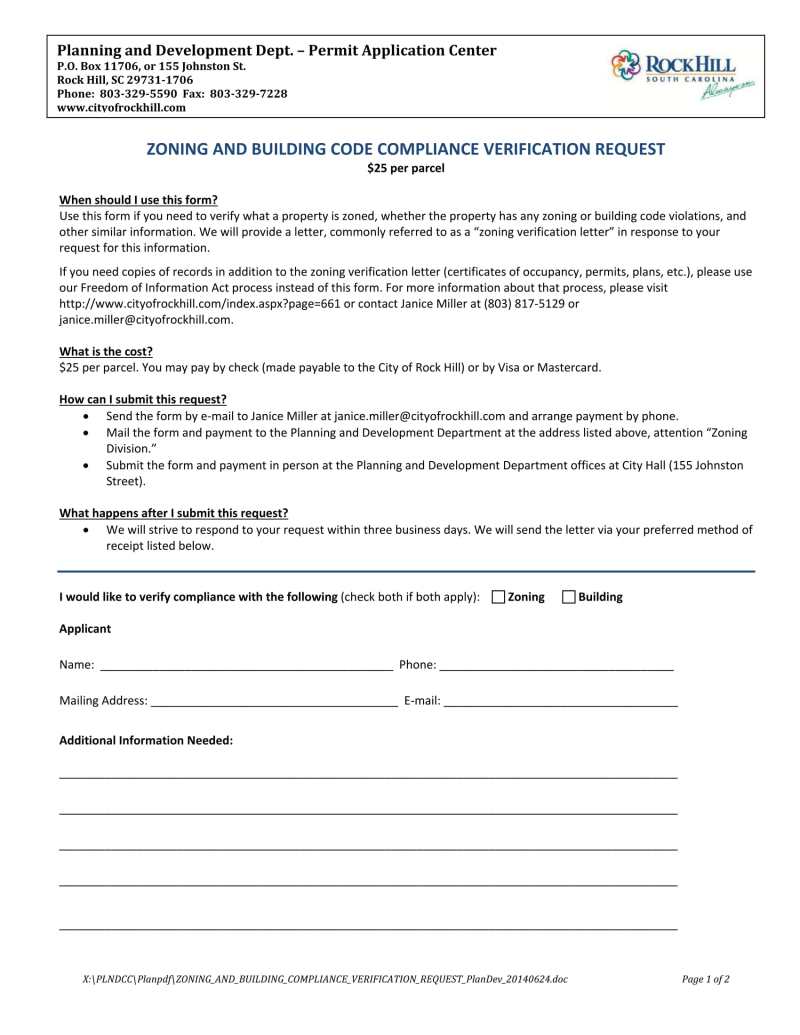
Obtaining a zoning compliance letter begins with a request to the local planning or zoning department, often submitted via an online portal, email, or in-person at city hall. The process varies by jurisdiction: some cities provide the letter for free, while others charge a fee (typically $50–$300) to cover staff time and record searches. The request should include the property’s legal description (e.g., parcel ID or address), the proposed use, and any specific questions (e.g., "Can I add a second story to this mixed-use building?").
Once submitted, the department cross-references the property against its zoning database, which may include historical records, survey maps, and prior approvals. For complex cases—such as properties with overlapping zoning districts or conditional uses—they may consult with engineers or legal advisors. The turnaround time ranges from a few days to several weeks, depending on workload. Upon approval, the letter is signed by a zoning official or city planner and serves as a snapshot of compliance at that moment. It’s critical to note that zoning laws can change, so a letter from 2015 may not reflect today’s rules—especially in fast-growing areas.
Key Benefits and Crucial Impact
A zoning compliance letter is more than a piece of paper; it’s a risk-management tool that can save property owners from financial losses, legal battles, and operational shutdowns. For developers, it’s the first step in due diligence, ensuring that a $10 million project isn’t built on a site that can’t legally accommodate it. For homeowners, it clarifies whether a home office, ADU (Accessory Dwelling Unit), or pool complies with local rules—avoiding fines or forced removals. Even investors use these letters to assess risk before purchasing property, as non-compliant uses can trigger costly retrofitting or rezoning.
Beyond individual transactions, zoning compliance letters play a broader role in urban planning. Cities use them to track patterns of non-compliance, identify enforcement gaps, and prioritize inspections. For example, if multiple letters reveal that homeowners in a suburban district are operating unpermitted short-term rentals, the city may launch a crackdown. The letter also serves as evidence in disputes, such as neighbor complaints or appeals to zoning board decisions. Without it, property owners are left defending their case with vague assumptions rather than concrete documentation.
"A zoning compliance letter is the difference between a smooth project and a legal nightmare. We’ve seen developers spend $500,000 on a site plan only to discover their proposed use wasn’t allowed—all because they skipped this step."
— Maria Rodriguez, Senior Planner, Los Angeles Department of City Planning
Major Advantages
- Legal Protection: Serves as evidence in court or before a zoning board if compliance is challenged. Courts often favor documented verification over verbal assurances.
- Financial Safeguard: Prevents costly rework or penalties by confirming permit requirements upfront. For example, a letter might reveal that a proposed retail space needs additional parking, allowing time to adjust the design.
- Permit Acceleration: Many municipalities fast-track permit applications for projects with pre-approved compliance letters, reducing processing times by 30–50%.
- Investor Confidence: Lenders and buyers often require compliance letters as part of due diligence, especially for commercial or multi-family properties.
- Future-Proofing: Helps identify potential issues before they escalate, such as height violations, lot coverage limits, or environmental restrictions.
Comparative Analysis
Understanding the differences between a zoning compliance letter, a zoning certificate, and a zoning map is essential to avoid confusion. While all relate to land-use regulations, their purposes and scopes vary significantly. Below is a side-by-side comparison of key documents property owners encounter:
| Document | Purpose and Key Features |
|---|---|
| Zoning Compliance Letter | Confirms whether a specific property meets current zoning laws for its current or proposed use. Includes permitted uses, height limits, setbacks, and conditional requirements. Valid only for the date issued. |
| Zoning Certificate | A broader document that may include the compliance letter plus additional details like flood zone status, easements, or historic district rules. Some cities issue this instead of a standalone letter. |
Zoning Map
| Shows zoning districts (e.g., R-2, C-3) for an area but doesn’t confirm whether a specific property complies with its district’s rules. Useful for initial research but not for permit applications. |
|
| Variance or Special Permit | Not a compliance document, but a request for exception to zoning rules. A compliance letter may reveal whether a variance is needed before applying for one. |

Future Trends and Innovations
The traditional zoning compliance letter is undergoing a digital transformation, with cities adopting blockchain-based verification systems and AI-powered zoning databases. For example, San Francisco’s "SF Planning" portal now allows real-time compliance checks via API, reducing turnaround times from weeks to minutes. Similarly, Houston’s "311" system integrates zoning data with property records, enabling citizens to request compliance letters via mobile app. These innovations aim to reduce human error and streamline the approval process, though adoption remains uneven across smaller municipalities.
Another emerging trend is the integration of environmental and climate resilience data into compliance letters. Cities like Portland and Seattle are now including floodplain risk assessments, wildfire hazard zones, and microclimate heat island mitigation requirements within zoning verification. For instance, a compliance letter in a coastal city might note that a proposed development must include elevated foundations due to rising sea levels. As climate regulations tighten, these letters will likely expand to cover sustainability metrics, such as solar-ready requirements or green building standards. Property owners ignoring these evolving standards risk non-compliance in the near future.
Conclusion
What is a zoning compliance letter? It’s the linchpin of property development, renovation, and ownership—yet its importance is often underestimated until a project hits a snag. From preventing multimillion-dollar delays to avoiding fines for unpermitted uses, this document is a non-negotiable tool for anyone interacting with real estate. The key to leveraging its power lies in proactivity: securing the letter before making decisions, not after. Whether you’re a developer eyeing a downtown lot or a homeowner planning a backyard shed, treating the compliance letter as a foundational step—rather than an afterthought—can mean the difference between success and setback.
The landscape of zoning compliance is evolving, with technology and climate policy reshaping how letters are issued and interpreted. Staying ahead means not only understanding the current mechanics but also anticipating how local regulations may change. For property professionals, the message is clear: a zoning compliance letter isn’t just paperwork—it’s insurance against the unknown. And in an era of tight budgets and stricter enforcement, that insurance is priceless.
Comprehensive FAQs
Q: How long does it take to get a zoning compliance letter?
A: Processing times vary by city. Small requests (e.g., single-family residential) may take 3–7 business days, while complex commercial or mixed-use properties can take 2–4 weeks. Some cities offer expedited services for a fee. Always confirm turnaround times with your local planning department before starting a project.
Q: Can a zoning compliance letter expire?
A: Yes. Zoning laws can change, and the letter reflects compliance at the time of issuance. For long-term projects, request an updated letter if the timeline exceeds 1–2 years, especially in fast-growing areas or cities with frequent zoning updates.
Q: What happens if my property isn’t compliant?
A: Non-compliance can trigger inspections, fines, stop-work orders, or even forced corrections (e.g., removing an unpermitted addition). Some jurisdictions offer grace periods for minor violations, but repeated offenses may lead to legal action. A compliance letter helps identify issues early so you can apply for variances or corrections proactively.
Q: Do I need a zoning compliance letter for a home renovation?
A: It depends on the scope. Minor cosmetic changes (e.g., repainting) usually don’t require verification, but structural modifications—such as adding a room, converting a garage to living space, or installing a pool—often do. Check your city’s rules, as some mandate compliance letters for any work exceeding a certain cost threshold (e.g., $5,000+).
Q: Can I challenge a zoning compliance letter if I disagree with its findings?
A: Yes. If the letter incorrectly states that your property is non-compliant, you can appeal to the zoning board or submit additional evidence (e.g., prior permits, historic records). However, the burden of proof is on you to demonstrate that the property meets the law as written. Consulting a land-use attorney can strengthen your case.
Q: Are zoning compliance letters transferable between properties?
A: No. Each letter is property-specific and tied to its unique zoning classification, parcel history, and legal description. Even adjacent lots may have different compliance statuses, so a letter for one property doesn’t apply to another.
Q: How do I request a zoning compliance letter?
A: Contact your local city or county planning department. Most provide online forms, email requests, or in-person submissions. Include the property’s address or parcel ID, the proposed use, and any specific questions (e.g., "Can I build a fence here?"). Some departments charge a fee; others offer free services for residents.
Leave a Comment
Comments are moderated before appearing. The data you submit is processed according to the Privacy Policy of versiliasolutions.oneagency.co.