What Is CA Sales Tax? The Hidden Rules Shaping California's Economy
Table of Contents
- The Complete Overview of What Is CA Sales Tax
- Historical Background and Evolution
- Core Mechanisms: How It Works
- Key Benefits and Crucial Impact
- Major Advantages
- Comparative Analysis
- Future Trends and Innovations
- Conclusion
- Comprehensive FAQs
- Q: Does California tax groceries?
- Q: How do I know what my local sales tax rate is?
- Q: What happens if I don’t collect sales tax as a remote seller?
- Q: Are there any sales tax holidays in California?
- Q: Can I get a refund if I overpaid sales tax?
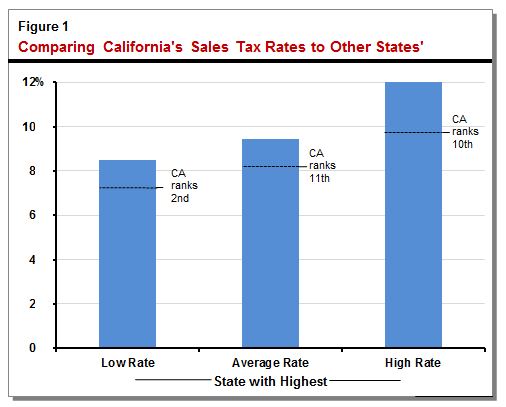
- Q: How does California’s sales tax compare to other states with high populations?
- Q: What’s the difference between sales tax and use tax?
- Q: Do I need to collect sales tax if I only sell digital products?
- Q: How often do I need to file sales tax returns in California?
- Q: Are there industries that are fully exempt from California sales tax?
California’s sales tax regime is a labyrinth of rates, exemptions, and compliance rules that affect every transaction—from a cup of coffee to a luxury car. What is CA sales tax isn’t just about the numbers on receipts; it’s a fiscal backbone that funds public services while shaping consumer behavior and business strategies. The Golden State’s system, with its tiered rates and local variations, stands out even among progressive tax jurisdictions. For businesses operating in California or consumers navigating purchases, misunderstanding these rules can lead to costly errors—whether overpaying, missing exemptions, or triggering audits.
The complexity begins with the baseline: California’s state sales tax rate sits at 7.25%, but this is just the starting point. Cities and counties add their own levies, creating a patchwork where the total what is CA sales tax you pay can jump to 10.25% in Los Angeles or 8.75% in San Francisco. These local surcharges fund everything from transit systems to education, but they also mean a retailer in Santa Monica must collect nearly 3% more than one in Sacramento—a disparity that ripples through pricing strategies and regional competitiveness.
What makes California’s system particularly intricate is its use tax, a parallel mechanism designed to close loopholes. Unlike sales tax, which applies to in-state purchases, use tax kicks in when goods are bought out-of-state but used in California. This dual-layer approach ensures the state captures revenue regardless of where a transaction originates, though enforcement remains a challenge for both businesses and taxpayers.

The Complete Overview of What Is CA Sales Tax
California’s sales tax framework is built on three pillars: statewide rates, local additions, and exemptions. The 7.25% state rate is the foundation, but the real variability comes from the 1,100+ local jurisdictions—counties, cities, and special districts—that append their own taxes. For example, a purchase in San Diego might include a 7.75% combined rate, while Riverside could charge 8.5%. This fragmentation forces businesses to maintain granular pricing systems, often using specialized software to track rates by ZIP code.The system isn’t static. Since 2013, California has expanded the sales tax base to include digital goods, streaming services, and even gross receipts for certain businesses under the Marketplace Facilitator Laws. These changes reflect a broader trend: states are aggressively adapting to e-commerce and remote sales, ensuring that what is CA sales tax remains relevant in an increasingly digital marketplace. For consumers, this means higher costs on online purchases, while businesses must navigate new reporting obligations for third-party platforms like Amazon or Etsy.
Historical Background and Evolution
The origins of California’s sales tax trace back to 1933, when the state adopted a general sales tax to stabilize its finances during the Great Depression. Initially set at 2%, it was a modest experiment compared to today’s structure. The rate remained relatively flat until the 1980s, when Proposition 13—a landmark tax revolt—forced the state to seek alternative revenue streams. Sales tax emerged as a key solution, and by 1991, the rate had climbed to 7.25%, where it remains today.The 1990s and 2000s saw the rise of local sales taxes, as cities and counties gained the authority to add their own levies. This decentralization was partly a response to Proposition 218 (1996), which required voter approval for new taxes. The result? A mosaic of rates that now define California’s fiscal landscape. More recently, the 2013 Supreme Court ruling in Direct Marketing Association v. Brohl forced states to require out-of-state retailers to collect sales tax, directly impacting what is CA sales tax for online shoppers. California was quick to comply, implementing the Marketplace Facilitator Laws in 2019 to hold platforms like Shopify and Walmart accountable for collecting taxes on behalf of sellers.
Core Mechanisms: How It Works
At its core, California’s sales tax is a consumption tax—levied on the retail sale of tangible personal property and certain services. The tax applies at the point of sale, meaning businesses act as collection agents for the state and local governments. When a customer buys a product, the seller adds the appropriate tax rate to the total, remits it to the California Department of Tax and Fee Administration (CDTFA), and keeps a portion for local allocations.The system relies on nexus rules to determine when a business must collect tax. Physical presence (e.g., a store, warehouse, or employee) creates nexus, but economic nexus—triggered by exceeding $500,000 in annual California sales or 200+ transactions—now ensnares even remote sellers. This expansion mirrors the South Dakota v. Wayfair (2018) decision, which redefined sales tax obligations in the digital age. For consumers, this means fewer surprises at checkout, but for businesses, it demands meticulous tracking of sales thresholds and customer locations.
Key Benefits and Crucial Impact
California’s sales tax system is more than a revenue generator—it’s a redistribution engine that funds critical infrastructure, education, and social services. The state’s $30+ billion annual sales tax haul supports everything from highway repairs to public transit, with local allocations often earmarked for community-specific needs. For businesses, compliance—while burdensome—can also be a strategic advantage. Those who accurately collect and remit taxes avoid penalties and build trust with regulators, which can be pivotal during audits.The economic ripple effects are profound. Higher sales taxes in urban areas like San Francisco or Los Angeles can deter tourism and drive consumers to neighboring states with lower rates. Conversely, rural regions with lower combined rates may see what is CA sales tax as a competitive edge for attracting shoppers. The system also influences pricing strategies: businesses in high-tax zones may absorb some costs to remain competitive, while others pass the burden directly to consumers.
"California’s sales tax isn’t just about collecting money—it’s about balancing growth and equity. The challenge is ensuring the system doesn’t strangle small businesses while still funding the services residents expect." — Mark Kealy, Former CDTFA Director
Major Advantages
- Revenue Stability: Unlike income tax, which fluctuates with economic cycles, sales tax provides a steady stream of funding tied to consumer spending. California’s system has proven resilient even during recessions.
- Local Control: The ability for cities and counties to set their own rates allows for targeted funding of regional priorities, from homelessness initiatives in San Diego to tech infrastructure in Silicon Valley.
- Broad Tax Base: By taxing a wide range of goods and services—including digital products and groceries (with exemptions)—California captures revenue from nearly every transaction, reducing reliance on volatile income tax revenues.
- Compliance Flexibility: The CDTFA offers automated filing tools and exemptions for certain industries (e.g., manufacturing equipment), easing the burden on businesses that meet specific criteria.
- Economic Incentives: Some local governments use sales tax holidays (e.g., back-to-school exemptions) to stimulate spending during off-peak periods, benefiting both consumers and retailers.
Comparative Analysis
| Feature | California | Texas | New York |
|---|---|---|---|
| State Sales Tax Rate | 7.25% | 6.25% | 4.00% |
| Average Combined Rate (Urban Areas) | 9.5%–10.25% | 8.25%–8.8% | 8.875% (NYC) |
| Key Exemptions | Groceries (partial), prescription drugs, manufacturing equipment | Groceries, clothing under $100, certain services | Prescription drugs, some farm equipment, certain manufacturing |
| Economic Nexus Threshold | $500K in sales or 200+ transactions | $500K in sales | $300K in sales or 200+ transactions |
Future Trends and Innovations
The next frontier for what is CA sales tax lies in automation and AI-driven compliance. The CDTFA is increasingly relying on machine learning to flag discrepancies in filings, reducing the need for manual audits. For businesses, this means real-time tax calculation tools integrated with POS systems will become standard, eliminating the guesswork in multi-jurisdictional sales.Another shift is the expansion of taxable services. With the rise of the gig economy, California is scrutinizing whether ride-sharing, freelance platforms, and even SaaS subscriptions should fall under sales tax. The state’s 2024 budget proposals hint at broadening the base to include digital advertising services, following trends in states like Colorado. Meanwhile, carbon taxes and sin taxes (e.g., on sugary drinks) may further complicate the landscape, forcing businesses to monitor what is CA sales tax across an evolving set of categories.
Conclusion
California’s sales tax system is a testament to fiscal pragmatism—adaptable enough to survive economic shifts yet rigid enough to fund essential services. For consumers, understanding what is CA sales tax means avoiding surprises at checkout and leveraging exemptions where possible. For businesses, the stakes are higher: non-compliance can result in back taxes, penalties, and reputational damage. The key to navigating this terrain is proactive compliance, whether through specialized software, tax professionals, or staying ahead of legislative changes.As California continues to innovate—from blockchain-based tax tracking to dynamic rate adjustments—the system will only grow more sophisticated. The challenge for all stakeholders is to balance revenue needs with economic fairness, ensuring that what is CA sales tax remains a tool for progress rather than a barrier to growth.
Comprehensive FAQs
Q: Does California tax groceries?
A: California partially exempts groceries from sales tax, but only on unprepared, unprocessed food (e.g., a loaf of bread). Prepared foods (e.g., sandwiches, hot meals) are fully taxable. The exemption applies to 7.25% of the state rate, but local taxes may still apply.
Q: How do I know what my local sales tax rate is?
A: Use the CDTFA’s Tax Rate Search Tool (https://www.cdtfa.ca.gov) to input your ZIP code. Alternatively, check your most recent sales receipt—it should list the breakdown of state, county, and city taxes.
Q: What happens if I don’t collect sales tax as a remote seller?
A: California enforces economic nexus rules strictly. If you exceed $500K in sales or 200+ transactions, you must register with the CDTFA and collect tax. Failure to do so can result in back taxes, interest, and penalties—often 10% of the uncollected amount—plus potential audits.
Q: Are there any sales tax holidays in California?
A: Yes. California offers an annual Sales Tax Holiday for back-to-school items (August) and energy-efficient products (varies by year). During these periods, certain purchases are tax-exempt for a limited time.
Q: Can I get a refund if I overpaid sales tax?
A: Refunds for overpaid sales tax are rare because businesses are required to remit the correct amount. However, if you paid tax on an exempt item (e.g., a tax-free grocery purchase mistakenly taxed), you can file a Claim for Refund (Form FTB 3894) with the CDTFA.
Q: How does California’s sales tax compare to other states with high populations?
A: California’s average combined rate (9.5%) is higher than Texas (~8.25%) but lower than Illinois (~8.8%) or Arizona (~8.4%). However, its exemption for groceries and local flexibility make it unique. New York’s 4% state rate is lower, but NYC’s 8.875% combined rate rivals California’s urban areas.
Q: What’s the difference between sales tax and use tax?
A: Sales tax applies to purchases made in California. Use tax applies to goods bought out-of-state but used in California. For example, if you buy a laptop online from an out-of-state retailer, you owe use tax (same rate as sales tax) unless the seller collects it for you.
Q: Do I need to collect sales tax if I only sell digital products?
A: Yes. Since 2013, digital products (e.g., e-books, software, streaming) are fully taxable in California. If you have nexus (physical or economic), you must collect the full combined rate for the customer’s location.
Q: How often do I need to file sales tax returns in California?
A: Filing frequency depends on your total annual taxable sales:
- $1,000 or more → Monthly
- $1,000–$5,000 → Quarterly
- Less than $1,000 → Annually
Q: Are there industries that are fully exempt from California sales tax?
A: Some industries have full or partial exemptions, including:
- Manufacturing equipment (used directly in production)
- Agricultural equipment (for farming operations)
- Nonprofit organizations (on certain purchases)
- Medical devices (prescribed by a healthcare provider)
Leave a Comment
Comments are moderated before appearing. The data you submit is processed according to the Privacy Policy of versiliasolutions.oneagency.co.