Unsaturated Explained: What Is Meant by the Term Unsaturation?
Table of Contents
- The Complete Overview of What Is Meant by the Term Unsaturated
- Historical Background and Evolution
- Core Mechanisms: How It Works
- Key Benefits and Crucial Impact
- Major Advantages
- Comparative Analysis
- Future Trends and Innovations
- Conclusion
- Comprehensive FAQs
- Q: What is the simplest example of an unsaturated compound?
- Q: Why do unsaturated fats have lower melting points than saturated fats?
- Q: Can unsaturated compounds be saturated through chemical reactions?
- Q: What role does unsaturation play in drug development?
- Q: Are there natural unsaturated compounds that aren’t hydrocarbons?
- Q: How does unsaturation affect the environmental impact of plastics?
- Q: Can unsaturation exist in inorganic compounds?
The term unsaturated is deceptively simple yet foundational across chemistry, nutrition, and material science. At its core, it describes a molecular structure where atoms are bonded in a way that allows additional components to attach—whether hydrogen atoms in hydrocarbons or functional groups in organic compounds. This property isn’t just theoretical; it dictates how substances behave in everything from cooking oils to polymer synthesis. When chemists ask what is meant by the term unsaturated?, they’re probing a concept that underpins reactivity, stability, and even biological function.
The implications stretch beyond laboratories. In nutrition, unsaturated fats are celebrated for their health benefits, while in engineering, unsaturated polymers enable flexible plastics. Yet confusion persists: what is meant by the term unsaturated in one field may differ subtly from another. For instance, a biochemist might focus on double bonds in fatty acids, while a materials scientist examines cross-linking in resins. The ambiguity arises because saturation isn’t binary—it’s a spectrum of molecular configurations that defy oversimplification.
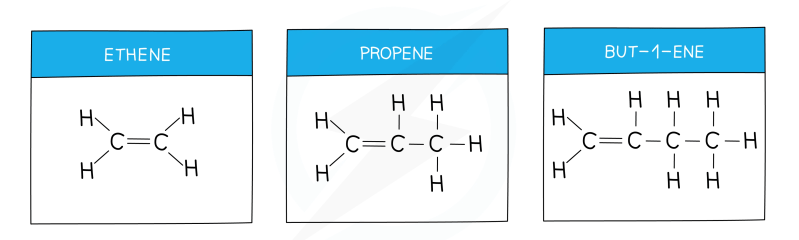
To clarify, consider this: saturation refers to the maximum number of single bonds an atom can form. Carbon, for example, typically bonds with four other atoms. If those bonds are all single (like in methane, CH₄), the molecule is saturated. But introduce a double or triple bond (as in ethylene, C₂H₄), and the molecule becomes unsaturated—capable of further reactions. This principle isn’t just academic; it’s the reason olive oil stays liquid at room temperature while butter solidifies, or why synthetic rubbers outperform natural latex in durability.

The Complete Overview of What Is Meant by the Term Unsaturated
The term unsaturated originates from the Latin saturare ("to satisfy"), reflecting the idea that a molecule can’t "hold" all possible hydrogen atoms due to multiple bonds. In organic chemistry, this means carbon atoms share more than one pair of electrons with adjacent atoms, creating double (C=C) or triple (C≡C) bonds. These bonds reduce the hydrogen-to-carbon ratio, leaving "openings" for additional reactions—a defining feature of what is meant by the term unsaturated. The distinction isn’t just about hydrogen; it’s about reactivity. Saturated compounds, like alkanes, resist chemical changes under mild conditions, while unsaturated ones, like alkenes or alkynes, readily undergo addition reactions, polymerization, or oxidation.Beyond carbon-based systems, the concept extends to other elements. For example, in inorganic chemistry, sulfur can form unsaturated compounds where it bonds with fewer atoms than its valence shell allows. Even in biological systems, unsaturated fatty acids (with cis double bonds) create kinks in lipid bilayers, affecting cell membrane fluidity. The term thus transcends a single discipline, serving as a unifying principle in structural chemistry. Understanding what is meant by unsaturated requires recognizing that it’s not just about missing hydrogens—it’s about the potential for new bonds, which drives everything from drug synthesis to the development of self-healing materials.
Historical Background and Evolution
The study of saturation began in the 19th century with the work of chemists like Michael Faraday and August Kekulé, who elucidated the structure of hydrocarbons. Faraday’s experiments with ethylene (C₂H₄) in 1825 revealed its ability to absorb bromine—a hallmark of unsaturation—while Kekulé’s 1865 benzene ring model cemented the idea of alternating double bonds. These breakthroughs laid the groundwork for what is meant by the term unsaturated in modern chemistry. The term itself gained traction in the early 20th century as organic synthesis advanced, particularly with the rise of petroleum chemistry, where unsaturated hydrocarbons (olefins) became crucial feedstocks for plastics and fuels.Nutritional science later repurposed the concept. In the 1950s, researchers like Ancel Keys linked unsaturated fats to reduced cardiovascular disease risk, sparking a paradigm shift in dietary guidelines. The term unsaturated in nutrition now distinguishes between monounsaturated (one double bond, e.g., oleic acid) and polyunsaturated (multiple double bonds, e.g., omega-3s) fatty acids. This evolution mirrors how scientific language adapts to new frontiers—from theoretical chemistry to public health. Today, what is meant by unsaturated spans from the lab bench to the kitchen table, reflecting its interdisciplinary relevance.
Core Mechanisms: How It Works
At the atomic level, unsaturation arises when carbon atoms form π (pi) bonds in addition to σ (sigma) bonds. A single bond is one σ bond; a double bond adds a π bond; a triple bond adds two. These π bonds are electron-rich and reactive, making unsaturated molecules susceptible to electrophilic addition reactions. For example, when hydrogen gas (H₂) reacts with ethylene (C₂H₄), the π bond breaks, and hydrogen atoms attach to each carbon, forming ethane (C₂H₆)—a saturated product. This mechanism explains why what is meant by the term unsaturated often involves terms like addition, hydrogenation, or polymerization.The stability of unsaturated compounds also hinges on bond angles and hybridization. In alkenes (C=C), the sp² hybridization creates a planar structure with 120° angles, while alkynes (C≡C) adopt linear sp hybridization. These geometries influence reactivity: trans isomers (e.g., in fats) pack tightly, while cis isomers (e.g., in oils) remain fluid. The concept extends to aromatic systems like benzene, where delocalized π electrons create a hybrid of saturated and unsaturated properties. This duality is why what is meant by unsaturated can include both reactive intermediates (e.g., carbenes) and stable molecules (e.g., graphite), blurring the line between theory and application.
Key Benefits and Crucial Impact
The practical advantages of unsaturation are vast. In chemistry, unsaturated compounds enable the creation of polymers like polyethylene, where ethylene monomers link via addition reactions to form long chains. In biology, unsaturated fatty acids prevent membrane rigidity in cold climates, a trait critical for organisms from Arctic fish to human cells. Even in medicine, unsaturated rings in drugs like aspirin (acetylsalicylic acid) enhance solubility and bioactivity. The term unsaturated thus isn’t just descriptive—it’s predictive, signaling which molecules will participate in desired reactions under specific conditions.What is meant by the term unsaturated also carries economic weight. The global market for unsaturated fats (e.g., canola oil) exceeds $20 billion annually, driven by health trends, while unsaturated polymers account for a third of all plastic production. Yet the benefits aren’t without trade-offs. Unsaturated fats oxidize more easily, leading to rancidity, while unsaturated polymers may degrade under UV light. Balancing these factors requires deep knowledge of what is meant by unsaturated in both structural and functional terms.
"Unsaturation is the difference between a static molecule and a dynamic one—between a compound that sits on a shelf and one that transforms industries."
— Dr. Linda J. Broadbelt, Northwestern University
Major Advantages
- Reactivity: Unsaturated compounds undergo addition, substitution, and polymerization reactions, enabling synthesis of complex molecules (e.g., pharmaceuticals, dyes).
- Biological Function: Unsaturated fatty acids regulate membrane fluidity, hormone signaling, and energy storage, critical for health.
- Material Properties: Unsaturated polymers (e.g., rubber, nylon) exhibit elasticity, durability, and thermal resistance compared to saturated counterparts.
- Energy Applications: Unsaturated hydrocarbons (e.g., biofuels from algae) offer higher energy density and cleaner combustion than saturated fuels.
- Medical Applications: Unsaturated lipids in cell membranes facilitate drug delivery, while unsaturated drugs (e.g., statins) target specific biochemical pathways.
Comparative Analysis
| Saturated Compounds | Unsaturated Compounds |
|---|---|
| Single bonds only (e.g., alkanes: CH₄, C₂H₆). | Contains double/triple bonds (e.g., alkenes: C₂H₄, alkynes: C₂H₂). |
| Higher melting/boiling points (stronger van der Waals forces). | Lower melting/boiling points (weaker intermolecular forces). |
| Resistant to chemical reactions (e.g., no addition reactions). | Highly reactive (e.g., hydrogenation, halogenation). |
| Examples: Butter, paraffin wax, polyethylene. | Examples: Olive oil, synthetic rubber, benzene. |
Future Trends and Innovations
Emerging research is redefining what is meant by the term unsaturated in sustainable chemistry. Bio-based unsaturated polymers, derived from plant oils (e.g., soybean-derived polyamides), are replacing petroleum-derived plastics, reducing carbon footprints. Meanwhile, unsaturated metal-organic frameworks (MOFs) are being engineered for carbon capture, leveraging their high surface area and reactivity. In nutrition, scientists are exploring how unsaturated fatty acids can be stabilized against oxidation using natural antioxidants, extending shelf life without synthetic preservatives.The next frontier may lie in designer unsaturation—tailoring molecular structures for specific applications. For instance, unsaturated peptides with precise double bonds could enable self-assembling biomaterials for tissue engineering, while unsaturated quantum dots might revolutionize solar cells. As materials science advances, what is meant by unsaturated will increasingly focus on functional unsaturation: not just the presence of double bonds, but their strategic placement to achieve desired properties, from conductivity to biodegradability.
Conclusion
The term unsaturated is more than a label—it’s a gateway to understanding reactivity, functionality, and innovation across disciplines. Whether in the lab, the kitchen, or the factory, what is meant by the term unsaturated shapes how substances interact with their environment. From the health benefits of omega-3s to the resilience of modern plastics, unsaturation is a cornerstone of both natural and synthetic systems. As research progresses, the boundaries of what is meant by unsaturated will expand, challenging us to rethink stability, design, and sustainability.The key takeaway? Unsaturated isn’t just a property—it’s a tool. Mastering its nuances allows chemists, engineers, and nutritionists to harness nature’s (and industry’s) most dynamic molecular architectures.
Comprehensive FAQs
Q: What is the simplest example of an unsaturated compound?
A: Ethylene (C₂H₄) is the simplest unsaturated hydrocarbon, featuring a carbon-carbon double bond. It’s the building block for polyethylene plastics and a natural plant hormone (ethylene gas).
Q: Why do unsaturated fats have lower melting points than saturated fats?
A: The cis double bonds in unsaturated fats create kinks in the fatty acid chains, preventing tight packing. This reduces intermolecular forces (van der Waals), lowering melting points. Saturated fats, with straight chains, pack tightly and solidify at higher temperatures.
Q: Can unsaturated compounds be saturated through chemical reactions?
A: Yes. A process called hydrogenation adds hydrogen atoms to double/triple bonds, converting unsaturated compounds to saturated ones. This is how vegetable oils (unsaturated) become solid margarine (saturated) when hydrogenated.
Q: What role does unsaturation play in drug development?
A: Unsaturated rings (e.g., in statins or ibuprofen) improve drug solubility and binding affinity to biological targets. The double bonds can also enhance metabolic stability or act as reactive sites for enzyme inhibition.
Q: Are there natural unsaturated compounds that aren’t hydrocarbons?
A: Absolutely. Unsaturated fatty acids (e.g., linoleic acid) and terpenes (e.g., limonene in citrus) contain double bonds but aren’t pure hydrocarbons. Even some amino acids (e.g., phenylalanine) have aromatic unsaturation in their side chains.
Q: How does unsaturation affect the environmental impact of plastics?
A: Unsaturated polymers (e.g., bio-based PLA) often degrade faster than saturated plastics (e.g., PET) due to oxidative cleavage of double bonds. However, some unsaturated plastics (like PVC) release toxic byproducts when degraded, highlighting the need for balanced design.
Q: Can unsaturation exist in inorganic compounds?
A: Rarely, but yes. For example, sulfur can form unsaturated species like S₂ (disulfur) with a double bond, or transition metals in coordination complexes may exhibit unsaturation in their d-orbitals (e.g., in organometallic catalysts).
Leave a Comment
Comments are moderated before appearing. The data you submit is processed according to the Privacy Policy of versiliasolutions.oneagency.co.