The Definitive Answer to What Is the Best API for Field Service Management?
Table of Contents
- The Complete Overview of Field Service Management APIs
- Historical Background and Evolution
- Core Mechanisms: How It Works
- Key Benefits and Crucial Impact
- Major Advantages
- Comparative Analysis
- Future Trends and Innovations
- Conclusion
- Comprehensive FAQs
- Q: How do I know if my current FSM API is underperforming?
- Q: Can I use multiple FSM APIs simultaneously?
- Q: What security protocols should I demand from an FSM API?
- Q: How do I future-proof my FSM API selection?
- Q: What’s the cost difference between a basic and advanced FSM API?
- Q: Can a small business benefit from a high-end FSM API?
Field service operations thrive on precision—every dispatch, every technician’s route, every customer interaction hinges on data flowing flawlessly between systems. Yet, the wrong API can turn a streamlined workflow into a bottleneck, leaving managers scrambling to reconcile schedules, inventory, and customer updates across fragmented platforms. The question "what is the best API for field service management?" isn’t just about technical compatibility; it’s about whether an API can handle the chaos of dynamic field operations while future-proofing your infrastructure.
Most businesses assume their existing CRM or ERP system’s API will suffice, only to realize later that it lacks the granularity for real-time GPS tracking, technician skill matching, or automated parts inventory syncs. The gap between a "good enough" API and one that transforms field service efficiency often comes down to three critical factors: latency tolerance, third-party ecosystem support, and adaptability to regulatory compliance (e.g., labor laws, safety protocols). Ignore these, and you’re left with an API that’s either too rigid or too slow—both equally disastrous for on-the-ground operations.
The stakes are higher than ever. A 2023 McKinsey report found that companies using optimized field service APIs reduce travel time by 20% and first-time fix rates by 15%, directly impacting revenue. But identifying the right API requires dissecting its core architecture, not just its marketing claims. Below, we break down how these systems function, their evolutionary trajectory, and why some APIs dominate while others fade into obscurity.

The Complete Overview of Field Service Management APIs
Field service management (FSM) APIs serve as the nervous system of distributed workforces, enabling real-time data exchange between dispatch systems, mobile apps, ERP backends, and third-party tools like telematics or parts catalogs. The best APIs for this purpose don’t just connect systems—they orchestrate them, balancing conflicting priorities like minimizing drive time, optimizing technician load, and ensuring compliance with service-level agreements (SLAs). For example, an API that can dynamically reroute a technician based on live traffic data (via Google Maps or HERE) while simultaneously pulling up their service history from a legacy CRM is solving problems most generic APIs can’t.What separates top-tier FSM APIs from the rest? Context-aware processing. A high-performance API doesn’t just push or pull data—it interprets it. It knows when a technician’s estimated time of arrival (ETA) is off by 15 minutes and can auto-alert the customer before the delay occurs. It cross-references a customer’s service contract to flag upsell opportunities mid-visit. And it logs every interaction in a standardized format for audit trails. The wrong API treats field service like a static checklist; the right one treats it as a fluid, data-driven ecosystem.
Historical Background and Evolution
The first generation of FSM APIs emerged in the late 1990s, built atop proprietary mainframe systems and designed primarily for dispatch optimization. These early APIs were clunky, requiring manual data entry and offering limited real-time capabilities. By the mid-2000s, the rise of cloud computing and RESTful architectures allowed APIs to become more agile, enabling basic integrations with GPS devices and early mobile apps. However, these systems still operated in silos—dispatch data lived in one platform, technician logs in another, and customer records in a third, creating a patchwork that frustrated both managers and field staff.The turning point came with the adoption of microservices architecture in the 2010s. APIs like those from ServiceMax (now part of PTC) and Oracle Field Service began offering modular, event-driven integrations that could stitch together disparate tools—from IoT sensors in industrial equipment to AI-driven predictive maintenance models. Today, the most advanced FSM APIs leverage graphQL for flexible querying, WebSockets for real-time updates, and edge computing to process data locally on mobile devices, reducing latency. The evolution hasn’t just been about speed; it’s about intelligence. Modern APIs now incorporate machine learning to predict equipment failures before they occur, or to suggest the most cost-effective parts replacement based on historical data.
Core Mechanisms: How It Works
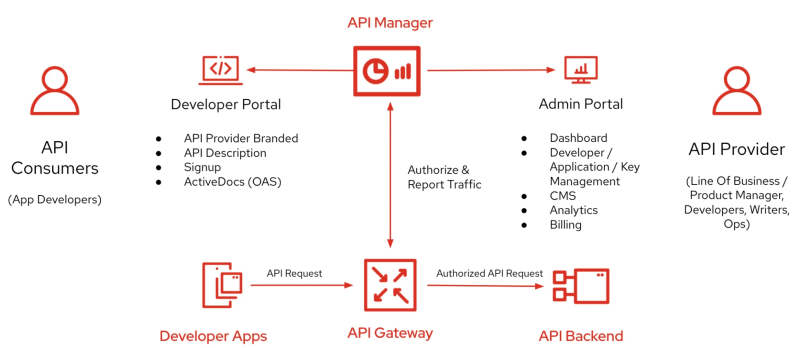
At its core, an FSM API functions as a mediator between front-end applications (e.g., mobile technician apps) and back-end systems (e.g., ERP, CRM, or inventory databases). The process begins with an authentication handshake—typically using OAuth 2.0—to verify the identity of both the API consumer (e.g., a mobile app) and the service provider (e.g., the dispatch server). Once authenticated, the API exposes endpoints that trigger specific actions, such as:The magic happens in the middleware layer, where the API processes raw data into actionable insights. For instance, if a technician’s route deviates from the optimal path (detected via geofencing), the API might trigger a rebalancing algorithm to adjust other technicians’ schedules, minimizing overall travel time. This layer also handles data normalization—converting disparate formats (e.g., a CSV from an old system vs. JSON from a new IoT sensor) into a unified schema that all integrated tools can understand.
What often goes unnoticed is the error-handling protocol. A robust FSM API won’t just log a failed request; it’ll retry intelligently, escalate critical failures to a human supervisor, or even suggest a workaround (e.g., "Technician #47 is offline; reroute to #12"). This level of resilience is non-negotiable in field service, where network drops or device failures are inevitable.
Key Benefits and Crucial Impact
The right API doesn’t just improve efficiency—it redefines what field service can achieve. Consider a utility company using an API that integrates with smart meters: technicians receive alerts when a customer’s usage spikes abnormally, allowing them to proactively diagnose issues before a service call is even requested. Or a healthcare provider whose API syncs patient records with on-site medical devices, ensuring technicians have critical data at their fingertips. These aren’t incremental gains; they’re paradigm shifts in how field service is delivered.The financial impact is equally stark. Companies like ServiceTitan (a leader in HVAC/R FSM) report that businesses using their API-driven platform see 30% higher technician utilization and 40% fewer no-shows. The reason? APIs eliminate the "telephone game" of relaying updates between dispatchers, technicians, and customers. When every stakeholder operates from the same real-time data, miscommunication—historically the biggest drain on productivity—dissipates.
> "The best FSM APIs don’t just connect systems; they connect people to the right information at the right moment. That’s the difference between a reactive field service operation and a predictive one." — Dave McCarthy, CTO of Oracle Field Service
Major Advantages
- Real-Time Coordination: APIs with WebSocket support enable live updates, ensuring dispatchers and technicians always have the latest job status, customer notes, or inventory changes—critical for time-sensitive industries like emergency repair or medical field service.
- Automated Compliance: Advanced APIs can auto-generate and submit required documentation (e.g., safety checklists, certifications) to regulatory bodies, reducing audit risks and manual errors.
- Scalability Without Latency: Cloud-native APIs with edge processing capabilities handle spikes in demand (e.g., during peak seasons) without degrading performance, unlike legacy systems that slow down under load.
- Seamless Third-Party Integrations: The best APIs offer pre-built connectors for tools like Salesforce, SAP, or Shopify, as well as customizable webhooks for niche applications (e.g., integrating with a drone survey tool for construction field service).
- Data-Driven Decision Making: APIs that aggregate field data (e.g., technician performance metrics, parts usage trends) into dashboards empower managers to optimize routes, allocate resources, and forecast demand with precision.
Comparative Analysis
Not all FSM APIs are created equal. Below is a high-level comparison of four leading options, focusing on their strengths and ideal use cases:| API Provider | Key Strengths & Best For |
|---|---|
| ServiceMax (PTC) | Enterprise-grade with AI-driven predictive maintenance. Best for industrial field service (e.g., manufacturing, energy) where equipment downtime is costly. |
| Oracle Field Service | Deep CRM/ERP integrations and global scalability. Ideal for large organizations with complex billing or multi-regional operations. |
| ServiceTitan | Specialized for trades (HVAC, plumbing, electrical). Offers native mobile apps with offline capabilities, crucial for areas with poor connectivity. |
| Zendesk Sunshine Platform | Customer-centric with strong ticketing and chat integrations. Best for service businesses prioritizing post-visit follow-ups and reviews. |
Future Trends and Innovations
The next frontier for FSM APIs lies in hyper-personalization and autonomous coordination. Imagine an API that not only assigns jobs but also negotiates technician availability in real time, offering incentives (e.g., bonus pay) to accept urgent requests based on their current location and workload. Or one that uses computer vision to verify a technician’s work via photo uploads, cross-referencing it against a digital twin of the equipment to ensure compliance with repair protocols.Another emerging trend is API-driven "digital twins"—virtual replicas of field assets (e.g., a fleet of service vehicles) that sync with real-world data via IoT. These twins allow managers to simulate scenarios (e.g., "What if all technicians in Zone 3 call in sick?") and auto-generate contingency plans. Meanwhile, blockchain-based APIs are gaining traction for industries like healthcare or legal services, where immutable audit trails are critical.
The long-term trajectory points to self-healing APIs—systems that automatically detect and resolve integration failures (e.g., by rerouting data through a backup endpoint) without human intervention. As 5G and edge computing mature, we’ll see APIs that process data on-device, eliminating latency entirely for field technicians.
Conclusion
Choosing the right API for field service management isn’t about picking the most feature-rich option—it’s about selecting the one that aligns with your operational rhythm. A high-end API won’t fix poor dispatch strategies or unmotivated technicians, but it will amplify your existing processes if implemented correctly. The key is to evaluate whether the API’s real-time capabilities, integration depth, and scalability match your pain points. For a trades business drowning in manual paperwork, ServiceTitan’s mobile-first approach might be the game-changer. For a multinational with siloed systems, Oracle’s enterprise-grade API could be the unifier.The future of FSM APIs is intelligent, adaptive, and invisible—so seamless that technicians and managers don’t notice the technology, only the results. As data becomes more granular and tools more interconnected, the question "what is the best API for field service management?" will shift from a technical query to a strategic one: Which API will help me redefine service excellence in my industry?
Comprehensive FAQs
Q: How do I know if my current FSM API is underperforming?
A: Signs of a struggling API include frequent manual data entry, delayed job updates, or technicians bypassing the system entirely (e.g., using personal notes instead of the app). Monitor metrics like data sync latency (should be <2 seconds) and integration error rates (aim for <1% monthly). If your API can’t handle peak loads without crashing, it’s time to evaluate alternatives.
Q: Can I use multiple FSM APIs simultaneously?
A: Yes, but it requires a middleware layer (e.g., MuleSoft or Zapier) to manage conflicts and ensure data consistency. For example, you might use ServiceMax for dispatch and Oracle for billing, with a custom API to sync customer records between them. However, this adds complexity, so it’s only recommended for large enterprises with dedicated IT support.
Q: What security protocols should I demand from an FSM API?
A: Minimum requirements include OAuth 2.0 for authentication, end-to-end encryption (TLS 1.2+) for data in transit, and role-based access control (RBAC) to restrict technician access to sensitive data. For industries like healthcare or finance, look for APIs with HIPAA/GDPR compliance and audit logging for all API calls.
Q: How do I future-proof my FSM API selection?
A: Prioritize APIs built on open standards (e.g., REST, GraphQL, OpenAPI) and those with active developer communities. Avoid proprietary lock-in by choosing providers that support custom webhooks and standardized data schemas. Also, assess whether the API can integrate with emerging tech like AI-driven routing or AR-guided repairs—features that will become table stakes in 3–5 years.
Q: What’s the cost difference between a basic and advanced FSM API?
A: Basic APIs (e.g., simple dispatch tools) may cost $50–$200 per technician/month, while enterprise-grade APIs (with AI, predictive analytics, and global scalability) can exceed $500+/technician/month. Hidden costs often include custom integration fees, premium support tiers, and data egress charges for high-volume operations. Always request a detailed pricing breakdown before committing.
Q: Can a small business benefit from a high-end FSM API?
A: Absolutely, but focus on APIs with scalable pricing models (e.g., pay-as-you-go) and modular features. For example, a small HVAC company might start with ServiceTitan’s core dispatch tools and later add AI-driven parts recommendations as revenue grows. The key is to avoid over-engineering—choose an API that grows with your business, not one that forces you to outgrow it.
Leave a Comment
Comments are moderated before appearing. The data you submit is processed according to the Privacy Policy of versiliasolutions.oneagency.co.