What Is the Difference Between an Inkjet and Laser Printer?
Table of Contents
- The Complete Overview of Inkjet and Laser Printers
- Historical Background and Evolution
- Core Mechanisms: How It Works
- Key Benefits and Crucial Impact
- Major Advantages
- Comparative Analysis
- Future Trends and Innovations
- Conclusion
- Comprehensive FAQs
- Q: Which is better for printing photos—inkjet or laser?
- Q: Are laser printers really more cost-effective in the long run?
- Q: Can inkjet printers handle business documents as well as laser printers?
- Q: What are the environmental impacts of each printer type?
- Q: Is there a hybrid printer that combines inkjet and laser technologies?
- Q: Which printer is better for small businesses with mixed needs?
The choice between an inkjet and laser printer isn’t just about printing documents—it’s about efficiency, cost, and long-term usability. While inkjet printers dominate home offices with their affordability and versatility, laser printers remain the backbone of professional environments, offering speed and durability. The question what is the difference between an inkjet and laser printer isn’t merely technical; it’s a strategic decision that impacts workflow, budget, and even environmental sustainability.
At first glance, both technologies serve the same purpose: converting digital files into physical copies. Yet, their inner workings, cost structures, and ideal use cases diverge sharply. Inkjet printers rely on liquid ink droplets sprayed onto paper, making them ideal for photos and occasional printing. Laser printers, on the other hand, use toner—a dry powder fused to paper via heat—delivering sharper text and faster output. The distinction isn’t just about speed or quality; it’s about how each technology aligns with specific needs, from home users to corporate offices.
The evolution of printing technology has been shaped by these fundamental differences. Inkjet printers emerged as a consumer-friendly alternative in the 1980s, while laser printers, derived from xerographic principles, became the gold standard for high-volume printing. Today, advancements in both—like pigment-based inks and solid-ink lasers—blur some lines, but the core question what is the difference between an inkjet and laser printer remains essential for making an informed purchase.

The Complete Overview of Inkjet and Laser Printers
Inkjet and laser printers represent two distinct paradigms in printing technology, each optimized for different scenarios. Inkjet printers excel in flexibility, capable of producing vibrant colors and handling various media types, from glossy photo paper to envelopes. Their lower upfront cost makes them a popular choice for households and small businesses with moderate printing needs. Laser printers, however, dominate in professional settings due to their speed, precision, and ability to handle high-volume tasks without compromising quality. The choice between them hinges on factors like print volume, budget, and the specific demands of the documents being produced.The debate over what is the difference between an inkjet and laser printer often boils down to cost per page versus initial investment. Inkjet printers may seem economical at purchase, but their ongoing expenses—ink cartridges, maintenance, and potential paper jams—can add up over time. Laser printers, while pricier upfront, offer lower operational costs per page, making them more cost-effective for heavy users. Additionally, laser printers are designed for durability, with fewer moving parts and longer lifespans, which further justifies their higher initial price.
Historical Background and Evolution
The inkjet printer’s origins trace back to the 1950s, when Sweet developed the first continuous-inkjet printing system for industrial applications. However, it wasn’t until the 1980s that inkjet technology became accessible to consumers, thanks to companies like Canon and Hewlett-Packard. These early models were limited in resolution and ink quality but laid the foundation for today’s high-definition inkjet printers. The introduction of pigment-based inks in the 1990s revolutionized photo printing, allowing for richer colors and water-resistant outputs—a breakthrough that solidified inkjet’s role in creative and home use.Laser printing, meanwhile, evolved from xerography, a technology patented by Chester Carlson in 1938. The first commercial laser printers emerged in the 1970s, primarily for office use, and were prohibitively expensive. By the 1980s, advancements in laser diode technology reduced costs, making them viable for small businesses. The shift from monochrome to color laser printers in the 1990s further expanded their appeal, particularly in sectors requiring high-speed, high-quality document production. Today, both technologies continue to evolve, with inkjet printers incorporating wireless connectivity and laser printers adopting eco-friendly toner options.
Core Mechanisms: How It Works
Inkjet printers operate by propelling tiny droplets of liquid ink onto paper through a print head. This head contains microscopic nozzles that fire ink onto the page, layer by layer, to create an image. The process is precise but sensitive to environmental factors like humidity and temperature, which can affect ink viscosity and print quality. Modern inkjet printers use either dye-based or pigment-based inks; dye inks are vibrant but prone to fading, while pigment inks are more durable and water-resistant. The trade-off lies in cost and longevity, with pigment inks generally being more expensive but offering better archival quality.Laser printers, in contrast, employ a xerographic process involving a rotating drum, toner, and heat. A laser beam scans the drum, creating an electrostatic image that attracts toner particles. The toner is then transferred to paper and fused using heat, resulting in sharp, smudge-resistant text and graphics. This method is far less susceptible to environmental factors, making laser printers more reliable for continuous use. Additionally, the absence of liquid ink means fewer maintenance issues, such as clogged nozzles or smudging. The key difference in what is the difference between an inkjet and laser printer lies in this fundamental mechanical and chemical approach to printing.
Key Benefits and Crucial Impact
The decision between inkjet and laser printers isn’t just about technical specifications; it’s about aligning technology with real-world needs. Inkjet printers shine in scenarios requiring color versatility, such as photo printing, marketing materials, or small-scale graphic design. Their ability to handle various paper types and produce high-resolution images makes them indispensable for creative professionals. Laser printers, however, are the workhorses of offices, capable of churning out thousands of pages daily with minimal wear and tear. The impact of this choice extends beyond the printer itself, influencing workflow efficiency, budget management, and even environmental footprint.Cost is a critical factor in this equation. While inkjet printers may have a lower initial price, their ongoing expenses—particularly the cost of ink—can escalate quickly for heavy users. Laser printers, though more expensive upfront, offer a lower cost per page, making them more economical in the long run. Additionally, laser printers are designed for high durability, with fewer components prone to failure, reducing downtime and maintenance costs. The environmental impact also differs; inkjet printers contribute more to e-waste due to disposable cartridges, whereas laser printers often use recyclable toner cartridges and have longer lifespans.
"The right printer isn’t just about what it can do today, but how it will serve you tomorrow. Inkjet and laser printers each have their place, and the best choice depends on balancing immediate needs with long-term goals." — Printing Industry Analyst, 2024
Major Advantages
Understanding what is the difference between an inkjet and laser printer reveals distinct advantages for each technology:- Inkjet Printers:
- Excels in color printing, ideal for photos, graphics, and marketing materials.
- Lower upfront cost, making them accessible for home and small office use.
- Versatile media handling, including envelopes, labels, and specialty papers.
- Quieter operation compared to many laser printers.
- Easier to find replacement inks and accessories due to widespread use.
- Laser Printers:
- Faster printing speeds, essential for high-volume document production.
- Lower cost per page, making them more economical for heavy users.
- Superior text clarity and durability, with smudge-resistant outputs.
- Longer lifespan and fewer maintenance issues, reducing downtime.
- Better for black-and-white documents, such as reports and contracts.
Comparative Analysis
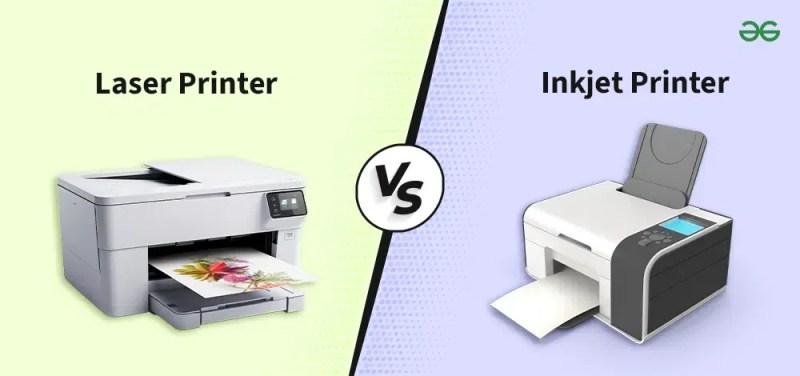
To further clarify what is the difference between an inkjet and laser printer, here’s a side-by-side comparison of key attributes:| Feature | Inkjet Printer | Laser Printer |
|---|---|---|
| Printing Technology | Liquid ink droplets sprayed onto paper. | Toner powder fused to paper via heat. |
| Ideal Use Case | Photos, graphics, occasional color printing. | High-volume documents, text-heavy printing. |
| Cost Per Page | Higher (especially with color ink). | Lower (toner is more cost-effective). |
| Durability | Shorter lifespan; more maintenance (clogged nozzles). | Longer lifespan; fewer moving parts. |
Future Trends and Innovations
The printing industry is undergoing a transformation, with both inkjet and laser technologies evolving to meet modern demands. Inkjet printers are increasingly incorporating solid-ink systems, which use wax-based sticks instead of liquid ink, reducing spills and improving longevity. Wireless connectivity and mobile printing capabilities are also becoming standard, allowing users to print from anywhere. On the laser front, advancements in toner technology—such as eco-friendly, recyclable cartridges—are reducing environmental impact, while AI-driven print optimization is enhancing efficiency.Looking ahead, the line between inkjet and laser printers may continue to blur. Hybrid models that combine the best of both technologies are emerging, offering the color versatility of inkjet with the speed and durability of laser. Additionally, sustainability will play a larger role, with manufacturers developing printers that minimize waste and energy consumption. As the question what is the difference between an inkjet and laser printer becomes more nuanced, the focus will shift toward how these technologies can adapt to the needs of an increasingly digital yet still paper-dependent world.
Conclusion
The choice between an inkjet and laser printer ultimately depends on individual or organizational needs. Inkjet printers remain the go-to for those prioritizing color flexibility and occasional high-quality prints, while laser printers are the clear winner for high-volume, text-heavy environments. The key is to weigh the initial investment against long-term costs, considering factors like print volume, document types, and environmental impact. As technology advances, the distinctions may become less rigid, but the core principles of what is the difference between an inkjet and laser printer will continue to guide purchasing decisions.For most users, the answer lies in understanding their specific requirements. Home users, photographers, and small businesses may lean toward inkjet for its versatility, while offices, schools, and enterprises will likely favor laser for its efficiency and reliability. The future of printing is bright, with innovations poised to make both technologies more accessible, sustainable, and integrated into our digital workflows.
Comprehensive FAQs
Q: Which is better for printing photos—inkjet or laser?
A: Inkjet printers are far superior for photo printing due to their ability to produce vibrant colors and fine details. Laser printers, while capable of color printing, typically lack the resolution and color depth needed for high-quality photos. If photo printing is a priority, an inkjet with pigment-based ink is the best choice.
Q: Are laser printers really more cost-effective in the long run?
A: Yes, for high-volume users. While laser printers have a higher upfront cost, their lower cost per page—especially for black-and-white printing—makes them more economical over time. Inkjet printers, on the other hand, can become expensive if you frequently print large volumes, particularly in color.
Q: Can inkjet printers handle business documents as well as laser printers?
A: Inkjet printers can handle business documents, but they may not match the sharpness and durability of laser prints. Laser printers are better suited for professional environments due to their faster speeds, lower smudging risk, and ability to produce crisp text. However, modern inkjet printers with high-resolution print heads can produce acceptable business documents for smaller offices.
Q: What are the environmental impacts of each printer type?
A: Inkjet printers contribute more to e-waste due to disposable ink cartridges, which often cannot be fully recycled. Laser printers, while not perfect, generally have a lower environmental impact because toner cartridges are more recyclable, and the printers themselves have longer lifespans. Additionally, some laser printers now use soy-based or recycled toner, further reducing their carbon footprint.
Q: Is there a hybrid printer that combines inkjet and laser technologies?
A: Yes, some advanced printers—often referred to as "solid ink" or "photocopier-style" printers—combine elements of both technologies. For example, solid ink printers use wax-based sticks instead of liquid ink, offering the color versatility of inkjet with the durability of laser. However, these are niche products and not yet mainstream for most consumers.
Q: Which printer is better for small businesses with mixed needs?
A: For small businesses that require both color flexibility and high-volume printing, a color laser printer is often the best solution. It balances the need for vibrant marketing materials with the efficiency required for daily operations. If budget is a concern, a high-quality inkjet printer with a multi-function capability (scanning, copying) may suffice for lighter use.
Leave a Comment
Comments are moderated before appearing. The data you submit is processed according to the Privacy Policy of versiliasolutions.oneagency.co.