The Hidden Equation for Mass: Unraveling Physics’ Most Fundamental Formula
Table of Contents
- The Complete Overview of What Is the Equation for Mass
- Historical Background and Evolution
- Core Mechanisms: How It Works
- Key Benefits and Crucial Impact
- Major Advantages
- Comparative Analysis
- Future Trends and Innovations
- Conclusion
- Comprehensive FAQs
- Q: Can mass be created or destroyed?
- Q: How does the Higgs boson relate to the equation for mass?
- Q: Is dark matter’s mass described by known equations?
- Q: Does relativity change the equation for mass at high speeds?
- Q: Could future physics redefine the equation for mass?
Mass is not merely a measure of an object’s inertia—it is the cornerstone of spacetime curvature, particle identity, and the very fabric of existence. When physicists seek to answer what is the equation for mass, they uncover a layered interplay of classical mechanics, relativity, and quantum field theory. The question itself bridges centuries of inquiry: from Newton’s intuitive grasp of inertia to Einstein’s revolutionary insight that mass and energy are interchangeable. Yet, the equation remains elusive in its simplicity, demanding precision. It is not a single formula but a synthesis of principles—where mass emerges from symmetry, Higgs fields, and the warping of geometry.
The pursuit of what defines the equation for mass reveals deeper tensions. In general relativity, mass distorts spacetime, yet in particle physics, mass arises from interactions with the Higgs boson. These dualities force scientists to reconcile seemingly disparate frameworks. The search for a unified theory—quantum gravity—hinges on resolving this tension. Meanwhile, everyday applications, from medical imaging to satellite navigation, rely on these equations without fully grasping their philosophical weight. The equation for mass is both a tool and a mystery, a bridge between the tangible and the abstract.

The Complete Overview of What Is the Equation for Mass
At its core, what is the equation for mass is not a single expression but a constellation of mathematical relationships spanning classical, relativistic, and quantum domains. The most iconic formulation—E=mc²—reveals mass as a concentrated form of energy, but it is only part of the story. Mass also manifests in Newton’s F=ma, where it quantifies resistance to acceleration, and in the Standard Model, where it emerges from the Higgs mechanism. These equations are interconnected: the energy-momentum tensor in general relativity, for instance, encodes mass as a source of gravitational fields, while the Klein-Gordon equation in quantum field theory describes massive particles. The challenge lies in unifying these perspectives into a single, coherent framework.The quest to define the equation for mass exposes the limits of current physics. While E=mc² elegantly ties mass to energy, it fails to explain why particles have mass in the first place. The Higgs field provides an answer at the quantum level—particles acquire mass through interactions with this field—but this mechanism remains incomplete without a theory of quantum gravity. Meanwhile, dark matter’s elusive mass defies conventional equations entirely, suggesting that what constitutes the equation for mass may extend beyond the Standard Model. The search for a unified theory, such as string theory or loop quantum gravity, promises to refine—or redefine—this equation entirely.
Historical Background and Evolution
The concept of mass traces back to Aristotle’s four elements, but it was Newton who formalized it as a measure of inertia in his Principia Mathematica (1687). His second law, F=ma, defined mass as proportional to the force required to accelerate an object, laying the foundation for classical mechanics. This definition endured until Einstein’s 1905 paper on special relativity, where what is the equation for mass took a radical turn. By showing that mass and energy are interchangeable (E=mc²), Einstein shattered the Newtonian paradigm, proving that mass is not an intrinsic property but a manifestation of energy density.The 20th century deepened the complexity. In 1925, Schrödinger’s wave equation introduced mass as a parameter in quantum mechanics, while Dirac’s relativistic quantum theory tied mass to spin and charge. The discovery of the Higgs boson in 2012 at CERN confirmed that mass arises from particles coupling to the Higgs field—a breakthrough that answered a long-standing question in particle physics. Yet, the equation for mass remains fragmented: general relativity describes mass as a geometric property, while quantum field theory treats it as an emergent phenomenon. The historical evolution reveals a discipline grappling with unification, where each breakthrough redefines the question itself.
Core Mechanisms: How It Works
In general relativity, mass curves spacetime, as described by the Einstein field equations:\[ G_{\mu\nu} + \Lambda g_{\mu\nu} = \frac{8\pi G}{c^4} T_{\mu\nu} \]
Here, the stress-energy tensor (Tμν) includes mass as a source of gravitational effects. This equation shows that what is the equation for mass in relativity is inseparable from the geometry of the universe. Meanwhile, in particle physics, the Higgs mechanism assigns mass to fermions via Yukawa couplings:
\[ m_f = y_f v \]
where yf is the coupling strength and v is the Higgs vacuum expectation value. This quantum explanation contrasts with relativity’s geometric view, highlighting the dual nature of mass.
The tension between these frameworks persists because quantum mechanics and general relativity operate on different scales. At macroscopic levels, mass behaves as a classical property, but at subatomic scales, it emerges from dynamic interactions. The search for a theory of quantum gravity—such as string theory or loop quantum gravity—aims to reconcile these mechanisms. Until then, the equation for mass remains a patchwork of approximations, each valid in its domain but incomplete as a whole.
Key Benefits and Crucial Impact
Understanding what is the equation for mass has reshaped technology, medicine, and our perception of reality. From GPS satellites correcting for relativistic mass effects to MRI machines leveraging nuclear spin-mass interactions, these equations underpin modern infrastructure. The energy-mass equivalence (E=mc²) powers nuclear energy and informs particle accelerators, while the Higgs mechanism enables precision tests of the Standard Model. Without these insights, fields like cosmology—where dark matter’s mass dominates galaxy rotation—would remain speculative.The philosophical implications are equally profound. Mass defines identity at the particle level and structure at the cosmic scale. It challenges our intuition: a photon has no rest mass yet contributes to energy, while a Higgs boson’s mass is a collective phenomenon. These revelations force scientists to rethink causality, locality, and the nature of reality itself.
"Mass is not a property of particles but a consequence of their interactions with the fabric of spacetime." — Leonard Susskind, Theoretical Physicist
Major Advantages
- Energy Production: E=mc² enables nuclear fission/fusion, providing ~15% of global energy.
- Medical Imaging: Mass-sensitive techniques (MRI, PET scans) rely on particle spin and Higgs-like interactions.
- Cosmological Models: Dark matter’s mass explains galaxy formation and cosmic structure.
- Theoretical Unification: Resolving what is the equation for mass could merge quantum mechanics and general relativity.
- Technological Precision: Relativistic mass corrections are critical for satellite navigation and particle colliders.
Comparative Analysis
| Framework | Equation for Mass |
|---|---|
| Classical Mechanics (Newton) | F=ma (inertial mass as resistance to acceleration) |
| Special Relativity (Einstein) | E=mc² (mass as energy density) |
| Quantum Field Theory | m = yv (Higgs mechanism) |
| General Relativity | Tμν in Einstein field equations (mass as spacetime curvature) |
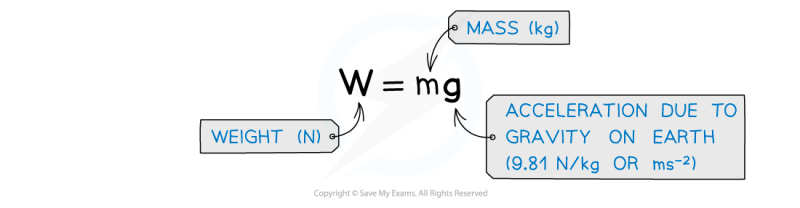
Future Trends and Innovations
The next frontier in what is the equation for mass lies in quantum gravity. Experiments like LIGO (gravitational waves) and the Large Hadron Collider (Higgs studies) are probing the limits of current theories. String theory’s vibrational mass spectrum or loop quantum gravity’s spin networks may soon provide a unified equation. Meanwhile, dark matter research could introduce entirely new mass components, expanding the Standard Model. Breakthroughs in topological insulators or axion physics might also redefine mass as an emergent property of quantum materials.Artificial intelligence is accelerating these discoveries by simulating complex interactions, while advances in quantum computing could solve relativistic many-body problems. The equation for mass may soon evolve from a static concept to a dynamic, context-dependent variable—one that adapts across scales and theories.
Conclusion
The question what is the equation for mass is more than a mathematical inquiry; it is a lens into the universe’s deepest mysteries. From Newton’s inertia to the Higgs field, each answer reveals new layers of complexity. Yet, the pursuit continues, driven by the hope that a unified theory will emerge—one where mass is not just calculated but understood in its full cosmic and quantum context. Until then, the equation remains a testament to humanity’s relentless curiosity, bridging the gap between the measurable and the metaphysical.The journey to define mass is far from over. Each generation refines the question, and with it, our grasp of reality itself.
Comprehensive FAQs
Q: Can mass be created or destroyed?
No, mass is conserved in classical systems (per Einstein’s E=mc²), but in particle interactions, mass can transform into energy and vice versa. For example, in nuclear reactions, a tiny fraction of mass converts to energy, following conservation laws.
Q: How does the Higgs boson relate to the equation for mass?
The Higgs mechanism explains why particles have mass by describing their interactions with the Higgs field. The equation m = yv shows mass as a product of coupling strength (y) and the Higgs field’s vacuum expectation value (v), not an intrinsic property.
Q: Is dark matter’s mass described by known equations?
Not yet. Dark matter’s mass interacts gravitationally but lacks electromagnetic interactions, defying the Standard Model’s mass equations. Candidates like WIMPs or axions require new physics to integrate into what is the equation for mass.
Q: Does relativity change the equation for mass at high speeds?
Yes. In special relativity, relativistic mass (γm₀) increases with velocity (γ = 1/√(1−v²/c²)), but modern physics treats m₀ (rest mass) as invariant and energy-momentum as the conserved quantity.
Q: Could future physics redefine the equation for mass?
Absolutely. Quantum gravity theories (e.g., string theory) may replace mass with geometric or topological properties, rendering current equations obsolete. Experiments like those at CERN or LIGO could force this paradigm shift.
Leave a Comment
Comments are moderated before appearing. The data you submit is processed according to the Privacy Policy of versiliasolutions.oneagency.co.