The Hidden Era: What Period Is Nitrogen’s Cosmic Birth?
Table of Contents
- The Complete Overview of Nitrogen’s Cosmic and Geological Timeline
- Historical Background and Evolution
- Core Mechanisms: How It Works
- Key Benefits and Crucial Impact
- Major Advantages
- Comparative Analysis
- Future Trends and Innovations
- Conclusion
- Comprehensive FAQs
- Q: How do we know nitrogen wasn’t always part of Earth’s atmosphere?
- Q: Can nitrogen be created artificially, or is it only found in nature?
- Q: Why is nitrogen fixation so difficult for most organisms?
- Q: How does nitrogen pollution affect human health?
- Q: Are there planets where nitrogen might not exist, or is it universal?
- Q: Could we run out of nitrogen on Earth?
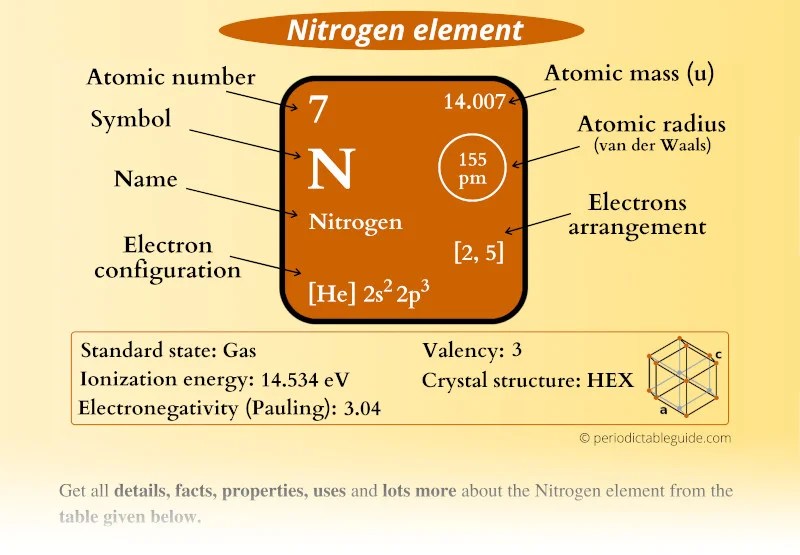
Nitrogen, the seventh element on the periodic table, is far more than an inert gas filling party balloons or preserving meat. It is a silent architect of life, a relic of stellar alchemy, and a cornerstone of Earth’s biosphere. Yet, its origins—what period is nitrogen truly born from—remain a question woven into the fabric of cosmic time. The answer lies not in a single geological epoch but in a series of cataclysmic events spanning billions of years, from the death throes of ancient stars to the chemical soup of a young Earth.
The story begins not on our planet but in the void between stars, where the first nitrogen atoms were forged in the furnaces of dying massive stars. These stars, far heavier than our Sun, burned through their hydrogen and helium reserves in a matter of millions of years, only to explode as supernovae, scattering nitrogen-14 (the most abundant isotope) across the galaxy. This process, known as stellar nucleosynthesis, is the first chapter in answering what period is nitrogen first synthesized. The gas then drifted through interstellar clouds, eventually becoming part of the molecular nurseries where new solar systems, including ours, would form.
On Earth, nitrogen’s journey took a dramatic turn. Unlike oxygen or carbon, which were delivered by comets and asteroids, nitrogen arrived primarily through volcanic outgassing during the planet’s formative years. As Earth’s mantle belched forth nitrogen-rich gases, they accumulated in the primordial atmosphere, creating a blanket that would later become essential for life. The question of what period is nitrogen most influential on Earth, however, is not a single moment but a gradual evolution—from the Archean eon’s anaerobic microbes to the modern nitrogen cycle, where bacteria and lightning play critical roles in converting it into bioavailable forms.

The Complete Overview of Nitrogen’s Cosmic and Geological Timeline
Nitrogen’s existence is a testament to the universe’s recycling program. Every atom of nitrogen on Earth was once part of a star, ejected into space, and later incorporated into planetary bodies. Understanding what period is nitrogen dominant in Earth’s history requires tracing its path from stellar nurseries to terrestrial ecosystems. The element’s abundance—making up 78% of Earth’s atmosphere—is a direct result of its stability and the sheer volume produced during supernovae. These explosions not only seeded the cosmos with nitrogen but also triggered the formation of heavier elements, setting the stage for complex chemistry.The timeline of nitrogen’s influence on Earth is equally fascinating. During the Hadean eon (4.6–4.0 billion years ago), when the planet was a molten rock, nitrogen was likely trapped in the mantle or lost to space. By the Archean (4.0–2.5 billion years ago), volcanic activity released it into the atmosphere, creating a reducing environment where ammonia (NH₃) and other nitrogen compounds dominated. This era is crucial for answering what period is nitrogen first became a biological player, as early lifeforms likely relied on fixed nitrogen—converted from atmospheric N₂ by lightning or hydrothermal vents—before cyanobacteria evolved to perform nitrogen fixation around 2.7 billion years ago.
Historical Background and Evolution
The scientific pursuit of what period is nitrogen originated in the 18th century, when chemists like Daniel Rutherford isolated it as a distinct gas in 1772. Rutherford’s discovery was part of a broader effort to classify air’s components, but it was Henry Cavendish who later identified nitrogen’s inert nature. The element’s name, derived from the Greek nitron (soda) and genes (forming), reflects its role in forming nitrates—a key insight that would later connect nitrogen to agriculture and industry.In the 20th century, the Haber-Bosch process revolutionized our understanding of what period is nitrogen became indispensable to humanity. By artificially fixing atmospheric nitrogen into ammonia, Fritz Haber and Carl Bosch unlocked the ability to produce fertilizers at scale, preventing mass starvation. This technological leap underscored nitrogen’s dual role: as a passive atmospheric gas and an active participant in Earth’s most critical cycles. Meanwhile, astrophysicists like Fred Hoyle expanded the narrative by demonstrating that nitrogen-14 is primarily synthesized in the CNO cycle (carbon-nitrogen-oxygen) of high-mass stars, further cementing its cosmic origins.
Core Mechanisms: How It Works
Nitrogen’s chemical behavior is governed by its triple bond (N≡N), which requires immense energy to break—explaining its stability and inertness under normal conditions. The process of what period is nitrogen becomes biologically useful hinges on nitrogen fixation, where atmospheric N₂ is converted into ammonia (NH₃) or nitrates (NO₃⁻). This can occur naturally through lightning, bacterial action (e.g., Rhizobium in legume roots), or industrially via the Haber-Bosch method. Once fixed, nitrogen enters ecosystems through plants, which assimilate it into amino acids and nucleic acids, forming the backbone of proteins and DNA.The nitrogen cycle is a closed-loop system where fixed nitrogen is eventually returned to the atmosphere through denitrification, performed by bacteria like Pseudomonas. This cycle is a delicate balance, and human activities—such as fossil fuel combustion and agricultural runoff—have disrupted it, leading to eutrophication and dead zones in oceans. The cycle’s efficiency also answers what period is nitrogen became a limiting nutrient for life: without fixation, Earth’s biosphere would be nitrogen-starved, despite its atmospheric abundance.
Key Benefits and Crucial Impact
Nitrogen’s influence extends from the microscopic to the global scale. As the most abundant gas in Earth’s atmosphere, it regulates temperature by absorbing infrared radiation, a process critical for maintaining habitable conditions. In living systems, nitrogen is the fourth most abundant element in the human body by mass, essential for synthesizing proteins, hormones, and even neurotransmitters like serotonin. The agricultural revolution, powered by nitrogen fertilizers, has enabled modern food production, supporting a global population that now exceeds 8 billion.Yet nitrogen’s impact is not without consequences. The same processes that sustain life can also harm it when unchecked. Excess nitrogen in waterways fuels toxic algal blooms, while nitrogen oxides (NOₓ) from combustion contribute to smog and acid rain. The tension between nitrogen’s benefits and its environmental costs frames the modern debate over what period is nitrogen will define humanity’s relationship with this element in the coming decades.
"Nitrogen is the silent partner of life—unseen, yet indispensable. Its story is one of cosmic creation, geological patience, and human ingenuity, all intertwined in a cycle that sustains us." — Carl Sagan (adapted from Cosmos)
Major Advantages
- Biological Foundations: Nitrogen is the building block of amino acids, DNA, and RNA, making it essential for all known life forms. Without it, proteins and genetic material could not exist.
- Atmospheric Stability: Its inert nature at standard conditions prevents it from reacting with other atmospheric gases, maintaining a stable environment for complex chemistry.
- Agricultural Productivity: The Haber-Bosch process has doubled global food production by providing accessible nitrogen fertilizers, preventing famines and supporting population growth.
- Industrial Versatility: Nitrogen is used in ammonia production, cryogenics, electronics manufacturing, and even as a preservative in food packaging.
- Cosmic Fingerprint: The presence of nitrogen in exoplanetary atmospheres is a key biomarker for habitability, as it suggests active geological or biological cycles.
Comparative Analysis
| Aspect | Nitrogen (N₂) | Oxygen (O₂) |
|---|---|---|
| Cosmic Origin | Primarily from CNO cycle in high-mass stars; supernovae ejection. | Mostly from Type II supernovae and stellar winds; also photodissociation of water. |
| Earth’s Abundance | 78% of atmosphere; ~0.002% in Earth’s crust. | 21% of atmosphere; ~46% of Earth’s crust. |
| Biological Role | Limiting nutrient; fixed into amino acids and nucleic acids. | Critical for respiration; component of organic molecules. |
| Industrial Impact | Haber-Bosch process; cryogenics; food preservation. | Steel production; combustion; medical applications. |
Future Trends and Innovations
The next frontier in nitrogen research lies at the intersection of astrobiology and sustainable chemistry. As telescopes like the James Webb Space Telescope analyze exoplanetary atmospheres, scientists seek to answer what period is nitrogen detectable in alien worlds—a potential sign of life. On Earth, the focus is shifting toward "green nitrogen," where renewable energy powers Haber-Bosch alternatives, reducing the carbon footprint of fertilizer production. Innovations in biological nitrogen fixation, such as genetically engineered crops, could further decouple agriculture from fossil fuels.Climate change may also reshape nitrogen’s role. Rising temperatures could accelerate denitrification in soils, releasing nitrous oxide (N₂O), a potent greenhouse gas. Meanwhile, ocean dead zones—expanding due to agricultural runoff—highlight the need for precision nitrogen management. The challenge ahead is to harness nitrogen’s potential while mitigating its unintended consequences, ensuring that what period is nitrogen dominates Earth’s future is one of balance, not excess.
Conclusion
Nitrogen’s journey from stellar furnaces to terrestrial life is a narrative of cosmic recycling and evolutionary necessity. The question of what period is nitrogen formed spans eons, but its significance is timeless. It is the invisible thread connecting stars to soil, chemistry to biology, and human innovation to environmental stewardship. As we stand on the brink of a nitrogen-centric future—where its management will dictate food security and climate resilience—understanding its origins and cycles is not just academic. It is a survival guide for a planet where an element once born in the death of stars now shapes the fate of all life.The story of nitrogen is far from over. With each supernova lighting up the cosmos, new nitrogen atoms are born, waiting to be woven into the next chapter of Earth’s—and perhaps extraterrestrial—history.
Comprehensive FAQs
Q: How do we know nitrogen wasn’t always part of Earth’s atmosphere?
A: Geological evidence, such as ancient sedimentary rocks from the Archean eon, shows low nitrogen concentrations compared to today’s levels. Models suggest early Earth’s atmosphere was richer in methane, ammonia, and carbon dioxide, with nitrogen gradually accumulating via volcanic outgassing over hundreds of millions of years.
Q: Can nitrogen be created artificially, or is it only found in nature?
A: Nitrogen cannot be artificially created from other elements under normal conditions due to its stable triple bond. However, it can be isolated from the atmosphere (as in air separation plants) or synthesized in nuclear reactions (e.g., producing nitrogen-13 for medical imaging). The Haber-Bosch process, meanwhile, "fixes" atmospheric nitrogen into ammonia, but it doesn’t create new nitrogen atoms.
Q: Why is nitrogen fixation so difficult for most organisms?
A: The N≡N triple bond requires 945 kJ/mol to break, an energy barrier most organisms cannot overcome. Only certain bacteria (e.g., Azotobacter, Rhizobium) and archaea possess the nitrogenase enzyme, which, under anaerobic conditions, can split N₂ using ATP. This is why nitrogen fixation is a rare and energy-intensive process in nature, often requiring symbiotic relationships (like legumes and their root nodules).
Q: How does nitrogen pollution affect human health?
A: While atmospheric nitrogen itself is inert, its reactive forms—such as nitrogen dioxide (NO₂) from vehicle emissions and ammonia (NH₃) from fertilizers—pose risks. NO₂ irritates the lungs, exacerbating asthma and respiratory diseases, while ammonia can cause eye and throat irritation. Indirectly, nitrogen runoff leads to harmful algal blooms, which produce toxins like microcystin, dangerous if ingested through contaminated water or seafood.
Q: Are there planets where nitrogen might not exist, or is it universal?
A: Nitrogen is not universally abundant in exoplanets. Its presence depends on the host star’s metallicity (element abundance) and planetary formation conditions. Rocky planets orbiting metal-poor stars may lack nitrogen, while gas giants could have nitrogen-rich atmospheres if they formed beyond the frost line. Telescopes like JWST are now searching for nitrogen signatures in exoplanetary spectra to infer habitability.
Q: Could we run out of nitrogen on Earth?
A: No—Earth’s atmospheric nitrogen is effectively infinite for human timescales, as it’s not consumed but recycled. However, the bioavailable nitrogen (fixed forms like nitrates) is a finite resource in agricultural systems. Overuse leads to depletion, requiring sustainable practices like crop rotation, cover crops, and precision farming to maintain soil nitrogen levels without over-reliance on fertilizers.
Leave a Comment
Comments are moderated before appearing. The data you submit is processed according to the Privacy Policy of versiliasolutions.oneagency.co.