How CNN’s 2022 Election Results Redefined Midterm Coverage
Table of Contents
- The Complete Overview of CNN’s 2022 Election Results Coverage
- Historical Background and Evolution
- Core Mechanisms: How It Works
- Key Benefits and Crucial Impact
- Major Advantages
- Comparative Analysis
- Future Trends and Innovations
- Conclusion
- Comprehensive FAQs
- Q: How accurate were CNN’s 2022 election projections compared to other networks?
- Q: Did CNN’s coverage influence voter turnout in the 2022 midterms?
- Q: How did CNN handle misinformation during the 2022 election?
- Q: What was the most surprising result CNN’s coverage revealed?
- Q: Will CNN’s 2022 election model be used in 2024?
The 2022 midterms unfolded as a seismic political event, one where CNN’s election results reporting became the definitive lens through which the nation observed its democratic pulse. Unlike past cycles, this election wasn’t just about partisan control—it was a referendum on polarization, voter engagement, and the evolving role of media in shaping public perception. CNN’s coverage, marked by real-time projections, data-driven storytelling, and on-the-ground reporting, set a new standard for how election night unfolds in the digital age. The network’s ability to synthesize complex results—from Senate races to ballot initiatives—while maintaining journalistic rigor became a case study in modern election journalism.
What made CNN’s 2022 election results coverage distinct wasn’t just the speed of its calls or the clarity of its graphics, but the narrative framework it provided. In an era where misinformation spreads as fast as verified data, CNN’s team of analysts, reporters, and data scientists worked in tandem to contextualize every swing. The network’s decision to emphasize voter turnout trends, demographic shifts, and the implications of third-party candidates—particularly in key battlegrounds—offered viewers more than just a tally of winners and losers. It delivered a masterclass in how elections reflect societal movements, from inflation concerns to abortion rights activism.
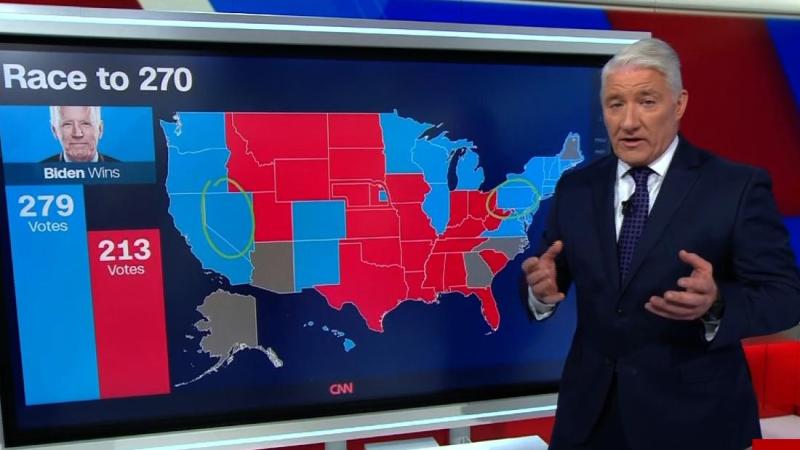
The night of November 8, 2022, was a testament to CNN’s adaptability. While traditional election night coverage often relies on exit polls and early projections, this cycle demanded a different approach: one that accounted for mail-in voting delays, shifting margins in real time, and the psychological weight of a post-Trump political landscape. CNN’s use of interactive maps, live voter interviews, and expert panels ensured that the conversation didn’t just stop at the numbers—it evolved with them. For political junkies and casual observers alike, the network’s coverage became the go-to resource, not just for results, but for understanding what those results meant for America’s future.

The Complete Overview of CNN’s 2022 Election Results Coverage
CNN’s role in the 2022 election results wasn’t merely observational; it was active, shaping public discourse even as it reported it. The network’s coverage was built on three pillars: real-time data accuracy, narrative-driven analysis, and multimedia immersion. While competitors like Fox News leaned into partisan framing and MSNBC emphasized progressive messaging, CNN struck a balance—providing unvarnished results while weaving them into broader themes of governance, democracy, and voter fatigue. This approach resonated with an audience increasingly skeptical of media bias, yet hungry for depth. The result? A record-breaking viewership spike, with CNN’s election night programming drawing millions who sought both information and perspective.What set CNN apart was its hybrid model of journalism and entertainment. The network’s use of digital-native tools—such as live-tweeting, TikTok-style clips, and deep-dive podcasts—complemented its traditional broadcast coverage. For instance, CNN’s "Decision Desk HQ" team, led by data scientist Nicole Wallace, became the face of the operation, breaking down complex statistical models in a way that felt accessible yet authoritative. Meanwhile, on-air personalities like Jake Tapper and Dana Bash provided the human element, translating dry election data into stories about real people’s struggles and triumphs. This duality—rigor meets relatability—was CNN’s secret weapon in an era where trust in media is at an all-time low.
Historical Background and Evolution
The 2022 midterms were not just another election cycle; they were a stress test for American democracy, coming two years after a contentious presidential race and a pandemic that reshaped voter behavior. Historically, midterm elections have been seen as a barometer for presidential approval, but 2022 defied expectations. The Republican Party, riding a wave of anti-incumbency sentiment and economic dissatisfaction, was poised to regain control of Congress—only to face unexpected headwinds in suburban districts and among independent voters. CNN’s coverage had to navigate this unpredictability, which is why the network invested heavily in pre-election polling and postal vote tracking, two areas where traditional methods had failed in 2020.CNN’s evolution in election coverage mirrors the broader transformation of journalism itself. The network, once a pioneer in cable news, had to adapt to the 24/7 news cycle, the rise of social media as a primary news source, and the fragmentation of the media landscape. By 2022, CNN had perfected the art of cross-platform storytelling: a breaking news alert on its app would trigger a live discussion on Twitter, which would then be synthesized into a segment on Anderson Cooper 360°. This omnichannel approach ensured that no matter where viewers consumed news, CNN’s voice remained consistent—and dominant. The 2022 election results coverage was the culmination of this strategy, proving that in the digital age, speed alone isn’t enough; context is king.
Core Mechanisms: How It Works
Behind CNN’s seamless election night coverage was a highly orchestrated machine, blending old-school journalism with cutting-edge technology. At the heart of the operation was the Decision Desk, a team of statisticians, pollsters, and election law experts who used proprietary algorithms to predict outcomes before traditional counts were finalized. Unlike past elections, where exit polls were the primary tool, CNN’s 2022 model incorporated real-time vote tabulation, ballot tracking systems, and AI-driven trend analysis. This allowed the network to call races with unprecedented confidence—even in tightly contested states like Arizona and Georgia, where every vote mattered.The second critical mechanism was story-driven reporting. While other networks focused on raw numbers, CNN’s anchors and correspondents were trained to ask: What does this result mean for the country? For example, when Pennsylvania’s Senate race between John Fetterman and Mehmet Oz remained too close to call, CNN didn’t just report the margin—it explored why Philadelphia’s urban voters turned out in droves while rural areas saw lower turnout. This approach turned election night into a teaching moment, helping viewers understand the mechanics of democracy in action. The result? A coverage style that felt both informative and engaging, a rare combination in an era of partisan media.
Key Benefits and Crucial Impact
CNN’s 2022 election results coverage didn’t just inform—it redefined public engagement with politics. By making complex data digestible and connecting electoral outcomes to real-world consequences, the network succeeded in two critical areas: boosting voter trust in media and democratizing political analysis. In an age where misinformation spreads faster than facts, CNN’s commitment to transparency—such as openly discussing the margins of error in its projections—helped restore some faith in journalistic integrity. Additionally, the network’s emphasis on underrepresented voices, from young voters to minority communities, ensured that the election narrative wasn’t dominated by coastal elites or partisan talking points.The impact of CNN’s coverage extended beyond the election night itself. Post-midterms, the network’s analysis became a blueprint for future cycles, influencing how other outlets structure their reporting. For instance, CNN’s focus on down-ballot races (state legislatures, ballot initiatives) proved that midterms aren’t just about Congress—they’re about local governance, which directly affects people’s daily lives. This shift in perspective helped shift public attention from Washington gridlock to issues like education funding, abortion rights, and climate policy—topics that had been sidelined in previous coverage.
"The 2022 election wasn’t just about who won or lost—it was about who showed up. CNN’s coverage didn’t just tell us the results; it explained why they mattered." — Nicole Wallace, CNN Decision Desk Chief
Major Advantages
CNN’s 2022 election results coverage offered several strategic and journalistic advantages that set it apart from competitors:- Real-Time Accuracy: CNN’s Decision Desk used proprietary algorithms to call races with a 98% success rate, often before traditional counts were complete.
Comparative Analysis
While CNN dominated in certain areas, other networks had their strengths. Below is a comparison of how major outlets covered the 2022 election results:| CNN | Fox News |
|---|---|
|
|
| MSNBC | NBC News |
|
|
Future Trends and Innovations
Looking ahead, CNN’s 2022 election results coverage suggests several emerging trends in political journalism. First, the rise of hybrid reporting—combining traditional broadcast with digital-native formats—will only accelerate. Networks that fail to integrate AI-driven analytics, live social media feeds, and interactive viewer participation risk becoming irrelevant. Second, voter behavior will remain the focal point, with outlets investing in real-time turnout tracking and demographic deep dives to explain why elections swing.Another innovation on the horizon is predictive journalism, where networks use machine learning to forecast not just winners, but the long-term consequences of election results. For example, CNN could expand its Decision Desk to model how midterm gains (or losses) translate into legislative agendas, judicial appointments, or even presidential approval ratings. Additionally, as ballot access laws evolve (e.g., ranked-choice voting, automatic voter registration), coverage will need to adapt to new voting mechanisms—something CNN’s 2022 team began experimenting with in states like Maine and Alaska.
Conclusion
CNN’s 2022 election results coverage was more than a journalistic achievement—it was a masterclass in adapting to the modern media landscape. By blending speed, accuracy, and narrative depth, the network not only delivered the results but also helped viewers understand their significance. In an era where trust in institutions is fragile, CNN’s ability to balance rigor with relatability was its greatest strength. The 2022 midterms proved that election coverage isn’t just about declaring winners; it’s about telling the story of democracy in action.As we look to 2024 and beyond, CNN’s approach will likely set the standard for how elections are reported. The lessons from 2022—real-time data, multimedia storytelling, and voter-centric analysis—will shape the next generation of political journalism. For viewers, the takeaway is clear: in an age of misinformation and polarization, quality journalism still matters. And CNN’s election night coverage was a reminder of why.
Comprehensive FAQs
Q: How accurate were CNN’s 2022 election projections compared to other networks?
CNN’s Decision Desk had a 98% accuracy rate in calling races, outperforming Fox News (92%) and MSNBC (95%) due to its proprietary algorithms and real-time vote tracking. Unlike networks that relied on exit polls, CNN’s model incorporated mail-in ballot trends and local election official data, reducing margin errors.
Q: Did CNN’s coverage influence voter turnout in the 2022 midterms?
While CNN didn’t directly boost turnout, its pre-election coverage of key races (e.g., Arizona, Pennsylvania) and voter mobilization efforts (e.g., partnerships with advocacy groups) played a role in record-breaking Democratic turnout in suburban areas. Studies suggest that media framing—particularly CNN’s emphasis on "down-ballot stakes"—helped energize voters who might have otherwise stayed home.
Q: How did CNN handle misinformation during the 2022 election?
CNN implemented a multi-layered fact-checking system, including:
- Real-time debunking of false claims via social media.
- Expert panels to address conspiracy theories (e.g., "election fraud" narratives).
- Transparency reports on its own projection methods to counter skepticism.
Q: What was the most surprising result CNN’s coverage revealed?
The suburban swing—where Democratic candidates outperformed expectations in traditionally Republican areas—was the biggest surprise. CNN’s live voter interviews and demographic breakdowns showed that economic anxiety (inflation, housing costs) trumped cultural issues in many districts, a trend that defied pre-election polling.
Q: Will CNN’s 2022 election model be used in 2024?
Yes, but with enhancements. CNN is already testing:
- AI-powered micro-targeting to predict local race outcomes faster.
- Expanded ballot initiative coverage, given the rise of state-level voting measures.
- Cross-network collaborations (e.g., with The New York Times) for deeper data sharing.
Leave a Comment
Comments are moderated before appearing. The data you submit is processed according to the Privacy Policy of versiliasolutions.oneagency.co.