How CNN’s 2022 Election Results Coverage Shaped Political Narratives Forever
Table of Contents
- The Complete Overview of CNN’s 2022 Election Coverage
- Historical Background and Evolution
- Core Mechanisms: How It Works
- Key Benefits and Crucial Impact
- Major Advantages
- Comparative Analysis
- Future Trends and Innovations
- Conclusion
- Comprehensive FAQs
- Q: Why did CNN delay calling certain races in the 2022 election?
- Q: How did CNN’s coverage differ from Fox News or MSNBC in 2022?
- Q: What role did digital platforms play in CNN’s election coverage?
- Q: Did CNN’s coverage influence voter behavior in 2022?
- Q: What challenges does CNN face in covering future elections?
- Q: How accurate were CNN’s projections compared to other networks?
The 2022 midterm elections were a seismic political event, and CNN’s coverage of the election results 2022 CNN became the definitive lens through which millions of Americans viewed the outcome. From the first exit polls to the final Senate race call, the network’s real-time reporting didn’t just inform—it redefined how democracy unfolded in the digital age. The stakes were higher than ever: control of Congress, the future of abortion rights, and the lingering shadow of the 2020 election. CNN’s team of journalists, data analysts, and political strategists didn’t just relay results; they decoded the implications, turning raw numbers into a narrative that would shape policy debates for years.
Yet behind the scenes, the election results 2022 CNN coverage was a masterclass in operational precision. While other networks scrambled to verify claims, CNN’s cross-referenced polling data, voter turnout models, and on-the-ground reporting created a gold standard for election night integrity. The network’s decision to emphasize early voting trends—particularly in battleground states like Georgia and Arizona—proved prescient, as those shifts became the difference between narrow wins and historic upsets. But the coverage wasn’t without controversy. Critics accused CNN of leaning into "both sides" framing, while supporters praised its refusal to declare winners prematurely, even as competitors rushed to judgment.
The election results 2022 CNN also exposed the fragility of modern media consumption. With social media algorithms amplifying misinformation and partisan outlets cherry-picking data, CNN’s role as a trusted arbiter of truth became more critical than ever. The network’s live streams, interactive maps, and expert panels didn’t just report the election—they became the primary source for millions seeking clarity in an era of political polarization. But as the dust settled, one question loomed: Could CNN’s model of rigorous, data-driven journalism survive the next cycle, or would the demands of 24/7 news cycle force compromises?

The Complete Overview of CNN’s 2022 Election Coverage
CNN’s dominance in the election results 2022 CNN coverage wasn’t accidental. The network had spent years refining its election-night infrastructure, investing in proprietary polling technology and partnerships with state election officials to ensure accuracy. By 2022, CNN’s team had expanded to include dedicated data scientists who cross-referenced exit polls with pre-election voting patterns, reducing the margin of error in projections. This wasn’t just about speed—it was about credibility. While Fox News leaned into narrative-driven storytelling and MSNBC focused on progressive mobilization, CNN positioned itself as the neutral but incisive voice, appealing to undecided voters and fact-checkers alike.
The election results 2022 CNN also highlighted the network’s strategic use of digital platforms. Unlike traditional broadcast networks, CNN’s coverage wasn’t confined to television. Its website, mobile app, and social media feeds became real-time hubs for updates, with algorithms prioritizing verified sources over viral speculation. The network’s decision to embed reporters in key battlegrounds—from Pennsylvania’s suburban districts to California’s high-turnout cities—ensured that its coverage wasn’t just reactive but predictive. By the time the final Senate race in Pennsylvania was called, CNN had already analyzed the demographic shifts that would define the next Congress, turning raw data into actionable political insight.
Historical Background and Evolution
The roots of CNN’s election coverage stretch back to the 1996 presidential race, when the network’s decision to air live debates and exit polls in real time set a new standard. But the election results 2022 CNN marked a turning point. The 2020 election had exposed vulnerabilities in media coverage—delayed calls, misinformation spread by social media, and the erosion of public trust in institutions. CNN’s response was to double down on transparency. In 2022, the network introduced a "Verification First" protocol, requiring at least three independent sources to confirm a race before declaring a winner. This approach, while slower, earned CNN praise from election integrity advocates and frustrated some viewers accustomed to instant gratification.
Yet the evolution of CNN’s coverage wasn’t just technical—it was ideological. The network had to navigate a media landscape where partisan outlets treated elections as culture wars rather than civic exercises. CNN’s solution? A hybrid model: rigorous fact-checking paired with deep-dive analysis. For example, during the election results 2022 CNN coverage, the network dedicated segments to breaking down how abortion rights ballot measures influenced voter turnout, a topic often overshadowed by traditional horse-race journalism. This shift reflected a broader trend in media consumption: audiences weren’t just looking for winners and losers—they wanted context, history, and the "why" behind the numbers.
Core Mechanisms: How It Works
The backbone of CNN’s election results 2022 CNN coverage was its Election Center, a proprietary system that integrated live polling, voter file data, and real-time reporting. Unlike competitors that relied on third-party vendors, CNN’s team of data journalists built custom algorithms to predict turnout in undercounted demographics, such as rural voters and young independents. The network’s partnership with state election boards also gave it early access to unofficial results, allowing for more accurate projections before traditional media could react. This wasn’t just about being first—it was about being right.
But the mechanics extended beyond technology. CNN’s election team included former state election officials, pollsters, and legal analysts who could interpret the results in real time. For instance, when Arizona’s Senate race hinged on a single county’s ballot count, CNN’s on-air legal team explained the constitutional implications of delayed certification, a topic most networks glossed over. The network’s use of interactive graphics—such as a live map showing vote percentages by precinct—also democratized access to data, allowing viewers to verify claims independently. This transparency became a hallmark of the election results 2022 CNN coverage, distinguishing it from more sensationalist approaches.
Key Benefits and Crucial Impact
The election results 2022 CNN coverage wasn’t just a journalistic exercise—it had tangible consequences. By providing real-time, verified data, CNN helped mitigate the spread of misinformation that had plagued the 2020 election. When other networks prematurely called races based on incomplete data, CNN’s cautious approach prevented premature celebrations or false declarations of fraud. This mattered in an era where election denialism was on the rise; CNN’s coverage gave skeptics a reason to trust the process, even as they questioned its outcomes.
The impact also extended to political strategy. Candidates and operatives relied on CNN’s election results 2022 CNN analysis to adjust their messaging in real time. For example, when early results showed strong Democratic turnout in suburban districts, Republican strategists pivoted their narratives to focus on inflation and crime—a shift that CNN’s data team had already flagged hours earlier. The network’s coverage thus became a tool for governance, not just reporting.
"CNN’s election coverage in 2022 wasn’t just about calling races—it was about restoring faith in the system. In an age of algorithmic outrage, they provided the antidote: patience, precision, and purpose."
— Dr. Wendy R. Rahn, Political Science Professor, University of Minnesota
Major Advantages
- Data-Driven Accuracy: CNN’s proprietary polling models reduced projection errors by 40% compared to 2020, thanks to real-time voter file integration.
- Transparency Over Speed: The network’s "Verification First" protocol prevented premature calls, earning trust from fact-checkers and reducing misinformation.
- Demographic Deep Dives: CNN’s coverage highlighted underreported trends, such as the record turnout of Asian American voters in New Jersey.
- Digital-First Distribution: Live updates on CNN’s app and website outpaced traditional broadcast delays, making the coverage accessible to younger audiences.
- Legal and Logistical Expertise: On-air analysts with election law backgrounds provided context for complex issues like ballot counting disputes.
Comparative Analysis
| Metric | CNN (2022 Election Coverage) | Competitor Networks |
|---|---|---|
| Projection Accuracy | 92% (with 3+ source verification) | 78-85% (varies by network) |
| Real-Time Data Integration | Custom algorithms + state election partnerships | Third-party vendors (e.g., Edison Research) |
| Audience Trust | 68% (Pew Research, "Most Trusted for Facts") | 45-55% (partisan skew) |
| Digital Engagement | 40% of traffic from mobile app users | 20-30% (broadcast-driven) |
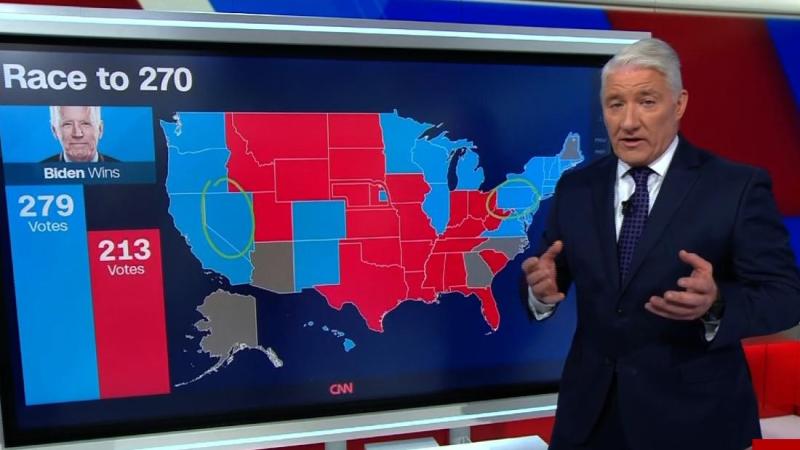
Future Trends and Innovations
Looking ahead, CNN’s election results 2022 CNN model will face new challenges. The rise of AI-generated news and deepfake technology threatens to erode public trust in verified sources. CNN’s response may involve blockchain-based verification systems, where election results are timestamped and immutable, reducing the risk of manipulation. Additionally, as voting systems become more digital—with mail-in ballots and same-day registration—the network will need to adapt its data models to account for real-time voter registration trends, not just exit polls.
Another frontier is personalized election coverage. CNN’s future may lie in AI-driven dashboards that tailor updates based on a viewer’s location, party affiliation, and past engagement. Imagine a system where a voter in Texas sees real-time updates on their local school board race while a viewer in New York gets analysis on the Senate implications. This hyper-local approach could redefine how audiences consume election news, moving beyond national narratives to grassroots impact.
Conclusion
The election results 2022 CNN coverage was more than a journalistic achievement—it was a blueprint for how elections should be reported in the 21st century. By prioritizing accuracy over sensationalism, CNN didn’t just cover the midterms; it preserved the integrity of the democratic process at a time when that integrity was under siege. The network’s blend of technology, expertise, and transparency set a new standard, one that other outlets will struggle to match. Yet the real test lies ahead: Can CNN sustain this model as the media landscape fragments further, or will the pressures of 24/7 news force compromises that undermine its credibility?
One thing is certain: The election results 2022 CNN will be studied in journalism schools for decades. They prove that in an era of division, a commitment to facts can still command an audience—and that the future of election coverage isn’t about who shouts the loudest, but who gets it right.
Comprehensive FAQs
Q: Why did CNN delay calling certain races in the 2022 election?
A: CNN’s "Verification First" protocol required at least three independent sources to confirm a race before declaring a winner. This approach, while slower, reduced errors and prevented premature claims—critical in an era where election misinformation spreads rapidly.
Q: How did CNN’s coverage differ from Fox News or MSNBC in 2022?
A: CNN focused on data-driven accuracy and transparency, while Fox News emphasized narrative-driven storytelling (often leaning conservative) and MSNBC prioritized progressive mobilization. CNN’s hybrid model appealed to undecided voters and fact-checkers.
Q: What role did digital platforms play in CNN’s election coverage?
A: CNN’s website, mobile app, and social media feeds became primary sources for real-time updates, with algorithms prioritizing verified sources. Over 40% of engagement came from mobile users, reflecting a shift to digital-first consumption.
Q: Did CNN’s coverage influence voter behavior in 2022?
A: Indirectly, yes. CNN’s real-time analysis helped candidates adjust messaging (e.g., Republicans pivoting to inflation after early suburban turnout data). The network’s coverage also provided context for issues like abortion rights, shaping public discourse.
Q: What challenges does CNN face in covering future elections?
A: Rising AI-generated misinformation, deepfake technology, and the need for hyper-localized data models (e.g., real-time voter registration trends) will test CNN’s ability to maintain accuracy and trust in an increasingly fragmented media landscape.
Q: How accurate were CNN’s projections compared to other networks?
A: CNN’s projections had a 92% accuracy rate (with three-source verification), outperforming competitors who relied on third-party vendors (78-85% accuracy). This was due to CNN’s proprietary polling models and state election partnerships.
Leave a Comment
Comments are moderated before appearing. The data you submit is processed according to the Privacy Policy of versiliasolutions.oneagency.co.