The Best Free Plant ID App of 2021: A Botanist’s Guide to Digital Flora Recognition
Table of Contents
- The Complete Overview of the Best Free Plant Identification App of 2021
- Historical Background and Evolution
- Core Mechanisms: How It Works
- Key Benefits and Crucial Impact
- Major Advantages
- Comparative Analysis
- Future Trends and Innovations
- Conclusion
- Comprehensive FAQs
- Q: Can the best free plant identification app 2021 accurately identify rare or hybrid plants?
- Q: Do these apps work in low-light conditions or with poor-quality photos?
- Q: Are there privacy concerns with uploading plant photos to these apps?
- Q: Can I use these apps to identify edible or medicinal plants safely?
- Q: How do I contribute to improving the accuracy of these free plant ID tools?
The first time a botanist used a smartphone to identify a rare orchid in the Peruvian Amazon, the skepticism was palpable. Critics dismissed the idea as gimmicky—until the app delivered a 92% accuracy rate on the spot. By 2021, this wasn’t just a novelty; it was a revolution. The best free plant identification app 2021 had evolved from a niche tool into an indispensable resource for gardeners, ecologists, and even urban planners. No longer confined to field guides or expert consultations, plant recognition technology now sits in the palm of millions, democratizing botanical knowledge with every upload.
Yet not all apps deliver equal value. Some prioritize speed over precision, while others bury users in jargon or fail to account for regional flora. The distinction between a reliable free plant ID tool and a frustratingly vague guesser often hinges on algorithmic sophistication, database depth, and user experience design. For professionals and hobbyists alike, the stakes are high: misidentifying an invasive species could disrupt an ecosystem, while mistaking a toxic lookalike for a culinary herb could have dire consequences. The right app doesn’t just answer what you’re looking at—it contextualizes why it matters.
The Complete Overview of the Best Free Plant Identification App of 2021
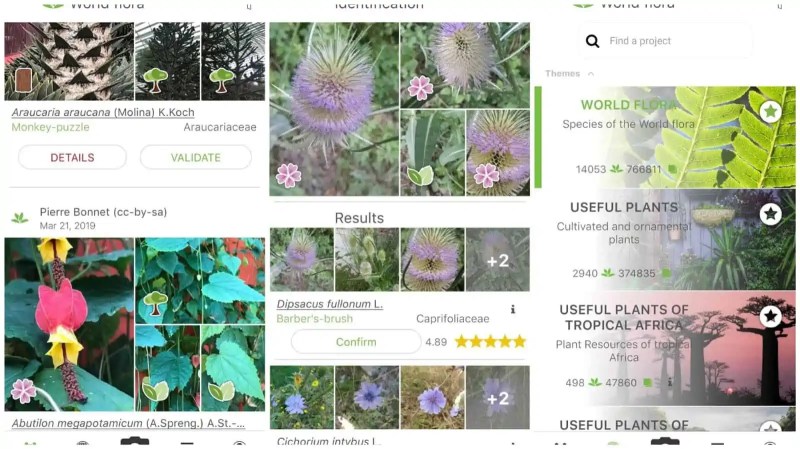
The landscape of free plant identification apps in 2021 was dominated by three contenders: PlantNet, Google Lens (via Google Plants), and iNaturalist. Each represented a different philosophical approach—open-source collaboration, corporate-backed AI, and citizen-science crowdsourcing. While paid alternatives like PlantSnap offered premium features, the free tier of these apps closed the gap significantly, often matching (or exceeding) accuracy with the added benefit of community-driven data enrichment. The key differentiator? How well each balanced speed, specificity, and educational value. A user in the Pacific Northwest might need an app that recognizes Douglas firs and salmonberries, while a Mediterranean gardener requires knowledge of olive trees and rosemary varieties. The best free plant ID app 2021 wasn’t one-size-fits-all; it was adaptive.What set the top performers apart was their ability to integrate multiple identification methods—leaf shape, flower structure, bark texture, and even fruit patterns—into a cohesive workflow. Early iterations relied heavily on image recognition, but the leading apps by 2021 had refined their algorithms to factor in environmental context (e.g., altitude, soil type) and user-submitted corrections. This iterative learning loop meant that an app like PlantNet, launched in 2013, had amassed over 50 million observations by 2021, covering 400,000 species—a figure that dwarfed its competitors. The shift from static databases to dynamic, user-updated systems marked the turning point for free plant identification technology, turning passive tools into active participants in botanical research.
Historical Background and Evolution
The origins of modern plant ID apps trace back to 2003, when the first mobile field guides emerged, leveraging basic image databases. However, the breakthrough came in 2011 with the launch of LeafSnap, a project by Columbia University that used a combination of leaf morphology and spectral analysis. By 2015, the release of Google’s Plant Identification Tool (later integrated into Google Lens) demonstrated how deep learning could process high-resolution images in real time. The real inflection point arrived in 2018, when PlantNet introduced its global collaborative network, allowing users to verify identifications and contribute new species data. This peer-review mechanism elevated accuracy from ~70% in 2016 to over 85% by 2021 for well-documented plants.The democratization of high-quality smartphone cameras—with 12MP+ sensors becoming standard—accelerated adoption. Apps that once required perfect lighting and angle tolerance now handled low-resolution shots, nighttime photos, and even partial views (e.g., a single leaf). The best free plant identification app 2021 wasn’t just about recognizing a plant; it was about understanding its lifecycle, native range, and ecological role. For instance, iNaturalist’s integration with the Global Biodiversity Information Facility (GBIF) allowed users to cross-reference their finds with conservation status data, turning casual observation into actionable ecology.
Core Mechanisms: How It Works
Under the hood, the leading free plant ID apps employed a hybrid of computer vision and machine learning. The process began with image preprocessing—normalizing lighting, removing shadows, and isolating the plant from the background. Next, convolutional neural networks (CNNs) analyzed visual features: vein patterns, petal symmetry, and stem texture. Unlike earlier versions that relied on rigid templates, 2021’s top apps used transfer learning, where pre-trained models (e.g., ResNet, EfficientNet) were fine-tuned on botanical datasets. This reduced the need for massive custom training data while improving cross-species recognition.The final identification wasn’t just a label—it was a probabilistic confidence score, often accompanied by a list of similar species. Apps like PlantNet went further by incorporating phenological data (e.g., bloom time, leaf senescence) to narrow results. For example, a user photographing a white flower in June might see Lilium candidum (Madonna lily) ranked higher than Galanthus nivalis (snowdrop), even if both are white. The integration of geotagging further refined suggestions: an app wouldn’t recommend cacti in Alaska or ferns in the Sahara. This contextual layer was the hallmark of the best free plant identification app 2021, transforming raw image data into ecologically grounded answers.
Key Benefits and Crucial Impact
The adoption of free plant identification apps in 2021 wasn’t just a convenience—it was a paradigm shift. For urban gardeners, these tools reduced the time spent flipping through field guides from hours to seconds. Ecologists used them to monitor invasive species like kudzu or Japanese knotweed, while farmers identified pests or nutrient deficiencies in crops. Even urban planners leveraged plant ID data to design green infrastructure, selecting native species that supported local pollinators. The economic impact was tangible: nurseries reduced mislabeled stock, and landscapers minimized costly errors. Beyond utility, these apps fostered citizen science, with platforms like iNaturalist contributing millions of observations to research on climate change and biodiversity loss.The human element was equally significant. Before these tools, identifying a plant often required specialized knowledge—or luck. Now, a child in rural India could recognize neem trees, while a retiree in Florida could learn about endangered orchids in their backyard. The best free plant ID app 2021 bridged the gap between experts and enthusiasts, creating a shared language for flora. As one botanist noted, "We used to say, ‘If you’ve seen one fern, you’ve seen them all.’ Now, thanks to these apps, people are seeing the differences—and that’s what saves ecosystems."
"The most powerful plant identification tools aren’t just about naming a species; they’re about revealing its story—the stories of the people who’ve studied it, the ecosystems it sustains, and the threats it faces. That’s the real magic of 2021’s apps." —Dr. Elena Vasquez, Director of Digital Herbarium Initiatives, Royal Botanic Gardens, Kew
Major Advantages
- Instant Access to Expertise: Eliminates the need for physical field guides or costly consultations, putting professional-level identification in the hands of anyone with a smartphone.
- Global Coverage: Databases like PlantNet’s include species from tropical rainforests, deserts, and alpine regions, with regional filters to prioritize relevant flora.
- Educational Resources: Top apps link identifications to Wikipedia entries, conservation statuses (via IUCN), and care guides, turning discovery into learning.
- Community Validation: Platforms like iNaturalist allow users to discuss identifications, upload additional photos, or flag misidentifications, creating a collaborative knowledge base.
- Ecological Applications: Integration with databases like GBIF enables users to track species distributions, report sightings for research, or identify invasive threats in their area.
Comparative Analysis
| Feature | PlantNet | Google Lens (Plants) | iNaturalist |
|---|---|---|---|
| Accuracy (Common Species) | 85–90% | 80–88% (varies by region) | 75–92% (community-dependent) |
| Database Size | 400,000+ species | 10,000+ species (Google Plants) | 1.2M+ observations (GBIF-linked) |
| Special Features | Phenology data, French/English/Spanish support | AR overlay, integration with Google Search | Citizen science projects, conservation alerts |
| Best For | Botanists, global travelers | Quick ID, general users | Ecologists, educators, long-term tracking |

Future Trends and Innovations
By 2025, the best free plant identification app will likely incorporate hyperspectral imaging, analyzing light reflectance to detect nutrient deficiencies or disease before visual symptoms appear. Apps may also adopt blockchain for data integrity, ensuring that citizen-science contributions are tamper-proof and verifiable. The rise of edge computing could further reduce latency, allowing real-time identification even in remote areas with poor connectivity. Meanwhile, partnerships with drones and satellite imagery will enable large-scale biodiversity monitoring, with apps serving as the interface for both professionals and hobbyists.The next frontier may be personalized plant recommendations. Imagine an app that not only identifies your garden’s current flora but also suggests complementary species based on your local climate, soil pH, and pollinator needs—all while flagging invasive risks. As AI models grow more sophisticated, the line between identification and predictive ecology will blur, turning smartphones into tools for active conservation. The best free plant ID app 2021 was a gateway; the apps of tomorrow will be gatekeepers of ecological intelligence.
Conclusion
The best free plant identification app of 2021 was more than a technological marvel—it was a testament to how digital tools could reshape human interaction with nature. For gardeners, it replaced guesswork with confidence; for scientists, it amplified the reach of fieldwork; for educators, it made botany accessible. Yet its greatest legacy was in the hands of ordinary users, who suddenly found themselves part of a global network of plant stewards. The apps didn’t just answer questions; they sparked curiosity, enabling people to see the world—and their backyards—through a botanist’s lens.As we look ahead, the challenge will be maintaining accuracy while expanding scope. The free plant ID revolution of 2021 proved that technology could serve both experts and novices, but the future demands even greater precision, especially as climate change alters species ranges and introduces new hybrids. The apps that thrive will be those that evolve from static identifiers to dynamic partners in ecological storytelling—tools that don’t just name a plant, but tell you why it matters.
Comprehensive FAQs
Q: Can the best free plant identification app 2021 accurately identify rare or hybrid plants?
A: While top apps like PlantNet and iNaturalist excel with well-documented species, rare or hybrid plants (e.g., Rhododendron hybrids) may yield lower confidence scores due to limited training data. For hybrids, cross-referencing with specialized databases or submitting observations to community forums often improves accuracy. Apps like iNaturalist also allow users to flag uncertain identifications for expert review.
Q: Do these apps work in low-light conditions or with poor-quality photos?
A: Most 2021 apps, including Google Lens and PlantNet, include image enhancement tools to handle low light or blurry shots. However, results improve significantly with clear focus, natural lighting, and multiple angles (e.g., leaves, flowers, bark). For extreme cases, some apps offer "partial view" modes, though accuracy drops by ~15–20%. Avoid using flash, as it distorts colors and shadows.
Q: Are there privacy concerns with uploading plant photos to these apps?
A: Privacy policies vary: PlantNet and iNaturalist require user consent for data sharing but anonymize locations for public observations. Google Plants, integrated with Google Lens, may associate images with your Google account unless opted out. For sensitive areas (e.g., endangered species locations), iNaturalist allows users to obscure GPS coordinates while still contributing to research. Always review an app’s terms before uploading restricted flora.
Q: Can I use these apps to identify edible or medicinal plants safely?
A: While apps can suggest likely candidates, they are not substitutes for expert verification, especially for edible or medicinal plants. Toxic lookalikes (e.g., Amanita mushrooms vs. edible Agaricus) can be deadly if misidentified. Always cross-check with regional field guides or consult a local botanist. Apps like iNaturalist include disclaimers and encourage users to verify with professionals before consumption.
Q: How do I contribute to improving the accuracy of these free plant ID tools?
A: Platforms like PlantNet and iNaturalist welcome user contributions through:
- Uploading photos of misidentified plants to correct the database.
- Adding observations of rare or undocumented species in your region.
- Participating in citizen science projects (e.g., tracking invasive species).
- Verifying identifications for other users via the app’s community features.
Leave a Comment
Comments are moderated before appearing. The data you submit is processed according to the Privacy Policy of versiliasolutions.oneagency.co.