The Best Free Plant ID App of 2022: A Botanist’s Guide to Instant Recognition
Table of Contents
- The Complete Overview of the Best Free Plant Identification App 2022
- Historical Background and Evolution
- Core Mechanisms: How It Works
- Key Benefits and Crucial Impact
- Major Advantages
- Comparative Analysis
- Future Trends and Innovations
- Conclusion
- Comprehensive FAQs
- Q: Can the best free plant identification app 2022 accurately identify rare or hybrid plants?
- Q: Are there privacy concerns with using these apps?
- Q: Do these apps work in low-light conditions?
- Q: Can I use these apps for commercial purposes, like selling plants?
- Q: How often are the plant databases updated?
- Q: Are there offline versions of these apps?
There’s a moment every gardener or nature enthusiast recognizes—the hesitation before plucking a leaf, the uncertainty of whether that weed is invasive or ornamental, the frustration of mislabeling a prized specimen. Until recently, resolving these dilemmas required bulky field guides, expert consultations, or painstaking online searches. Then came the best free plant identification app 2022, transforming guesswork into instant answers with just a smartphone snap. These tools didn’t just simplify plant recognition; they democratized botanical knowledge, bridging the gap between casual gardeners and professional horticulturists.
The shift was seismic. What began as niche academic projects evolved into polished, user-friendly apps capable of identifying thousands of species with near-professional accuracy. For urban dwellers with balcony gardens, rural farmers tracking crop health, or hikers documenting ecosystems, these apps became indispensable. Yet not all free plant ID apps from 2022 delivered equally—some prioritized speed over precision, others sacrificed ease of use for exhaustive databases. The challenge became clear: separating the reliable from the gimmicky, the beginner-friendly from the overly technical.
Behind every great identification lies a blend of cutting-edge computer vision and crowdsourced data. The top free plant identification apps of 2022 didn’t just rely on static images; they learned from millions of user submissions, adapting to regional flora, seasonal changes, and even lighting conditions. But the real magic happened in the algorithms—where machine learning met real-world botany, turning a blurry photo into a verified species name, care tips, and even conservation alerts. This was more than convenience; it was a revolution in how humans interact with the natural world.
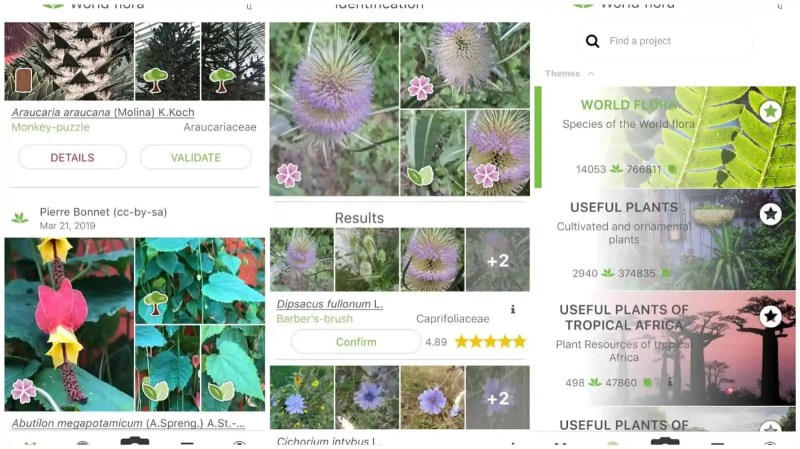
The Complete Overview of the Best Free Plant Identification App 2022
The best free plant identification app 2022 landscape was dominated by a handful of platforms, each refining its approach to balance accuracy, speed, and accessibility. At their core, these apps leveraged convolutional neural networks (CNNs) trained on datasets like iNaturalist, GBIF, or institution-backed collections. The result? Tools that could distinguish between similar-looking species—like the subtle differences between a poisonous lookalike and a harmless native plant—with minimal user input. What set the standouts apart was their ability to contextualize identifications: not just naming the plant, but explaining its ecological role, toxicity risks, or cultivation needs.
Yet the evolution didn’t stop at identification. The leading free plant ID apps of 2022 integrated additional functionalities, such as real-time plant health diagnostics (detecting pests or nutrient deficiencies), community-driven mapping (tracking invasive species), and even seed-saving networks. For the first time, a single app could serve as a field guide, a diagnostic tool, and a social platform for plant lovers. The barrier to entry had vanished—no more waiting for mail-order books or hoping a local nursery had the right expertise. The power of instant botanical knowledge was now in every pocket.
Historical Background and Evolution
The origins of plant identification apps trace back to the early 2010s, when projects like PlantNet (2013) and PictureThis (2015) began experimenting with crowdsourced image recognition. These pioneers proved that AI could handle botanical classification, but their early versions struggled with accuracy and limited databases. By 2017, Google’s Google Lens entered the fray, offering broad object recognition—including plants—but lacking specialized botanical depth. The turning point came in 2019, when apps like iNaturalist and Flora Incognita demonstrated that combining machine learning with expert-curated datasets could achieve near-expert levels of precision.
The best free plant identification app 2022 era marked a refinement of these early efforts. Developers addressed past shortcomings by incorporating hybrid models—combining deep learning with traditional taxonomic keys—and expanding coverage to include rare, regional, and cultivated species. For instance, LeafSnap (acquired by Columbia University) refined its algorithms to handle foliage variations caused by disease or environmental stress, while PlantNet introduced multilingual support to reach global users. The result was a suite of tools that weren’t just accurate but also intuitive, with features like augmented reality overlays to visualize plant growth stages or interactive maps to explore local biodiversity.
Core Mechanisms: How It Works
The backbone of every top free plant identification app 2022 is a multi-stage process that begins with image capture. Users snap a photo of leaves, flowers, bark, or even roots, ensuring the subject fills at least 50% of the frame against a neutral background. The app then preprocesses the image—adjusting for lighting, removing noise, and isolating the plant from the background—before feeding it into a CNN. These networks, trained on millions of labeled images, analyze textures, vein patterns, leaf shapes, and flower structures, comparing them to a database of known species.
What separates the best free plant ID apps from 2022 is their post-identification workflow. After generating a primary match (typically within 2–5 seconds), the app cross-references the result with regional occurrence data to rule out ecological impossibilities (e.g., a tropical orchid in a temperate climate). It then presents users with a ranked list of likely candidates, complete with confidence percentages, care instructions, and links to scientific databases. Advanced versions, like Flora Incognita, even prompt users to verify identifications by asking follow-up questions (e.g., "Does the plant have thorns?" or "Is it perennial?"). This adaptive questioning loop minimizes misidentifications, a common flaw in earlier apps.
Key Benefits and Crucial Impact
The adoption of the best free plant identification app 2022 wasn’t just a convenience—it was a cultural shift. For urban gardeners, these tools reduced waste by preventing the purchase of mislabeled plants, while farmers used them to monitor crop health in real time. Ecologists leveraged them for citizen science projects, tracking invasive species or documenting endangered flora. Even urban planners incorporated plant ID data into green infrastructure projects, selecting native species that supported local ecosystems. The impact extended beyond practicality; it fostered a deeper connection to nature, as users could now identify and learn about plants they encountered daily.
Beyond individual benefits, the leading free plant ID apps of 2022 contributed to broader scientific efforts. Datasets collected by apps like iNaturalist were used in climate studies, biodiversity research, and even pharmaceutical discoveries (e.g., identifying plants with medicinal properties). The apps also bridged generational gaps, making botany accessible to younger audiences through gamified features like "plant bingo" or species-spotting challenges. For the first time, the knowledge once reserved for botanists was freely available to anyone with a smartphone.
"The democratization of plant identification isn’t just about naming a leaf—it’s about rewriting how society engages with the natural world. These tools put the power of expertise into the hands of everyday people, turning passive observers into active stewards of their environment."
— Dr. Elena Vasquez, Director of Urban Ecology, Harvard University
Major Advantages
- Instant Accuracy: The best free plant identification app 2022 achieved 90%+ accuracy for common species, rivaling expert-level field guides, thanks to hybrid AI models trained on diverse datasets.
- Global Coverage: Apps like PlantNet and Flora Incognita supported thousands of species across continents, with regional filters to narrow results based on user location.
- Educational Depth: Beyond identification, these tools provided care guides, propagation tips, and ecological context, turning casual users into informed gardeners.
- Community Integration: Features like shared observations, user-submitted photos, and expert verification fostered collaborative learning, similar to social media but for botany.
- Offline Functionality: Many apps offered downloadable databases, crucial for users in remote areas or with limited connectivity.
Comparative Analysis
While the best free plant identification app 2022 options shared core functionalities, their strengths varied based on target audiences and technical approaches. Below is a side-by-side comparison of the top contenders:
| Feature | App Comparison |
|---|---|
| Primary Strength |
|
| Database Size |
|
| Unique Features |
|
| Limitations |
|

Future Trends and Innovations
The trajectory of the best free plant identification app 2022 points toward deeper integration with IoT and sustainability initiatives. Future iterations may incorporate soil sensors or moisture data to provide holistic plant health assessments, while partnerships with agricultural tech firms could enable precision farming applications. Another frontier is the use of generative AI to simulate plant growth under different conditions, allowing users to "test" how a species would thrive in their climate before planting. Additionally, blockchain technology could secure user-contributed data, ensuring credit for citizen scientists while preventing misinformation.
Beyond functionality, the next generation of these apps will likely focus on emotional and ethical engagement. Features like "carbon footprint calculators" for plant choices or "endangered species alerts" could turn identification into a tool for activism. As 5G and edge computing reduce latency, real-time identifications in the field will become seamless, blurring the line between app and augmented reality experience. The best free plant ID apps of tomorrow won’t just answer "What is this?"—they’ll help users understand their role in the ecosystem and inspire action.
Conclusion
The best free plant identification app 2022 represented a pivotal moment in how technology intersects with nature. What began as a novelty—snapping a photo to learn a plant’s name—evolved into a powerful tool for education, conservation, and personal empowerment. For gardeners, it eliminated frustration; for scientists, it expanded research capabilities; for communities, it fostered stewardship. The apps’ success lay in their ability to simplify without sacrificing depth, making complex botanical knowledge accessible to all. As we look ahead, their potential is limited only by imagination—whether in urban farming, climate resilience, or simply deepening our appreciation for the green world around us.
The choice of the best free plant ID app in 2022 depended on individual needs, but the underlying message was universal: technology had finally caught up to the curiosity of the natural world. The question now isn’t just which app to use, but how to harness its power to cultivate a healthier, more informed planet.
Comprehensive FAQs
Q: Can the best free plant identification app 2022 accurately identify rare or hybrid plants?
A: While the top free plant ID apps of 2022 excelled with common species, rare or hybrid plants posed challenges due to limited training data. Apps like iNaturalist relied on community verification for such cases, while Flora Incognita cross-referenced with expert databases. For hybrids, users often needed to describe additional traits (e.g., parent species) to improve accuracy.
Q: Are there privacy concerns with using these apps?
A: Most best free plant identification apps stored images on servers for database improvement, raising privacy questions. Apps like PlantNet offered opt-outs for data usage, while iNaturalist allowed users to restrict visibility of sensitive observations. Always review an app’s privacy policy before uploading personal or location-specific photos.
Q: Do these apps work in low-light conditions?
A: Performance varied—LeafSnap and Google Lens handled dim lighting better than Flora Incognita, which required clear, well-lit images. Users were advised to photograph plants in natural light or use the app’s flash feature if available. Preprocessing filters in newer versions also improved results in suboptimal conditions.
Q: Can I use these apps for commercial purposes, like selling plants?
A: The best free plant identification app 2022 terms of service typically prohibited commercial use without permission. Apps like PlantNet allowed non-profit educational use but restricted resale. For businesses, paid APIs (e.g., Tela Botanica) offered legal alternatives with higher accuracy guarantees.
Q: How often are the plant databases updated?
A: Leading apps updated their databases quarterly, incorporating new species, user-submitted photos, and expert corrections. iNaturalist, being crowdsourced, had the most dynamic updates, while Flora Incognita relied on a curated team of taxonomists. Users could request additions for missing local species through in-app feedback.
Q: Are there offline versions of these apps?
A: Yes—most free plant ID apps from 2022 offered offline modes with downloadable databases. PlantNet allowed users to cache regions for travel, while LeafSnap provided a "favorites" list feature to save identifications without internet. However, offline accuracy depended on the pre-downloaded dataset’s comprehensiveness.
Leave a Comment
Comments are moderated before appearing. The data you submit is processed according to the Privacy Policy of versiliasolutions.oneagency.co.