How to Accurately Calculate Take Home Pay in 2024: A Definitive Breakdown
Table of Contents
- The Complete Overview of Calculating Take Home Pay
- Historical Background and Evolution
- Core Mechanisms: How It Works
- Key Benefits and Crucial Impact
- Major Advantages
- Comparative Analysis
- Future Trends and Innovations
- Conclusion
- Comprehensive FAQs
- Q: How do I calculate take home pay if I’m paid hourly?
- Q: Does my state of residence affect how I calculate take home pay?
- Q: How can I adjust my W-4 to avoid overpaying or underpaying taxes?
- Q: What deductions reduce my taxable income when calculating take home pay?
- Q: How do bonuses or irregular pay impact take home pay calculations?
- Q: Can I calculate take home pay for a job offer before accepting it?
- Q: What’s the difference between gross pay and net pay?
- Q: How do student loan payments affect take home pay?
- Q: Are there tools or calculators to help calculate take home pay?
Understanding your true earnings—what you actually receive after taxes and deductions—is the foundation of financial literacy. Yet, many professionals and employees alike struggle to accurately calculate take home pay, often relying on oversimplified estimates or outdated tools. Gross salary figures are meaningless without factoring in federal, state, and local taxes, Social Security contributions, health insurance premiums, and other mandatory or voluntary deductions. The discrepancy between what an employer advertises and what lands in your bank account can be stark, especially when accounting for regional tax laws or employer-specific benefits.
The process of determining your net pay isn’t just about subtracting numbers from a pay stub; it’s a dynamic interplay of statutory requirements, employer policies, and personal financial choices. For instance, a $75,000 annual salary in Texas may yield a vastly different take-home amount than the same salary in New York due to state income tax rates, local taxes, and varying Social Security tax caps. Even within the same state, deductions like 401(k) contributions or student loan repayments can shift your net pay by hundreds per paycheck. Without precise calculations, budgeting, retirement planning, or major purchases become guesswork.
Missteps in figuring out take home pay can lead to financial stress, particularly for those managing multiple income streams, freelance work, or variable compensation. The solution lies in mastering the mechanics—knowing which taxes apply, how deductions interact, and how to adjust for life changes like marriage, parenthood, or career transitions. This guide provides a structured approach to calculate take home pay with clarity, ensuring you can project your earnings with confidence, whether negotiating a new job or optimizing your current financial strategy.
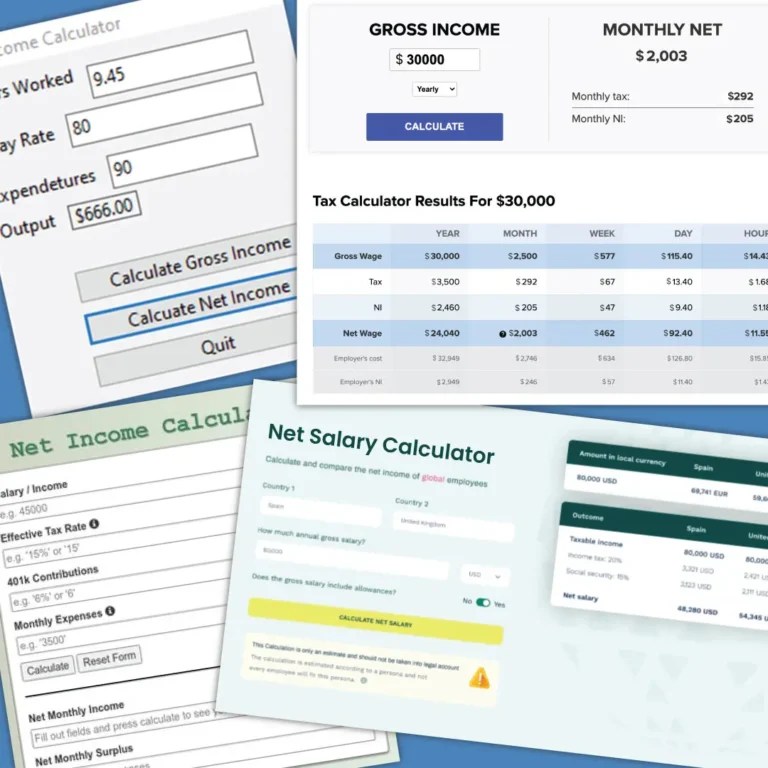
The Complete Overview of Calculating Take Home Pay
The term calculate take home pay refers to the method of determining your net earnings after all mandatory and voluntary deductions have been applied to your gross salary. This process is critical for financial planning, as it reveals the true amount available for expenses, savings, and investments. Unlike gross pay—which is the total compensation before any reductions—net pay reflects what you can realistically allocate toward rent, loans, or discretionary spending. The accuracy of this calculation depends on several variables, including your employment status (W-2 vs. 1099), geographic location, and the specific benefits offered by your employer.Employers typically handle payroll deductions automatically, but understanding the underlying mechanics empowers you to make informed decisions. For example, adjusting your W-4 withholding can prevent overpaying or underpaying taxes throughout the year, while contributing to a Health Savings Account (HSA) may reduce taxable income. Tools like payroll calculators provide a starting point, but they often lack customization for unique scenarios—such as self-employment taxes for freelancers or non-resident alien tax rules. To accurately determine take home pay, you must account for federal income tax, FICA (Social Security and Medicare), state and local taxes (where applicable), and pre-tax or post-tax deductions like retirement contributions or commuter benefits.
Historical Background and Evolution
The concept of calculating take home pay has evolved alongside labor laws and tax systems. In the early 20th century, payroll deductions were minimal, primarily limited to Social Security taxes introduced by the 1935 Social Security Act. The federal income tax, established in 1913, was initially voluntary and applied only to high earners. Over time, the complexity of tax codes expanded, incorporating Medicare in 1965, state income taxes in most regions, and a growing list of employer-sponsored benefits. The rise of 401(k) plans in the 1980s and HSAs in the 2000s further complicated net pay calculations, as these deductions directly impact taxable income.Today, the process of figuring out take home pay is influenced by digital tools and real-time payroll systems, but the core principles remain rooted in statutory requirements. The IRS and state revenue departments publish annual tax tables and withholding guidelines, which employers use to calculate deductions. However, these tables are generalized and may not account for personal exemptions, dependents, or local taxes in high-cost areas like California or New Jersey. Historically, employees had little control over deductions, but modern W-4 forms and flexible spending accounts (FSAs) now allow for greater customization. This shift reflects a broader trend toward financial transparency, where individuals are expected to participate actively in managing their compensation.
Core Mechanisms: How It Works
At its core, calculating take home pay involves subtracting all applicable deductions from your gross salary. The primary deductions are:1. Federal Income Tax: Determined by your filing status, income level, and standard deduction or itemized deductions.
2. FICA Taxes: Social Security (6.2% up to the wage base) and Medicare (1.45%, with an additional 0.9% for earnings over $200,000).
3. State and Local Taxes: Varies by jurisdiction; some states (e.g., Texas) have no income tax, while others (e.g., California) impose progressive rates.
4. Pre-Tax Deductions: Contributions to retirement accounts (401(k), 403(b)), FSAs, or HSAs reduce taxable income.
5. Post-Tax Deductions: Voluntary contributions (e.g., union dues, charitable donations) or mandatory deductions (e.g., garnishments) are subtracted after taxes.
Employers use payroll software to apply these deductions, but the accuracy depends on up-to-date tax tables and correct employee inputs. For example, if you claim too many exemptions on your W-4, you may owe a large tax bill at year-end. Conversely, claiming too few could result in unnecessary withholdings. To determine your net pay with precision, you must align your deductions with your actual financial needs and tax obligations. Online calculators, such as those from the IRS or ADP, can simulate these deductions, but they should be cross-checked with official tax guidelines.
Key Benefits and Crucial Impact
Accurately calculating take home pay is more than a numerical exercise—it’s a financial safeguard. Knowing your net earnings allows you to budget effectively, avoid surprises during tax season, and optimize benefit contributions. For instance, maximizing a 401(k) contribution not only boosts retirement savings but also lowers taxable income, increasing your take-home amount. Similarly, understanding how state taxes affect your paycheck can influence career decisions, such as whether to relocate for a job or negotiate remote work arrangements. The ripple effects of precise payroll calculations extend to mortgage affordability, college savings, and emergency funds.Financial planners often emphasize that figuring out take home pay is the first step in wealth-building. Without this clarity, individuals may overspend, under-save, or miss opportunities to reduce tax liabilities. For example, a freelancer who fails to account for self-employment taxes may face unexpected quarterly estimated payments. Employers also benefit from transparent payroll processes, as accurate deductions reduce year-end adjustments and improve employee satisfaction. The ability to calculate take home pay with confidence is a cornerstone of financial literacy, bridging the gap between earnings and actual disposable income.
"The difference between gross pay and net pay is where personal finance begins. Without understanding take-home earnings, every financial decision is a gamble." — Jane Bryant Quinn, Personal Finance Author
Major Advantages
- Budgeting Accuracy: Precise net pay calculations allow for realistic monthly budgets, ensuring you allocate funds to necessities, debt repayment, and savings without overshooting.
- Tax Optimization: Adjusting W-4 withholdings or contributing to tax-advantaged accounts (e.g., HSA, 401(k)) can legally reduce taxable income, increasing your take-home amount.
- Career Decision-Making: Comparing job offers requires calculating take home pay across locations and benefit packages, helping you choose roles that align with your financial goals.
- Debt Management: Knowing your net pay helps prioritize high-interest debt (e.g., credit cards) while maintaining contributions to retirement or education funds.
- Retirement Planning: Understanding how deductions like 401(k) contributions affect your paycheck enables you to balance current expenses with long-term savings.
Comparative Analysis
The method to calculate take home pay varies significantly based on employment type, location, and benefits. Below is a comparison of key factors:| Factor | W-2 Employee (Traditional Salary) | 1099 Independent Contractor |
|---|---|---|
| Tax Withholding | Employer deducts federal/state taxes, FICA automatically. | Self-employed; must pay quarterly estimated taxes (self-employment tax + income tax). |
Retirement Contributions
| 401(k)/403(b) deductions reduce taxable income pre-tax. |
SEP IRA or Solo 401(k); contributions are tax-deductible but require manual tracking. |
|
| Health Insurance | Employer-sponsored plans may offer pre-tax premiums. | Must purchase individual plans; premiums are medical expenses but not pre-tax (unless through marketplace subsidies). |
| Deductions Flexibility | Limited to W-4 adjustments and employer benefits. | Full control over deductions (e.g., home office, mileage, business expenses). |

Future Trends and Innovations
The landscape of calculating take home pay is poised for transformation, driven by automation and regulatory changes. Payroll platforms are integrating AI to dynamically adjust withholdings based on real-time income fluctuations, such as bonuses or variable commissions. Blockchain technology may soon enable transparent, tamper-proof payroll records, reducing discrepancies in net pay calculations. Additionally, the rise of gig economy work is pushing for standardized tools to help 1099 workers determine their net earnings amid complex tax obligations.Legislative shifts, such as potential reforms to FICA or state tax structures, will further reshape how individuals figure out take home pay. Remote work trends may also lead to new tax models, such as "tax harmonization" for digital nomads or prorated state tax calculations based on time spent in a jurisdiction. Employers are likely to adopt more flexible benefit structures, allowing employees to customize deductions (e.g., student loan repayment assistance) in real time. Staying ahead of these trends will be essential for maintaining accurate payroll projections.
Conclusion
The ability to calculate take home pay is a fundamental skill for financial stability, yet it remains overlooked by many. By understanding the interplay of taxes, deductions, and regional variations, you can transform raw salary figures into actionable insights for budgeting, saving, and investing. Whether you’re evaluating a job offer, planning for retirement, or optimizing tax withholdings, precision in net pay calculations is non-negotiable. Tools like payroll calculators and tax software provide a starting point, but personalization—accounting for your unique financial situation—is what delivers true accuracy.As work structures evolve and tax codes become more complex, the onus falls on individuals to take control of their compensation. Determining your take home pay isn’t just about crunching numbers; it’s about aligning your earnings with your lifestyle and long-term goals. By mastering this process, you gain the confidence to make informed decisions, whether negotiating a raise, relocating for a better opportunity, or simply ensuring your paycheck reflects your true financial capacity.
Comprehensive FAQs
Q: How do I calculate take home pay if I’m paid hourly?
A: To calculate take home pay for hourly wages, multiply your hourly rate by hours worked (including overtime if applicable) to get gross pay. Subtract federal income tax (using IRS withholding tables), FICA (7.65% for Social Security and Medicare), state/local taxes (if applicable), and any pre-tax deductions (e.g., 401(k) contributions). Post-tax deductions (e.g., health insurance) are subtracted last. Use an hourly paycheck calculator for precise estimates.
Q: Does my state of residence affect how I calculate take home pay?
A: Yes. States with no income tax (e.g., Texas, Florida) simplify calculating take home pay by eliminating state withholdings, while high-tax states (e.g., California, New York) require additional deductions. Some states (e.g., Pennsylvania) have flat rates, while others (e.g., Oregon) use progressive scales. Local taxes (e.g., city income tax in places like Philadelphia or Baltimore) further complicate the process. Always account for your state and city when figuring out take home pay.
Q: How can I adjust my W-4 to avoid overpaying or underpaying taxes?
A: To optimize your W-4, use the IRS’s Tax Withholding Estimator. Input your annual income, deductions, and dependents to determine the correct withholding allowance. If you’re self-employed or have multiple income streams, consider using Form 1040-ES for quarterly estimated taxes. Adjusting your W-4 ensures your paycheck reflects your actual tax liability, preventing surprises at tax time.
Q: What deductions reduce my taxable income when calculating take home pay?
A: Pre-tax deductions that lower your taxable income include:
- 401(k), 403(b), or 457(b) retirement contributions (up to IRS limits).
- Health Savings Account (HSA) contributions (if eligible).
- Flexible Spending Accounts (FSA) for healthcare or dependent care.
- Commuting benefits (e.g., transit subsidies).
- Certain insurance premiums (e.g., long-term care insurance).
Q: How do bonuses or irregular pay impact take home pay calculations?
A: Bonuses and irregular payments (e.g., commissions, stock options) complicate calculating take home pay because they may push you into higher tax brackets or trigger additional taxes. For example, a year-end bonus could be subject to supplemental wage tax rates (up to 37% federal + FICA). To mitigate this, adjust your W-4 withholding temporarily or make estimated tax payments. Use a bonus paycheck calculator to simulate the impact on your net earnings.
Q: Can I calculate take home pay for a job offer before accepting it?
A: Yes. Request the employer’s payroll department for a detailed payroll breakdown, including:
- Gross salary and frequency (biweekly, monthly).
- Estimated federal/state/local tax rates.
- Benefits (e.g., 401(k) match, health insurance costs).
- Pre-tax/post-tax deductions.
Q: What’s the difference between gross pay and net pay?
A: Gross pay is your total earnings before any deductions (salary, wages, bonuses). Net pay (or take home pay) is what remains after subtracting:
- Federal income tax.
- FICA taxes (Social Security and Medicare).
- State/local taxes.
- Pre-tax and post-tax deductions.
Q: How do student loan payments affect take home pay?
A: Student loan payments are typically post-tax deductions, meaning they reduce your net pay after taxes have been withheld. However, if your employer offers a student loan repayment assistance program (LRAP), some contributions may be pre-tax, lowering your taxable income. To figure out take home pay with student loans, subtract the monthly payment from your net earnings. For federal loans, consider income-driven repayment plans, which may reduce your monthly burden.
Q: Are there tools or calculators to help calculate take home pay?
A: Yes. Reliable tools include:
These platforms allow you to input your salary, location, and deductions to calculate take home pay accurately. For freelancers, use tools like TurboTax Self-Employed or QuickBooks Self-Employed.
Leave a Comment
Comments are moderated before appearing. The data you submit is processed according to the Privacy Policy of versiliasolutions.oneagency.co.