Difference Between Revenue and Income: The Hidden Financial Distinction Every Investor Must Know
Table of Contents
- The Complete Overview of the Difference Between Revenue and Income
- Historical Background and Evolution
- Core Mechanisms: How It Works
- Key Benefits and Crucial Impact
- Major Advantages
- Comparative Analysis
- Future Trends and Innovations
- Conclusion
- Comprehensive FAQs
- Q: Can a company have positive revenue but negative income?
- Q: Why do some companies report "non-GAAP income" separately?
- Q: How does deferred revenue affect the difference between revenue and income?
- Q: Are there industries where revenue and income are nearly identical?
- Q: What’s the most common mistake analysts make when comparing revenue vs. income?
Financial statements are the silent language of business—where numbers whisper truths about performance, solvency, and strategy. Yet, even seasoned investors and executives often conflate two foundational terms: revenue and income. The distinction isn’t merely semantic; it’s the difference between a company’s raw potential and its actual profitability. A tech startup might boast $100 million in revenue from subscriptions, while its income after expenses hovers near zero—a red flag for any stakeholder. The confusion persists because accounting frameworks like GAAP and IFRS blur the lines with jargon like "gross income" or "net revenue," but the core principle remains: one measures sales, the other measures what’s left after costs. Misunderstanding this can lead to mispriced stocks, misallocated budgets, or even regulatory penalties.
The stakes are higher than ever. In 2023, public companies faced scrutiny over aggressive revenue recognition policies, while private firms struggled with valuation gaps tied to income misreporting. The difference between revenue and income isn’t just academic—it’s a battleground for transparency in an era where ESG metrics and shareholder activism demand precision. Take Amazon, for example: its revenue soared past $514 billion in 2023, yet its net income (after all expenses) was a fraction of that. The gap reveals a company that reinvests aggressively, but also one where margins are razor-thin. For investors, this distinction separates hype from substance.
The Complete Overview of the Difference Between Revenue and Income
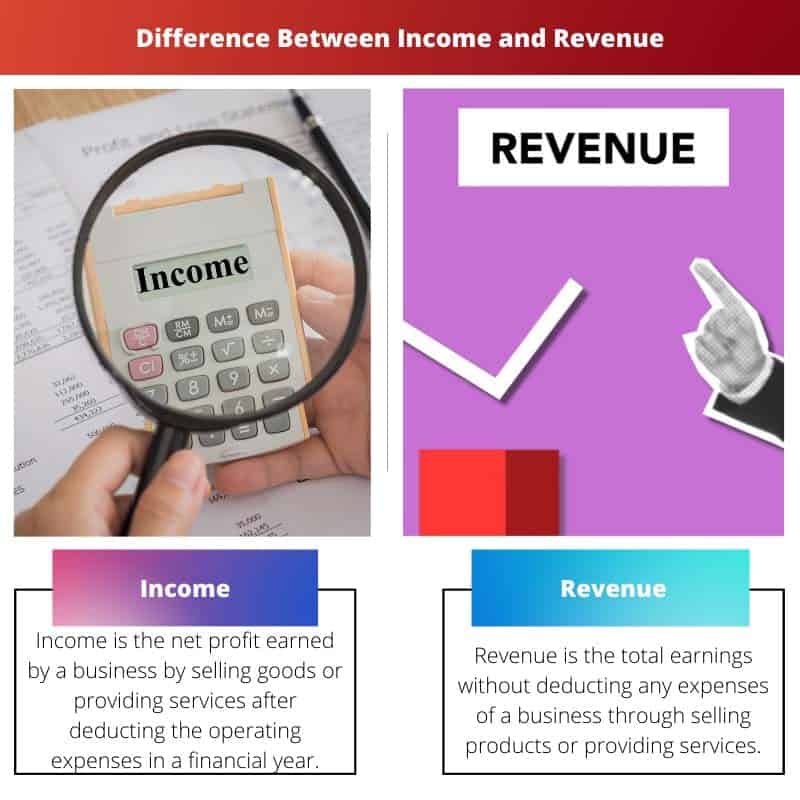
At its core, the difference between revenue and income hinges on a single question: What happens after the sale? Revenue is the total amount a company earns from selling goods or services before any deductions—think of it as the top line of a profit-and-loss statement. Income, conversely, is what remains after subtracting costs like production, taxes, and operating expenses; it’s the bottom line. This binary isn’t just theoretical. Consider Tesla: its revenue from vehicle sales and energy products may climb, but its net income fluctuates with R&D costs and inventory write-downs. The gap exposes the brutal math of scaling a capital-intensive business.The confusion arises because terms like "gross income" (revenue minus cost of goods sold) and "net income" (revenue minus all expenses) create a semantic minefield. Even financial media often uses them interchangeably, obscuring the fact that revenue is a metric of activity, while income reflects profitability. For instance, a SaaS company might report $50 million in revenue but only $5 million in net income after server costs, salaries, and marketing. The difference between revenue and income thus becomes a litmus test for efficiency—high revenue with low income signals unsustainable growth.
Historical Background and Evolution
The modern distinction between revenue and income traces back to 19th-century industrialization, when factories and railroads required precise tracking of cash flows versus actual earnings. Early accountants like Luca Pacioli (father of double-entry bookkeeping) laid the groundwork, but it was the 20th century that formalized the split. The U.S. Securities and Exchange Commission (SEC) and the Financial Accounting Standards Board (FASB) later codified these terms in GAAP, while the International Accounting Standards Board (IASB) aligned global practices under IFRS. The shift from cash-basis to accrual accounting in the 1930s further solidified the divide: revenue now reflects sales when earned (not necessarily when paid), while income accounts for expenses when incurred.The evolution wasn’t linear. The dot-com bubble of the late 1990s exposed how revenue could inflate valuations without corresponding income, leading to stricter revenue recognition rules (ASC 606 under GAAP). Today, the difference between revenue and income is a cornerstone of financial reporting, with regulators scrutinizing everything from subscription models (e.g., Netflix’s deferred revenue) to cryptocurrency mining operations (where revenue spikes but income lags due to volatility). The lesson? What gets measured shapes what gets managed—and the revenue-income gap is a critical measure of both.
Core Mechanisms: How It Works
Revenue is the raw material of finance: it’s recorded when a sale is recognized (not necessarily completed). For a retailer, this means the moment an order ships; for a service provider, it’s when the work is billed. Income, however, is the alchemy of revenue minus costs. Take a manufacturing firm: its revenue is the sale price of widgets, but its income deducts the cost of raw materials, labor, and overhead. The mechanics differ by industry. In software, revenue might include deferred payments (e.g., annual subscriptions), while income subtracts customer support and cloud infrastructure costs. The key? Revenue is a flow (sales over time), while income is a stock (what’s left after outflows).The interplay between the two is governed by accounting principles. For example, under ASC 606, revenue must be recognized when control of a good/service transfers to the customer—a rule that upended tech valuations when companies like Salesforce shifted from perpetual to subscription models. Meanwhile, income is net of operating expenses, interest, taxes, and one-time items (e.g., asset impairments). The difference between revenue and income thus reveals a company’s operating leverage: high revenue with low income suggests high fixed costs (e.g., airlines), while balanced figures imply efficiency (e.g., Apple’s hardware-software synergy).
Key Benefits and Crucial Impact
Understanding the difference between revenue and income is non-negotiable for stakeholders. For investors, it separates growth stories from profit stories—consider Uber’s revenue surges versus its persistent net losses. For creditors, the gap signals repayment capacity; a company with high revenue but negative income may struggle to service debt. Even employees benefit: the revenue-income ratio influences bonuses, stock options, and job security. The impact extends to public policy: governments use these metrics to assess tax liabilities and economic contributions. Misclassifying one for the other can lead to fraud allegations (see: Wirecard’s collapsed revenue figures) or misguided strategic decisions.As Warren Buffett once noted:
"Price is what you pay; value is what you get. Revenue is the price of sales; income is the value after costs. Confuse the two, and you’ll overpay for growth—or worse, miss the rot beneath."
Major Advantages
- Investor Clarity: Distinguishing revenue from income reveals true profitability. A company with $1B in revenue but $100M in income has 10x less earning power than one with $100M revenue and $90M income.
- Risk Assessment: High revenue with low income often indicates high burn rates (e.g., biotech startups). This helps lenders and insurers price risk accurately.
- Tax Optimization: Jurisdictions tax income, not revenue. Misclassifying deductions can trigger audits or penalties (e.g., Amazon’s EU tax disputes over income vs. revenue allocation).
- Strategic Pivoting: Companies like Tesla use revenue growth to justify R&D spend, while income stability ensures investor confidence during transitions (e.g., shifting from cars to energy).
- Regulatory Compliance: Securities laws (e.g., Sarbanes-Oxley) mandate accurate revenue recognition to prevent earnings manipulation. Income figures must align with GAAP/IFRS to avoid restatements.
Comparative Analysis
| Metric | Revenue | Income |
|---|---|---|
| Definition | Total sales from goods/services before deductions. | Profit remaining after all expenses (net income) or partial expenses (gross income). |
| Accounting Treatment | Recorded when earned (accrual basis) or received (cash basis). | Calculated as: Revenue – (COGS + Operating Expenses + Taxes + Interest). |
| Industry Variability | High in subscription models (e.g., Spotify), low in asset-heavy sectors (e.g., utilities). | Volatile in R&D-driven firms (e.g., Big Pharma), stable in mature industries (e.g., Coca-Cola). |
| Investor Focus | Growth potential (top-line expansion). | Sustainability (bottom-line health). |

Future Trends and Innovations
The difference between revenue and income is evolving with digital transformation. Blockchain-based accounting (e.g., smart contracts for revenue recognition) promises real-time clarity, while AI-driven expense forecasting could shrink the revenue-income gap by automating cost tracking. Regulators are also tightening rules: the SEC’s 2023 proposal on "materiality" may force companies to disclose revenue breakdowns by customer or geography, bridging the opacity that once hid income shortfalls. Meanwhile, ESG reporting is blurring the lines further—companies now link revenue from sustainable products to income impacts (e.g., Patagonia’s "1% for the Planet" model).The biggest disruption may come from alternative metrics. Metrics like "EBITDA" (Earnings Before Interest, Taxes, Depreciation, Amortization) already redefine income, while "free cash flow" (FCF) strips out capital expenditures to show true liquidity. As stakeholders demand more granularity, the revenue-income dichotomy may fragment into sub-categories: recurring revenue, adjusted income, or non-GAAP income. The future isn’t just about numbers—it’s about context.
Conclusion
The difference between revenue and income is the financial equivalent of a compass: it doesn’t tell you where to go, but it keeps you from getting lost. Revenue is the wind in your sails; income is the fuel in your tank. Ignore the distinction, and you risk misjudging a company’s health—whether you’re an investor, a creditor, or an executive. The examples are legion: WeWork’s revenue growth masked its income collapse, while Nvidia’s revenue surged alongside its income due to disciplined cost control. The lesson? Financial statements are stories, and the revenue-income narrative is the plot twist that separates legends from liabilities.Mastery of this distinction isn’t optional—it’s a prerequisite for informed decision-making. As financial markets grow more complex, the ability to parse revenue from income will determine who thrives and who falls prey to hype. The numbers don’t lie, but they do whisper—and those who listen closely will hear the future before it arrives.
Comprehensive FAQs
Q: Can a company have positive revenue but negative income?
A: Absolutely. This is common in growth-stage companies (e.g., startups, biotech firms) where revenue covers operating costs but not all expenses (e.g., R&D, marketing). It’s also seen in cyclical industries like retail during holiday seasons. Negative income with positive revenue signals a burn rate—unsustainable without external funding.
Q: Why do some companies report "non-GAAP income" separately?
A: Non-GAAP income adjusts for one-time items (e.g., stock-based compensation, asset sales) to reflect "normalized" earnings. Companies use it to smooth volatility, but regulators warn it can obscure revenue-income realities. For example, Tesla’s non-GAAP income excludes R&D amortization, which GAAP requires—leading to debates over transparency.
Q: How does deferred revenue affect the difference between revenue and income?
A: Deferred revenue (prepaid sales not yet recognized) appears as a liability on balance sheets. When recognized, it boosts revenue but may not immediately improve income if costs (e.g., fulfillment) lag. Subscription models (e.g., Adobe) rely on deferred revenue to front-load cash flows, but income depends on managing churn and COGS.
Q: Are there industries where revenue and income are nearly identical?
A: Mature, low-cost industries like utilities or commodity trading often show tight revenue-income margins because fixed costs are minimal relative to sales. For example, a pipeline operator’s revenue from gas transport may closely mirror its income after depreciation and maintenance. Conversely, capital-intensive sectors (e.g., semiconductors) will always have wide gaps.
Q: What’s the most common mistake analysts make when comparing revenue vs. income?
A: Overemphasizing revenue growth while ignoring income trends. Analysts often chase "top-line expansion" without stress-testing whether income can sustain it. For instance, a social media platform might grow revenue via ads but see income eroded by rising content moderation costs—a critical detail missed in quarterly earnings calls.
Leave a Comment
Comments are moderated before appearing. The data you submit is processed according to the Privacy Policy of versiliasolutions.oneagency.co.