The Hidden Difference Between Revenue and Income: What Every Business Owner Must Know
Table of Contents
- The Complete Overview of the Difference Between Revenue and Income
- Historical Background and Evolution
- Core Mechanisms: How It Works
- Key Benefits and Crucial Impact
- Major Advantages
- Comparative Analysis
- Future Trends and Innovations
- Conclusion
- Comprehensive FAQs
- Q: Can a company have high revenue but negative income?
- Q: How does revenue recognition differ from income recognition?
- Q: Why do investors care more about income than revenue?
- Q: Are there industries where revenue and income are often conflated?
- Q: How can small businesses improve their income relative to revenue?
- Q: What’s the most common mistake businesses make with revenue vs. income?
The numbers on a company’s financial statements rarely tell the same story. Revenue and income—two terms often used synonymously in casual conversation—carry distinct meanings that can drastically alter how stakeholders perceive a business’s financial health. A tech startup might boast "$50 million in revenue" while quietly reporting a net loss of $20 million; the difference between these figures isn’t just semantics—it’s the difference between survival and insolvency. Understanding the difference between revenue and income isn’t just an accounting exercise; it’s a strategic imperative for founders, investors, and executives who must navigate the fine line between growth metrics and actual profitability.
Yet confusion persists. Even seasoned entrepreneurs mislabel expenses as revenue or conflate gross income with net profit, leading to misallocated resources, investor distrust, or worse—regulatory scrutiny. The disconnect stems from how these terms are defined in financial frameworks like GAAP (Generally Accepted Accounting Principles) and IFRS (International Financial Reporting Standards), where revenue represents the total earnings from business activities, while income accounts for what remains after deducting costs. The gap between them isn’t just numerical; it’s a reflection of operational efficiency, pricing strategy, and long-term sustainability.
For public companies, this distinction is non-negotiable. A single misstep in classifying transactions can trigger SEC investigations or restatements that erase millions in market value overnight. Private businesses, meanwhile, risk misguided capital raises or failed expansions when leadership fails to distinguish between what money comes in (revenue) and what money stays (income). The stakes are higher than ever in an era where investors scrutinize unit economics and burn rates with a microscope.
The Complete Overview of the Difference Between Revenue and Income
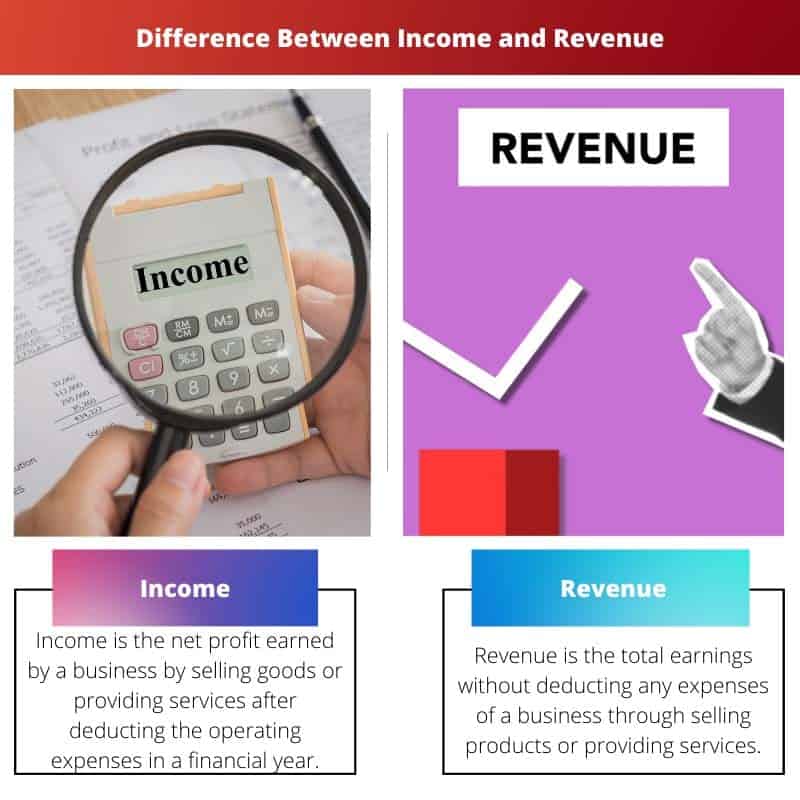
At its core, the difference between revenue and income hinges on a fundamental accounting principle: revenue is the raw total of all money generated from core business operations, while income is what remains after subtracting the costs required to produce that revenue. Revenue is the top line of an income statement—a broad, unfiltered snapshot of sales, subscriptions, or service fees. Income, however, is the bottom line, reflecting the financial reality after accounting for expenses like salaries, rent, inventory, and taxes. This distinction isn’t merely academic; it shapes everything from investor pitches to tax filings.The confusion arises because revenue and income share a semantic overlap in everyday language. When a freelancer says, "I made $10,000 this month," they’re often referring to gross revenue—not net income after deducting software subscriptions, marketing costs, or self-employment taxes. Similarly, a SaaS company might tout "$100 million in annual recurring revenue" (ARR) while privately acknowledging that 40% of that is eaten by cloud hosting and customer support. The difference between revenue and income becomes glaringly obvious when examining cash flow statements: a business can generate massive revenue but still hemorrhage cash if income isn’t managed.
Historical Background and Evolution
The modern distinction between revenue and income traces back to the industrial revolution, when companies began scaling operations beyond sole proprietorships. Early accounting practices, like those codified in the 18th century by Italian mathematician Luca Pacioli, treated all inflows as "profit" until the rise of double-entry bookkeeping demanded granularity. By the 20th century, as corporations grew complex, frameworks like GAAP (established in the U.S. in 1939) formalized the separation: revenue became the "top line" (sales, fees, interest), while income was reserved for the "bottom line" after expenses.The evolution accelerated with the digital age. Subscription models (e.g., Netflix, Adobe) introduced metrics like "revenue recognition" over time, while e-commerce platforms blurred lines between revenue and income by treating shipping costs as either an expense or a bundled service. Regulators responded with stricter rules—such as ASC 606 (Revenue from Contracts with Customers)—forcing companies to disclose how they classify transactions. Today, the difference between revenue and income isn’t just about numbers; it’s about transparency in an era where stakeholders demand real-time financial clarity.
Core Mechanisms: How It Works
Revenue is recognized when a company delivers a product or service, regardless of whether cash has been received. For example, a software company might recognize $10,000 in revenue upon activating a customer’s license, even if payment is deferred for 90 days. Income, however, is calculated by subtracting all direct and indirect costs from revenue. Direct costs include COGS (Cost of Goods Sold), while indirect costs cover overhead like office rent, payroll, and depreciation. The formula is simple:Income = Revenue – (Direct Costs + Indirect Costs + Taxes)
The mechanics become more nuanced with accrual accounting, where revenue is recorded when earned (not when paid) and expenses are matched to the periods they benefit. A retail store might report $500,000 in revenue from holiday sales but only $300,000 in income after accounting for inventory, shipping, and marketing. The difference between revenue and income here highlights operational efficiency: two businesses with identical revenue can have vastly different incomes based on cost control.
Key Benefits and Crucial Impact
Mastering the difference between revenue and income isn’t just about avoiding errors—it’s about unlocking strategic advantages. Companies that align revenue growth with income sustainability attract higher valuations, secure better financing terms, and weather economic downturns with resilience. Investors, for instance, don’t care about revenue alone; they demand proof that income scales with growth. A $1 billion revenue company with negative income is a red flag, while a $100 million revenue firm with 30% net income is a hidden gem.The impact extends to tax planning. Revenue is taxable in full only if it’s recognized as income; deferring revenue recognition (e.g., via long-term contracts) can delay tax liabilities. Similarly, classifying certain expenses as capital expenditures (CAPEX) rather than operating expenses (OPEX) alters income statements. Missteps here can trigger audits or penalties. As Warren Buffett once noted:
"Price is what you pay; value is what you get. Revenue is what you bill; income is what you keep."This aphorism captures the essence: revenue is the promise, income is the reality.
Major Advantages
Understanding the difference between revenue and income provides five critical advantages:- Investor Confidence: Demonstrating scalable income (not just revenue) justifies higher valuations and attracts institutional investors.
- Cost Optimization: Identifying the gap between revenue and income reveals inefficiencies—such as high customer acquisition costs (CAC) or bloated overhead.
- Tax Efficiency: Strategic revenue recognition timing and expense classification can defer taxes or qualify for deductions.
- Cash Flow Management: Revenue doesn’t equal cash; income does. Businesses must reconcile the two to avoid liquidity crises (e.g., high revenue but negative income due to unpaid invoices).
- Regulatory Compliance: Misclassifying revenue as income (or vice versa) violates GAAP/IFRS, risking restatements or legal action.
Comparative Analysis
The table below summarizes the key differences between revenue and income:| Metric | Revenue | Income |
|---|---|---|
| Definition | Total earnings from sales/services before expenses. | Net profit after deducting all costs (direct + indirect). |
| Accounting Treatment | Recognized when earned (accrual basis) or received (cash basis). | Calculated as: Revenue – COGS – Operating Expenses – Taxes. |
| Key Variations | Gross Revenue, Net Revenue, Recurring Revenue (ARR/MRR). | Gross Income, Operating Income, Net Income. |
| Investor Focus | Growth potential (top-line metric). | Profitability (bottom-line metric). |

Future Trends and Innovations
The difference between revenue and income will become even more pronounced with AI-driven financial modeling. Tools like QuickBooks AI or Oracle NetSuite are now automating expense categorization, reducing human error in classifying revenue vs. income. Blockchain is also reshaping revenue recognition, with smart contracts enabling real-time income tracking for decentralized businesses.Regulators are tightening rules on "profitability metrics," pushing companies to disclose non-GAAP income adjustments (e.g., EBITDA vs. net income). Meanwhile, the rise of "revenue-based financing" (where investors fund growth based on future revenue streams) blurs the lines between income and liquidity. Businesses that fail to adapt risk falling into the trap of prioritizing revenue over income—leading to unsustainable burn rates and valuation gaps.
Conclusion
The difference between revenue and income is more than an accounting technicality; it’s the bedrock of financial literacy for modern businesses. Revenue is the headline, but income is the substance. Ignoring this distinction can lead to overvalued startups, misguided expansions, or regulatory nightmares. The companies that thrive will be those that treat revenue as a growth engine and income as the North Star guiding every financial decision.For entrepreneurs, the lesson is clear: revenue without income is a mirage. Investors, lenders, and regulators demand proof that the money coming in translates to sustainable profit. The sooner this principle is internalized, the sooner businesses can turn financial statements from static reports into dynamic tools for strategic advantage.
Comprehensive FAQs
Q: Can a company have high revenue but negative income?
A: Absolutely. This is common in growth-stage startups (e.g., Uber, WeWork) that prioritize scaling over profitability. High revenue with negative income signals unsustainable operations, often requiring external funding to cover losses.
Q: How does revenue recognition differ from income recognition?
A: Revenue is recognized when a product/service is delivered (per ASC 606), while income recognition occurs only after all related costs are deducted. For example, a SaaS company recognizes revenue monthly but calculates income annually after accounting for R&D, customer support, and infrastructure costs.
Q: Why do investors care more about income than revenue?
A: Investors assess risk and return. Revenue shows potential, but income reveals whether a business can generate cash flow. A $100M revenue company with 5% net income is far less attractive than a $50M revenue company with 20% net income, as the latter demonstrates efficiency.
Q: Are there industries where revenue and income are often conflated?
A: Yes. Subscription-based models (e.g., streaming services) and high-margin businesses (e.g., luxury goods) sometimes blur the lines because their COGS are low relative to revenue. However, even in these cases, income is critical for sustaining growth (e.g., Netflix’s content costs eat into revenue).
Q: How can small businesses improve their income relative to revenue?
A: Focus on:
1. Cost Control: Negotiate supplier contracts, automate processes.
2. Pricing Strategy: Increase margins without losing customers.
3. Expense Tracking: Use tools like Xero or FreshBooks to monitor income vs. revenue.
4. Tax Planning: Defer income or accelerate expense deductions legally.
5. Unit Economics: Ensure customer lifetime value (LTV) exceeds acquisition cost (CAC).
Q: What’s the most common mistake businesses make with revenue vs. income?
A: Treating revenue as income. Startups often celebrate revenue milestones while ignoring income, leading to cash crunches. The fix? Implement a "profit-first" mindset: allocate income to reinvestment early, even if revenue grows faster.
Leave a Comment
Comments are moderated before appearing. The data you submit is processed according to the Privacy Policy of versiliasolutions.oneagency.co.