The equation from Fahrenheit to Celsius—precision in temperature conversion
Table of Contents
- The Complete Overview of the Equation from Fahrenheit to Celsius
- Historical Background and Evolution
- Core Mechanisms: How It Works
- Key Benefits and Crucial Impact
- Major Advantages
- Comparative Analysis
- Future Trends and Innovations
- Conclusion
- Comprehensive FAQs
- Q: Why does the equation from Fahrenheit to Celsius require subtracting 32?
- Q: Can I use the equation from Fahrenheit to Celsius for temperatures below absolute zero?
- Q: What’s the fastest way to estimate Fahrenheit to Celsius without a calculator?
- Q: Why do some online converters give slightly different results for the equation from Fahrenheit to Celsius?
- Q: How does the equation from Fahrenheit to Celsius apply to non-linear temperature effects, like the human body’s response to heat?
- Q: Are there industries where the equation from Fahrenheit to Celsius is more critical than others?
- Q: Can I derive the equation from Fahrenheit to Celsius from scratch using only the freezing and boiling points of water?
The transition between Fahrenheit and Celsius isn’t just a mathematical operation—it’s a bridge between two fundamentally different ways of measuring temperature, each rooted in distinct scientific and cultural legacies. The equation from Fahrenheit to Celsius (or its reverse) remains one of the most frequently applied conversions globally, yet its nuances—from rounding errors to contextual precision—are often overlooked. Whether you’re calibrating a laboratory experiment, interpreting weather forecasts, or troubleshooting an HVAC system, understanding this conversion isn’t just about plugging numbers into a formula. It’s about recognizing why the scales diverge, how they interact in real-world scenarios, and the subtle pitfalls that can arise when precision matters.
At its core, the Fahrenheit-to-Celsius conversion hinges on a linear relationship defined by two fixed points: the freezing and boiling points of water. While Celsius (originally called centigrade) aligns neatly with these benchmarks at 0°C and 100°C, Fahrenheit’s 32°F and 212°F create a steeper gradient, demanding a more complex adjustment. This discrepancy isn’t arbitrary—it reflects the empirical traditions of 18th-century science, where Daniel Gabriel Fahrenheit’s scale was calibrated using brine mixtures and human body temperature, while Anders Celsius’s system prioritized simplicity and metric coherence. Today, the equation from Fahrenheit to Celsius serves as a testament to how scientific progress often preserves legacy systems alongside innovations, blending practicality with historical inertia.
The stakes of this conversion extend beyond academic exercises. In fields like meteorology, medicine, and engineering, even fractional errors can have tangible consequences. A miscalculated temperature in a chemical reaction might alter its outcome; a misread thermometer in a patient’s room could misdiagnose fever severity. Yet, despite its critical role, the Fahrenheit-to-Celsius formula is frequently misapplied—whether through memorization errors, tool inaccuracies, or assumptions about linear interpolation. To deploy it effectively, one must grasp not only the arithmetic but also the why behind the numbers: the thermodynamic principles, the cultural adoption of each scale, and the technological contexts where one might dominate the other.
The Complete Overview of the Equation from Fahrenheit to Celsius
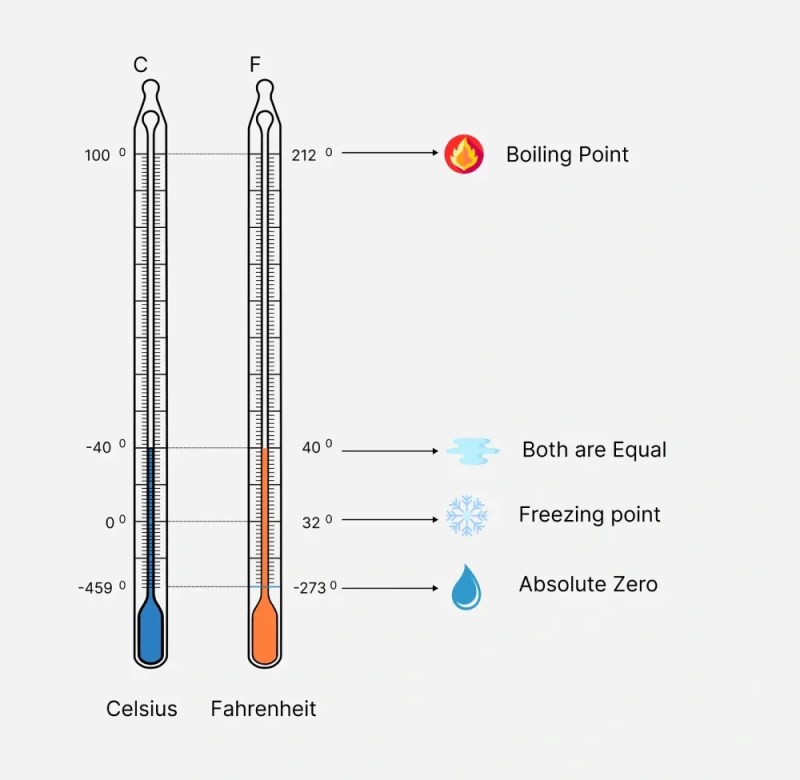
The equation from Fahrenheit to Celsius is a deceptively simple linear transformation: subtract 32 from the Fahrenheit value, then multiply by 5/9. Yet this brevity belies the depth of its derivation. The formula’s structure—(°F − 32) × 5/9—emerges from the relationship between the two scales’ intervals and reference points. A 1°C change corresponds to a 1.8°F change (since 9/5 = 1.8), and the subtraction of 32 accounts for the offset between their freezing points. This dual adjustment ensures that 32°F (freezing point of water in Fahrenheit) converts to 0°C, while 212°F (boiling point) maps to 100°C, preserving the proportionality of the scale.What often confuses learners is the asymmetry of the conversion. The reverse process—Celsius to Fahrenheit—requires a different formula: (°C × 9/5) + 32—because the operations are not commutative. This asymmetry stems from the scales’ origins: Fahrenheit’s larger degree increments (1.8× those of Celsius) and its non-zero baseline create a directional bias in conversions. For professionals, this means memorizing both equations or using a reliable reference, as even minor arithmetic mistakes can cascade in high-precision applications like semiconductor manufacturing or cryogenics.
Historical Background and Evolution
The equation from Fahrenheit to Celsius traces its lineage to the early 18th century, when Daniel Gabriel Fahrenheit introduced his scale in 1724. Fahrenheit’s system was based on three fixed points: the freezing point of brine (0°F), the freezing point of water (32°F), and human body temperature (96°F, later adjusted to 98.6°F). This empirical approach reflected the practical needs of his era, where precise temperature control was critical for scientific instruments like thermometers. In contrast, Anders Celsius proposed his centigrade scale in 1742, dividing the range between freezing and boiling water into 100 equal parts—a radical simplification that aligned with the metric system’s decimal logic.The tension between these scales persisted for centuries, partly due to cultural inertia. Fahrenheit’s scale remained dominant in the United States and a few other nations, while Celsius (later renamed in honor of its creator) became the international standard for science and daily use. The equation from Fahrenheit to Celsius thus became a necessary tool for cross-border communication, particularly in fields like aviation, where temperatures must be universally intelligible. The adoption of the metric system in most countries further cemented Celsius’s primacy, though Fahrenheit’s persistence in the U.S. ensures that the conversion remains a global literacy requirement.
Core Mechanisms: How It Works
The Fahrenheit-to-Celsius conversion operates on two mathematical principles: scaling and offsetting. The scaling factor (5/9) adjusts for the difference in degree size between the two scales, while the offset (−32) aligns their reference points. For example, converting 68°F to Celsius:1. Subtract 32: 68 − 32 = 36
2. Multiply by 5/9: 36 × 0.555... ≈ 20°C
This two-step process ensures accuracy, but it’s vulnerable to rounding errors, especially when dealing with non-integer values. Digital tools and scientific calculators mitigate this risk by using floating-point arithmetic, but manual calculations require careful attention to decimal places.
The reverse conversion—Celsius to Fahrenheit—flips the operations but retains the same core logic. Here, the multiplication by 9/5 (or 1.8) comes first, followed by the addition of 32. This order is critical because the offset must be applied after scaling to maintain proportionality. For instance, converting 25°C to Fahrenheit:
1. Multiply by 9/5: 25 × 1.8 = 45
2. Add 32: 45 + 32 = 77°F
The non-commutative nature of these operations underscores why the equation from Fahrenheit to Celsius cannot be derived by simply reversing the steps—each direction demands its own formula.
Key Benefits and Crucial Impact
The equation from Fahrenheit to Celsius is more than a mathematical curiosity; it’s a practical necessity in an interconnected world where temperature scales coexist. For scientists, engineers, and travelers, the ability to seamlessly switch between scales eliminates barriers to collaboration and data interpretation. In medicine, for example, a patient’s temperature might be recorded in Fahrenheit in the U.S. but analyzed in Celsius globally, making accurate conversion essential for diagnosis. Similarly, weather forecasts that toggle between scales risk miscommunication if not handled precisely, as even a 1°C error can significantly alter perceived conditions.The conversion’s utility extends to everyday technology. Smartphones, fitness trackers, and home thermostats often default to the user’s regional scale, forcing software developers to embed robust Fahrenheit-to-Celsius algorithms to ensure compatibility. This behind-the-scenes functionality highlights how deeply the conversion is woven into modern infrastructure—from HVAC systems to pharmaceutical storage. Without it, cross-border logistics, scientific research, and even culinary practices (where recipes may specify one scale over the other) would face unnecessary friction.
"Temperature is the most universal yet locally interpreted measure in science. The equation from Fahrenheit to Celsius isn’t just about numbers—it’s about breaking down the last language barrier between systems that refuse to align." — Dr. Elena Vasquez, Thermodynamics Professor, MIT
Major Advantages
- Precision in Scientific Research: The equation from Fahrenheit to Celsius ensures consistency in experiments where data must be comparable across regions, such as climate studies or material science tests.
- Global Standardization: Celsius’s adoption in the metric system reduces ambiguity in international trade, manufacturing, and medical protocols.
- Technological Integration: Digital systems rely on accurate conversions to display temperatures correctly, from weather apps to industrial sensors.
- Educational Clarity: Teaching the conversion fosters numerical literacy, helping students grasp linear relationships and unit analysis.
- Safety and Compliance: In fields like aviation and food safety, incorrect conversions can lead to critical failures; the formula acts as a safeguard.
Comparative Analysis
| Feature | Fahrenheit | Celsius |
|---|---|---|
| Freezing Point of Water | 32°F | 0°C |
| Boiling Point of Water | 212°F | 100°C |
| Degree Increment Size | 1°F = 5/9°C (smaller relative change) | 1°C = 9/5°F (larger relative change) |
| Primary Use Cases | U.S. weather, cooking, body temperature | Global science, metric systems, international standards |

Future Trends and Innovations
As technology advances, the equation from Fahrenheit to Celsius may evolve from a manual calculation to an automated, context-aware process. Machine learning models could soon predict temperature conversions in real-time, accounting for environmental variables like humidity or altitude, which affect perceived temperature. Additionally, the rise of quantum computing might enable instantaneous, error-free conversions across vast datasets, revolutionizing fields like climate modeling. Meanwhile, the cultural persistence of Fahrenheit in certain regions suggests that the conversion will remain relevant, though its application may shift toward AI-assisted tools rather than memorized formulas.Long-term, the Fahrenheit-to-Celsius equation could become obsolete in some contexts as standardized interfaces (e.g., universal temperature units in IoT devices) emerge. However, its educational value—teaching students about scale relationships and historical scientific methods—ensures its place in curricula. The future may see the formula integrated into augmented reality systems, where users point their devices at a thermometer and receive instant, accurate conversions in their preferred scale, blurring the lines between manual and digital mastery.
Conclusion
The equation from Fahrenheit to Celsius is a microcosm of how science balances tradition with progress. Its simplicity belies the layers of history, physics, and practicality that underpin it, from 18th-century thermometers to today’s global supply chains. Whether you’re a student grappling with unit conversions or a professional relying on precise measurements, understanding this formula isn’t just about solving for x—it’s about appreciating the systems that shape how we measure the world. As temperature scales continue to intersect in an increasingly interconnected society, the ability to navigate between Fahrenheit and Celsius remains a cornerstone of scientific literacy and cross-cultural communication.For those who master it, the conversion becomes more than arithmetic—it’s a lens through which to view the evolution of measurement itself. And in a world where precision can mean the difference between success and failure, that lens is invaluable.
Comprehensive FAQs
Q: Why does the equation from Fahrenheit to Celsius require subtracting 32?
A: The subtraction of 32 accounts for the offset between the freezing points of water in the two scales. Fahrenheit sets water’s freezing point at 32°F, while Celsius uses 0°C. Without this adjustment, the scales wouldn’t align at their reference points, leading to incorrect conversions.
Q: Can I use the equation from Fahrenheit to Celsius for temperatures below absolute zero?
A: Yes, but with caution. The formula remains mathematically valid for all temperatures, including Kelvin-equivalent values (e.g., −459.67°F = −273.15°C). However, extreme lows may require additional context, such as converting to Kelvin first for scientific work.
Q: What’s the fastest way to estimate Fahrenheit to Celsius without a calculator?
A: For quick approximations, subtract 30 from the Fahrenheit value and halve the result. For example, 70°F ≈ (70 − 30)/2 = 20°C. This method works well for temperatures between 32°F and 100°F but loses accuracy at extremes.
Q: Why do some online converters give slightly different results for the equation from Fahrenheit to Celsius?
A: Discrepancies often arise from rounding differences during intermediate steps. For instance, multiplying by 5/9 might be approximated as 0.5556, while some tools use 0.555555... or retain more decimal places. For critical applications, use tools that specify their rounding method.
Q: How does the equation from Fahrenheit to Celsius apply to non-linear temperature effects, like the human body’s response to heat?
A: The conversion itself is linear, but perceived temperature (e.g., "feels like" readings) incorporates non-linear factors like humidity and wind speed. For example, 30°C might feel hotter in high humidity due to reduced evaporative cooling, even though the conversion to Fahrenheit (86°F) remains mathematically accurate.
Q: Are there industries where the equation from Fahrenheit to Celsius is more critical than others?
A: Yes. Industries like aviation (where instrument readings must be universally understood), pharmaceuticals (for storage temperature compliance), and semiconductor manufacturing (where precise thermal control is essential) rely heavily on accurate conversions. Even culinary arts depend on it, as recipes may switch between scales.
Q: Can I derive the equation from Fahrenheit to Celsius from scratch using only the freezing and boiling points of water?
A: Absolutely. Given that 32°F = 0°C and 212°F = 100°C, you can set up a linear equation y = mx + b, where x is Fahrenheit and y is Celsius. Solving for m (slope) and b (y-intercept) yields the standard formula: C = (5/9)(F − 32).
Leave a Comment
Comments are moderated before appearing. The data you submit is processed according to the Privacy Policy of versiliasolutions.oneagency.co.