
Unraveling 1 nm to m: The Tiny Scale That Shapes Modern Science
At first glance, the conversion seems straightforward: 1 nm to m equals 0.000000001 meters, or 1 × 10⁻⁹ m. But the implications ripple across disciplines. In...
Tag
At first glance, the conversion seems straightforward: 1 nm to m equals 0.000000001 meters, or 1 × 10⁻⁹ m. But the implications ripple across disciplines. In...

Most people stop at the basic formula: multiply miles by 1.60934 to get kilometers. But that overlooks the nuances. For instance, aviation charts often round...

Yet, despite its simplicity, the conversion 104 kg to lbs remains a stumbling block for many. The confusion often stems from an outdated education system that...

The confusion around 10ml to mg conversions stems from a fundamental misunderstanding: milliliters measure volume, while milligrams measure weight. Without...

Behind every temperature reading lies a story of standardization. The Fahrenheit scale, introduced in 1724 by Daniel Gabriel Fahrenheit, was initially designed...

Take the Eiffel Tower, for instance. Its height is 330 meters—not 33,000 centimeters, though both represent the same physical reality. The choice of unit isn’t...

Density measurement isn’t just a scientific curiosity—it’s the silent force behind breakthroughs in aerospace, pharmaceuticals, and even climate research...
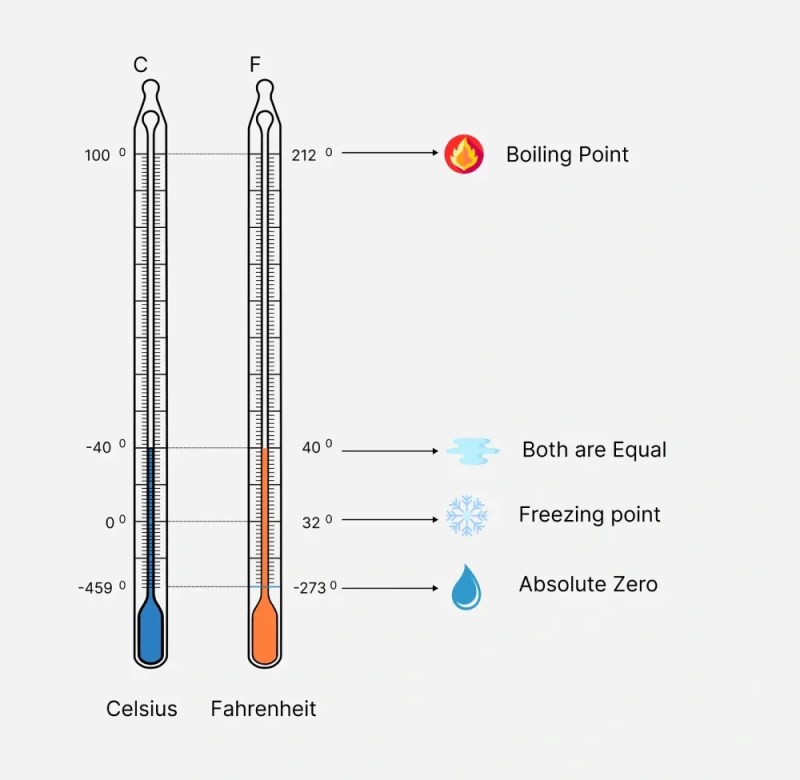
At its core, the Fahrenheit-to-Celsius conversion hinges on a linear relationship defined by two fixed points: the freezing and boiling points of water. While...

The problem deepens when precision matters. A baker’s recipe calling for 500 grams of flour might yield a cake with the exact density intended, but converting...

The process of determining how to calculate mass has evolved alongside human civilization, from ancient trade balances to quantum precision scales. Early...

At its core, pressure is a measure of force distributed over a surface, but its implications ripple across disciplines. Engineers rely on it to ensure...

Chemistry is the language of matter, and at its core lies the conversion between mass and moles—a skill that separates the novice from the expert. Whether...

The ability to quantify how systems evolve over time is the cornerstone of progress in science, economics, and technology. Whether tracking stock market...

At first glance, the calculation seems straightforward: divide the given mass by the molar mass. But beneath this simplicity lies a web of historical...

Yet, despite its ubiquity, the conversion often sparks confusion. Why does a 10°C increase correspond to a 10 Kelvin increase, but the starting points differ...

At its core, the kelvin to celsius formula (K = °C + 273.15) isn’t just a tool—it’s a reflection of the 19th-century scientific revolution that redefined...

At its widest point—the equator—the Earth measures 24,901 miles when traversed in a perfect circle. Along the poles, where the planet’s diameter narrows, the...

The confusion persists because everyday language often conflates "volume" and "weight," but science demands rigor. Water, with its near-perfect density of 1...

The challenge deepens when considering that ml naar mg isn’t a fixed ratio. Unlike converting between metric units of the same dimension (e.g., liters to...

Yet the problem extends beyond healthcare. Chemists, food scientists, and even DIY enthusiasts frequently grapple with converting between these units...