How to Use Free Apps to Identify Plants Like a Botanist
Table of Contents
- The Complete Overview of Free Apps to Identify Plants
- Historical Background and Evolution
- Core Mechanisms: How It Works
- Key Benefits and Crucial Impact
- Major Advantages
- Comparative Analysis
- Future Trends and Innovations
- Conclusion
- Comprehensive FAQs
- Q: Are free apps to identify plants as accurate as a botanist?
- Q: Can these apps identify plants without flowers or leaves?
- Q: Do I need an internet connection to use these apps?
- Q: Are there privacy concerns with uploading plant photos?
- Q: How can I improve the accuracy of plant identification results?
- Q: Are there free apps to identify plants for specific regions?
The first time you spot an unfamiliar plant in the wild, your instinct might be to snap a photo and hope for the best. But what if you could instantly know its name, medicinal properties, or even its toxicity? That’s the power of free apps to identify plants—tools that transform casual curiosity into scientific precision. These applications leverage machine learning, crowdsourced databases, and high-resolution imaging to bridge the gap between amateur enthusiasts and professional botanists. No longer confined to field guides or university labs, plant identification has democratized itself through technology, making it accessible to gardeners, hikers, and researchers alike.
Yet not all free apps to identify plants are created equal. Some rely on user-generated data, while others integrate with global botanical archives. The best perform like digital field assistants, cross-referencing leaf shape, flower structure, and even soil conditions to narrow down possibilities. For example, a single app might distinguish between a harmless wild violet and a lookalike that’s poisonous to livestock—a distinction that could save time, money, or even lives. The question isn’t whether these tools work, but how to choose the right one for your needs, whether you’re a backyard gardener or a conservation scientist.
The rise of free apps to identify plants reflects a broader shift in how humans interact with nature. Gone are the days of flipping through heavy encyclopedias or memorizing Latin binomials. Today, a smartphone in your pocket can unlock the secrets of the plant kingdom—if you know which tools to trust. But beneath the user-friendly interfaces lies a complex web of algorithms, databases, and ethical considerations. Understanding how these apps function—and their limitations—is key to using them effectively. From the early days of digital herbariums to today’s AI-driven plant scanners, the evolution of plant identification technology is a story of innovation, accessibility, and the enduring human fascination with the natural world.

The Complete Overview of Free Apps to Identify Plants
The modern era of free apps to identify plants began as a niche solution for hobbyists but has since expanded into a critical tool for ecology, agriculture, and education. These applications typically operate by analyzing visual inputs—photos of leaves, flowers, or bark—and comparing them against vast digital libraries of plant species. Some go further, incorporating GPS data to refine results based on geographic location, while others allow users to input specific characteristics like leaf arrangement or stem texture. The result is a seamless fusion of technology and botany, where a simple upload can yield detailed insights, from common names to scientific classifications.What sets today’s free apps to identify plants apart is their ability to adapt to user feedback. Many platforms allow corrections when misidentifications occur, continuously improving their accuracy through collective intelligence. This crowdsourcing model has democratized plant identification, enabling citizen scientists to contribute to global databases while receiving immediate feedback. However, the effectiveness of these tools hinges on the quality of their underlying datasets. Apps with partnerships to academic institutions or government botanical gardens tend to offer more reliable results than those relying solely on user-contributed images.
Historical Background and Evolution
The concept of digital plant identification traces back to the late 20th century, when early computer vision systems were first applied to botanical research. Projects like the Flora of North America began digitizing herbarium specimens, laying the groundwork for what would become interactive plant databases. The real breakthrough came with the proliferation of smartphones in the 2010s, which provided the hardware and portability needed for on-the-go identification. Early apps like PlantNet (2013) and iNaturalist (2008) pioneered the use of crowdsourced data, allowing users to submit photos and receive community-driven identifications.Today, free apps to identify plants have evolved into sophisticated platforms that combine machine learning with expert curation. Apps like Google Lens and PictureThis now employ neural networks trained on millions of labeled images, achieving near-instant recognition rates for common species. Meanwhile, niche applications cater to specific regions or plant types, such as Seek (for Australian flora) or LeafSnap (focused on tree identification). This specialization reflects a growing recognition that one-size-fits-all solutions often fall short in regions with high biodiversity or rare endemic species.
Core Mechanisms: How It Works
At their core, free apps to identify plants function through a combination of image recognition and database matching. When a user uploads a photo, the app’s algorithm extracts key visual features—such as vein patterns, flower symmetry, or leaf margins—and compares them to a pre-labeled dataset. Advanced systems use convolutional neural networks (CNNs) to simulate human visual processing, identifying subtle differences between species that might escape the naked eye. For instance, an app might distinguish between two oak varieties by analyzing the shape of their acorns or the density of their bark pores.Beyond visual analysis, many free apps to identify plants incorporate additional layers of data. GPS coordinates help eliminate species that don’t grow in the user’s region, while seasonal information (e.g., blooming periods) further refines results. Some apps even allow users to input environmental conditions, such as soil type or altitude, to narrow down possibilities. The most robust platforms also integrate with external databases, such as the Global Biodiversity Information Facility (GBIF), to provide context on a plant’s ecological role, conservation status, or historical distribution.
Key Benefits and Crucial Impact
The adoption of free apps to identify plants has had a transformative impact across multiple fields. For gardeners, these tools eliminate the guesswork of plant care, offering instant advice on watering, pruning, and pest control. Ecologists use them to monitor invasive species, track biodiversity, and document rare flora in real time. Even urban planners leverage plant identification apps to design green spaces that support local ecosystems. The accessibility of these tools has also sparked a renaissance in citizen science, with millions of users contributing to global conservation efforts through platforms like iNaturalist.What makes free apps to identify plants particularly valuable is their ability to reduce barriers to entry. Traditional botanical study often requires years of training, expensive equipment, or access to specialized libraries. Today, a free app can put a field expert’s knowledge in anyone’s hands—whether you’re a student in a classroom or a farmer in a remote village. This democratization of knowledge aligns with broader trends in open-access science, where technology accelerates discovery without the need for institutional gatekeepers.
"The most powerful tool for a botanist isn’t a microscope—it’s the ability to instantly connect a plant to its story, from its evolutionary history to its cultural significance. Free apps to identify plants do exactly that, turning every outing into an opportunity for discovery." — Dr. Elena Vasquez, Director of the Digital Herbarium Project
Major Advantages
- Instant Accessibility: No need for physical field guides or expert consultation—identifications are available within seconds of uploading a photo.
- Educational Value: Many apps provide detailed species profiles, including growth habits, medicinal uses, and ecological relationships.
- Community Collaboration: Platforms like iNaturalist allow users to discuss identifications, share observations, and contribute to scientific research.
- Conservation Applications: Real-time identification helps track endangered species, invasive plants, and habitat changes, supporting global biodiversity efforts.
- Cost-Effective: Unlike specialized botanical software or lab equipment, these apps are free to use, making them ideal for budget-conscious users.
Comparative Analysis
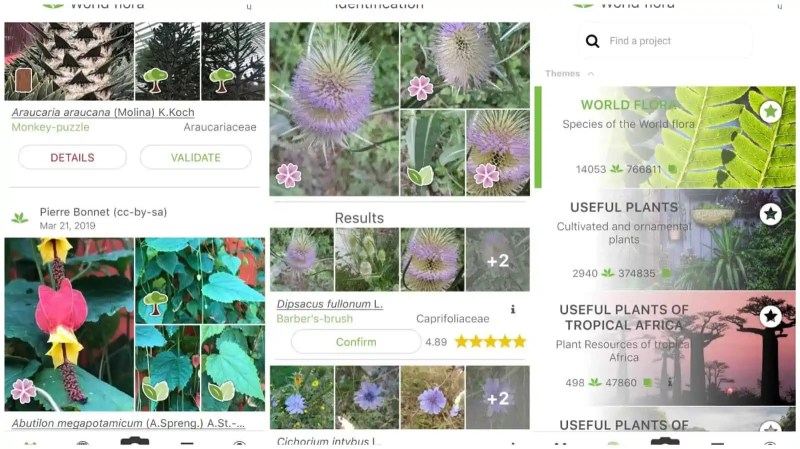
While free apps to identify plants share a common purpose, their features, accuracy, and user experiences vary significantly. Below is a comparison of four leading platforms, highlighting their strengths and ideal use cases.| App | Key Features & Differentiators |
|---|---|
| PictureThis | AI-powered with a focus on gardening; provides care tips, disease diagnosis, and plant shopping recommendations. Best for home gardeners but less accurate for wild species. |
| PlantNet | Open-source and community-driven; excels in identifying European and North American flora. Offers advanced tools for researchers but has a steeper learning curve. |
| iNaturalist | Citizen science platform with global coverage; integrates with GBIF and eBird. Ideal for ecological studies but requires manual verification for some identifications. |
| Google Lens | General-purpose image recognition with broad plant coverage. Fast and user-friendly but lacks botanical depth compared to specialized apps. |
Future Trends and Innovations
The next generation of free apps to identify plants is poised to integrate even deeper with emerging technologies. Augmented reality (AR) overlays could project 3D models of plants onto real-world environments, helping users visualize growth patterns or root structures. Meanwhile, advancements in portable DNA sequencing (e.g., Oxford Nanopore) may soon allow apps to verify identifications at the genetic level, eliminating ambiguity for rare or hybrid species. Additionally, the rise of edge computing could enable offline plant identification, making these tools viable in remote areas without internet access.Another frontier is the fusion of plant identification with climate and sustainability data. Future apps might not only name a plant but also assess its resilience to drought, its carbon sequestration potential, or its role in pollinator ecosystems. As datasets grow more comprehensive and algorithms become more precise, free apps to identify plants could evolve into comprehensive ecological management tools, bridging the gap between individual users and large-scale conservation initiatives.
Conclusion
The landscape of free apps to identify plants has changed forever how we interact with the natural world. What began as a convenience for gardeners has grown into a cornerstone of modern botany, enabling everything from backyard gardening to large-scale ecological research. The key to leveraging these tools effectively lies in understanding their strengths—whether it’s the crowdsourced rigor of iNaturalist or the gardening-focused insights of PictureThis—and recognizing their limitations, such as regional biases or occasional misidentifications.As technology advances, the line between amateur botanist and professional researcher will continue to blur. Free apps to identify plants are not just tools; they are gateways to participation in the scientific process. For those willing to explore, they offer a chance to contribute to global knowledge while satisfying a fundamental human curiosity about the green world around us.
Comprehensive FAQs
Q: Are free apps to identify plants as accurate as a botanist?
A: While free apps to identify plants are highly accurate for common species, they may struggle with rare, hybrid, or regionally specific plants. Apps like PlantNet or iNaturalist improve with user corrections, but complex identifications still benefit from expert review. For critical applications (e.g., toxic plant identification), cross-referencing with multiple sources is recommended.
Q: Can these apps identify plants without flowers or leaves?
A: Some free apps to identify plants can recognize species based on bark, seeds, or even roots, but accuracy drops significantly without distinctive features like leaves or flowers. Apps like PictureThis perform better with clear visual markers, while iNaturalist’s community may provide insights based on less obvious traits.
Q: Do I need an internet connection to use these apps?
A: Most free apps to identify plants require an internet connection to access their databases, though some (like PictureThis) offer limited offline functionality for previously identified plants. Future advancements in edge computing may enable fully offline identification, but this remains rare today.
Q: Are there privacy concerns with uploading plant photos?
A: Reputable free apps to identify plants (e.g., iNaturalist, PlantNet) prioritize data privacy, often anonymizing submissions or allowing users to control sharing settings. However, always review an app’s privacy policy before uploading sensitive images, especially in protected or private locations.
Q: How can I improve the accuracy of plant identification results?
A: To maximize the effectiveness of free apps to identify plants, ensure high-quality photos with good lighting and multiple angles. Include distinctive features (e.g., flowers, seeds) and, if possible, input location data. For ambiguous results, consult multiple apps or seek verification from local botanical societies.
Q: Are there free apps to identify plants for specific regions?
A: Yes. Apps like Seek (Australia), Pl@ntNet (Europe), and Flora Incognita (Germany) specialize in regional flora. For the Americas, iNaturalist and PictureThis offer broad coverage, while niche apps (e.g., LeafSnap for trees) cater to specific plant types. Always check an app’s documented regions before use.
Leave a Comment
Comments are moderated before appearing. The data you submit is processed according to the Privacy Policy of versiliasolutions.oneagency.co.