The Best Free Plant Identification App: A Botanist’s Secret Toolkit
Table of Contents
- The Complete Overview of the Free Plant Identification App
- Historical Background and Evolution
- Core Mechanisms: How It Works
- Key Benefits and Crucial Impact
- Major Advantages
- Comparative Analysis
- Future Trends and Innovations
- Conclusion
- Comprehensive FAQs
- Q: Can a free plant identification app accurately identify rare or endangered species?
- Q: How does lighting affect the accuracy of a plant identification app?
- Q: Are there privacy concerns with using a plant identification app?
- Q: Can a plant identification app work without an internet connection?
- Q: What should I do if the app misidentifies a plant?
- Q: Are there apps specialized for identifying mushrooms or cacti?
- Q: How can educators incorporate a free plant identification app into lesson plans?
- Q: Do these apps work for identifying non-flowering plants (e.g., ferns, mosses)?
- Q: Can a plant identification app help with invasive species detection?
- Q: What’s the best app for identifying edible wild plants?
The first time you spot an unfamiliar plant in a forest, a city park, or even your neighbor’s garden, hesitation sets in. Is it invasive? Edible? A rare native species? Before the era of smartphones, identifying plants required heavy field guides, expert consultations, or painstaking library research—processes that could take hours, days, or never yield answers at all. Today, a free plant identification app transforms that uncertainty into instant clarity, democratizing botanical knowledge for hobbyists, scientists, and casual explorers alike. These tools don’t just recognize plants; they bridge the gap between curiosity and expertise, turning passive observation into active discovery.
What makes a free plant identification app truly indispensable isn’t just its convenience, but its precision. Machine learning models trained on millions of images now achieve accuracy rates rivaling—or surpassing—that of traditional taxonomic keys. Yet not all apps deliver equally. Some struggle with regional flora, others misidentify common species, and a few prioritize aesthetics over functionality. The best plant ID apps combine robust databases with user-friendly interfaces, leveraging crowd-sourced data to refine their algorithms over time. For the urban forager, the competitive gardener, or the field ecologist, these apps are no longer optional; they’re essential.
The shift from physical herbariums to digital identification mirrors broader technological advancements in citizen science. Where once a botanist might spend years cataloging a region’s flora, today’s free plant identification app delivers near-instant results—often with additional details like care tips, toxicity warnings, or ecological significance. This evolution hasn’t just accelerated discovery; it’s reshaped how we interact with the natural world, turning every smartphone into a portable field guide.
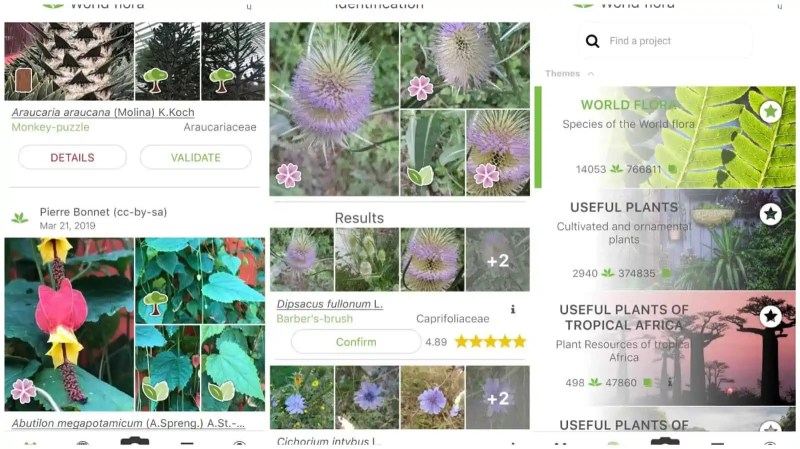
The Complete Overview of the Free Plant Identification App
A free plant identification app operates at the intersection of computer vision, crowdsourced data, and botanical science. At its core, it functions as a digital herbarium, but with dynamic updates and real-time processing. Users capture an image of a plant’s leaf, flower, or stem, and within seconds, the app cross-references visual features against a database of pre-classified species. The most sophisticated versions employ convolutional neural networks (CNNs), which analyze textures, shapes, and color gradients—features humans might overlook but algorithms excel at detecting. This isn’t just pattern recognition; it’s a synthesis of decades of botanical research distilled into a pocket-sized tool.The real power of these apps lies in their accessibility. Traditional plant identification relied on Latin binomials, morphological keys, and specialized training—barriers that excluded non-specialists. A free plant identification app, however, removes those hurdles. A child can use it to identify dandelions in a backyard, while a conservationist can deploy it to monitor invasive species in a wetland. The democratization of botanical knowledge has led to unexpected applications: farmers using apps to diagnose crop diseases, chefs verifying wild edibles, and students conducting independent research. The technology’s scalability means it serves both the casual user and the professional, blurring the lines between amateur and expert.
Historical Background and Evolution
The concept of automated plant identification predates smartphones, tracing back to early 20th-century punch-card systems and later, 1980s expert systems like the Delphi program. These tools used rule-based logic to match plant characteristics against a database, but their accuracy was limited by the rigidity of their programming. The turning point came in the 2010s with the rise of image recognition and cloud computing. Apps like PlantNet (2013) and Google Lens (2017) pioneered the use of crowdsourced images to train algorithms, significantly improving identification rates. By 2020, free plant identification apps had matured into tools capable of distinguishing between closely related species, thanks to advancements in deep learning.What distinguishes today’s plant ID apps from their predecessors is their integration with broader ecological networks. Early versions operated in isolation, but modern apps often sync with global databases like the Global Biodiversity Information Facility (GBIF) or iNaturalist, allowing users to contribute their findings to scientific research. This symbiotic relationship between user and app has created a feedback loop: the more people use the app, the more data it collects, and the smarter it becomes. Historically, botanical knowledge was centralized in institutions; now, it’s distributed across millions of devices, making it one of the most collaborative scientific endeavors of the 21st century.
Core Mechanisms: How It Works
Under the hood, a free plant identification app relies on a multi-step process that begins with image capture. The user takes a photograph focusing on key diagnostic features—leaf arrangement, flower structure, or bark texture—while the app’s camera overlay ensures proper framing. The image is then processed through a convolutional neural network (CNN), which extracts visual features and compares them to a labeled dataset. The most advanced apps, like PictureThis or LeafSnap, use transfer learning, where pre-trained models (originally designed for general image recognition) are fine-tuned for botanical specificity.The second critical component is the database. High-quality free plant identification apps maintain curated collections of verified species, often sourced from herbaria, academic institutions, and citizen science projects. For example, iNaturalist’s community-vetted observations help refine identifications, while Pl@ntNet incorporates data from the Cirad research center. The app’s algorithm doesn’t just match images; it calculates probabilities based on geographic location, seasonality, and environmental context. If a user in the Pacific Northwest submits a photo of a red-leaved plant, the app will prioritize species native to that biome over those found in the Mediterranean.
Key Benefits and Crucial Impact
The adoption of a free plant identification app extends far beyond the novelty of instant answers. For gardeners, it eliminates the guesswork of plant care, reducing water waste and chemical overuse by ensuring accurate species recognition. Ecologists leverage these tools to track biodiversity, while urban planners use them to assess green space health. Even law enforcement agencies have adopted plant ID apps to identify controlled substances disguised as ornamental plants. The technology’s versatility makes it a cornerstone of modern environmental stewardship, offering a scalable solution to problems that once required specialized labor.Beyond practical applications, the psychological impact is profound. Studies suggest that using a plant identification app increases engagement with nature, particularly among younger generations. By making identification effortless, these apps foster a sense of connection to ecosystems, encouraging users to explore, document, and protect their surroundings. For educators, the implications are equally significant: students can now conduct fieldwork independently, applying theoretical knowledge to real-world observations in real time.
"A free plant identification app is more than a tool—it’s a catalyst for ecological literacy. It turns passive observers into active participants in conservation, one photograph at a time." — Dr. Elena Valdez, Director of Urban Ecology, Harvard Forest
Major Advantages
- Instant Accuracy: Modern free plant identification apps achieve over 90% accuracy for common species, rivaling expert-level identification in seconds. Advanced models like Google’s Plant ID incorporate 3D imaging for even greater precision.
- Multilingual and Global Coverage: Apps such as Pl@ntNet support multiple languages and include databases for flora across six continents, making them indispensable for travelers and researchers.
- Educational Integration: Many apps provide detailed species profiles, including growth habits, ecological roles, and conservation status, turning identification into an educational experience.
- Community and Collaboration: Platforms like iNaturalist allow users to share findings, collaborate with experts, and contribute to scientific research, fostering a global network of naturalists.
- Cost-Effective Alternative: Unlike specialized equipment or expert consultations, a free plant identification app requires only a smartphone, democratizing access to botanical expertise.
Comparative Analysis
While numerous free plant identification apps exist, their features and limitations vary significantly. Below is a comparison of four leading tools:| Feature | PlantNet | PictureThis | LeafSnap | Google Lens (Plant ID) |
|---|---|---|---|---|
| Primary Strength | Open-source, global database | AI-driven care advice for gardeners | Leaf-focused identification | Integration with Google ecosystem |
| Accuracy Rate | 85–92% (varies by region) | 90–95% (specialized in ornamental plants) | 88–94% (optimized for deciduous trees) | 80–88% (broader but less botanical depth) |
| Database Size | 500,000+ species | 200,000+ (garden-focused) | 1,000+ (leaf-specific) | 10,000+ (general image recognition) |
| Unique Feature | Crowdsourced verification | Personalized garden coaching | 3D leaf scanning | Cross-platform accessibility |

Future Trends and Innovations
The next generation of free plant identification apps will likely integrate augmented reality (AR) and hyperspectral imaging, allowing users to scan plants for hidden details like nutrient deficiencies or pest infestations. Companies like IBM and Microsoft are already experimenting with AI-powered plant health monitors, which could predict diseases before visual symptoms appear. Additionally, blockchain technology may verify the authenticity of rare species identifications, adding a layer of trust to citizen science contributions.Another emerging trend is hyperlocalization, where apps tailor identifications to microclimates or urban heat islands. Imagine an app that not only names a plant but also assesses its resilience to local pollution or drought conditions. As 5G and edge computing become ubiquitous, these apps will process data faster, enabling real-time identification even in remote areas. The future of plant ID technology isn’t just about recognizing species—it’s about creating a living digital herbarium that evolves alongside the planet’s changing ecosystems.
Conclusion
The rise of the free plant identification app marks a paradigm shift in how society interacts with flora. What began as a niche tool for enthusiasts has become a vital resource for scientists, policymakers, and everyday citizens. Its impact is measurable: reduced pesticide use in gardens, faster responses to invasive species, and a surge in environmental awareness among younger generations. Yet, the technology’s potential is far from exhausted. As algorithms grow more sophisticated and databases expand, these apps will continue to redefine the boundaries of botanical exploration.For the individual, the value is personal—no more second-guessing a mysterious vine or mislabeling a houseplant. For the collective, it’s transformative: a free plant identification app is a gateway to understanding our shared biosphere, one photograph at a time. The question isn’t whether these tools will persist, but how deeply they’ll reshape our relationship with the natural world in the decades to come.
Comprehensive FAQs
Q: Can a free plant identification app accurately identify rare or endangered species?
A: Most free plant identification apps struggle with rare species due to limited sample sizes in their databases. For endangered plants, cross-referencing with regional conservation databases (e.g., CITES or IUCN Red List) is recommended. Apps like iNaturalist often include expert-vetted observations for such cases.
Q: How does lighting affect the accuracy of a plant identification app?
A: Poor lighting—especially shadows or backlighting—can distort colors and textures, reducing accuracy. Ideal conditions include natural daylight and clear, unobstructed views of diagnostic features. Some apps, like PictureThis, offer flash or HDR modes to mitigate this.
Q: Are there privacy concerns with using a plant identification app?
A: Most free plant identification apps require internet access to process images, which may raise privacy questions about data storage. Reputable apps (e.g., Pl@ntNet) are GDPR-compliant and allow offline mode for sensitive locations. Always review an app’s privacy policy before uploading images.
Q: Can a plant identification app work without an internet connection?
A: Some apps, such as LeafSnap or PictureThis, offer limited offline functionality by downloading regional databases in advance. However, full identification (including expert verification) typically requires cloud processing.
Q: What should I do if the app misidentifies a plant?
A: If a free plant identification app provides an incorrect result, most platforms allow users to flag the error and submit corrections. Apps like iNaturalist rely on community feedback to improve accuracy. For critical identifications (e.g., poisonous plants), consult a local botanist or extension service.
Q: Are there apps specialized for identifying mushrooms or cacti?
A: Yes. iNaturalist and Seek by iNaturalist include specialized filters for fungi and succulents. For cacti, Cactus ID (paid) or Pl@ntNet’s desert flora database are excellent choices. Always exercise caution with wild mushrooms, as misidentification can be deadly.
Q: How can educators incorporate a free plant identification app into lesson plans?
A: Apps like PictureThis and Google Lens integrate with Google Classroom, making them ideal for field trips or lab work. Educators can assign projects like "Document the biodiversity of your schoolyard" or "Track seasonal changes in local flora." Many apps also offer teacher resources, including quizzes and species fact sheets.
Q: Do these apps work for identifying non-flowering plants (e.g., ferns, mosses)?
A: Some free plant identification apps (e.g., Pl@ntNet) include bryophytes and pteridophytes, but coverage is often limited. For specialized groups like mosses, Bryophyte Atlas or iNaturalist’s community observations are more reliable. Close-up images of spores or leaf structures improve accuracy.
Q: Can a plant identification app help with invasive species detection?
A: Absolutely. Apps like EDDMapS (for the U.S.) or Alien Species (EU) are designed specifically for invasive plant tracking. A free plant identification app can serve as a first step, but reporting suspected invasives to local agricultural extension offices is crucial for containment efforts.
Q: What’s the best app for identifying edible wild plants?
A: While no app replaces expert foraging knowledge, PictureThis and Seek by iNaturalist include edibility warnings for common species. For serious foraging, pair a plant ID app with a field guide like Peterson’s Wild Edibles and consult local experts to avoid toxic look-alikes (e.g., pokeweed vs. wild grape).
Leave a Comment
Comments are moderated before appearing. The data you submit is processed according to the Privacy Policy of versiliasolutions.oneagency.co.