Protect Your Side Hustle: The Smart Guide to Home-Based Business Insurance
Table of Contents
- The Complete Overview of Home-Based Business Insurance
- Historical Background and Evolution
- Core Mechanisms: How It Works
- Key Benefits and Crucial Impact
- Major Advantages
- Comparative Analysis
- Future Trends and Innovations
- Conclusion
- Comprehensive FAQs
- Q: Does my homeowner’s insurance cover my home-based business?
- Q: How much does home-based business insurance cost?
- Q: What if I operate from a co-working space part-time?
- Q: Can I get business insurance if I have no employees?
- Q: What’s the difference between general liability and professional liability?
- Q: How do I file a claim for a home-based business?
Running a business from your living room or garage wasn’t always a mainstream career path. Decades ago, it was dismissed as a hobby or a last-resort income stream. Today, it’s the backbone of the gig economy—freelancers, e-commerce sellers, and consultants generate billions annually, often without the safety net of traditional office space. The catch? Your homeowner’s policy won’t cover a client lawsuit, a stolen laptop, or a fire that destroys your inventory. That’s where home-based business insurance steps in.
The shift from "side gig" to "legitimate enterprise" demands more than a handshake and a PayPal link. It requires liability protection, asset safeguards, and financial resilience against unforeseen disruptions. Yet many entrepreneurs overlook this critical layer of defense, assuming their personal insurance will suffice—or worse, operating entirely uninsured. The reality? A single claim could wipe out years of profit. Whether you’re a graphic designer, a handmade candle seller, or a virtual assistant, the right home-based business insurance isn’t just smart; it’s survival insurance.
Consider this: A disgruntled client could sue for $50,000 over a botched website design. Your landlord might deny coverage if a kitchen fire traces back to your candle-making operation. Or a cyberattack could expose client data, triggering fines and legal fees. These scenarios aren’t hypothetical—they’re documented risks that home-based business insurance was designed to mitigate. The question isn’t if you need it, but how to choose the right policy before a crisis forces your hand.
The Complete Overview of Home-Based Business Insurance
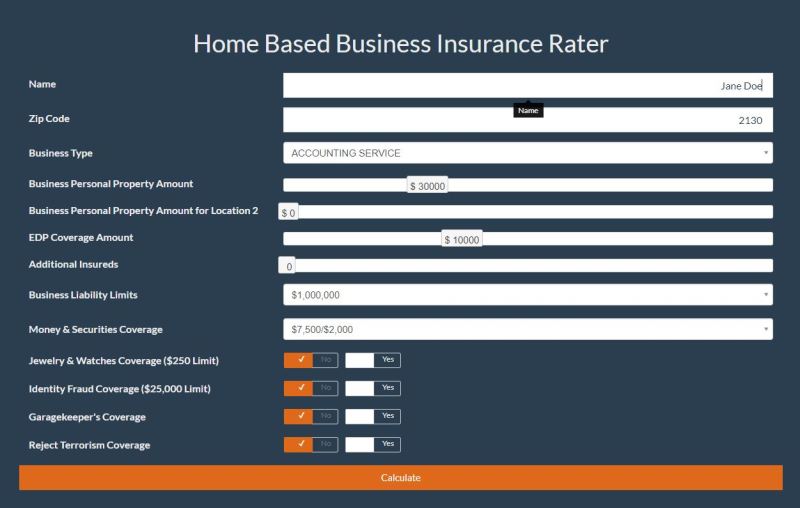
Home-based business insurance is a specialized policy (or rider) tailored to entrepreneurs who operate from residential properties. Unlike commercial insurance, which covers office spaces, this coverage bridges the gap between personal and professional liability. It typically includes general liability, professional liability (errors & omissions), property protection for business assets, and sometimes cyber liability or business interruption coverage. The key distinction? It’s not an add-on to your homeowner’s policy—it’s a standalone solution built for the unique risks of remote work.
Not all policies are created equal. A freelance photographer’s needs differ from those of a home-based bakery owner, who may require food contamination coverage. The right home-based business insurance depends on industry, revenue, and exposure to third-party risks. For example, a consultant advising on financial matters might prioritize errors & omissions (E&O) insurance, while a product-based business (e.g., dropshipping) would focus on product liability and inventory protection. The absence of these safeguards leaves entrepreneurs vulnerable to lawsuits, equipment theft, or even regulatory penalties—all of which can bankrupt a small operation overnight.
Historical Background and Evolution
The concept of home-based business insurance emerged alongside the rise of the gig economy in the late 20th century. Before the internet democratized entrepreneurship, most businesses required physical storefronts, making commercial insurance the default. However, as telecommuting and home offices became viable, insurers recognized a gap: personal policies excluded business activities, yet home-based entrepreneurs faced identical risks to their brick-and-mortar counterparts. The first dedicated policies appeared in the 1990s, targeting freelancers and consultants, but adoption remained low due to cost perceptions and limited awareness.
Fast-forward to the 2010s, and the landscape transformed. Platforms like Etsy, Fiverr, and Shopify fueled an explosion of home-based ventures, forcing insurers to innovate. Today, home-based business insurance is no longer a niche product—it’s a mainstream necessity, with providers offering modular coverage (e.g., bundling liability with cyber protection). Regulatory shifts, such as stricter data privacy laws (e.g., GDPR, CCPA), have further accelerated demand. What was once an afterthought is now a cornerstone of risk management for the modern entrepreneur.
Core Mechanisms: How It Works
The mechanics of home-based business insurance revolve around three pillars: liability, property, and operational protection. Liability coverage addresses third-party claims, such as a client alleging negligence or a customer tripping over inventory stored in your home. Property coverage compensates for damage or theft of business equipment (laptops, machinery, raw materials) or even structural modifications (e.g., a converted garage workshop). Operational protections—like business interruption insurance—cover lost income if a covered event (fire, natural disaster) halts operations.
Policies are typically underwritten by specialty insurers or added as endorsements to homeowner’s policies, though the latter often caps coverage at $1,000–$2,500—woefully inadequate for most businesses. Premiums vary based on factors like annual revenue, industry risk, and claims history. For instance, a home-based bakery might pay $800–$1,500/year for liability + product coverage, while a tech consultant could spend $500–$1,200 for E&O and cyber liability. The critical step? Conducting a risk assessment to identify gaps. A freelance coder might overlook professional liability until a client sues over a buggy software update—by then, it’s too late.
Key Benefits and Crucial Impact
Without home-based business insurance, entrepreneurs gamble with their livelihoods. A single incident—whether a data breach, property damage, or legal dispute—can trigger financial ruin. The coverage isn’t just about claims; it’s about continuity. Imagine a home-based therapist whose client files a malpractice suit: without professional liability insurance, the entrepreneur could face personal asset seizure. Or a handmade jewelry seller whose Etsy shop is hacked, exposing customer payment details. The legal and reputational fallout alone can close doors before the insurance even kicks in.
The psychological impact is equally critical. Business owners who prioritize home-based business insurance operate with confidence, knowing they’re shielded from catastrophic losses. This peace of mind translates to better decision-making, from scaling operations to negotiating contracts. It’s not just about protecting assets—it’s about preserving the ability to earn a living. The data bears this out: 40% of small businesses never reopen after a major claim, often due to insufficient coverage. For home-based entrepreneurs, who lack the safety net of commercial real estate, the stakes are higher.
"Insurance isn’t an expense—it’s the cost of doing business without fear." — Robert Kiyosaki, Author of Rich Dad Poor Dad
Major Advantages
- Liability Protection: Covers legal fees and settlements if a client or customer sues for negligence, property damage, or personal injury (e.g., a delivery person slipping on your walkway).
- Professional Liability (E&O): Shields against claims of errors, omissions, or misrepresentation in services (e.g., a misfiled tax return by a bookkeeper).
- Property Coverage: Reimburses stolen or damaged business equipment, inventory, or even home modifications used for operations (e.g., a workshop fire destroying tools).
- Business Interruption Insurance: Replaces lost income if a covered event (e.g., a pipe burst flooding your office) forces temporary closure.
- Cyber Liability: Addresses data breaches, ransomware attacks, or regulatory fines for mishandling customer information (critical for e-commerce and service-based businesses).
Comparative Analysis
| Coverage Type | Home-Based Business Insurance vs. Homeowner’s Policy |
|---|---|
| Liability Limits | Home-based policies offer $1M–$2M in liability; homeowner’s policies typically cap at $300K–$500K. |
| Professional Services | E&O coverage is included in business policies but excluded from homeowner’s insurance. |
| Property Damage | Business insurance covers commercial equipment (e.g., 3D printers, servers); homeowner’s policies may exclude "business use." |
| Cyber Risks | Standalone cyber liability is rare in homeowner’s policies; business insurance often includes it as an add-on. |

Future Trends and Innovations
The next decade will redefine home-based business insurance through technology and shifting risks. Artificial intelligence is already enabling insurers to offer dynamic pricing—adjusting premiums based on real-time risk factors (e.g., a baker’s kitchen fire history). Blockchain may streamline claims processing, reducing fraud and speeding payouts. Meanwhile, the rise of "digital nomad" policies is addressing the needs of location-independent entrepreneurs, who operate across jurisdictions with varying liability laws. Another trend? Micro-insurance, where freelancers pay per-project premiums for short-term coverage (e.g., a one-off consulting gig).
Regulatory changes will also reshape the landscape. As more cities impose zoning restrictions on home businesses, insurers may tie coverage to compliance (e.g., fire safety certifications for workshops). Climate-related risks—like wildfires or hurricanes—will push providers to offer parametric insurance, which pays out automatically upon triggering an event (e.g., a 5.0+ earthquake). For entrepreneurs, staying ahead means monitoring these innovations and advocating for tailored policies that reflect their evolving operations. The future of home-based business insurance won’t just protect assets—it will redefine how we perceive risk itself.
Conclusion
The decision to invest in home-based business insurance isn’t a luxury—it’s a strategic imperative. It’s the difference between a setback and a shutdown, between a minor hiccup and a career-ending lawsuit. The entrepreneurs who thrive in the gig economy aren’t those who cut corners; they’re the ones who treat their home-based ventures with the same rigor as a traditional business. That means securing coverage before the first client signs on, not after the first claim is filed.
Start by assessing your risks: What could go wrong in your specific industry? Then, compare quotes from specialty insurers (e.g., Hiscox, Thimble) and your existing homeowner’s provider. Don’t assume you’re covered—ask for a policy review. And remember: The best time to buy home-based business insurance was yesterday. The second-best time is today.
Comprehensive FAQs
Q: Does my homeowner’s insurance cover my home-based business?
A: No. Homeowner’s policies exclude business activities unless you purchase a separate endorsement (often limited to $1,000–$2,500). For adequate protection, you need a dedicated home-based business insurance policy or a business owner’s policy (BOP) if your revenue exceeds thresholds.
Q: How much does home-based business insurance cost?
A: Premiums range from $300–$2,000/year, depending on industry, revenue, and coverage type. Freelancers (e.g., writers, designers) typically pay $500–$1,200, while product-based businesses (e.g., bakeries, artisans) may pay $800–$1,500+. Cyber liability add-ons can increase costs by 20–50%.
Q: What if I operate from a co-working space part-time?
A: Co-working spaces often require proof of home-based business insurance for liability coverage. If you split time between home and a shared office, you may need a hybrid policy or a commercial policy for the co-working portion. Always disclose your work locations to avoid claim denials.
Q: Can I get business insurance if I have no employees?
A: Yes. Home-based business insurance is available to sole proprietors, freelancers, and LLCs with no employees. Policies like general liability and professional liability are particularly relevant for solo operators, who lack the corporate shield of an employer.
Q: What’s the difference between general liability and professional liability?
A: General liability covers third-party injuries/property damage (e.g., a client slipping in your home office). Professional liability (E&O) covers errors in your services (e.g., a misdiagnosis by a telehealth provider). Many home-based business insurance policies bundle both, but high-risk professions (e.g., legal, medical, financial consulting) should prioritize E&O.
Q: How do I file a claim for a home-based business?
A: Contact your insurer immediately after an incident (e.g., theft, lawsuit). Document everything—photos, police reports, client communications—and provide your policy number. Delays can void coverage, so act within 24–48 hours. For cyber incidents, notify authorities (e.g., FTC) and your insurer simultaneously.
Leave a Comment
Comments are moderated before appearing. The data you submit is processed according to the Privacy Policy of versiliasolutions.oneagency.co.