How to Properly Define a JSON File: The Definitive Technical Blueprint
Table of Contents
- The Complete Overview of How to Properly Define a JSON File
- Historical Background and Evolution
- Core Mechanisms: How It Works
- Key Benefits and Crucial Impact
- Major Advantages
- Comparative Analysis
- Future Trends and Innovations
- Conclusion
- Comprehensive FAQs
- Q: Can JSON keys use single quotes instead of double quotes?
- Q: What’s the difference between a JSON object and a JSON array?
- Q: How do I handle special characters in JSON strings?
- Q: Is it safe to use JSON for sensitive data?
- Q: Why does my JSON file work in one language but fail in another?
- Q: Can JSON files include comments?
- Q: What’s the maximum size for a valid JSON file?
JSON isn’t just another data format—it’s the backbone of modern APIs, configuration files, and cross-platform communication. Yet, even seasoned developers stumble when how to properly define a JSON file isn’t executed with strict adherence to its core principles. A single misplaced comma or unquoted key can render an entire system unusable. The stakes are higher than syntax: poorly structured JSON introduces security vulnerabilities, parsing errors, and wasted development cycles.
The problem isn’t the format itself—it’s the assumption that JSON’s simplicity equates to carefree implementation. In reality, defining a JSON file correctly demands an understanding of its hierarchical nature, data type constraints, and the invisible rules governing its consumption. Whether you’re configuring a microservice, transmitting sensor data, or building a frontend dashboard, the way you structure your JSON determines how reliably it functions across languages and tools.

The Complete Overview of How to Properly Define a JSON File
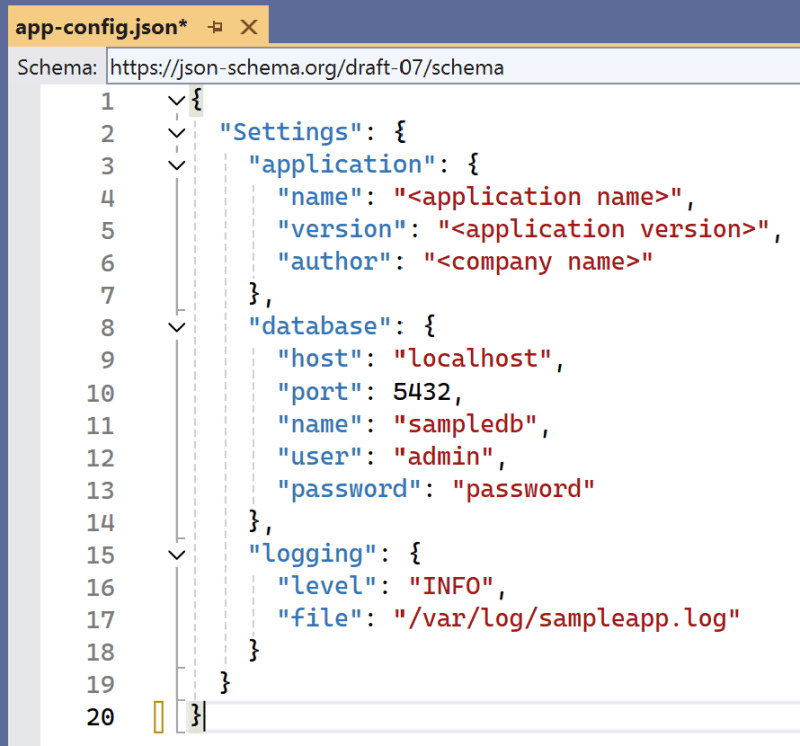
Defining a JSON file isn’t about writing arbitrary text between curly braces—it’s about creating a self-describing, machine-readable document with explicit rules. At its core, JSON (JavaScript Object Notation) is a standardized text format that represents data as key-value pairs, arrays, and nested objects. The key word here is structured: unlike XML or YAML, JSON enforces a rigid syntax where every character—from quotes to commas—must align with its specification (RFC 8259). This precision ensures compatibility across programming languages, databases, and APIs, but it also means deviations (even minor ones) can break parsing logic.The process of how to properly define a JSON file begins with a foundational choice: whether to treat it as a singular object (`{}`) or an array (`[]`). This decision isn’t arbitrary—it dictates how the data will be consumed. For example, a REST API might return an array of objects (`[{"id":1}, {"id":2}]`) for pagination, while a configuration file typically uses a single object (`{"timeout":30, "retries":3}`). The distinction matters because tools like `jq` or `python -m json.tool` validate and process these structures differently. Ignoring this distinction leads to errors like "Expecting value: line 1 column 1 (char 0)"—a cryptic message that often stems from a misaligned root structure.
Historical Background and Evolution
JSON’s origins trace back to 2001, when Douglas Crockford, a JavaScript architect at State Software, proposed it as a lightweight alternative to XML. The format was designed to mirror JavaScript’s native object literal syntax, making it instantly adoptable for web developers. By 2002, JSON gained traction as a data interchange format, and its simplicity—lacking tags or attributes—made it ideal for APIs. The formal specification (RFC 4627) was published in 2006, followed by RFC 7159 in 2014, which standardized Unicode support and stricter parsing rules.The evolution of JSON reflects broader industry shifts. As APIs became the default for microservices and cloud applications, JSON’s human-readable yet machine-efficient structure made it the de facto standard. Tools like `json-server` and libraries such as `Gson` (Java) or `jsoncpp` (C++) emerged to handle serialization/deserialization, but the burden of how to properly define a JSON file remained on developers. Modern JSON also supports comments (via extensions like JSON5) and binary data (via MessagePack), but these are non-standard and require explicit tooling. Understanding this history clarifies why JSON’s syntax is both strict and intentional—it was built for reliability in distributed systems.
Core Mechanisms: How It Works
JSON’s power lies in its dual nature: it’s both a data format and a language-agnostic contract. The format’s core components—objects, arrays, strings, numbers, booleans, and `null`—are designed to be universally interpretable. An object (`{}`) is a collection of key-value pairs, where keys must be strings (enclosed in double quotes) and values can be any valid JSON data type. Arrays (`[]`) are ordered lists of values, which can include other objects or arrays, enabling nested hierarchies.The mechanics of how to properly define a JSON file hinge on two invisible rules: whitespace sensitivity and strict typing. JSON ignores whitespace for readability but fails if it’s misplaced (e.g., `{"key": "value", "key2": "value"}` is valid; `{"key": "value" , "key2": "value"}` is not). Typing is equally critical: `true`/`false` must be lowercase, numbers cannot have leading zeros (unless scientific notation), and strings must use double quotes—single quotes or unescaped characters (`\n`, `\t`) will cause parsing errors. Tools like JSONLint automate validation, but manual inspection is essential for edge cases, such as handling Unicode characters or multi-line strings.
Key Benefits and Crucial Impact
The impact of how to properly define a JSON file extends beyond syntax—it shapes system performance, security, and maintainability. JSON’s lightweight nature reduces bandwidth usage compared to XML, making it ideal for high-frequency API calls. Its ubiquity also lowers cognitive load: developers familiar with one language’s JSON parser can adapt to another with minimal effort. However, the benefits are conditional. A poorly defined JSON file—with missing fields, incorrect types, or circular references—can trigger cascading failures in dependent systems.The trade-off is clear: JSON’s simplicity demands discipline. A single misplaced character can corrupt an entire dataset, while inconsistent naming conventions (e.g., `userId` vs. `user_id`) create technical debt. The solution lies in how to properly define a JSON file as a living document: versioning schemas, using tools like JSON Schema for validation, and documenting edge cases. This approach ensures JSON remains both flexible and reliable—critical for industries where data integrity is non-negotiable, such as healthcare or financial services.
"JSON isn’t just a format; it’s a contract between systems. Define it sloppily, and you’re not just writing code—you’re building a house of cards." — Douglas Crockford
Major Advantages
- Language Agnosticism: JSON’s syntax is supported natively in JavaScript and has libraries for every major language (Python, Java, Go), eliminating serialization barriers.
- Human-Readable Structure: Unlike binary formats, JSON allows developers to inspect and debug data without specialized tools, reducing onboarding time.
- API-First Design: REST and GraphQL APIs universally use JSON for requests/responses, making it the default for modern web services.
- Extensibility: JSON Schema enables validation rules (e.g., required fields, type constraints), turning raw JSON into a self-documenting format.
- Performance Optimization: Tools like `gzip` compress JSON efficiently, and streaming parsers (e.g., `json-stream`) handle large datasets without loading entire files into memory.
Comparative Analysis
| JSON | XML |
|---|---|
|
|
| YAML | Protocol Buffers |
|
|
Future Trends and Innovations
The future of JSON lies in its adaptability. As edge computing grows, JSON’s role in lightweight data transmission will expand, with formats like JSON Lines (`.jsonl`) gaining traction for log aggregation. Meanwhile, JSON Schema is evolving to support polymorphic types and conditional validation, reducing the need for custom parsers. Another trend is JSON over WebSockets, where real-time updates leverage JSON’s simplicity for bidirectional communication.Innovations like JSON-Templating (e.g., `json-server` with dynamic routes) and WASM-based JSON parsers are pushing boundaries, but the core principle remains unchanged: how to properly define a JSON file will always require adherence to its foundational rules. The difference is that tomorrow’s JSON will be smarter—validated at compile time, optimized for quantum-resistant encryption, and integrated with AI-driven schema generation.
Conclusion
Mastering how to properly define a JSON file isn’t about memorizing syntax—it’s about understanding the intent behind it. JSON’s design philosophy prioritizes clarity, compatibility, and performance, but these benefits vanish if the format is treated as an afterthought. The next time you craft a JSON file, ask: Is this structure future-proof? Will it parse correctly in 10 years? The answer lies in rigor: validating with tools, documenting schemas, and anticipating edge cases.JSON’s ubiquity ensures it won’t disappear, but its effectiveness hinges on how deliberately it’s used. Whether you’re building a public API or a private configuration, the principles of proper JSON definition are the same: precision, consistency, and an unwavering commitment to the format’s core rules.
Comprehensive FAQs
Q: Can JSON keys use single quotes instead of double quotes?
A: No. JSON requires double quotes (`"`) for all keys and string values. Single quotes (`'`) are invalid and will cause parsing errors in all compliant implementations. This rule is absolute—even if your language supports single-quoted strings natively.
Q: What’s the difference between a JSON object and a JSON array?
A: A JSON object (`{}`) is an unordered collection of key-value pairs, while a JSON array (`[]`) is an ordered list of values. Objects are used for structured data (e.g., `{"name": "Alice"}`), and arrays for sequences (e.g., `["apple", "banana"]`). Misusing one for the other can break APIs or configuration files.
Q: How do I handle special characters in JSON strings?
A: Escape special characters using backslashes (`\`): `\n` (newline), `\t` (tab), `\"` (quote), and `\\` (backslash). Unicode characters can be included directly (e.g., `"café"`) or via escape sequences (`"\u00E9"`). Always validate strings with a tool like JSONLint to catch unescaped characters.
Q: Is it safe to use JSON for sensitive data?
A: JSON itself isn’t encrypted, so sensitive data (e.g., passwords) should never be stored in plain JSON. Always use HTTPS for transmission and encrypt data at rest. Tools like `jsonwebtoken` (JWT) can sign JSON payloads for integrity, but encryption remains a separate step.
Q: Why does my JSON file work in one language but fail in another?
A: JSON is standardized, but language libraries may have quirks. For example, Python’s `json` module rejects trailing commas (`{"a":1,}`), while JavaScript tolerates them. Always validate against RFC 8259 and test with multiple parsers (e.g., `jq`, `node -p`). Tooling like Postman or Swagger can also reveal inconsistencies.
Q: Can JSON files include comments?
A: No, standard JSON (RFC 8259) prohibits comments. However, extensions like JSON5 or JSONC (used in VS Code settings) support `//` and `/ /` comments. If you need comments, use a non-standard format or document the schema separately.
Q: What’s the maximum size for a valid JSON file?
A: There’s no theoretical limit, but practical constraints apply. Most parsers handle files up to several GB, but memory limits (e.g., in Node.js) or database imports may impose restrictions. For large datasets, consider streaming parsers or splitting JSON into smaller files (e.g., `.jsonl`).
Leave a Comment
Comments are moderated before appearing. The data you submit is processed according to the Privacy Policy of versiliasolutions.oneagency.co.