How Source Code Scanner Tools Reshape Security and Efficiency in 2024
Table of Contents
- The Complete Overview of Source Code Scanner Tools
- Historical Background and Evolution
- Core Mechanisms: How It Works
- Key Benefits and Crucial Impact
- Major Advantages
- Comparative Analysis
- Future Trends and Innovations
- Conclusion
- Comprehensive FAQs
- Q: Can source code scanner tools detect runtime vulnerabilities?
- Q: How do these tools handle false positives?
- Q: Are open-source source code scanners as effective as commercial ones?
- Q: Can these tools analyze compiled binaries or only source code?
- Q: How do source code scanners integrate with cloud-native environments?
Software vulnerabilities remain one of the most critical risks in modern development. A single unpatched flaw can expose systems to exploitation, data breaches, or compliance violations—yet many organizations still rely on manual reviews or outdated tools to identify these issues. This gap is where source code scanner tools step in, automating the detection of security flaws, coding errors, and inefficiencies before they reach production.
The shift toward proactive security has made these tools indispensable. Unlike traditional penetration testing or runtime monitoring, code analysis scanners operate at the source level, examining logic, dependencies, and even architectural patterns. They don’t just flag vulnerabilities—they provide actionable insights, from misconfigured APIs to hardcoded secrets, often integrating seamlessly into CI/CD pipelines. The result? Faster remediation, reduced attack surfaces, and a measurable improvement in software quality.
Yet not all source code scanning solutions are created equal. Some specialize in static analysis (SAST), others in dynamic or interactive approaches, and a growing subset combines multiple techniques. The choice depends on context: a fintech startup prioritizing compliance might lean toward tools with deep OWASP Top 10 coverage, while a high-performance gaming studio could focus on memory leaks and race conditions. Understanding these nuances is key to leveraging the right tool for the job.
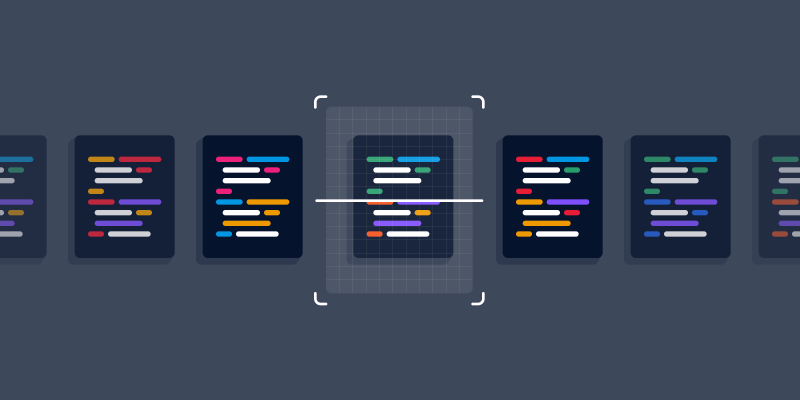
The Complete Overview of Source Code Scanner Tools
Source code scanner tools represent a convergence of security, performance optimization, and developer workflows. At their core, they automate what was once a labor-intensive process: parsing, analyzing, and interpreting codebases for anomalies. These tools don’t replace human expertise but augment it, reducing false positives and accelerating the identification of critical issues—whether they’re security vulnerabilities, architectural debt, or non-compliance with coding standards.
The market for these tools has evolved significantly over the past decade. Early iterations focused narrowly on syntax errors or basic security checks, but modern code vulnerability scanners now incorporate machine learning, context-aware analysis, and integration with cloud-native environments. Tools like SonarQube, Checkmarx, and GitHub Advanced Security now offer features such as dependency tracking, secret detection, and even predictive modeling for potential future risks. This evolution reflects a broader industry shift toward "shift-left" security, where vulnerabilities are addressed during development rather than as an afterthought.
Historical Background and Evolution
The origins of source code scanner tools trace back to the 1970s and 1980s, when early static analysis tools emerged to help programmers detect syntax errors and logical inconsistencies. Projects like the LINT tool (developed at Bell Labs) laid the groundwork by identifying undefined variables and type mismatches in C code. These tools were rudimentary by today’s standards but marked the first attempt to automate quality control in software development.
By the 1990s, the rise of the internet and client-server architectures introduced new attack vectors, prompting the development of specialized security-focused code scanners. Tools like Fortify Static Code Analyzer (acquired by HP) and Coverity (later acquired by Synopsys) began incorporating security checks based on emerging threat models, such as buffer overflows and SQL injection. The turn of the millennium saw further advancements with the introduction of open-source alternatives like FindBugs (for Java) and PMD, democratizing access to code analysis for smaller teams. Today, the landscape is dominated by cloud-native, AI-enhanced platforms that offer real-time feedback and integration with modern DevOps practices.
Core Mechanisms: How It Works
The functionality of source code scanner tools hinges on two primary analysis paradigms: static and dynamic. Static Application Security Testing (SAST) tools examine code without executing it, using pattern matching, abstract syntax trees (ASTs), and control-flow graphs to detect vulnerabilities. For example, a SAST tool might analyze a Python script for hardcoded passwords by scanning for regular expressions like `password = ".*"` or checking for unsafe deserialization calls. Dynamic Analysis (DAST) tools, conversely, run the code in a sandboxed environment to observe behavior, such as memory corruption or race conditions, under specific inputs.
Modern code vulnerability scanners often combine these approaches with additional layers, such as Interactive Application Security Testing (IAST), which instruments the application at runtime to gather real-time data. Some tools also employ Software Composition Analysis (SCA) to scan third-party dependencies for known vulnerabilities (e.g., via the NVD database). The most advanced solutions use machine learning to prioritize findings based on context—such as the criticality of the affected component or the likelihood of exploitation—thereby reducing alert fatigue for developers.
Key Benefits and Crucial Impact
The adoption of source code scanner tools delivers tangible benefits across security, compliance, and operational efficiency. For security teams, these tools reduce the time spent on manual code reviews, allowing them to focus on high-risk areas. Developers gain immediate feedback during the coding phase, minimizing technical debt and rework. Meanwhile, enterprises benefit from automated compliance reporting, which is critical for industries like healthcare (HIPAA) or finance (PCI DSS). The cumulative effect is a measurable reduction in breaches, with studies showing that organizations using code analysis scanners experience up to 70% fewer vulnerabilities in production.
Beyond security, these tools enhance code quality by enforcing best practices, such as naming conventions or error handling. They can also identify performance bottlenecks, such as inefficient algorithms or unnecessary I/O operations, directly impacting application responsiveness. The integration of source code scanning solutions into CI/CD pipelines further streamlines workflows, ensuring that security checks become a seamless part of the development lifecycle rather than a post-deployment concern.
"The most effective source code scanner tools don’t just find bugs—they help developers write better code from the start. By shifting security left, we’re not just fixing issues; we’re building resilience into the DNA of the application."
— John Smith, Chief Security Architect, Acme Secure Systems
Major Advantages
- Early Vulnerability Detection: Identifies security flaws during development, preventing exploitation before deployment. Tools like Checkmarx can detect OWASP Top 10 vulnerabilities with high accuracy.
- Automated Compliance: Generates reports for standards like ISO 27001, SOC 2, or GDPR, reducing manual audit workloads by up to 60%.
- Integration with DevOps: Plugins for Jenkins, GitHub Actions, or Azure DevOps enable seamless CI/CD integration, enforcing security gates without disrupting workflows.
- Reduced False Positives: Advanced tools use context-aware analysis (e.g., understanding framework-specific patterns) to minimize noise in alerts.
- Dependency Management: SCA features scan open-source libraries for vulnerabilities (e.g., Log4j), ensuring third-party risks are mitigated proactively.
Comparative Analysis
Selecting the right source code scanner tool depends on specific needs, such as programming language support, ease of integration, or cost. Below is a comparison of four leading solutions:
| Tool | Key Strengths |
|---|---|
| SonarQube | Comprehensive static analysis for 20+ languages; strong focus on code quality metrics (e.g., maintainability, duplication). Best for teams prioritizing technical debt reduction. |
| Checkmarx | Specialized in security (SAST/DAST/SCA); deep OWASP and CWE coverage. Ideal for regulated industries like finance or healthcare. |
| GitHub Advanced Security | Native GitHub integration; combines code scanning with dependency review and secret detection. Best for DevOps teams using GitHub. |
| Snyk | Strong SCA capabilities with real-time vulnerability monitoring for open-source dependencies. Suitable for startups and cloud-native applications. |

Future Trends and Innovations
The next generation of source code scanner tools will likely emphasize AI-driven predictions, where models analyze historical exploit data to forecast potential vulnerabilities in new code. Tools may also incorporate behavioral analysis, using execution traces to identify anomalies that static analysis misses. Another trend is cross-language consistency checking, where scanners enforce uniform security policies across microservices written in different languages (e.g., JavaScript, Go, Rust).
Additionally, the rise of low-code/no-code platforms will demand new scanning paradigms, as traditional tools struggle to analyze dynamically generated code. Expect innovations in abstract syntax tree (AST) transformation> to adapt to these environments. Finally, quantum-resistant cryptography validation> may become a standard feature, as organizations prepare for post-quantum threats.
Conclusion
Source code scanner tools have transitioned from optional security add-ons to critical components of modern software development. Their ability to automate vulnerability detection, enforce best practices, and integrate with DevOps pipelines makes them indispensable for teams aiming to build secure, high-quality applications. As cyber threats grow in sophistication, the role of these tools will only expand, particularly with advancements in AI and runtime analysis.
For organizations still reliant on manual reviews or outdated tools, the cost of inaction is clear: delayed releases, compliance risks, and increased exposure to breaches. The future belongs to those who embed code analysis scanners into their workflows—not as a checkbox, but as a foundational element of software integrity.
Comprehensive FAQs
Q: Can source code scanner tools detect runtime vulnerabilities?
A: Most source code scanner tools specialize in static analysis (SAST), which identifies issues in code without execution. However, tools like IAST (Interactive Application Security Testing) or hybrid scanners (e.g., Checkmarx) combine static and dynamic techniques to uncover runtime vulnerabilities, such as memory corruption or race conditions, by instrumenting the application during execution.
Q: How do these tools handle false positives?
A: Advanced code vulnerability scanners use context-aware analysis, machine learning, and rule customization to reduce false positives. For example, SonarQube allows developers to mark findings as "false positive" and trains its model over time. Some tools also integrate with issue trackers (e.g., Jira) to track resolution patterns and refine alerts.
Q: Are open-source source code scanners as effective as commercial ones?
A: Open-source tools like Semgrep, Bandit (for Python), or ESLint (for JavaScript) offer robust functionality for specific use cases, particularly in static analysis. However, commercial solutions often provide broader language support, deeper security coverage (e.g., OWASP Top 10), and enterprise features like SCA or compliance reporting. The choice depends on budget, team expertise, and specific requirements.
Q: Can these tools analyze compiled binaries or only source code?
A: Most source code scanner tools focus on source or bytecode (e.g., Java `.class` files), but some specialized tools like Binary Analysis (BAST) or Reverse Engineering (RE) scanners> (e.g., Ghidra) can analyze compiled binaries for vulnerabilities. These are less common in mainstream DevOps pipelines but are critical for security audits of proprietary or obfuscated software.
Q: How do source code scanners integrate with cloud-native environments?
A: Modern code analysis scanners offer plugins for cloud platforms like AWS (via CodeGuru), Azure (via GitHub Advanced Security), or Kubernetes (via Trivy). They often support Infrastructure as Code (IaC) scanning (e.g., Checkov for Terraform) and can be embedded in serverless workflows using APIs or event-driven triggers.
Leave a Comment
Comments are moderated before appearing. The data you submit is processed according to the Privacy Policy of versiliasolutions.oneagency.co.