
Unlocking the Science: What Does Allotrope Meaning Reveal About Matter’s Hidden Forms?
What binds these disparate forms is a precise scientific framework: the allotrope meaning hinges on how atoms of the same element bond in three-dimensional...
Tag
What binds these disparate forms is a precise scientific framework: the allotrope meaning hinges on how atoms of the same element bond in three-dimensional...

Yet this rule isn’t arbitrary. It emerged from a century of experimental rigor, where scientists like Mendeleev and later Rutherford pieced together the puzzle...

Where chemistry meets everyday life, the definition of unsaturated takes on practical weight. Consider cooking oils: the "healthy" monounsaturated and...

What makes these elements so relentlessly reactive? It’s not just their position on the table but their atomic structure: a near-insatiable hunger for...

At first glance, the answer seems straightforward: as you move left to right across a period, atoms get smaller. But the why demands a deeper dive into quantum...

The periodic table isn’t just a map of elements—it’s a blueprint of atomic behavior, where patterns dictate how elements bond, react, and define the very...

The atomic nucleus is a realm of precise measurements, where even the tiniest deviation in mass can reveal fundamental truths about matter. Understanding how...

Chemistry often presents questions that seem simple on the surface but reveal profound complexity upon closer examination. Few concepts spark as much initial...

What makes this principle so enduring is its counterintuitive elegance. Most people assume mass can disappear—think of smoke rising from a fire or a balloon...

The mg molar mass isn’t merely an academic curiosity—it’s a variable that influences everything from battery technology (where magnesium alloys reduce weight)...

At its core, the molar mass of H₂ (approximately 2.016 g/mol) reflects the sum of atomic masses of two hydrogen atoms, each adjusted for their natural isotopic...

The balance between atoms isn’t just a theoretical curiosity—it’s the foundation of how substances behave. A single shift in molecular weight can transform a...
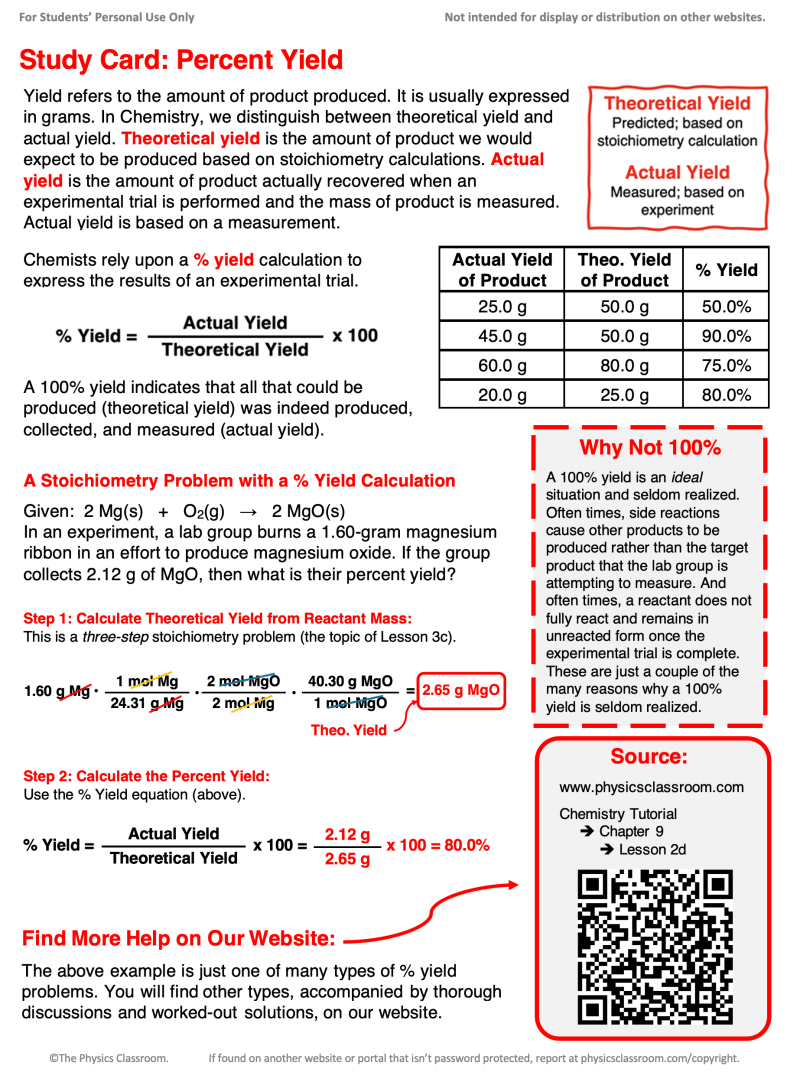
The term "percent yield in chemistry" encapsulates efficiency, a silent arbiter in laboratories where margins matter. A 95% yield might seem acceptable in bulk...

Yet the "vigor of T" in this context isn’t just about temperature or time; it’s the tension between these elements, the irresistible pull of nature’s balance...

The consequences of these elements’ electronegativity are everywhere. Fluorine’s voracious appetite for electrons makes it the linchpin of nonstick coatings...

The periodic table is a map of elemental behavior, where each atom’s identity shapes the world around us. At the heart of this behavior lies a fundamental...

At its core, the periodic table is a mathematical framework disguised as a visual tool. It organizes 118 elements by increasing atomic number (Z), but the real...

At first glance, one might assume that adding electrons to an atom would simply expand its electron cloud, like layers of an onion. But reality is far more...

At first glance, the periodic table seems arbitrary—a grid of symbols with little apparent connection. Yet beneath the surface, a fundamental principle governs...
At the heart of the question why does atomic radius decrease across a period lies a fundamental tension: as you move from sodium to chlorine, each new element...