
Why Are Daughter Cells in Meiosis Never Identical—and What Does It Mean?
The question cuts to the heart of heredity: why would nature design a system where offspring differ from parents and from each other? The answer lies in...
Tag
The question cuts to the heart of heredity: why would nature design a system where offspring differ from parents and from each other? The answer lies in...

At first glance, the idea of identical daughter cells might seem plausible, given that meiosis reduces chromosome number by half. Yet, the reality is far more...

The misconception that meiosis yields identical daughter cells persists even among educated audiences, often conflating it with mitosis. However, the very...
At first glance, the question seems to contradict basic genetic principles. If crossing over were absent, wouldn’t daughter cells mirror their parent’s DNA?...

The term chromosome itself carries a history as rich as the structures it names. Derived from the Greek chroma (color) and soma (body), chromosomes earned...

At its core, meiosis is a two-stage process that reduces chromosome number by half while shuffling genetic material through recombination and independent...
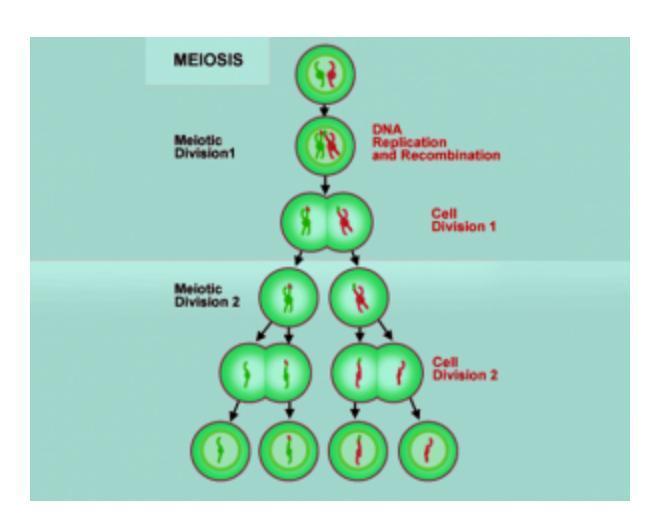
The moment a parent cell begins meiosis, it embarks on a journey unlike any other in biology. Unlike mitosis, where daughter cells inherit an identical genetic...
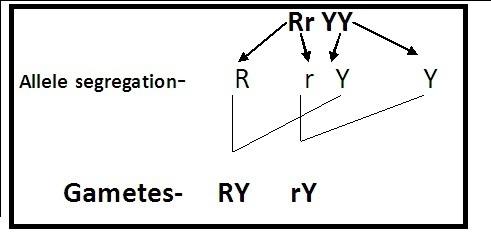
The answer to how many alleles in a gamete is not merely a number but a gateway to understanding genetic disorders, evolutionary adaptation, and even forensic...

Chromosomes are the unsung heroes of biology, the tightly coiled threads of DNA that carry the instructions for nearly every trait, from eye color to disease...

Yet for all its importance, meiosis remains misunderstood. Many conflate it with mitosis, overlooking its unique mechanics: homologous recombination...

The moment two homologous chromosomes align during meiosis, the cell’s machinery prepares for one of biology’s most precise dances: crossover. This isn’t mere...

At first glance, the answer might seem obvious—fertilization clearly combines two complete sets of chromosomes. Yet crossing over, though occurring earlier in...

This limitation isn’t arbitrary; it’s a direct consequence of chromosomal architecture. Imagine two genes sitting side by side on a DNA strand. If they were...