Unlocking the Mystery: How Many Alleles in a Gamete and Why It Matters
Table of Contents
- The Complete Overview of How Many Alleles in a Gamete
- Historical Background and Evolution
- Core Mechanisms: How It Works
- Key Benefits and Crucial Impact
- Major Advantages
- Comparative Analysis
- Future Trends and Innovations
- Conclusion
- Comprehensive FAQs
- Q: Why does a gamete have only one allele per gene instead of two?
- Q: Can a gamete ever have more than one allele for a gene?
- Q: How does the one-allele rule apply to genes on the X and Y chromosomes?
- Q: Does the number of alleles in a gamete change if the organism is polyploid (e.g., some plants with 4n or 6n cells)? A: In polyploid organisms, somatic cells contain multiple sets of chromosomes (e.g., 4n = four alleles per gene). During meiosis, homologous chromosomes still pair and separate, but the process is more complex. For example, a tetraploid (4n) plant might produce gametes with two alleles per gene (2n), as homologous pairs segregate in a way that reduces the ploidy by half. Thus, the "one allele" rule generalizes to haploidy, but the baseline changes with ploidy level. Q: How do mutations in gametes affect the allele count?
- Q: Are there exceptions to the one-allele-per-gamete rule in nature?
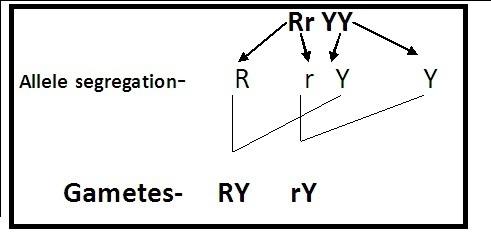
The question of how many alleles in a gamete cuts to the heart of heredity. At its core, it reveals why siblings share traits with parents yet differ from one another—an enigma that has puzzled biologists since Gregor Mendel’s pea experiments. A gamete, whether sperm or egg, is not a random genetic throw but a precise product of meiosis, a cellular dance where chromosomes split and recombine. This process ensures that each gamete carries exactly one allele for every gene, a fact that underpins the predictability of inheritance patterns while allowing for staggering genetic diversity.
The answer to how many alleles in a gamete is not merely a number but a gateway to understanding genetic disorders, evolutionary adaptation, and even forensic science. Take cystic fibrosis, for instance: a recessive allele must pair with another to manifest the disease, yet each parent contributes only one allele to their offspring. This one-allele rule explains why carriers—individuals with one normal and one defective allele—can pass the condition silently for generations. The implications ripple across medicine, agriculture, and conservation biology, where allele counts dictate breeding strategies for disease resistance or endangered species recovery.
What makes this question compelling is its dual nature: it is both a fundamental biological truth and a practical tool. Farmers selecting for drought-resistant crops rely on knowing how many alleles in a gamete to predict trait inheritance. Clinicians use allele counts to assess risk for autosomal recessive disorders. Even in forensic genetics, the principle helps reconstruct familial relationships from DNA evidence. Yet beneath these applications lies a deeper truth: the gamete’s allele count is a testament to nature’s efficiency, balancing stability with variation to sustain life’s complexity.
The Complete Overview of How Many Alleles in a Gamete
The answer to how many alleles in a gamete is one allele per gene. This is not an arbitrary rule but a consequence of meiosis, the specialized cell division that produces haploid gametes from diploid somatic cells. In humans, diploid cells contain two sets of chromosomes (one from each parent), meaning each gene has two alleles—one maternal and one paternal. During meiosis, homologous chromosomes separate, ensuring each gamete receives only one chromosome from each pair. Thus, for every gene, the gamete inherits exactly one allele, whether dominant, recessive, or co-dominant.This one-allele-per-gene principle is the foundation of Mendel’s laws, particularly the Law of Segregation, which states that allele pairs separate during gamete formation. The implication is profound: when two gametes fuse during fertilization, the zygote regains diploidy, restoring two alleles per gene. This cycle—reduction to haploidy in gametes, restoration in zygotes—ensures genetic continuity while enabling recombination. The result? A mechanism so elegant that it has remained virtually unchanged across millions of years of evolution, from yeast to humans.
Historical Background and Evolution
The question of how many alleles in a gamete was implicitly answered by Gregor Mendel’s 1866 experiments with pea plants, though he did not use the term "allele." Mendel observed that traits like flower color segregated in predictable ratios (e.g., 3:1 for dominant traits), which he attributed to "factors" (now alleles) that paired and separated during reproduction. His work lay dormant until 1900, when Hugo de Vries, Carl Correns, and Erich von Tschermak independently rediscovered it, sparking the field of genetics.The term "allele" was coined in 1909 by Wilhelm Johannsen, who distinguished between genes (the hereditary units) and their alternative forms (alleles). By the 1930s, the chromosomal theory of inheritance—proposed by Thomas Hunt Morgan—linked Mendel’s factors to physical chromosomes, confirming that alleles occupy specific loci. This framework explained how many alleles in a gamete by showing that meiosis’s reductional division ensures haploidy. The discovery of DNA’s double-helix structure in 1953 further cemented the molecular basis of alleles, revealing how genetic variation arises from mutations, crossovers, and independent assortment during meiosis.
Core Mechanisms: How It Works
The answer to how many alleles in a gamete emerges from meiosis’s two critical phases: meiosis I (reductional division) and meiosis II (equational division). In meiosis I, homologous chromosomes pair up and separate, reducing the chromosome number by half. This ensures that each daughter cell (and thus each gamete) receives only one chromosome from each homologous pair. For a gene located on chromosome 1, for example, the gamete will carry either the maternal or paternal allele—but never both.Meiosis II further refines this process by separating sister chromatids, though the allele count remains unchanged because each chromatid is genetically identical (barring rare recombination errors). The net result is a gamete with a haploid chromosome number (n), where each gene is represented by a single allele. This haploidy is essential for sexual reproduction: when two gametes fuse, their alleles combine to restore diploidy (2n) in the zygote, allowing the next generation to inherit two alleles per gene once more.
Key Benefits and Crucial Impact
Understanding how many alleles in a gamete is more than academic—it is a practical lens through which to view inheritance, disease, and evolution. In medicine, this principle underpins genetic counseling, where clinicians calculate the probability of recessive disorders (e.g., Tay-Sachs disease) based on parental allele combinations. For example, two carriers (each with one recessive allele) have a 25% chance of producing an affected child, a risk that stems directly from the gamete’s single-allele contribution.In agriculture, breeders leverage this knowledge to fix desirable traits. If a crop variety exhibits resistance to a pest, selecting plants homozygous for the resistance allele ensures that all gametes carry the same allele, guaranteeing the trait in offspring. Conversely, heterozygosity (two different alleles) introduces variability, which can be exploited in hybrid vigor programs. The allele count in gametes thus becomes a tool for shaping the future of species, from livestock to laboratory mice.
"Genetics is the only field where the laws of probability are not just theoretical—they are written into the fabric of life itself. The gamete’s single allele is the first step in a chain of events that determines whether a trait will flourish or fade across generations."
— Francis Crick, Co-discoverer of DNA’s Structure
Major Advantages
- Predictability in Inheritance: Knowing how many alleles in a gamete allows for accurate Punnett square predictions, crucial in breeding programs and medical genetics.
- Disease Risk Assessment: For recessive disorders, allele counts in gametes enable carriers to estimate their offspring’s risk, empowering informed reproductive choices.
- Genetic Diversity: The random assortment of alleles during meiosis ensures that each gamete is unique, fostering adaptation and resilience in populations.
- Forensic Applications: Allele inheritance patterns help reconstruct familial relationships in DNA profiling, solving cold cases by tracing genetic lineages.
- Evolutionary Insight: The one-allele-per-gamete rule explains how new combinations of alleles arise, driving natural selection and speciation over time.
Comparative Analysis
| Feature | Diploid Somatic Cell (2n) | Haploid Gamete (n) |
|---|---|---|
| Allele Count per Gene | Two (one maternal, one paternal) | One (randomly selected during meiosis) |
| Chromosome Number | 46 in humans (23 pairs) | 23 in humans (one of each pair) |
| Mechanism Ensuring Count | Mitosis (chromosome duplication) | Meiosis I (homologous separation) |
| Genetic Variation Source | None (identical to parent cell) | Crossing over, independent assortment, random fertilization |

Future Trends and Innovations
Advances in genomics are refining our understanding of how many alleles in a gamete beyond the binary of one or two. Techniques like CRISPR-Cas9 now allow precise editing of alleles in gametes, raising ethical debates about "designer babies" and germline modifications. Meanwhile, single-cell sequencing is revealing mosaicism—where gametes carry unexpected allele combinations due to post-zygotic mutations. This challenges the traditional view that gametes are genetically uniform, suggesting that allele counts may vary in rare cases.The field is also exploring epigenetic inheritance, where chemical modifications to DNA (not changes in allele sequence) can be passed through gametes. If these modifications persist across generations, they could introduce a new layer to the question of how many alleles in a gamete—not just in terms of DNA sequence but also in regulatory "alleles" that influence gene expression. As these technologies mature, the distinction between genetic and epigenetic inheritance may blur, redefining how we teach and apply the principles of gamete allele counts.
Conclusion
The answer to how many alleles in a gamete—one per gene—is a cornerstone of biology, bridging the gap between molecular genetics and observable traits. It explains why a blue-eyed parent can have brown-eyed children, why some diseases skip generations, and how life’s diversity persists despite genetic constraints. Yet this simplicity belies its power: the single allele in a gamete is the raw material for evolution, the first domino in a chain that shapes every living organism.As research progresses, the question may evolve from a static answer to a dynamic exploration of genetic and epigenetic inheritance. But at its heart, the principle remains unchanged: meiosis ensures that each gamete carries exactly one allele for every gene, a rule as old as life itself and as vital as the reproduction it governs.
Comprehensive FAQs
Q: Why does a gamete have only one allele per gene instead of two?
A: Gametes are haploid (n), meaning they contain half the chromosome number of diploid (2n) somatic cells. During meiosis I, homologous chromosomes separate, ensuring each gamete inherits only one chromosome from each pair—and thus one allele per gene. This reduction to haploidy is essential for sexual reproduction, as the fusion of two haploid gametes restores diploidy in the zygote.
Q: Can a gamete ever have more than one allele for a gene?
A: No, under normal circumstances, a gamete will always carry exactly one allele per gene due to meiosis’s reductional division. However, rare errors like nondisjunction (where homologous chromosomes fail to separate) can result in gametes with an extra chromosome (e.g., trisomy 21 in Down syndrome), but this affects entire chromosomes, not individual alleles.
Q: How does the one-allele rule apply to genes on the X and Y chromosomes?
A: In males (XY), the Y chromosome carries few genes, so most X-linked genes have only one allele in sperm (the X chromosome). Females (XX) produce gametes with either the maternal or paternal X, but since both are X chromosomes, the allele count remains one per gene. This explains why X-linked recessive disorders (e.g., color blindness) are more common in males, who lack a second X to compensate.
Q: Does the number of alleles in a gamete change if the organism is polyploid (e.g., some plants with 4n or 6n cells)?
A: In polyploid organisms, somatic cells contain multiple sets of chromosomes (e.g., 4n = four alleles per gene). During meiosis, homologous chromosomes still pair and separate, but the process is more complex. For example, a tetraploid (4n) plant might produce gametes with two alleles per gene (2n), as homologous pairs segregate in a way that reduces the ploidy by half. Thus, the "one allele" rule generalizes to haploidy, but the baseline changes with ploidy level.
Q: How do mutations in gametes affect the allele count?
A: Mutations alter the DNA sequence of an allele but do not change the fact that a gamete carries one allele per gene. However, if a mutation occurs in a gamete or early embryo, it can create a new allele that may be passed to offspring. The allele count remains one per gene, but the variant itself becomes part of the genetic diversity pool.
Q: Are there exceptions to the one-allele-per-gamete rule in nature?
A: The rule holds true for sexual reproduction in most eukaryotes, but some organisms exhibit apomixis (asexual reproduction via seeds or spores), where gametes may not undergo meiosis and thus retain diploidy. In these cases, "gametes" can carry two alleles per gene, though this is not true sexual reproduction. Additionally, some bacteria and archaea use horizontal gene transfer, bypassing gamete formation entirely.
Leave a Comment
Comments are moderated before appearing. The data you submit is processed according to the Privacy Policy of versiliasolutions.oneagency.co.