
Why Are Daughter Cells in Meiosis Never Identical—and What Does It Mean?
The question cuts to the heart of heredity: why would nature design a system where offspring differ from parents and from each other? The answer lies in...
Tag
The question cuts to the heart of heredity: why would nature design a system where offspring differ from parents and from each other? The answer lies in...

At first glance, the idea of identical daughter cells might seem plausible, given that meiosis reduces chromosome number by half. Yet, the reality is far more...

The misconception that meiosis yields identical daughter cells persists even among educated audiences, often conflating it with mitosis. However, the very...
At first glance, the question seems to contradict basic genetic principles. If crossing over were absent, wouldn’t daughter cells mirror their parent’s DNA?...

At its core, biological incompatibility isn’t just about fertility statistics or age-related decline; it’s about the silent wars waged between sperm and egg...

At its core, meiosis is a two-stage process that reduces chromosome number by half while shuffling genetic material through recombination and independent...

Unfertilized eggs—whether laid by chickens, fish, or amphibians—serve as nature’s survival strategy, a reserve of nutrients and genetic material waiting for...

What separates a fertilized egg from an infertile one, in the hen’s mind, is less about direct knowledge and more about the absence of expected outcomes. A...

Clinical studies confirm that hCG appears in urine or blood only after a fertilized embryo attaches to the uterine lining, a process that doesn’t align with...

The egg’s journey begins long before ovulation. Inside the ovaries, primordial follicles—each containing a single egg—lie dormant for years, waiting for the...
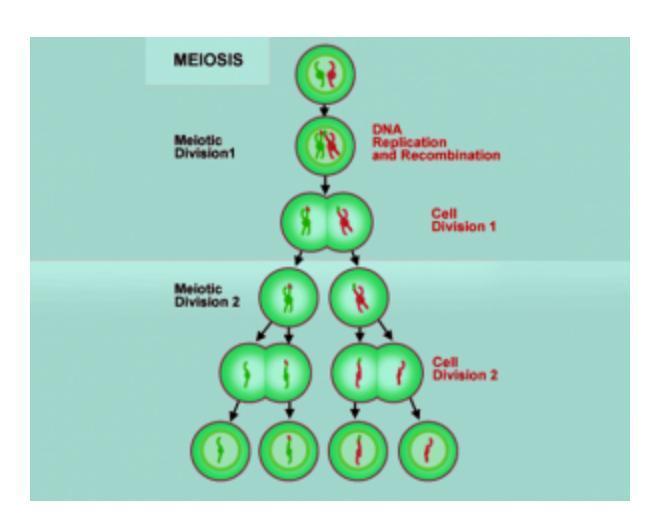
The moment a parent cell begins meiosis, it embarks on a journey unlike any other in biology. Unlike mitosis, where daughter cells inherit an identical genetic...

The moment an egg meets sperm, the body doesn’t announce it with fanfare. Instead, fertilization triggers a cascade of microscopic events—some visible only...
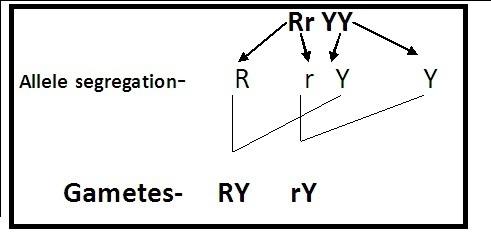
The answer to how many alleles in a gamete is not merely a number but a gateway to understanding genetic disorders, evolutionary adaptation, and even forensic...

The idea that women are born with a lifetime supply of eggs—yet only a fraction will ever mature—challenges conventional notions of abundance. Unlike sperm...

Yet the conversation around how many eggs does a woman have at 40 is rarely separated from misinformation. Many assume egg count is a fixed number, like a bank...

This singularity of egg release is a marvel of biological efficiency. Unlike males, who produce millions of sperm daily, females are born with a finite number...

The stigma surrounding menstruation persists even in modern discourse, where conversations about menstrual cycle length are frequently reduced to vague...

Yet, despite its fundamental role, the ova cell remains shrouded in mystery for many. Misconceptions persist about its lifespan, quality, and the factors that...

Yet beyond its role in reproduction, the ova egg cell is a marvel of cellular engineering. It is the largest human cell, designed to nourish and protect the...

Yet, despite their ubiquity, the ovum’s role is frequently misunderstood. It is not merely a passive recipient of sperm but an active participant in...