Every process—whether brewing tea, assembling machinery, or writing a report—relies on precision. The difference between a confusing manual and a crystal-clear...
The first time a developer encountered a line of code reduced to a single dot—no brackets, no semicolons, just a punctuation mark bridging disparate...
Yet, many writers treat definitions as an afterthought, rushing through them with vague phrasing or relying on dictionary entries that lack contextual...
The stakes are higher than most realize. In pharmaceuticals, a miswritten dosage could alter treatment outcomes. In engineering, a misaligned unit might...
Consider the rise of "just-in-time" inventory systems in the 1970s. Before Toyota’s lean manufacturing principles, English lacked precise terms for real-time...
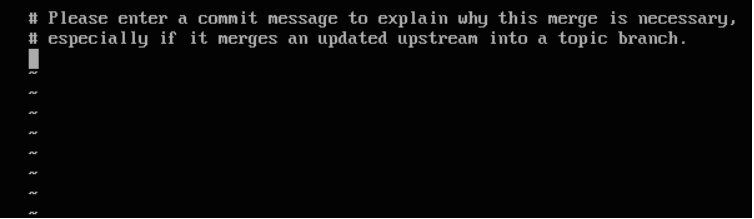
The pressure to document why a merge was made—whether it’s a critical bug fix, a breaking API change, or an experimental feature—isn’t just about compliance...
Technical terms often feel like a foreign language—packed with precision yet devoid of context. A developer might casually toss out "latency," assuming you...
The challenge lies in balancing accuracy with readability. A poorly constructed sentence—like "The compound exhibits high reactivity due to its unstable...
Behind every request for "in a markdown table" or "as a JSON object" lies a fundamental question: What is the primary reason for specifying the output format...
The ocean’s rhythm is a language of its own—one where every breaking wave traduzione carries meaning beyond the surface. Whether in poetry, maritime folklore...
In Italian aviation circles, "dato di volare" (the closest literal translation) carries connotations of being authorized or cleared to fly, but the English...