The Hidden Art of Please Enter a Commit Message in Software Development
Table of Contents
- The Complete Overview of "Please Enter a Commit Message to Explain Why This Merge Is Necessary"
- Historical Background and Evolution
- Core Mechanisms: How It Works
- Key Benefits and Crucial Impact
- Major Advantages
- Comparative Analysis
- Future Trends and Innovations
- Conclusion
- Comprehensive FAQs
- Q: What happens if I skip the commit message entirely?
- Q: How long should a commit message be?
- Q: Can AI generate commit messages for me?
- Q: What if I don’t know why a merge was necessary?
- Q: How do commit messages improve security?
- Q: Are there tools to enforce better commit messages?
- Q: What’s the difference between a commit message and a pull request description?
Software development thrives on precision, yet the most overlooked ritual—the commit message—often becomes the weakest link in a team’s workflow. When a developer is prompted to "please enter a commit message to explain why this merge is necessary," it’s not just a formality; it’s a critical checkpoint where technical intent meets human collaboration. The message serves as a timestamped explanation, a historical marker, and a communication bridge between past and future contributors. Without it, merges risk becoming cryptic snapshots of code changes, leaving teams to reverse-engineer intent from diffs and debug sessions.
The pressure to document why a merge was made—whether it’s a critical bug fix, a breaking API change, or an experimental feature—isn’t just about compliance. It’s about future-proofing the codebase. A well-crafted explanation reduces cognitive load for reviewers, accelerates onboarding for new hires, and minimizes the "why did we do this?" debates that derail sprints. Yet, many teams treat commit messages as an afterthought, defaulting to vague placeholders like "fix bug" or "update dependencies"—messages that fail to answer the fundamental question: What problem did this merge solve, and why was it the right solution?
The stakes are higher than ever. With distributed teams, open-source contributions, and CI/CD pipelines automating deployments, every commit message becomes part of the project’s institutional memory. Ignoring this practice isn’t just sloppy—it’s a systemic risk. The message isn’t just metadata; it’s the narrative thread that holds together a project’s evolution.
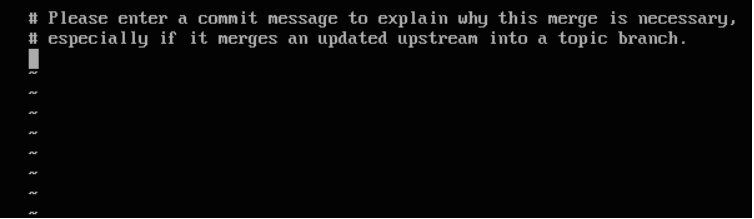
The Complete Overview of "Please Enter a Commit Message to Explain Why This Merge Is Necessary"
At its core, the prompt "please enter a commit message to explain why this merge is necessary" is a safeguard against technical debt and miscommunication. It forces developers to pause and articulate the purpose behind their changes—not just the changes themselves. This discipline is particularly vital in collaborative environments where multiple engineers, designers, and product managers interact with the same codebase. Without clear documentation at the point of change, merges become black boxes: the output is visible, but the reasoning remains obscured.The practice traces back to the early days of version control systems, where commit messages were the primary means of tracking progress. Modern tools like Git have elevated this to a structured process, but the principle remains unchanged: every merge should leave behind a traceable explanation. This isn’t just about debugging—it’s about preserving the intent behind decisions, which is often more valuable than the code itself.
Historical Background and Evolution
The concept of commit messages predates Git, emerging in earlier version control systems like CVS and Subversion. In those systems, messages were often terse and functional, serving as little more than timestamps for changes. However, as projects grew in complexity, the need for richer context became apparent. Git, introduced in 2005, formalized this practice by making commit messages a first-class citizen in its workflow. Linus Torvalds, Git’s creator, famously emphasized that "good commit messages are like good prose"—clear, concise, and structured to convey meaning efficiently.Over time, communities like the Linux kernel and open-source projects refined commit message conventions. The 50/72 rule (50 characters for the subject line, 72 for the body) became a standard, ensuring messages were both scannable and detailed. Today, the prompt "please enter a commit message to explain why this merge is necessary" isn’t just a technical requirement—it’s a cultural norm in modern development.
Core Mechanisms: How It Works
When a developer initiates a merge in Git, the system pauses to collect a commit message before finalizing the change. This message is stored in the repository’s history, linked to the specific commit hash. The structure of a well-formed message typically includes:1. A concise subject line (e.g., "Fix race condition in user authentication").
2. A detailed body explaining the why (e.g., "Thread safety issue caused by concurrent access to session store. Resolved by implementing mutex locks.").
3. Optional metadata (e.g., related tickets, references to design docs).
The system enforces this through hooks or pre-commit checks, ensuring no merge proceeds without an explanation. This mechanism isn’t just about compliance—it’s a feedback loop. Poorly written messages trigger discussions, forcing teams to refine their communication practices over time.
Key Benefits and Crucial Impact
The discipline of explaining merges through commit messages transforms a technical process into a collaborative one. It reduces the time spent deciphering past decisions, minimizes rework from misunderstood changes, and fosters a culture of accountability. In high-velocity environments like startups or open-source projects, where iterations are rapid, this practice acts as a force multiplier—accelerating onboarding, improving code reviews, and even surfacing design flaws early.The impact extends beyond the codebase. Well-documented merges create a knowledge base that outlives individual contributors. When a senior engineer leaves, the commit history becomes the institutional memory, ensuring continuity. Conversely, neglected messages lead to "knowledge silos," where critical context is lost, and future changes become riskier.
"A commit message is the difference between a project that scales and one that collapses under its own complexity." — Martin Fowler, Chief Scientist at ThoughtWorks
Major Advantages
- Reduces Debugging Time: Clear messages help teams quickly identify the root cause of issues, cutting down on speculative fixes.
- Improves Code Reviews: Reviewers can focus on the logic of changes rather than reverse-engineering intent from diffs.
- Enhances Onboarding: New hires can trace the evolution of features, understanding why decisions were made without asking senior team members.
- Mitigates Technical Debt: Explicit explanations reduce the likelihood of poorly justified changes being merged, as peers can challenge unclear reasoning.
- Supports Compliance & Auditing: In regulated industries (e.g., finance, healthcare), commit messages provide a verifiable trail of changes, crucial for audits.
Comparative Analysis
| Poor Commit Messages | Well-Structured Messages |
|---|---|
Example: *"Fix bug" Issues: No context, no problem description, no solution details. |
Example: *"Fix memory leak in PDF generator: replaced temporary file handling with stream processing to prevent file descriptor exhaustion (Issue #42)." Benefits: Clear problem, solution, and reference to tracking issue. |
Impact: Future developers must manually trace the bug, increasing cognitive load. |
Impact: Immediate understanding of the fix’s scope and rationale. |
Review Overhead: High (requires follow-up questions). |
Review Overhead: Low (self-documenting). |
Long-Term Risk: Knowledge loss, repeated bugs, slower iterations. |
Long-Term Risk: Reduced technical debt, faster iterations, scalable collaboration. |

Future Trends and Innovations
As AI integrates into development workflows, commit messages may evolve beyond text-based explanations. Tools like GitHub Copilot could auto-generate draft messages based on code changes, but the human touch will remain essential—AI can’t replicate the nuance of a developer’s reasoning. Meanwhile, stricter enforcement mechanisms (e.g., mandatory message templates in CI pipelines) will push teams toward consistency.The rise of "explainable AI" in software might also influence how merges are documented. Future systems could require commit messages to include not just what changed but why the change aligns with broader system goals—effectively turning every merge into a mini-architecture decision record (ADR).
Conclusion
The prompt "please enter a commit message to explain why this merge is necessary" is more than a technical formality—it’s a cornerstone of maintainable, collaborative software development. Neglecting it risks turning codebases into unreadable tangles of undocumented changes, while embracing it fosters transparency, accountability, and scalability. In an era where software is the backbone of nearly every industry, the discipline of clear commit messages isn’t just good practice—it’s a competitive advantage.Teams that treat commit messages as an afterthought will find themselves bogged down by technical debt, while those that master the art of explanation will build systems that evolve seamlessly—regardless of who joins or leaves the team.
Comprehensive FAQs
Q: What happens if I skip the commit message entirely?
A: Most Git configurations will block the merge until a message is provided. Even if bypassed, the commit will lack context, making future debugging and reviews far more difficult. Some teams enforce this via pre-commit hooks, ensuring no merge proceeds without documentation.
Q: How long should a commit message be?
A: Follow the 50/72 rule: the subject line should be ≤50 characters, and the body ≤72. If the change is complex, use a multi-paragraph body, but avoid wall-of-text messages. Prioritize clarity over verbosity—future readers should grasp the why in seconds.
Q: Can AI generate commit messages for me?
A: Yes, but with caveats. AI tools like GitHub Copilot can draft messages based on code changes, but they lack domain-specific context (e.g., business rules, team conventions). Always review and refine AI-generated messages to ensure accuracy and alignment with your team’s standards.
Q: What if I don’t know why a merge was necessary?
A: This is a red flag. Before merging, clarify the purpose with the original developer or stakeholder. A vague commit message ("update for compliance") is worse than none—it invites confusion. If unsure, default to asking: "What problem does this solve, and how was the solution validated?"
Q: How do commit messages improve security?
A: Detailed messages help audit trails by documenting who made changes, when, and why. In regulated industries, this is critical for compliance (e.g., GDPR, HIPAA). Poorly documented changes can obscure security risks, while explicit messages make anomalies easier to detect during code reviews.
Q: Are there tools to enforce better commit messages?
A: Yes. Tools like commitlint enforce message conventions (e.g., requiring imperative mood, limiting length). CI pipelines can also block pushes with invalid messages. Some teams use custom scripts to scan commit histories for vague messages and flag them in pull requests.
Q: What’s the difference between a commit message and a pull request description?
A: A commit message explains what changed and why at the granular level (per commit), while a PR description provides broader context (e.g., goals, trade-offs, related issues). Both are essential—commit messages are the atomic documentation of changes, and PR descriptions tie them to the bigger picture.
Leave a Comment
Comments are moderated before appearing. The data you submit is processed according to the Privacy Policy of versiliasolutions.oneagency.co.