The Definitive Blueprint for Building an API Platform in 2024
Table of Contents
- The Complete Overview of How to Build an API Platform
- Historical Background and Evolution
- Core Mechanisms: How It Works
- Key Benefits and Crucial Impact
- Major Advantages
- Comparative Analysis
- Future Trends and Innovations
- Conclusion
- Comprehensive FAQs
- Q: What’s the first step in building an API platform?
- Q: Should I use REST, GraphQL, or something else?
- Q: How do I handle API versioning?
- Q: What security measures are essential?
- Q: How can I monitor and optimize performance?
- Q: Can I monetize an internal API?
APIs are the invisible infrastructure of the digital economy—powering everything from mobile apps to enterprise SaaS. Yet most developers treat them as an afterthought, bolting them onto existing systems rather than designing them as first-class platforms. This approach leads to technical debt, performance bottlenecks, and security vulnerabilities that haunt products for years. The difference between a fragile API and a production-grade platform often comes down to intentional design choices made early in the process.
Consider Stripe’s API: a single endpoint handles billions of transactions annually with sub-100ms latency. Behind the scenes, it’s not just a collection of functions—it’s a meticulously orchestrated system with rate limiting, circuit breakers, and real-time analytics baked into its DNA. Replicating this level of reliability requires understanding how to build an API platform that scales with demand while maintaining consistency across distributed systems. The tools exist, but the methodology doesn’t.
Many teams start with REST or GraphQL endpoints, only to realize too late that their "API" is actually a monolith disguised as a service. The shift from ad-hoc integration to a true API platform demands a rethinking of architecture, tooling, and operational practices. This guide cuts through the hype to focus on the concrete steps—from defining your API’s purpose to deploying it at scale—that separate hobby projects from enterprise-grade systems.
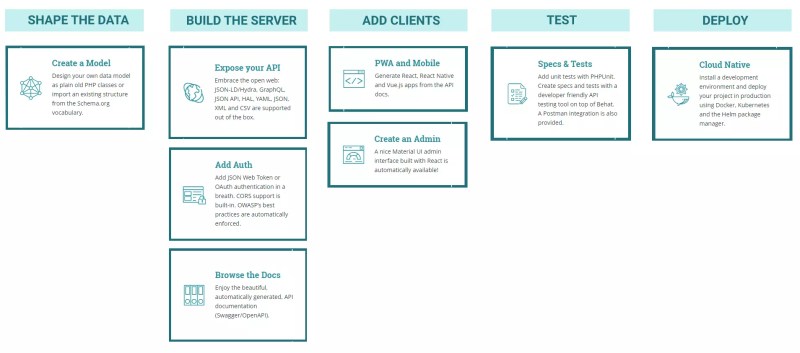
The Complete Overview of How to Build an API Platform
Building an API platform is fundamentally about creating a self-contained system that abstracts business logic into reusable, secure, and scalable endpoints. Unlike traditional backend services, an API platform must anticipate growth in both traffic and functionality, which requires upfront decisions about versioning, documentation, and governance. The process begins with a clear definition of the platform’s scope: Will it serve internal teams, third-party developers, or both? The answer dictates everything from authentication strategies to rate limiting policies.
Architecturally, modern API platforms often adopt a layered approach—separating concerns between the API gateway (handling routing and security), business logic layer (core functionality), and data access layer (databases or external services). This separation isn’t just theoretical; it directly impacts maintainability. For example, a poorly designed API gateway can become a single point of failure when traffic spikes, while a modular business layer allows individual services to scale independently. The key insight is that an API platform isn’t just code; it’s a product with its own lifecycle, requiring versioning, deprecation policies, and even a support ecosystem for consumers.
Historical Background and Evolution
The concept of APIs predates the term "platform," tracing back to early Unix interprocess communication (IPC) mechanisms in the 1970s. However, the modern API economy emerged in the 2000s with companies like Amazon (2002) and eBay (2000) exposing their internal systems to developers. These early APIs were often undocumented, poorly versioned, and treated as secondary to the main product. The shift toward API-first design came later, driven by the rise of mobile apps and the need for lightweight, standardized interfaces.
Today, the evolution of how to build an API platform is defined by three major paradigms: REST (resource-oriented), GraphQL (query flexibility), and asynchronous event-driven architectures (like WebSockets or Kafka). REST remains dominant due to its simplicity, but GraphQL’s ability to reduce over-fetching has made it popular for complex frontends. Meanwhile, event-driven APIs (e.g., Twilio’s real-time messaging) are gaining traction for stateful applications. The choice between these models isn’t just technical—it reflects the platform’s intended use case. For instance, a financial API handling high-frequency trades would prioritize low latency over flexibility, whereas a content management system might favor GraphQL’s granular data control.
Core Mechanisms: How It Works
At its core, an API platform operates through a series of well-defined contracts between producers (the API) and consumers (clients). These contracts specify endpoints, request/response formats (often JSON or XML), authentication methods (OAuth 2.0, API keys), and rate limits. The physical implementation typically involves an API gateway (e.g., Kong, Apigee) that handles routing, load balancing, and security policies before forwarding requests to backend services. Behind the scenes, these services might interact with databases, third-party APIs, or serverless functions, but the gateway ensures a consistent interface.
Performance and reliability hinge on two critical mechanisms: caching and observability. Caching (via Redis or CDNs) reduces latency for repeated requests, while observability tools (Prometheus, Grafana) provide real-time metrics on response times, error rates, and traffic patterns. For example, Netflix’s API platform uses edge caching to serve static content globally, while their internal APIs rely on circuit breakers to fail gracefully during outages. The lesson here is that how to build an API platform isn’t just about writing endpoints—it’s about designing for failure and optimizing for the 99th percentile of user experience.
Key Benefits and Crucial Impact
An API platform transforms a company’s technical capabilities from a cost center into a revenue driver. By abstracting core functionality into reusable services, businesses can accelerate product development, reduce duplication, and monetize access to their data (as seen with Twitter’s API or Salesforce’s ecosystem). The impact extends beyond internal efficiency: well-designed APIs attract third-party developers, creating a network effect that amplifies a product’s reach. For instance, Uber’s API enabled a marketplace of logistics partners, while Shopify’s API turned merchants into developers.
However, the benefits are conditional. A poorly designed API platform can become a technical debt sinkhole, requiring constant refactoring as usage grows. The difference lies in treating the API as a product—with versioning, backward compatibility guarantees, and a clear deprecation policy. Companies like Google and Microsoft invest heavily in API documentation and SDKs because they understand that developer experience directly correlates with adoption rates. The goal isn’t just to expose functionality but to make it frictionless to use.
"An API is not a product until it has users who depend on it." — Kin Lane (API Evangelist)
Major Advantages
- Scalability: Decoupled services allow horizontal scaling of individual components (e.g., scaling the payment service independently of the user profile service).
- Security: Centralized authentication (OAuth 2.0, JWT) and rate limiting (e.g., 1000 requests/minute) protect against abuse and DDoS attacks.
- Developer Velocity: Standardized endpoints reduce onboarding time for new teams, enabling faster feature delivery.
- Monetization: Tiered pricing (free tier + paid plans) or usage-based billing (e.g., AWS API Gateway) creates new revenue streams.
- Future-Proofing: Versioning and backward compatibility ensure legacy clients aren’t broken during updates.
Comparative Analysis
| Traditional Monolithic Backend | Modern API Platform |
|---|---|
| Single codebase with tight coupling between features. | Modular services with clear boundaries (e.g., auth service, billing service). |
| Scaling requires replicating the entire application. | Independent scaling of services (e.g., scaling the search service during peak traffic). |
| Changes risk breaking existing functionality. | Versioned APIs allow parallel development (e.g., v1 and v2 coexist). |
| Limited to internal use or simple integrations. | Designed for third-party consumption with documentation and SDKs. |

Future Trends and Innovations
The next generation of API platforms will blur the line between traditional APIs and event-driven architectures. Serverless APIs (e.g., AWS Lambda functions triggered via API Gateway) are reducing operational overhead, while AI-driven APIs (like those using LLMs for natural language queries) are emerging in niche domains. Additionally, the rise of "API mesh" architectures—where service-to-service communication happens via a dedicated mesh (like Istio)—is addressing the complexity of microservices. These trends suggest that how to build an API platform in 2024 will increasingly involve hybrid approaches: combining REST/GraphQL for synchronous requests with event streams for asynchronous workflows.
Security will also evolve beyond basic authentication. Zero-trust models, where every API call is authenticated and authorized independently, will become standard. Meanwhile, APIs will integrate more tightly with identity providers (e.g., OAuth 2.1) and decentralized identity solutions (like DIDs). The shift toward "API-as-a-Product" will also demand better tooling for governance—automated compliance checks, usage analytics, and even API "marketplaces" where organizations can discover and consume internal APIs like public ones.
Conclusion
Building an API platform is not a one-time project but an ongoing discipline. The most successful platforms—like those at PayPal, Airbnb, or GitHub—treat APIs as first-class citizens in their architecture, investing in documentation, monitoring, and community support. The alternative is a technical debt nightmare where every new feature requires rewriting the API layer. The key takeaway is that how to build an API platform starts with a mindset shift: from viewing APIs as a technical necessity to recognizing them as a strategic asset.
Start with a clear use case, design for failure, and prioritize developer experience. Use tools like OpenAPI/Swagger for documentation, Kong or Traefik for gateways, and Prometheus for observability. Most importantly, version your APIs from day one and communicate changes proactively. The platforms that thrive in the next decade won’t be the ones with the most endpoints, but those built with intentionality and scalability in mind.
Comprehensive FAQs
Q: What’s the first step in building an API platform?
A: Define the platform’s purpose and audience. Ask: Who will consume the API (internal teams vs. third parties), what problems does it solve, and what’s the expected scale? This shapes everything from authentication to rate limits. For example, a public API for developers needs detailed documentation and sandbox testing, while an internal API might prioritize performance over discoverability.
Q: Should I use REST, GraphQL, or something else?
A: REST is best for simple, resource-oriented APIs (e.g., CRUD operations), while GraphQL excels at complex queries with nested data. For real-time updates, consider WebSockets or Server-Sent Events (SSE). The choice depends on your use case: REST for broad compatibility, GraphQL for flexible frontends, and async APIs for event-driven workflows.
Q: How do I handle API versioning?
A: Use URL-based versioning (e.g., `/v1/users`) or header-based versioning (`Accept: application/vnd.company.v1+json`). Always maintain backward compatibility for at least one major version. Tools like OpenAPI can automate versioning documentation. For example, Twitter’s API deprecated v1.1 in favor of v2 while supporting both during transition.
Q: What security measures are essential?
A: Mandatory layers include:
- Authentication (OAuth 2.0, API keys, or JWT).
- Authorization (role-based access control, RBAC).
- Rate limiting (e.g., 100 requests/minute per key).
- Input validation (reject malformed requests early).
- HTTPS with certificate pinning.
Q: How can I monitor and optimize performance?
A: Implement:
- Distributed tracing (Jaeger, OpenTelemetry) to track requests across services.
- Caching (Redis, CDNs) for repeated queries.
- Load testing (Locust, k6) to simulate traffic spikes.
- Autoscaling (Kubernetes HPA or AWS Auto Scaling).
Q: Can I monetize an internal API?
A: Yes, via usage-based pricing (e.g., $0.01 per 1000 calls) or tiered plans (free tier + paid features). Tools like Stripe’s Billing API or AWS Marketplace can handle payments. Internal APIs can also reduce costs by consolidating duplicate services (e.g., a shared payment processing API instead of per-team implementations).
Leave a Comment
Comments are moderated before appearing. The data you submit is processed according to the Privacy Policy of versiliasolutions.oneagency.co.