
DNA Polymerase: The Molecular Engine Behind Life’s Blueprint
The enzyme’s name belies its complexity: "polymerase" refers to its ability to stitch together nucleotides into long chains, while "DNA" anchors it to the...
Tag
The enzyme’s name belies its complexity: "polymerase" refers to its ability to stitch together nucleotides into long chains, while "DNA" anchors it to the...

At the heart of every dividing cell lies a molecular marvel: the enzyme responsible for copying life’s instruction manual with near-perfect accuracy. DNA...

The study of DNA polymerase biology definition intersects with nearly every facet of genetic research, from forensic science to gene therapy. Scientists have...

Every living cell on Earth carries an invisible instruction manual—DNA—that dictates its identity, behavior, and legacy. At the heart of this genetic code’s...

At its core, DNA polymerase function synthesis is not just about copying DNA; it is a multi-step process involving proofreading, error correction, and...
The discovery of DNA polymerase I function in 1956 marked a turning point in molecular biology, revealing how cells meticulously edit and replicate their...

The story of DNA polymerase III function begins not in a lab, but in the primordial soup of early Earth, where the first self-replicating molecules emerged...

The first glimpse of this enzymatic marvel came in the 1950s, when Arthur Kornberg isolated DNA polymerase I from E. coli , proving that cells could replicate...

The term "DNA polymerase simple" might evoke images of a straightforward machine, but even the most basic forms—such as E. coli ’s Pol I—embody a sophisticated...

At its core, the DNA polymerase structure is a masterclass in biochemical efficiency. It operates at the intersection of chemistry and physics, where hydrogen...

A single chromosome isn’t just a passive repository of genes; it’s a dynamic hub of activity, where DNA interacts with proteins, enzymes, and RNA molecules in...

The cell’s most critical task—replicating its entire genetic blueprint with flawless precision—relies on a single enzyme: DNA Polymerase 3. Without it, every...

What makes histone acetylation particularly fascinating is its dual role: it’s both a cause and a consequence of cellular behavior. A single acetylation event...

What makes homologous genes so compelling is their dual nature. They are both a fossil record—preserving the genetic blueprints of common ancestors—and a...

The concept of homology in genetics is one of biology’s most profound discoveries—a silent testament to the interconnectedness of all life. When scientists...
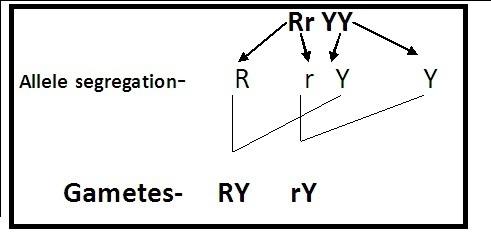
The answer to how many alleles in a gamete is not merely a number but a gateway to understanding genetic disorders, evolutionary adaptation, and even forensic...

The implications stretch far beyond flower petals. From human blood types to agricultural crop breeding, incomplete dominance reveals how nature often operates...

The study of biological mechanisms bridges the gap between abstract theory and tangible reality. It explains why a neuron fires an electrical impulse or how a...

The first time a patient swallows a pill, they rarely consider the invisible dance unfolding inside their cells. A molecule—often no larger than a...

Consider the story of penicillin. When Alexander Fleming first observed its antibacterial properties in 1928, he had no idea it would bind irreversibly to...